Flag Cichlids (Mesonauta festivus) originate exclusively from the massive Amazon and Paraguay river basins. With this guide, you will learn the exact realities of maintaining their complex environments safely.
Physical Features of Flag Cichlids
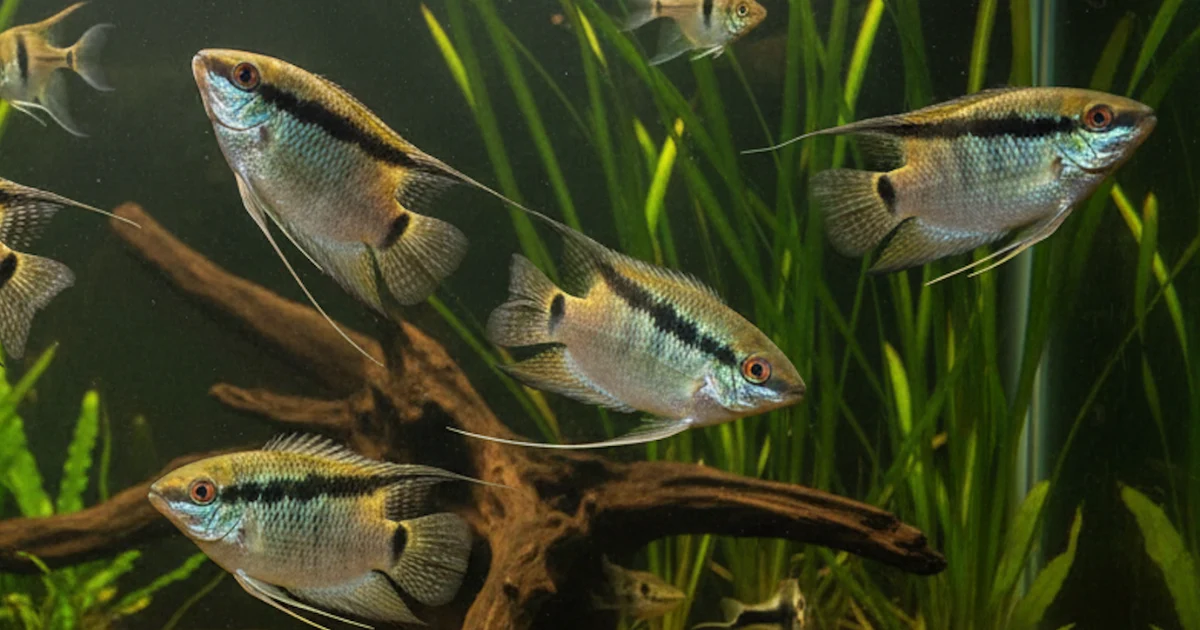
Their deep, laterally compressed bodies and distinct slanted posture define their anatomy. Flag Cichlids display a striking dark stripe running diagonally from their mouth upward. This black band frequently extends directly into the upper tip of their dorsal fin. They possess noticeably elongated pelvic fins that resemble delicate, trailing threads. Therefore, they use these modified fins to navigate through dense aquatic vegetation.
Are They Suitable for Beginners?
Beginners frequently succeed when providing a properly sized, chemically stable aquatic environment. They will actively tolerate a wide range of standard water parameters safely. Consequently, inexperienced keepers frequently trigger stress by failing to provide adequate vertical swimming space. Therefore, managing their health demands a highly specialized, properly cycled aquarium setup.
Lifespan and Size of Flag Cichlids
Understanding their biological growth prevents unexpected spatial crowding. Specifically, adult Flag Cichlids generally reach approximately 6 to 8 inches (15.2 to 20.3 centimeters) long. Furthermore, pristine water and proper nutrition accelerate their growth rate. Providing a highly stable environment maximizes their overall lifespan. Therefore, a perfectly maintained individual will easily live for 7 to 10 years.
Understanding Their Temperament
They exhibit highly peaceful but cautiously timid behaviors. Specifically, dominant fish will actively claim small areas around preferred driftwood or large aquatic plants. Furthermore, sudden introductions of aggressive tank mates frequently result in severe stress. Consequently, their mellow temperament dictates you can house them with similar sized community fish. Therefore, they only display severe territorial violence during active breeding and spawning phases. As a result, managing their environment requires constant behavioral observation and strategic hardscaping safely.
Minimum Tank Size and Setup for Flag Cichlids
A single juvenile strictly requires a minimum 40 gallon (151 liter) aquarium. Furthermore, housing fully grown adults strictly demands an aquarium of 55 gallons (208 liters). You must absolutely utilize tall aquariums because they prefer swimming in the upper levels. Adding numerous tall Amazon swords provides necessary visual barriers and exploration areas. Therefore, a larger water volume actively dilutes their heavy biological waste effectively.
Ideal Water Parameters
Highly stable water chemistry prevents sudden physiological shock. Specifically, you must maintain tropical water temperatures between 75 and 82°F (24 to 28°C). Furthermore, they strictly demand slightly acidic to neutral water constantly. Consequently, you must maintain a pH of 6.0 to 7.0 for optimal cellular function. Maintaining general hardness between 2 and 10 dGH prevents osmotic stress. As a result, pristine, tannin stained water prevents bacterial infections.
Proper Diet for Flag Cichlids
Optimizing their nutrition requires a highly varied, surface feeding menu. Specifically, their upward pointing mouths dictate they consume floating foods efficiently. They eagerly consume high quality floating cichlid pellets and blanched spinach. Consequently, feeding them exactly 3 grams (0.10 ounces) of mixed matter twice daily works perfectly. Therefore, offering live bloodworms or mosquito larvae occasionally boosts their complex immune systems. A strict, balanced diet absolutely prevents severe nutritional deficiencies.
Breeding Behaviors
These fish breed methodically when provided with broad leaved aquatic plants. Specifically, a bonded pair will thoroughly clean a chosen sturdy leaf entirely. The female lays hundreds of eggs while the male aggressively guards the perimeter. Both parents actively fan the eggs to prevent deadly fungal growth. They frequently move newly hatched fry to secure pits dug into the sand. Therefore, providing baby brine shrimp ensures high survival rates for the offspring.
Compatible Tankmates for Flag Cichlids
Introducing other fish requires careful biological considerations. Specifically, you must avoid any highly aggressive, massive cichlids. Furthermore, similarly sized, peaceful species like Angelfish or Severums offer highly successful tank compatibility. Consequently, large Corydoras catfish also share their heavily planted environments quite peacefully. Therefore, avoid housing them with tiny Neon Tetras that will easily become natural prey. As a result, careful selection actively prevents highly stressful and unbalanced tank dynamics.
Sources
- Seriously Fish
https://www.seriouslyfish.com/species/mesonauta-festivus/ - Fishkeeping World
https://www.fishkeepingworld.com/festivum-cichlid/ - The Aquarium Wiki
https://www.theaquariumwiki.com/wiki/Mesonauta_festivus - Animal World
https://animal-world.com/encyclo/fresh/cichlid/festivum.php - Aquatic Community
https://www.aquaticcommunity.com/cichlid/festivum.php
Leave a Reply
You must be logged in to post a comment.