
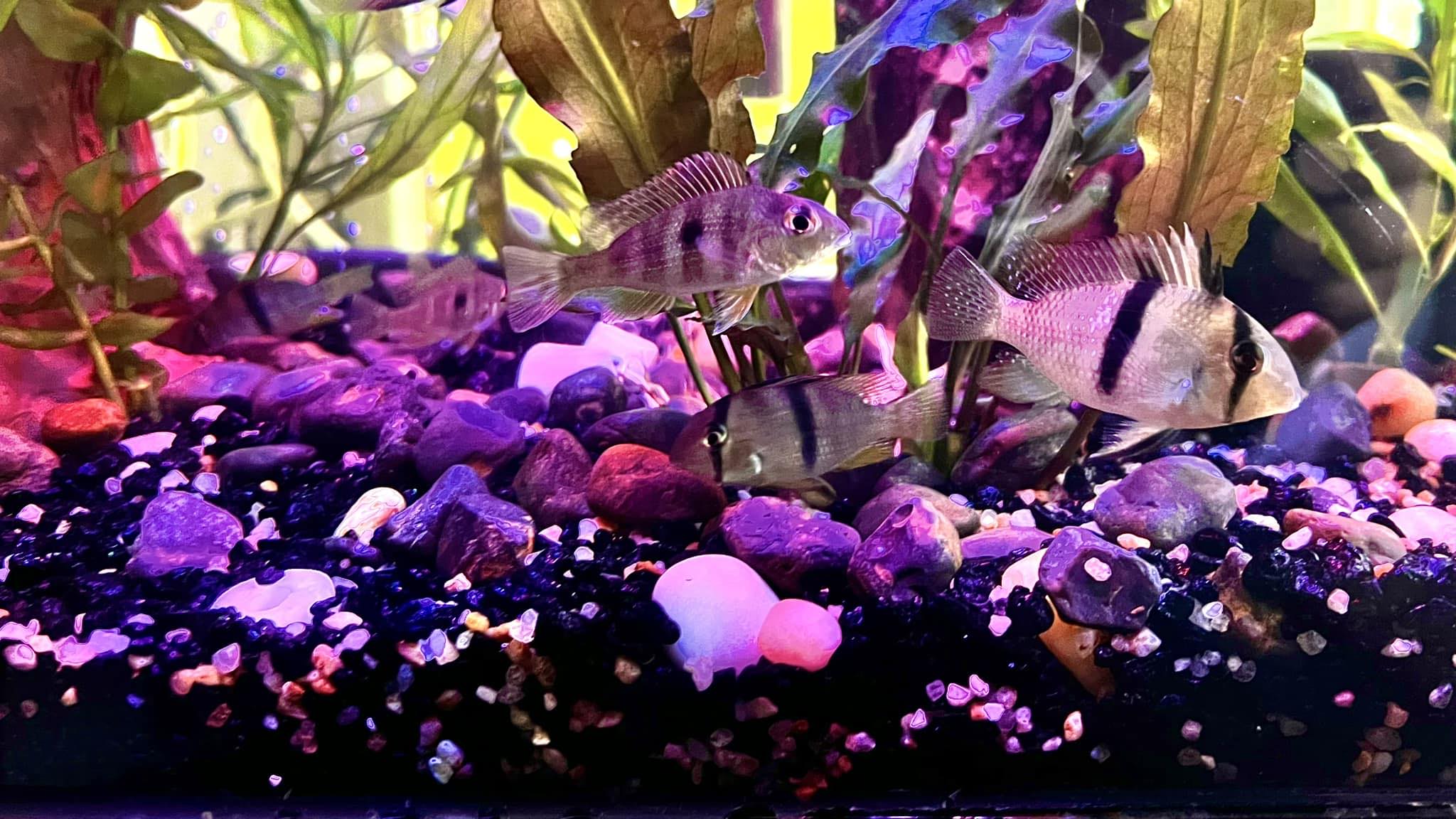
It’s a horrifying sight that almost every new hobbyist experiences. You do a headcount in your beautiful community tank and realize a fish is missing. Or worse, you witness an act of aggression, a chase, and the grim reality of nature playing out in your living room. The first question is always a panicked, “Why?” However, the answer lies in the ancient, hardwired instincts of the creatures we keep. Therefore, this guide will explore the rules of the aquatic world, helping you understand temperament, compatibility, and how to build a peaceful aquarium where everyone survives.
The Angelfish and the Tightrope Walk
I will never forget the tightrope walk of setting up my first true community tank. I had my heart set on a graceful pair of Angelfish and a vibrant, shimmering school of Cardinal Tetras. The problem? As every expert will tell you, to an adult Angelfish, a Cardinal Tetra looks like a delicious, bite-sized snack.
Despite this warning, I determined to create a balance. I learned that success didn’t require changing the fish’s nature, but rather respecting it. In a large, tall tank with plenty of plants and hiding spots, the huge school of Tetras felt secure. Meanwhile, I kept my Angelfish well-fed and happy, so their predatory instincts never triggered. This taught me the most important lesson in fishkeeping: a peaceful aquarium isn’t an accident. Instead, it is a carefully planned and managed world where everyone feels safe.
The Golden Rule for A Peaceful Aquarium: The Mouth Size Test
Before we dive into the complexities of temperament, let’s start with the most fundamental, unbreakable rule of fishkeeping:
If Fish A can fit into Fish B’s mouth, Fish A will eventually be eaten.
It is not a matter of “if,” but “when.” A predator’s instinct is absolute. For example, that large, beautiful Angelfish may ignore your tiny Neon Tetras for months, but one day, it will see them not as tank mates, but as a perfect, wriggling snack. Remember that this rule applies to all fish. Consequently, you must research the adult size of every fish you buy and ensure it will never be small enough to be eaten by its tank mates. This is your first rule for a peaceful aquarium.
Beyond the Mouth: What is Fish Temperament?
Once you’ve passed the mouth-size test, you must understand the personality of your fish. Not all fish are created equal.
Peaceful Community Fish:

These are fish that rarely show aggression towards other species. They are perfect for a mixed community tank.
Examples: Corydoras Catfish, Rasboras, Kuhli Loaches, most Tetras, Platys.
Semi-Aggressive Fish:

These fish are generally peaceful but can be territorial, especially with their own kind or during breeding. They can work in a community tank if it is large enough with plenty of hiding spots.
Examples: Most Angelfish, Severums, Gouramis, many Barbs.
Aggressive Predators:

These fish view the entire tank as their territory and most other fish as either a threat or food. They should almost always be kept in a species-only tank or with other large, robust fish.
Examples: Oscars, Jack Dempseys, most large African Cichlids, Arowanas.
Fin Nippers:

This is a specific type of aggression where a fish will relentlessly nip at the long, flowing fins of others.
Examples: Tiger Barbs are the most famous example. Similarly, Danios are famous for this reputation. Serpae Tetrascan likewise be nippy. Due to this behavior, never house them with long-finned fish such as Bettas, Angelfish, or Guppies.
Why Are My Fish Fighting? (The Root Causes)
If you’ve chosen fish of a compatible size and temperament but are still seeing aggression, it’s a sign that something in their environment is wrong.
- Territorial Disputes: Most semi-aggressive fish are territorial. If the tank is too small or is a bare, open space, a dominant fish can see and harass others constantly.
Solution: Use a larger tank and create a complex aquascape with driftwood, rocks, and plants to break up lines of sight and create distinct territories. - Stress from Overcrowding: A tank with too many fish is a pressure cooker for aggression. The constant competition for space and resources will make even peaceful fish stressed and nippy.
- Mismatched Needs: If a fish is kept in the wrong water parameters (pH, temperature), it will be stressed, and stress leads to unpredictable, aggressive behavior.
- Sickness and Weakness: In nature, predators often cull the sick and weak from a group. This instinct is still present in our aquariums. If one fish becomes ill, other fish may start to bully and pick on it.
- Breeding Behavior: When fish are ready to breed, their aggression skyrockets. A bonded pair of Angelfish or Convict Cichlids will terrorize every other fish in the tank to protect their eggs.
How Do I Build a Peaceful Aquarium? A Checklist for Success
A peaceful aquarium is built with research and planning, not hope and luck.
Research Before You Buy: Know the adult size, temperament, and water requirements of every single fish you plan to add.
Provide Adequate Space: Start with the largest tank you can accommodate. A bigger tank is the number one tool for diluting aggression.
Aquascape for Peace: Use rocks, driftwood, and plants to create visual barriers and hiding spots.
Feed Properly: A well-fed predator is a lazy predator. Keeping your fish on a regular, nutritious diet can reduce aggression born from hunger.
Quarantine New Fish: A sick or stressed new fish can upset the entire balance of your established peaceful aquarium.
Peaceful Community Aquarium FAQ
The mouth size test is the foundational compatibility rule: if one fish can fit inside another’s mouth, it will eventually be eaten. This applies regardless of how peaceful a predator appears in the short term. Researching the adult size of every fish before purchase is non-negotiable for a peaceful aquarium.
Fish aggression in a compatible tank is almost always caused by an environmental problem. A tank that is too small, lacks visual barriers, holds too many fish, or has incorrect water parameters pushes even peaceful species into conflict. Correcting the environment resolves aggression faster than replacing the fish.
Aggressive predators like Oscars, Jack Dempseys, Arowanas, and most large African Cichlids should never be placed in a peaceful community tank. Fin-nipping species like Tiger Barbs, Serpae Tetras, and Danios must also be excluded from tanks housing long-finned fish such as Bettas, Angelfish, or Guppies. Research every species before purchase, not after an attack occurs.
A complex aquascape with driftwood, rocks, and dense planting is the most effective physical tool for reducing aggression in a community tank. Visual barriers break the line of sight between territorial fish, allowing a submissive fish to escape harassment without being constantly exposed. A dominant fish cannot bully what it cannot see.
Breeding behavior overrides even the most reliable temperament in a peaceful aquarium. When fish form a bonded pair and prepare to spawn, their territorial instincts escalate dramatically, and they will attack any tank mate that approaches their chosen spawning site. Species like Angelfish and Convict Cichlids become particularly ferocious guardians during active breeding.
Semi-aggressive fish can work in a peaceful aquarium if the tank is large enough and the aquascape is sufficiently complex. Angelfish, Severums, and many Gouramis are territorial by nature but manageable with adequate space and hiding spots. Choosing compatible tank mates and providing visual barriers resolves most semi-aggressive conflicts.
A sick or weakened fish triggers predatory instincts in tank mates, even in an otherwise peaceful aquarium. Fish are hardwired to identify and target visibly compromised individuals, as this behavior exists to cull the weak in wild populations. Quarantining any sick fish immediately protects it from harassment and prevents disease spread to healthy tank mates.
Sources
- Practical Fishkeeping (Community Tank Rules)
https://www.practicalfishkeeping.co.uk/features/how-to-set-up-a-community-tank/ - Seriously Fish (Pterophyllum scalare)
https://www.seriouslyfish.com/species/pterophyllum-scalare/ - Aquarium Co-Op (Tiger Barb Care)
https://www.aquariumcoop.com/blogs/aquarium/tiger-barb-care-guide - American Cichlid Association (Cichlid Aggression)
https://cichlid.org/articles/cichlid-aggression/ - FishLab (Reducing Aggression)
https://fishlab.com/reduce-fish-aggression/
Leave a Reply
You must be logged in to post a comment.