
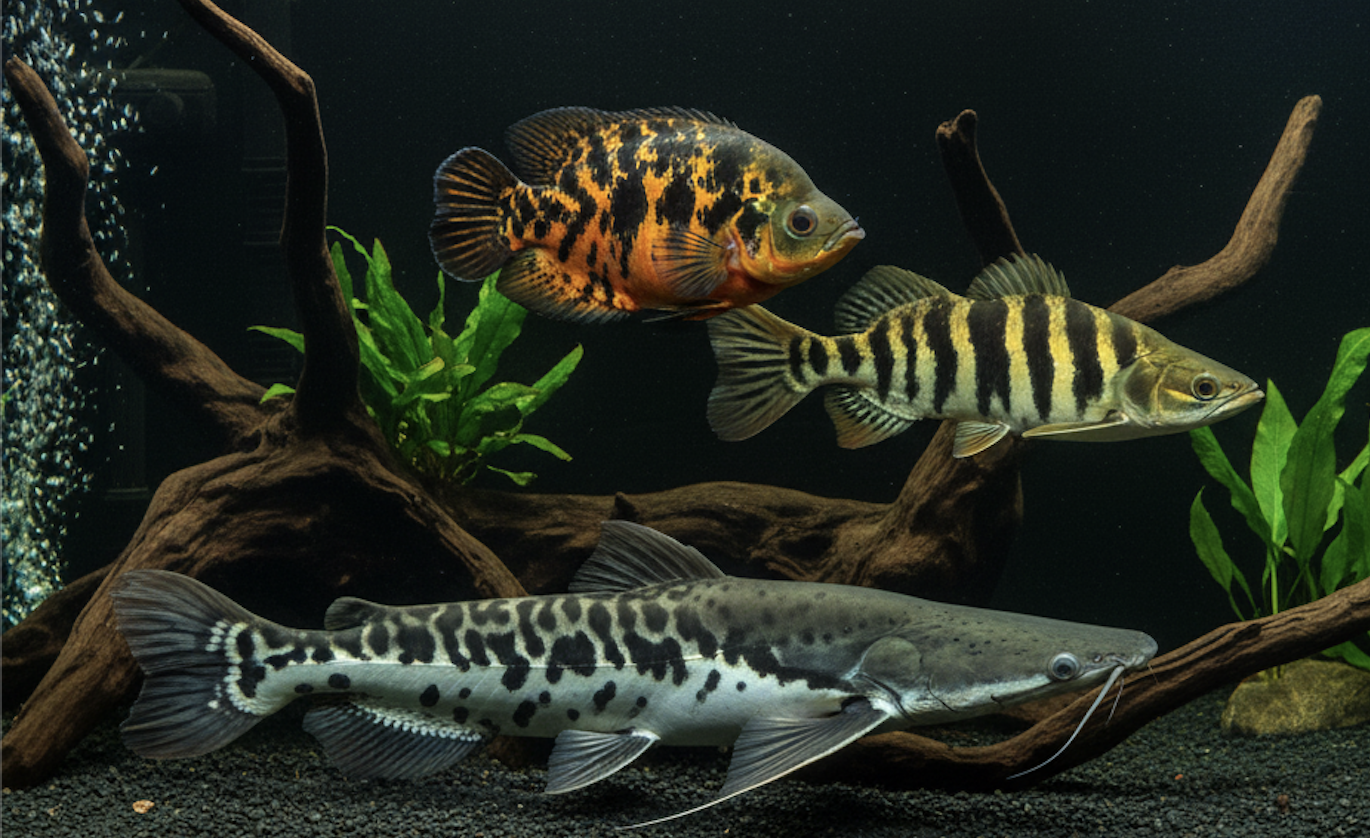
Your aquarium is supposed to be a serene, peaceful slice of nature. But right now, it’s a warzone. One fish has claimed the entire tank as its personal kingdom, and it is terrorizing every other inhabitant. This phenomenon is territorial aggression, one of the most stressful and complex challenges in the aquarium hobby. But don’t despair. Understanding the “why” behind the aggression is the first step to creating a lasting peace. Therefore, this guide is your diplomatic toolkit, filled with the strategies and tricks of the trade to turn your aquatic battlefield back into a harmonious community.
Designing Your Tank to Diffuse Territorial Aggression
I am the proud landlord of several very different aquatic properties. In my 10-gallon tank, my betta, Sky, reigns over his tiny, peaceful kingdom. His entire territory is the size of a shoebox, and he defends it with the quiet dignity of a tiny, finned king.
In stark contrast, there was my South American cichlid tank. That wasn’t a kingdom; instead, it was a sprawling, multi-neighbourhood city with constant, low-level property disputes. My Severums claimed the open water, the Guianacara claimed their favorite caves, and yet everyone respected everyone else’s space… most of the time. It taught me that fish aggression isn’t about being “mean”, rather, it’s about real estate. This guide is for every aquarist who has ever had to act as a referee in a fishy property dispute.
Why Are My Fish Fighting? Understanding Territorial Aggression
First, it’s crucial to understand that your aggressive fish is not “evil.” Rather, it is acting on millions of years of hardwired instinct. In the wild, a good territory is the key to survival. It ensures access to the best food, the safest hiding spots, and the most desirable mates. Therefore, when a fish claims a territory in your tank, it is acting out this fundamental, life-or-death instinct. Your job is not to punish the fish, but to manage the environment to make this instinct less destructive.
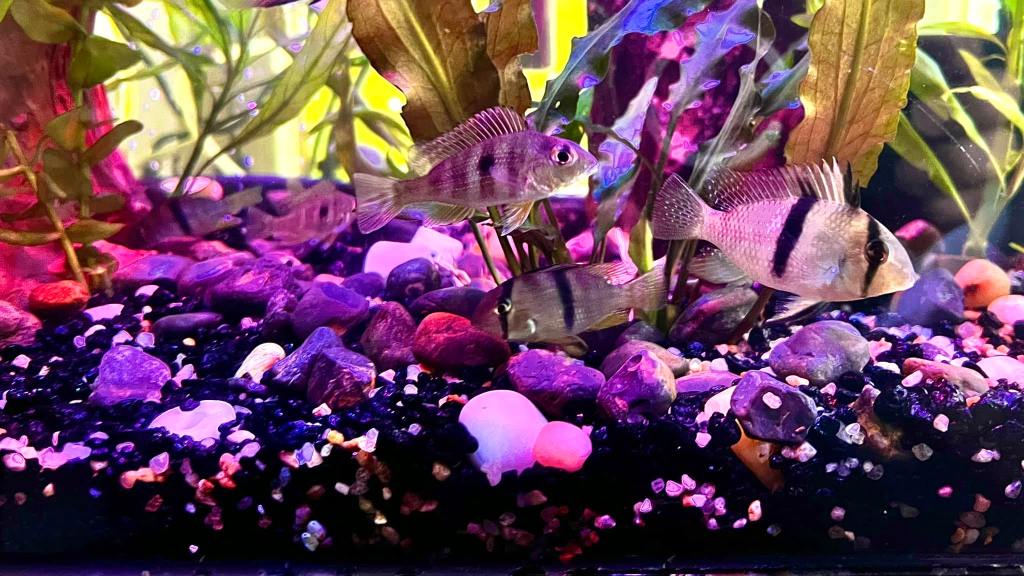
How Can I Manage Territorial Aggression? The Aquascaper’s Toolkit
You cannot change the fish’s nature, but you can change its world. A peaceful tank is built, not bought.
The Power of Space: Is Your Tank Big Enough?
This is the single most important factor. A larger tank is the number one tool for diluting aggression.
The Problem with Small Tanks: In contrast, in a cramped tank, fish are in a state of “forced proximity.” Because of this, there are no distinct territories, and a submissive fish has nowhere to escape. This lack of space turns minor spats into relentless, life-threatening harassment.
The Solution: Therefore, always start with the largest tank you can accommodate for the species you want to keep. Giving a territorial cichlid a 75-gallon tank instead of a 40-gallon tank doesn’t just give it more room to swim; crucially,it gives it a bigger kingdom to patrol, which makes the smaller territories of its tank mates seem less threatening.
The Art of the Aquascape: How Can I Use Decor to minimize territorial disputes?
A bare tank is a battlefield. A complex, decorated tank is a peaceful city with many neighborhoods. Your goal is to break the lines of sight.
Create Visual Barriers: A dominant fish cannot bully a fish it cannot see. Use large, branching pieces of driftwood and strategically stacked rockwork to create walls and divisions within the tank.
Provide Multiple, High-Value Hiding Spots: Don’t just provide one “perfect” cave. If you do, the dominant fish will claim it and guard it ferociously. Create at least one good cave or hiding spot for every territorial fish in the tank. This gives everyone a safe “home base” to retreat to.
Use Plants as Walls: For fish that don’t eat plants, tall, dense stands of plants like Vallisneria or Amazon Swords are the perfect, living privacy fences. While Silver Dollars (Metynnis spp.) are excellent dither fish for aggressive cichlids due to their size and speed, they are obligate herbivores. The Silver Dollars will eat the “walls” down to the roots in days. Silver Dollars are for non-planted tanks only.
The “Dither Fish” Tactic: How Do Other Fish Create Calm?
“Dither fish” are peaceful, active, schooling fish that are kept with larger, semi-aggressive cichlids. Crucially, they serve a psychological purpose.
How it Works: In the wild, if small fish are swimming calmly in the open, it signals to a larger, more cautious cichlid that there are no predators nearby. Therefore, the presence of a confident school of dither fish makes your territorial fish feel safe, secure, and less defensive. Furthermore, their constant motion also distracts the bully, spreading its attention.
Good Dither Fish Choices: You need fast-moving, robust species that are too big to be eaten. Classic choices include Silver Dollars, large Rainbowfish, or fast-moving barbs for certain setups.
The “Hard Reset”: How Can I Reset the Entire Territory?
This is a powerful, last-resort technique for a tank where a single bully has claimed the entire space as its own.
The Method: You perform a major re-scape of the entire aquarium. Move all the rocks, all the driftwood, and change the layout completely.
Why it Works: This act of “total redecoration” destroys all existing territories. When you re-introduce the fish, the bully’s “kingdom” is gone. Every single fish in the tank is now on an equal footing, forced to explore and establish new, smaller territories from scratch. It’s like wiping the social slate clean.
When Is It Time to Rehome a Bully?
Sometimes, despite your best efforts, you just have a fish with a particularly aggressive personality. It happens. If one fish is consistently damaging the fins of its tank mates, preventing them from eating, or causing them to hide constantly, the most humane and responsible thing you can do is to remove the bully. You can often return it to a local fish store or rehome it to a hobbyist who has a large, species-only tank where its aggressive nature can be properly managed.
Territorial Fish Behavior FAQ
Fish defend territories because access to space, food, and mates determined survival through millions of years of evolution. This instinct operates in cichlids, bettas, and many other species regardless of whether a real predator is present. Compressed aquarium conditions intensify this behavior by reducing the space available for natural territory boundaries.
A larger tank dilutes aggression by giving each fish enough room to establish a distinct territory away from rivals. In cramped conditions, fish exist in forced proximity with no escape route, turning minor disputes into constant, life-threatening harassment. Tank size is the single most impactful factor in managing territorial behavior.
Arranging driftwood and rockwork to block sightlines between fish prevents a dominant individual from monitoring and intimidating the entire tank. Multiple quality hiding spots distribute territorial claims across the aquarium rather than concentrating aggression in one guarded area. Dense plant stands serve as additional physical barriers between competing zones.
Dither fish are peaceful, active schooling species kept alongside semi-aggressive cichlids to reduce their defensive stress response. Their calm open-water movement signals that no predator is present, lowering the territorial fish’s defensive tension. A less stressed territorial fish displays significantly less aggression toward its tank mates.
A hard reset means completely rearranging all tank decor to destroy every existing territorial boundary simultaneously. This forces every fish, including the dominant individual, to claim new and smaller territories from an equal starting position. It is the final practical option before
Silver Dollars are effective dither fish for large cichlid tanks due to their speed, size, and resilience. They are obligate herbivores, however, and will strip live plants down to bare stems within days of introduction. Silver Dollars belong exclusively in non-planted setups.
If one fish persistently injures tank mates, blocks their food, or forces them to hide constantly, management has failed. Rehoming the bully to a species-only or appropriately matched tank is the most humane resolution available. A territorial fish thriving in the right environment benefits every animal involved.
Sources
- Cichlid Forum (Managing Aggression)
https://www.cichlid-forum.com/articles/managing_aggression.php - Practical Fishkeeping (Dither Fish) https://www.practicalfishkeeping.co.uk/features/what-are-dither-fish/
- Seriously Fish (Metynnis hypsauchen) https://www.seriouslyfish.com/species/metynnis-hypsauchen/
- The Spruce Pets (Cichlid Aggression) https://www.thesprucepets.com/reducing-cichlid-aggression-1380965
- University of Florida (Fish Stress) https://edis.ifas.ufl.edu/publication/FA005


Leave a Reply
You must be logged in to post a comment.