
Panda Dwarf Cichlids (Apistogramma nijsseni) originate from the highly localized river basins of the Rio Ucayali in Peru. They belong to the diverse Apistogramma genus, recognized for their complex social structures and parental care. Consequently, this guide uses verifiable scientific evidence to ensure your husbandry meets professional standards. You must recognize that their unique physiology demands a highly stable and acidic environment.
Physical Features of Panda Dwarf Cichlids
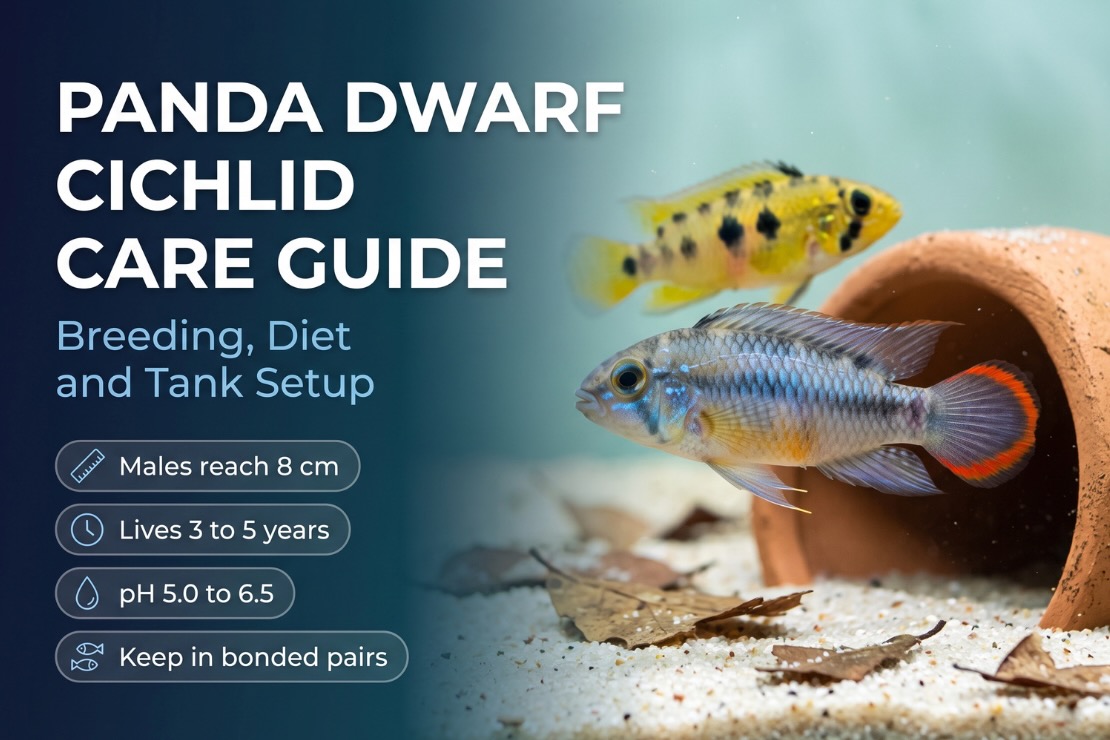
Their striking color dimorphism define their anatomy and overall aesthetic completely. Specifically, female Panda Dwarf Cichlids display a brilliant yellow body with large, bold black blotches. Furthermore, the males feature a vibrant blue sheen across their flanks and a rounded, red-edged tail. Consequently, these colors act as immediate indicators of their social rank and overall health. Therefore, their unique “panda” patterning allows observant aquarists to identify high quality fish. As a result, their distinct profile creates a dynamic visual display.
Are Panda Dwarf Cichlids Good for Beginners?
Panda Dwarf Cichlids possess an incredibly sensitive constitution that demands pristine water stability constantly. Furthermore, they are much less tolerant of nitrate levels than the more common Cockatoo variety. Consequently, inexperienced keepers frequently trigger fatal stress by failing to maintain a low pH environment. Therefore, this species remains strictly recommended for intermediate to advanced hobbyists with significant experience. As a result, novices should prioritize hardier species initially.
Lifespan and Size of Panda Dwarf Cichlids
Understanding their biological growth prevents unexpected spatial crowding within “nano” setups completely. Specifically, adult male Panda Dwarf Cichlids generally reach approximately 7.5 to 8 centimeters in length. Furthermore, females remain significantly smaller, reaching only about 4 to 5 centimeters during their life cycle. Consequently, providing a highly stable environment maximizes their overall lifespan. Therefore, a perfectly maintained individual will easily live for 3 to 5 years safely. As a result, you must commit to a rigorous and consistent care plan.
Understanding Their Temperament
They exhibit a relatively peaceful temperament but remain highly territorial within their preferred leaf litter or caves. Furthermore, they spend most of their time hovering near the substrate in search of micro predation opportunities. Indeed, they only show significant aggression toward other male Panda Dwarf Cichlids or similar looking rivals. Consequently, they are ideal residents for peaceful community aquariums with small schooling characins. Therefore, you should avoid housing them with hyper active or larger, aggressive species. As a result, they foster a calm and dynamic tank environment.
Do They Need to Be Kept in Groups?
Panda Dwarf Cichlids are best kept in bonded pairs rather than large, disorganized groups. Specifically, keeping multiple males in a small aquarium leads to violent and often fatal territorial combat. Furthermore, unlike other Apistogramma, they often form stronger monogamous bonds during the breeding season. Consequently, providing multiple caves ensures that each individual can find a secure retreat. Therefore, you must provide an aquarium large enough to accommodate their territorial boundaries. As a result, a proper pair structure prevents excessive social stress.
Minimum Tank Size and Setup
A minimum volume of 75 liters (20 gallons) is required for a single pair. Furthermore, you should provide a fine sand substrate to support their natural sifting and nesting behavior. Specifically, adding numerous small caves, terra cotta pots, or coconut shells is mandatory for their security. Consequently, dense vegetation and leaf litter provide necessary visual barriers and humic substances. Therefore, you must ensure the tank layout offers plenty of broken lines of sight. As a result, the fish will feel secure and display their best colors.
Water Parameters for Panda Dwarf Cichlids
Highly stable water chemistry prevents sudden physiological shock entirely. Specifically, you must rigidly maintain tropical water temperatures between 25°C and 28°C. Furthermore, Panda Dwarf Cichlids strictly demand soft, acidic water with a pH of 5.0 to 6.5. Consequently, maintaining a general hardness below 5 dGH prevents osmotic stress and supports successful breeding. Therefore, performing 20% to 30% weekly water changes remains mandatory for nitrate control. As a result, pristine, well oxygenated water prevents deadly opportunistic bacterial infections.
Proper Diet for This Species
Optimizing their nutrition requires a highly varied, protein-rich menu strictly. Specifically, their robust digestive tracts process meaty foods like live or frozen brine shrimp and daphnia efficiently. Furthermore, you should use high quality sinking pellets like Hikari Tropical Vibra Bites to ensure balanced nutrition. Consequently, feeding an adult exactly 2 grams of food twice daily works perfectly. Therefore, offering live blackworms occasionally boosts their complex immune systems directly. As a result, a balanced diet prevents severe nutritional deficiencies.
Common Health Problems
Poor water quality quickly leads to chronic stress and systemic immune collapse. Specifically, they are highly susceptible to “skin cloudiness” and secondary fungal infections in high nitrate water. Furthermore, they may experience internal parasites if fed uncleaned live foods frequently. Consequently, maintaining pristine water and an stress free environment remains the best preventative measure. Therefore, you must monitor their gill movements daily for any signs of respiratory distress. As a result, early intervention prevents minor issues from becoming fatal.
Breeding Panda Dwarf Cichlids
They are cave spawning fish that exhibit fascinating and highly complex parental care. Specifically, the female will deposit her eggs on the ceiling of a cave for the male to fertilize. Furthermore, the female assumes the primary role of guarding and fanning the eggs until they hatch. Consequently, she becomes highly territorial and will chase away the male or any other intruders. Therefore, you must provide a peaceful environment with no predatory tankmates to succeed. As a result, breeding Panda Dwarf Cichlids is a rewarding experience for dedicated keepers.
Which Tankmates are Compatible?
Introducing other fish requires highly careful considerations always. Specifically, you must avoid any fish small enough to be consumed. Furthermore, schooling fish like Neon Tetras or Rummy Nose Tetras act as excellent “dither fish” for them. Consequently, peaceful bottom dwellers like Corydoras catfish or Otocinclus also share the environment quite peacefully. Therefore, avoid housing them with aggressive cichlids that will bully their smaller size. As a result, careful selection actively prevents highly stressful tank dynamics.
Essential Equipment for the Setup
Their metabolic waste demands efficient and stable filtration systems. Specifically, you should utilize a high quality sponge filter or low flow canister filter to ensure water clarity. Furthermore, a submersible heater with a guard is essential to maintain the required warm temperatures safely. Consequently, you must also use a liquid test kit for those mandatory weekly water quality checks. Therefore, high-quality gear prevents equipment failure in a delicate tank environment.
Identifying Male and Female Panda Dwarf Cichlids
Sexual dimorphism in Panda Dwarf Cichlids is extremely pronounced and easy to identify. Specifically, males grow significantly larger and possess vibrant blue coloration and a red edged tail. Furthermore, females display a much more brilliant yellow coloration with large black spots on the flanks and tail base. Consequently, when ready to spawn, the female’s yellow hue becomes significantly more intense. Therefore, identifying gender is a simple task even for relatively new hobbyists. As a result, gender-specific housing remains unnecessary for their general care.
Proper Filtration for Panda Dwarf Cichlids
You require a filtration system that provides high biological capacity without excessive current. Specifically, sponge filters or low flow canister filters work exceptionally well for these river dwellers. Furthermore, you must ensure the water remains well-oxygenated at all times to support their high metabolism. Consequently, you must perform 20% to 30% weekly water changes to keep nitrates near zero. Therefore, gentle mechanical filtration prevents the water from becoming stagnant. As a result, the animals will thrive in clean water.
Intelligence and Interaction
They are widely considered highly observant and intelligent “sentinels” within the aquarium. Specifically, they will follow your movements and even learn to recognize their keepers during feeding. Furthermore, they exhibit complex social interactions and hierarchical behaviors within their pair. Consequently, they provide a level of interaction that is rare in such small fish. Therefore, they require mental stimulation through environmental complexity and live food foraging. As a result, they form a unique, observant bond with their dedicated keepers.
Aggression and Territoriality
Their aggression is almost exclusively limited to the immediate area around their spawning cave. Specifically, they will flare their fins and lunge at any fish that gets too close to their eggs. Furthermore, they are generally peaceful toward other species that do not threaten their territory. Consequently, providing adequate space and numerous caves effectively eliminates most inter-species stress. Therefore, they should not be considered truly aggressive predators. As a result, their calm nature makes them excellent candidates for community setups.
Are They Safe for Planted Tanks?
They are perfectly safe for planted tanks as they do not consume vegetation. Specifically, they will not uproot or shred your aquatic plants like many larger cichlids do. Furthermore, providing dense vegetation actually helps them feel more secure and provides natural spawning sites. Consequently, using hardy plants like Anubias or Java Fern attached to decor provides necessary shaded exploration areas. Therefore, integrating plants into their habitat promotes a more naturalistic and healthy ecosystem. As a result, a well-planted tank actively supports their psychological well being.
Sources
- Seriously Fish
https://www.seriouslyfish.com/species/apistogramma-nijsseni/ - Aquarium Co-Op
https://www.aquariumcoop.com/blogs/aquarium/apistogramma-care-guide - FishBase
https://www.fishbase.se/summary/Apistogramma-nijsseni.html - AquaInfo
https://aquainfo.org/apistogramma-nijsseni-panda-dwarf-cichlid/ - Practical Fishkeeping
https://www.practicalfishkeeping.co.uk/features/how-to-keep-apistogramma-nijsseni/

Leave a Reply
You must be logged in to post a comment.