
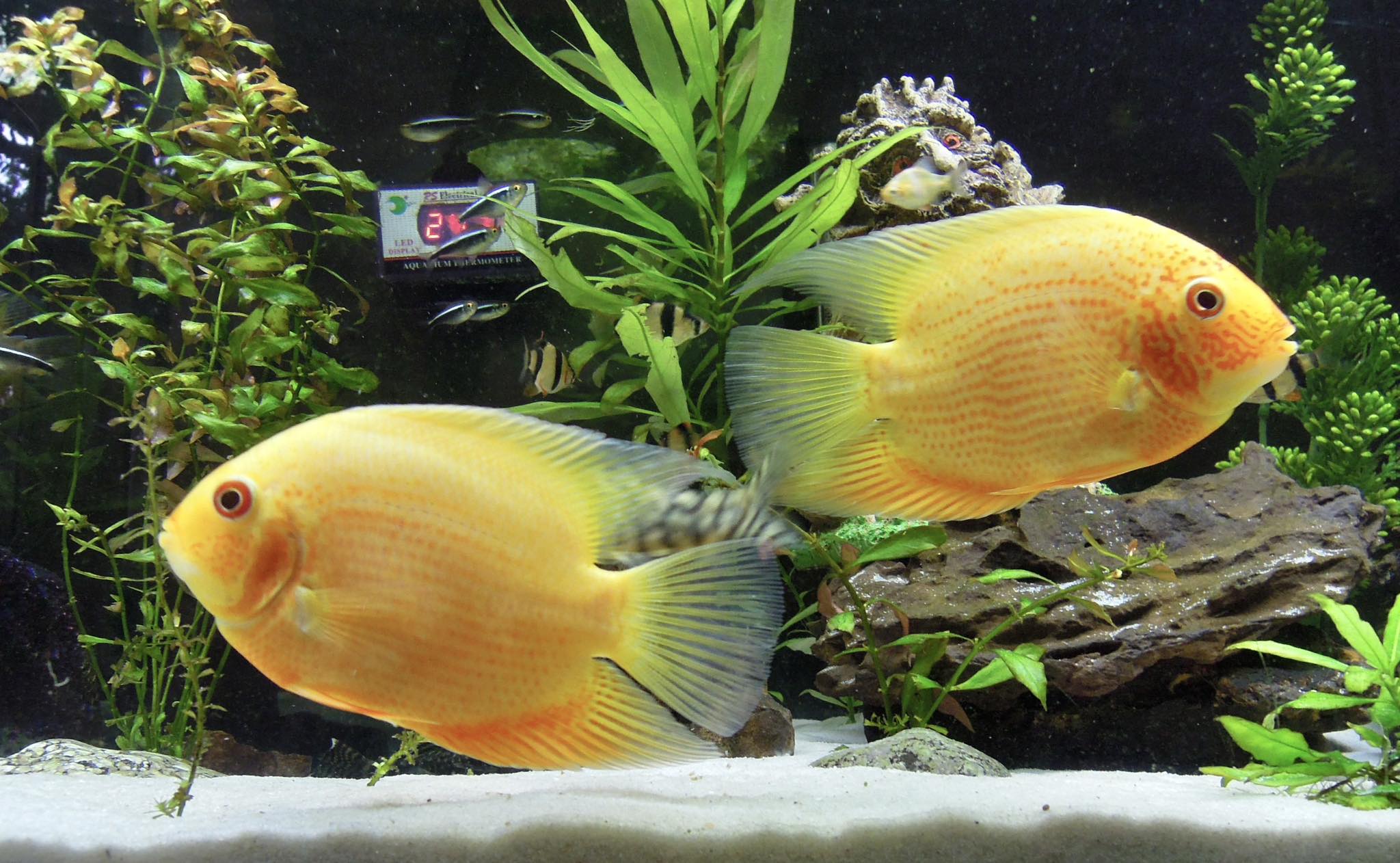
I used to think all fish were “free spirits” they’d lay their eggs and swim away. My experience with my first pair of fish parents are my Red Spotted Severums, they proved how wrong I was. They didn’t just lay eggs; they instantly transformed into ferocious, full-time bodyguards, defending their tiny territory against everything including my own hand during tank maintenance!
However, Watching that instinct up close was a revelation that completely changed how I see the aquatic world. The world of freshwater aquariums is teeming with life, and within it, we find a fascinating array of parenting behaviors. Furthermore, some fish species are exemplary parents, demonstrating remarkable dedication and care for their offspring. Ultimately, this guide is a celebration of those surprisingly dedicated parents swimming in our tanks.
Which Fish Parents are mouthbrooders?
Cichlids

Often hailed as the most intelligent fish parents, are renowned for their parental instincts. Many cichlid species exhibit intricate breeding behaviors. Like the beloved African cichlids, carry their eggs and fry in their mouths for protection. Hence, This unique method ensures the survival of their offspring in challenging environments. In some species, the fry will even return to their parent’s mouth for protection when threatened.
Discus

Substrate Spawning Cichlids. These Fish Parents lay their eggs on a flat surface, often a rock or leaf. Both parents then diligently guard and fan the eggs, ensuring optimal oxygenation. Indeed, Discus are the “Gold Standard” of fish parenting. Also, they feed their fry with a specialized nutritional mucus (slime coat) secreted from their skin. This is a critical detail to include.
Who are the Nest Builders?
Betta fish

Known for their vibrant colors and flowing fins, are also dedicated Fish Parents. Male betta fish build bubble nests at the water’s surface. They carefully gather air bubbles and plant debris to create a floating nest. Then, once the female lays eggs, the male fertilizes them and guards the nest, keeping it aerated and free of debris.
Sticklebacks

Male sticklebacks construct elaborate nests made of plants and debris. Also, They then court females to lay eggs in the nest, which they guard fiercely.
Unique Parenting Strategies
Sea Horses

Male seahorses have a pouch on their belly where females deposit eggs. Then, the male carries the eggs until they hatch, providing nutrients and protection.
Angelfish

Both parents work together to care for their young. Angelfish clean a flat surface and lay eggs, which they then guard and fan. Then, once the fry hatch, the parents still continue to protect them.
Why Choose Fish Parents that have parental Instincts?
Fascinating Behavior: Watching fish parents care for their young is a captivating experience. as a result, their intricate behaviors, from mouthbrooding to nest building, offer hours of entertainment.
Successful Breeding: Fish with parental instincts are more likely to successfully raise their offspring. Therefore, increasing the chances of breeding success for hobbyists.
Naturalistic Aquariums: By observing fish in their natural parenting roles, you can create more naturalistic and engaging aquarium setups.
Educational Opportunities: Studying fish parenting behaviors can provide valuable insights into animal behavior and ecology.
When choosing fish with strong parental instincts, consider the tank size. Specifically, consider water parameters. Check for compatibility with other tank inhabitants. By providing a suitable environment, you can witness the wonders of fish parenting firsthand. Remember, while these fish are excellent parents, it’s important to provide them with optimal conditions to ensure their well-being and the successful rearing of their offspring.
Aquarium Fish Parents FAQ
Cichlids are considered the most dedicated parents in the freshwater hobby, with many species guarding eggs and fry aggressively. Discus stand apart from all others by feeding their newly hatched fry from a slime coat secreted by their own skin. Angelfish and betta fish also demonstrate strong, observable parenting behaviors well-suited to home aquariums.
Cichlid fish parents use territorial aggression, physical herding, and mouthbrooding to shield their offspring from tank mates and environmental threats. Many African cichlid species carry fertilized eggs or newly hatched fry inside their mouths, retreating when threatened. Substrate-spawning cichlids like discus and angelfish guard a flat surface and fan the eggs to ensure constant oxygenation.
Mouthbrooding fish parents hold fertilized eggs or live fry inside their mouths until offspring are developed enough to survive independently. African cichlids, including Mbuna and Haplochromis species, are the most well-known mouthbrooders in the freshwater hobby. Some species practice biparental mouthbrooding, where both parents take turns holding the developing fry.
Male betta fish build bubble nests at the water surface using air bubbles and plant debris to house their eggs. After spawning, the male collects fallen eggs, places them in the nest, and guards it until the fry become free-swimming. Female bettas play no parental role and should be removed after spawning.
Discus fish parents produce a nutritional mucus from their skin that newly hatched fry graze on directly. Both parents rotate roles, presenting their bodies alternately as feeding surfaces to ensure the fry are nourished evenly. This feeding behavior is unique among freshwater fish and makes discus the most demanding species to breed successfully.
Fish parents — particularly cichlids — become significantly more aggressive toward tank mates during spawning and while actively guarding fry. This territorial behavior is instinctive and intensifies based on the perceived threat level in the tank. Hobbyists should relocate the breeding pair to a separate tank or ensure other fish have ample hiding options.
The idea that all fish abandon their eggs is a myth — many freshwater species actively parent their offspring after spawning. Cichlids, discus, bettas, and seahorses all actively guard or carry their eggs and fry until viable. Fish that do abandon eggs, like most tetras, are the exception rather than the rule in home aquariums.
Sources
- Male Betta Fish
- Parental care by males (fishes and amphibians)
- Invasive Amazon sailfin catfish in Bangladesh
- The Dirt Cheap Discus
- Mouthbrooder
- These Damselfish Are Devoted Parents
- How do seahorses differ from all other animals?
- Britannica (Fish Reproductive Behavior)
Leave a Reply
You must be logged in to post a comment.