

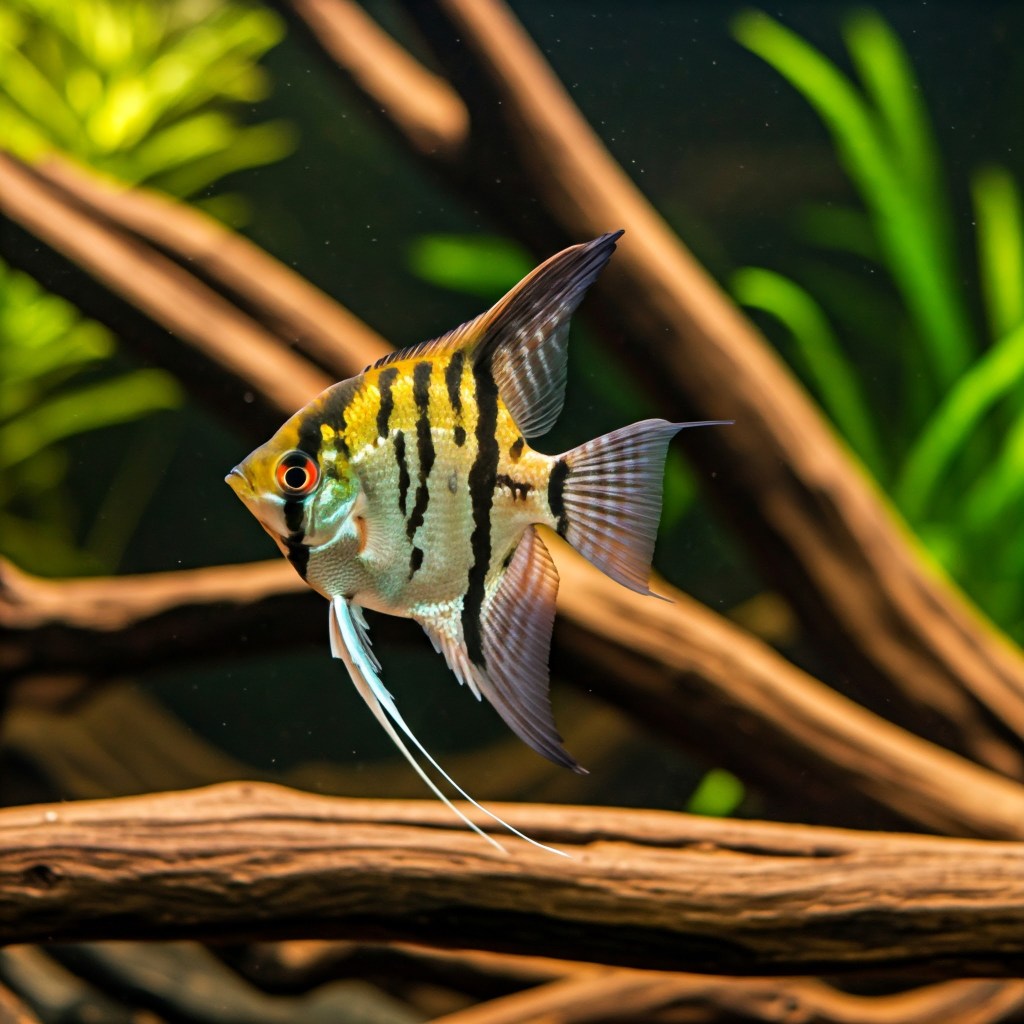
With their elegant, disc-shaped bodies and long, flowing fins, Freshwater Angelfish (Pterophyllum scalare) move through the water with a unique grace that has made them a cornerstone of the aquarium hobby for generations. They are living art, but behind that serene beauty lies the fiery heart of a cichlid, full of complex behaviors and social drama. This guide will answer all your questions and prepare you for the rewarding challenge of keeping these aquatic queens.
My Angelfish Soap Opera
My story with Angelfish started with six beautiful, juvenile Black Marbles. They were a peaceful, harmonious little group, and I was in love. But as they grew, so did the drama. Aggression began to simmer, and I soon found myself rehoming the most bullied fish to save their fins. Eventually, a male and a female formed a powerful pair bond. They were a stunning couple, but they instantly turned on everyone else, becoming the tiny, finned tyrants of the tank. Their fights could cause real damage. After finding new homes for the remaining angels, I was left with just the happy couple. They even laid eggs together! But the drama wasn’t over. One of them ate some of the eggs, which immediately turned into a full-blown couple’s fight. It was a fascinating, frustrating, and hilarious look into just how much character these incredible fish have.
What Are the Ideal Water Conditions for Angelfish?
To truly see your Angelfish thrive, you must create an environment that mimics their native Amazonian waters. This means focusing on warmth, stability, and cleanliness. A reliable heater is essential, as they require a stable tropical temperature between 76-82°F (24-28°C). While adaptable to various water conditions, they do best in soft, slightly acidic water with a pH range of 6.5 to 7.5. As cichlids, they are sensitive to nitrates and poor water quality, making a consistent maintenance routine crucial. Plan for weekly water changes of 25-50% to keep the water pristine. Finally, a well-planted tank is key to their well-being. Tall, broad-leaved plants like Amazon Swords and Vallisneria not only provide a sense of security that reduces stress, but they also create the ideal vertical surfaces that a bonded pair will instinctively clean and choose as a prime location to lay their eggs.
How Big Do they Get and What Size Tank Do They Need?
Angelfish get much larger than many beginners expect. Their body can reach the size of a small saucer, but their real size comes from their vertical height.
Adult Size: They can reach 6 inches (15 cm) long and 8-10 inches (20-25 cm) tall.
Tank Size: Because of their height, a tall tank is essential. A 29-gallon (110-liter) tank is the absolute minimum for a single pair, but a 55-gallon (208-liter) tank or larger is highly recommended to give them adequate swimming space and dilute aggression.
Are They Aggressive?
Yes, Angelfish are cichlids and can be semi-aggressive, especially with each other. They form a distinct pecking order, and as they mature, they become increasingly territorial. A bonded pair, in particular, can become very aggressive towards any other fish they view as a threat to their territory or potential offspring.
How Do I Know if My Angelfish Are Stressed?
Signs of stress include hiding constantly, clamped fins (holding their fins tightly against their body), loss of appetite, and rapid breathing. This is often a result of bullying or poor water quality.
Can They Live With Other Fish?
Choosing the right tank mates is key to a peaceful community.
Good Tank Mates: Peaceful, medium-sized fish that are not known for fin nipping. Good choices include Corydoras catfish, larger tetras (like Black Skirt or Rummy Nose), and Bristlenose Plecos.
Bad Tank Mates: Avoid fin nippers like Tiger Barbs. Also, avoid any fish small enough to fit in an adult Angelfish’s mouth (like Neon Tetras), as they will eventually become a snack.
What Do Angelfish Eat?
Angelfish are omnivores but lean towards a carnivorous diet.
Staple Food: A high-quality flake or pellet formulated for cichlids should be the core of their diet.
Supplements: Their health and color will benefit greatly from regular feedings of frozen or live foods like bloodworms, brine shrimp, and daphnia.
How Do I Tell if an Angelfish is Male or Female?
Sexing Angelfish is notoriously difficult, especially when they are young. In mature adults, the most reliable sign is the shape of their breeding tube (papilla), which becomes visible during spawning. The male’s papilla is small, pointed, and triangular, while the female’s is wider, rounder, and more blunt.
What Should I Do When My Angelfish Lay Eggs?
A bonded pair will choose a flat, vertical surface (like a broad leaf, a piece of slate, or the filter intake) to meticulously clean before laying their eggs. Both parents will guard the eggs fiercely. If you wish to raise the fry, it’s often best to move the eggs to a separate, dedicated hatching tank with an air stone, as first-time parents (like in my story) often eat their eggs due to stress or inexperience.
How Long Do Angelfish Live?
With proper care in a large, clean aquarium, Angelfish can be long-term companions, living for 10 to 15 years.
What Are the Different Types of Angelfish?
Decades of selective breeding have produced a stunning variety of Angelfish. Some popular types include:
Silver: The classic wild type with black vertical bars.
Marble: Features a beautiful, random marbling of black and white.
Koi: Have orange, white, and black patches, resembling a Koi carp.
Zebra: Have more numerous and defined black stripes than the Silver.
Veiltail: A genetic mutation that results in extra-long, flowing fins.
Albino: Lack dark pigments, often with a white or yellow body and red eyes.
Angelfish Care FAQ
Freshwater Angelfish (Pterophyllum scalare) grow up to 6 inches (15 cm) in body length and 8–10 inches (20–25 cm) in vertical height. Their significant vertical profile makes a tall aquarium mandatory, as standard-depth tanks restrict natural posture and swimming behavior. Most beginners seriously underestimate adult size when purchasing small juveniles from pet stores.
A bonded pair of Angelfish requires a minimum tank of 29 gallons (110 liters), though a 55-gallon (208-liter) tank is strongly recommended for long-term success. The aquarium must be tall rather than wide to accommodate their vertical body profile. Larger volumes also dilute the territorial aggression that intensifies sharply as Angelfish reach sexual maturity.
Angelfish are cichlids and become increasingly semi-aggressive as they mature, establishing a strict dominance hierarchy within the aquarium. A bonded pair will attack any fish perceived as a territorial threat, including former peaceful tank mates. Fin-nipping species like Tiger Barbs must be permanently excluded, as the resulting stress causes severe fin damage and secondary bacterial infections.
Reliably sexing Angelfish is difficult until the fish reach full sexual maturity. The most accurate method is observing the breeding tube (papilla) during spawning — the male’s papilla is small and pointed, while the female’s is wider and blunt. Body shape and fin length are unreliable identifiers in juvenile or non-breeding adults.
A bonded pair will methodically clean a flat vertical surface before depositing a clutch, which both parents then guard aggressively against all tank mates. First-time parents frequently consume their own eggs due to stress. Moving the eggs to a separate hatching tank with gentle aeration offers the highest fry survival rate.
Stressed Angelfish display clamped fins held tightly against the body, persistent hiding, loss of appetite, and rapid or labored breathing. These symptoms most commonly indicate bullying from tank mates or deteriorating water quality. Testing water parameters and observing tank dynamics simultaneously is the correct diagnostic first step, rather than medicating immediately.
Freshwater Angelfish are exceptionally long-lived cichlids capable of surviving 10 to 15 years in a well-maintained home aquarium. Consistent water changes, a quality varied diet, and adequate tank space are the primary longevity factors. This lifespan demands a serious long-term commitment from any keeper considering them as a display fish.
Sources
- Aquarium Co-Op (Freshwater Angelfish)
- Seriously Fish
- Aqueon (Care Guide & Tank Mates)
- Aquatic Community (Breeding & Sexing Guide)
- FishBase (Scientific Data: Pterophyllum scalare)


Leave a Reply