

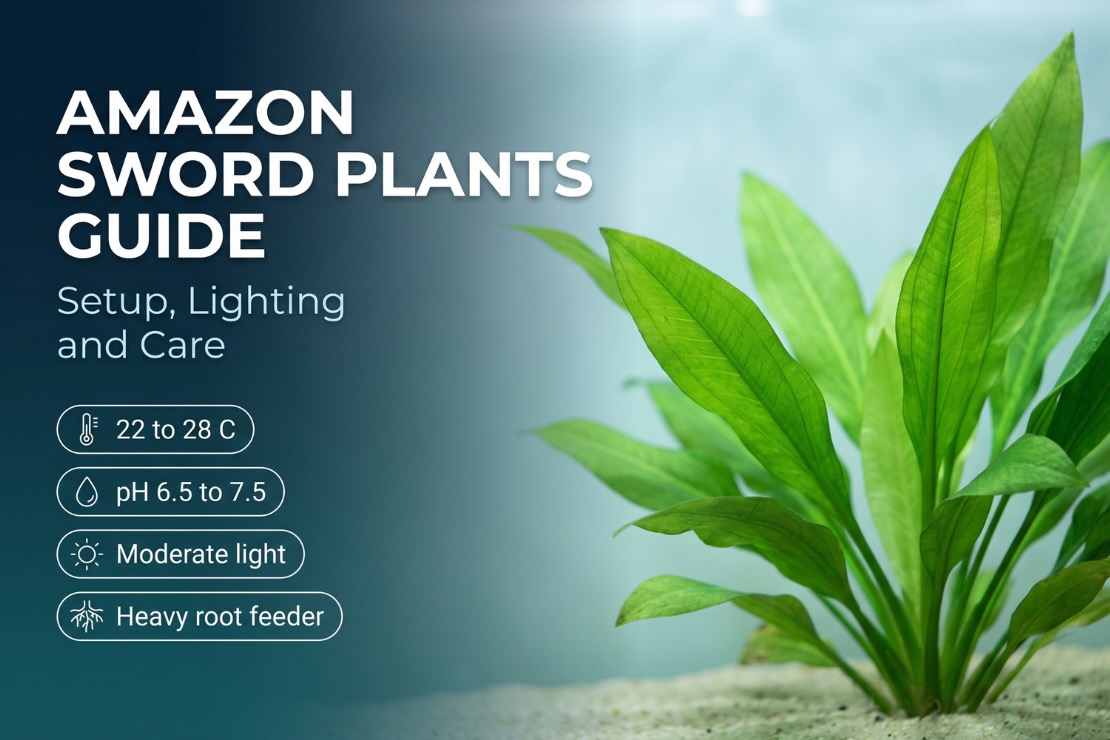
When I first dreamt of creating a lush, jungle-like aquascape, there was one plant that I knew had to be the star: the Amazon Sword. It was the iconic “aquarium plant” I’d seen in photos, with its broad, vibrant green leaves reaching majestically towards the light. My Anubias plants were my lesson in patience and resilience, teaching me about rhizomes and attaching plants to hardscape. However, the Amazon Sword was my lesson in building a foundation. It taught me the crucial importance of a nutrient-rich substrate and the concept of “root feeding.” Watching that first sword plant send out a runner that sprouted tiny new plantlets was a moment of pure magic, a sign that I was creating not just an aquarium, but a thriving, self-sustaining ecosystem.
In short, the Amazon Sword (Echinodorus genus) is a centerpiece, a background behemoth, and one of the most rewarding plants in the hobby. While often labeled a beginner plant, its true potential is only unlocked with a little specific knowledge.
Aquarium Setup and Planting
What size tank is needed for an Amazon sword?
These plants can grow quite large, often over 20 inches (50 cm) tall. it is worth noting that a healthy Amazon Sword can easily reach 18–24 inches in width. In a standard 20-gallon or 29-gallon tank, a single Amazon Sword will often physically fill the entire tank, blocking light to all other plants. They are best used as solitary centerpieces in these tank sizes.Consequently, they are best suited for taller aquariums. If placed in smaller tanks, they will quickly outgrow the space and dominate the aquascape.
What is the best substrate for Amazon swords?
This is the single most important factor for success. Amazon Swords are extremely heavy root feeders. They draw the vast majority of their nutrients from the substrate, not the water column.
- Ideal: A nutrient-rich aquatic soil.
- Essential for Inert Substrate: If you are using sand or gravel, it is non-negotiable to provide them with root tabs. Insert a few tabs deep into the substrate around the base of the plant every few months.
Do they need a deep substrate?

Yes, because the roots need room to spread downward and sideways. A bed of 2 to 3 inches (5 to 7.5 cm) is the minimum. The back of the tank can go deeper, so slope the substrate upward from front to back. This gives the plant extra depth where swords usually sit. In fact, the slope also adds visual depth to the aquascape.
A thin layer causes trouble over time. The roots reach the glass and circle the bottom without gripping anything. As a result, the whole plant may lift and float. Fine, fluffy soil can also compact around roots, so a slightly coarser layer helps water and oxygen move through.
Aquatic soil works best under a cap of sand or small gravel. The cap keeps nutrients in place. Furthermore, it stops fish from digging soil into the water. When you vacuum, clean only the surface. Deep pokes tear roots, and swords dislike that.
What is the best way to plant an Amazon sword?

The best method is to plant it by hand, with the roots spread out and the crown resting at the surface. Start by removing the plastic pot, the rockwool, and any lead weights. Rinse the roots gently under dechlorinated water. Then trim very long roots so they fit the planting hole without curling upward.
Next, dig a hole with your fingers or tweezers. Lower the roots into it and spread them out. Then draw the substrate around them and press lightly. Pressing hard can bruise the roots, so gentle pressure works better.
Fresh plants sometimes float back up. Therefore, a small stone or plant weight on top of the roots holds them until they anchor. Leave generous space around the plant. An adult sword spreads wide, and neighbors will feel crowded quickly.

Water Parameters and Lighting
They are often mistakenly sold as “low light” plants. While it’s true that they might survive in low light, they will grow extremely slowly and look leggy. However, for healthy, lush growth, they absolutely require moderate lighting. No, CO2 is not necessary, which makes them a great plant for low-tech setups. However, like most plants, they will absolutely thrive and grow much faster and more robustly if CO2 is provided. Amazon Swords are very adaptable and will thrive in a wide range of standard tropical tank conditions.
Temperature: 72-82°F (22-28°C)
pH: 6.5 to 7.5
Fertilization and Growth

Amazon swords feed in two places, but the roots do most of the work. Root tabs supply the bulk of the nutrients. The water column adds the rest, mainly through liquid fertilizer and fish waste. Indeed, a stocked tank already gives the plant some nitrogen.
New leaves emerge from the center of the crown, and older leaves move to the outside. A healthy plant keeps producing new growth at a steady pace once established. The first weeks may look slow while the roots settle. However, that pause is normal.
Follow the label on any liquid fertilizer. Overdosing rarely helps and often feeds algae. Replace root tabs on a regular schedule, and place them a few centimeters from the crown rather than directly under it. Consequently, the roots grow outward to reach them, which strengthens the plant.
What are the signs of nutrient deficiencies?
The location of the damage tells you which nutrient is missing. Plants move some nutrients from old leaves to new ones. Nitrogen, potassium, and magnesium fall into this group. Therefore, a shortage shows first on the oldest, outer leaves.
Other nutrients stay where they are, such as iron and calcium. A shortage of these shows on the newest leaves. Specifically, pale new leaves with green veins point toward iron. Yellowing between the veins of older leaves often points toward magnesium. Pale, washed-out older leaves can signal low nitrogen.
Change one thing at a time. Add a fertilizer or adjust the light, then wait two weeks before judging the result. A short log with dates keeps the guesswork down. Plants rarely respond overnight, no matter how hopeful we feel.
Is it normal for a new Amazon sword to “melt”?
Yes, this is very common and often alarms new keepers. The reason is that most swords are grown “emersed” (out of water) at the nursery. Consequently, when you submerge them in your tank, they will shed their old “air” leaves and grow new leaves adapted for underwater life. As long as the crown and roots are healthy, be patient; new growth will appear.
Pruning and Propagation

It’s very simple. When trimming, when an outer leaf becomes old, yellow, or covered in algae, simply trim the leaf stem as close to the crown of the plant as possible with a pair of sharp aquascaping scissors. A healthy, mature Amazon Sword will propagate itself by sending up a long runner, or “flower stalk,” towards the light. From this runner, tiny new plantlets will begin to grow along this stalk.
When should I separate the plantlets?

Separate them when the plantlet stands on its own, with its own roots and a few firm leaves. Until then, the runner keeps feeding it. Cutting early costs the young plant its food supply.
There is also a gentler method. While the plantlet is still attached, bend the runner down and pin it to the substrate with a small stone. The plantlet then roots in place. Once the roots grip, cut the runner with sharp scissors and leave a short stub on the plantlet.
Some keepers float the plantlet in a shallow dish first. This works, but planting it directly usually gives better results. Meanwhile, keep the mother plant healthy, because a stressed parent produces weaker offspring.
How do I plant a new plantlet?
Carefully snip the plantlet off the runner. You can then plant it directly into the substrate (remembering to keep the crown above the soil). Because it is a heavy root feeder, placing a small piece of a root tab underneath it will give it a fantastic head start.
Common Problems
Why are my Amazon sword’s leaves turning yellow or brown?
Start by asking which leaves are changing. Outer leaves that age and fade are normal. New leaves that come in pale suggest a nutrient problem. Yellowing across the whole plant points to weak light or poor overall feeding.
Brown patches and holes deserve a closer look. Sudden changes in temperature or water chemistry can stress the plant. In addition, some fish medications harm plants, so read the label before dosing a tank with swords in it. A heavy algae coat can also block light and cause browning underneath.
Remove damaged leaves at the base. A dying leaf drains energy and feeds algae as it rots. For example, a plant that drops two old leaves a month while producing new ones is simply renewing itself.
Why is my Amazon sword getting so much algae?
Broad leaves catch light and hold still water, so algae settle on them easily. Old leaves attract the most, because they grow slowly and cannot shed the film. Green spot algae appears as hard green dots and is often linked with strong light and low phosphate. Hair algae and diatoms look softer and wipe off easily.
Fix the cause before you clean. Shorten the lighting period and reduce feeding. Floating plants can also shade the tank. Then remove algae by hand, wiping leaves gently with a soft brush or your fingers.
A cleanup crew helps too. Nerite snails and Amano shrimp graze on algae without harming healthy leaves. However, they cannot fix a lighting imbalance alone. Expect improvement over several weeks rather than several days.
Why is my Amazon sword getting taller and thinner?

The plant is stretching toward light that has become too weak by the time it arrives. Light loses strength as it travels through water. In a tall tank, the bottom of the plant receives far less than the top. Consequently, leaf stalks lengthen while the blades stay narrow.
Check the equipment before buying anything new. A dirty light cover blocks output. Old bulbs also fade over time, so replace them on the manufacturer’s schedule. Raising the fixture closer to the water may help, and so may extending the lighting period slightly.
If leaves reach the surface, they may shade the rest of the tank. Trim those leaves at the base. As a result, more light reaches the lower plants and the sword can rebuild a compact shape.
Tank Mates and Species
The right tank mates protect the plant and use its shelter well. Peaceful schooling fish enjoy the shade under broad leaves. Bottom dwellers such as corydoras stay out of the way, and snails and shrimp graze harmlessly. Some fish, such as angelfish, also lay eggs on broad leaves, which makes swords useful for breeders.
Diggers cause more trouble than nibblers. Fish that rearrange the substrate can uproot young plants and expose roots. Therefore, match the fish to the planting style before you buy either.
The species you choose matters as well. Compact varieties suit smaller tanks better than the classic form. For instance, the narrow-leaf types take up less room sideways. Check the expected adult size on the plant label, since many swords arrive small.
Will certain fish eat my Amazon sword?
Yes, some will, and the damage follows a pattern. Goldfish, silver dollars, and large plant-eating cichlids chew leaves down. Plecos usually rasp at the surface, which leaves pale scrapes and thin patches. Ragged edges and clean-cut holes suggest nibbling, while yellowing points to nutrition.
A hungry fish eats more plants. Feed a varied diet that includes blanched vegetables such as zucchini, and the leaves often survive. In addition, offer algae wafers to plecos so they have another option.
If the fish still win, change the planting. Tough plants such as Anubias and Java fern are usually left alone. Indeed, many keepers use them in tanks where swords never stood a chance.
What are the different types of Amazon swords?
“Amazon Sword” is a common name that refers to many different species and cultivars within the Echinodorus genus. Some popular varieties include:
- Echinodorus bleheri/grisebachii: The “classic” Amazon Sword.
- Echinodorus ‘Ozelot’: A beautiful variant with reddish-brown spotted leaves.
- Echinodorus ‘Rubin’: A narrow-leaf variety with deep red coloration.
Amazon Sword Plants Care FAQ
Amazon sword plants are heavy root feeders that draw most of their nutrients from the substrate, not the water column. A nutrient-rich aquatic soil is the ideal choice. If using inert sand or gravel, root tabs inserted deep into the substrate around the plant’s base every few months are non-negotiable for healthy growth.
The crown of an Amazon sword must stay at the substrate surface, not buried. Spread the roots into a hole, draw substrate around them, and press lightly. Pressing hard can bruise the roots, and a floating plant needs a small stone or plant weight until it anchors.
Melting is a normal and expected transition for a newly added Amazon sword plant. Most swords are grown out of water at nurseries, and once submerged, they shed their old terrestrial leaves to grow new ones adapted for underwater life. As long as the crown and roots remain healthy, new growth will appear with patience.
Goldfish, silver dollars, and large plant-eating cichlids chew Amazon sword leaves down. Plecos usually rasp at the leaf surface, which leaves pale scrapes and thin patches. Ragged edges and clean-cut holes suggest nibbling, while yellowing points to nutrition, and feeding blanched vegetables such as zucchini often saves the leaves.
A mature Amazon sword propagates by sending up a long runner with tiny plantlets along it. Separate each plantlet once it stands on its own with its own roots and a few firm leaves. Plant it directly into the substrate with the crown above the soil and a piece of root tab underneath.
Deficiencies appear as pale or yellowing leaves, and their location shows which nutrient is missing. Pale new leaves with green veins point toward iron, while yellowing between the veins of older leaves often points toward magnesium. Pale, washed-out older leaves can signal low nitrogen, so change one thing at a time.
Sources
- Aquarium Co-Op (Root Tabs Guide)
https://www.aquariumcoop.com/blogs/aquarium/how-to-use-root-tabs - Tropica (Planting Guide)
https://tropica.com/en/guide/get-started/how-to-plant/ - Seachem (Plant Deficiency Chart)
https://www.seachem.com/downloads/charts/Plant-Deficiency-Chart.pdf - Buce Plant (Crypt & Sword Melt)
https://buceplant.com/blogs/news/how-to-prevent-aquarium-plant-melt - Seriously Fish (Echinodorus care)
https://www.seriouslyfish.com/species/echinodorus-grisebachii/ - Florida Aquatic Nurseries (Echinodorus Propagation)
https://www.floridaaquatic.com/echinodorus-bleheri
Leave a Reply
You must be logged in to post a comment.