
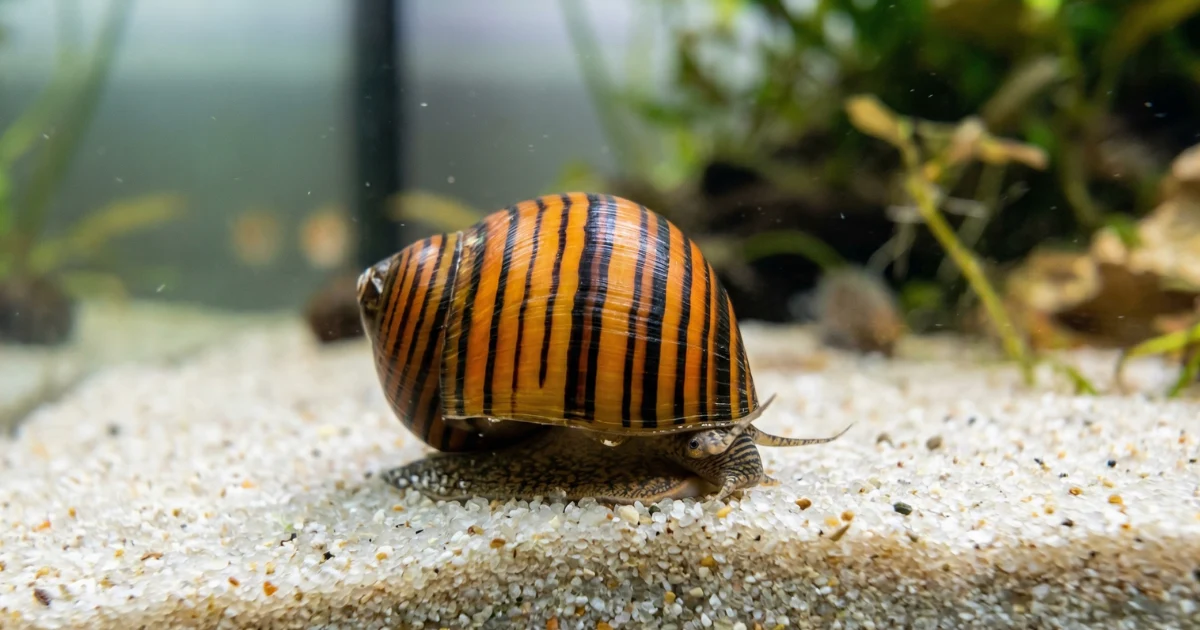
The industry frequently refers to Onion Nerite Snails (Vittina semiconica) under the broader Neritina genus. These algae eaters come from the coastal tidal areas of Southeast Asia. This guide will teach you the exact realities of maintaining their specialized aquatic environments safely. Mastering their care requires absolute dedication to water chemistry.
Identifying Onion Nerite Snails
Onion Nerite Snails display a warm orange, brown, or dark red base coloration. They feature distinct black spots or horizontal stripes across their rounded shells. These intricate patterns resemble the outer skin of a red onion. Also, they remain relatively small, rarely exceeding 3 cm in diameter. As a result, their appearance creates a beautiful contrast against green aquatic plants.
Are Onion Nerite Snails Beginner-Friendly?
Beginners often succeed when providing a mature, stable aquatic environment. Onion Nerite Snails possess hardy constitutions. However, they absolutely require established, seasoned aquariums to survive. Furthermore, they will starve rapidly in newly cycled tanks lacking natural algae. Consequently, fish keepers must cultivate biofilm before introducing these hungry invertebrates. Therefore, managing their health demands a constant supply of natural food. As a result, adequate preparation ensures a successful experience for beginners.
Lifespan and Size of Onion Nerite Snails
Adult Onion nerites reach approximately 2.5 to 3 cm in overall diameter. They grow relatively slowly compared to common pest snail varieties. Furthermore, understanding their biological growth prevents unexpected spatial issues. Providing a highly stable environment maximizes their overall lifes pan. Therefore, a perfectly maintained snail will easily live for up to three years.
Understanding Their Temperament
These snails exhibit peaceful and solitary behaviors. Specifically, they patrol the glass, substrate, and decorations searching for biofilm. Furthermore, sudden external movements rarely spook these incredibly focused snails. Consequently, their peaceful temperament dictates they will never harm any tank mates. They completely ignore live aquatic plants while grazing on surface algae. Indeed, they are ideal for community tanks. As a result, providing ample hardscape prevents unnecessary physical stress.
Do Onion Nerite Snails Reproduce in Fresh Water?
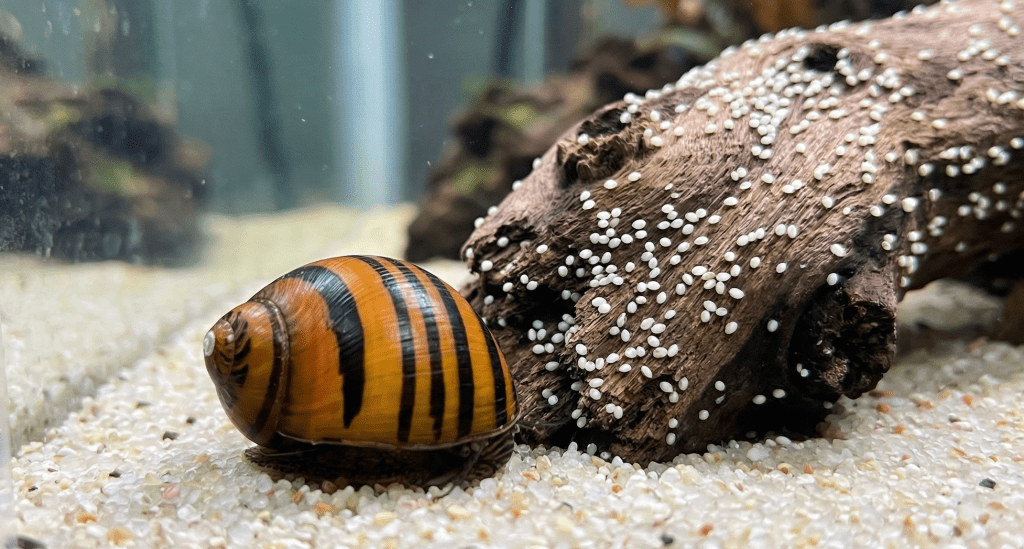
You must evaluate their complex reproductive biology carefully. Specifically, Onion Nerite Snails cannot reproduce successfully in standard fresh water environments. Their developing larvae strictly require brackish or salt water environments to survive. Females will still lay small, hard white eggs across decorations. Therefore, these unhatching eggs often become a permanent, stubborn visual nuisance. In fact, they require manual scraping for removal.
Minimum Tank Size and Setup
A single snail requires a minimum 5 gallon aquarium. Furthermore, standard small tanks suit their spatial needs perfectly. In fact, they function as effective cleaners in well established setups. You must absolutely secure the habitat with a tight, weighted lid. They frequently climb above the waterline and escape open tanks. They will explore outside the water. As a result, securing the perimeter actively prevents fatal drying accidents.
Ideal Water Parameters for Onion Nerite Snails
Stable water chemistry prevents sudden behavioral shifts. Specifically, you must maintain tropical temperatures between 22 and 28°C. Furthermore, Onion Nerite Snails prefer consistent, slightly alkaline and hard water. Consequently, their environment demands absolutely zero ammonia and nitrite. Therefore, you must provide adequate calcium to prevent severe shell erosion. In fact, acidic water will dissolve their shells over time. As a result, pristine hard water prevents deadly infections.
Proper Diet for This Species
Optimizing their nutrition requires a highly constant, algae rich menu. Specifically, they eagerly consume green spot algae and brown diatoms. Furthermore, you must measure their available food to prevent slow starvation. Supplementing their diet with exactly 1 gram of sinking algae wafers works perfectly. Also, offering blanched zucchini occasionally boosts their immune systems. A diverse diet mimics their natural foraging habits.
Common Health Problems
Onion Nerite Snails frequently develop severely pitted shells in acidic, soft water. Specifically, environmental stress and poor water quality cause preventable ailments. Also, a lack of dietary calcium induces lethal lethargy and sudden death. Furthermore, neglecting lid requirements invites fatal dehydration outside the tank. Therefore, maintaining impeccable water conditions prevents these devastating issues. And, proper water hardness serves as their best medicine.
Compatible Tankmates for Onion Nerite Snails
You must avoid any large or predatory fish species. Aggressive loaches and pufferfish will consume your snails ruthlessly. So, introducing other peaceful fish requires basic biological considerations. Consequently, small tetras and rasboras offer successful and safe tank compatibility. Also, dwarf shrimp share their environments peacefully. In fact, they are perfect for community settings.
Sources
- Flip Aquatics
https://flipaquatics.com/products/3-onion-nerite-snails - Whitlyn Aquatics
https://www.whitlynaquatics.com/products/red-onion-nerite-snail-neritina-sp - Aquarium Roots
https://aquariumroots.com/products/red-onion-snail - Horizon Aquatics
https://www.horizonaquatics.co.uk/products/red-onion-snail - Saturn Shrimp
https://saturnshrimp.co.za/shop/livestock/freshwater-snails/red-onion-nerite-snail/ - Aquarium Source
https://www.aquariumsource.com/nerite-snail/ - Aquarium Co-Op
https://www.aquariumcoop.com/blogs/aquarium/nerite-snails-care-guide - Modest Fish
https://modestfish.com/nerite-snail-care/


Leave a Reply