
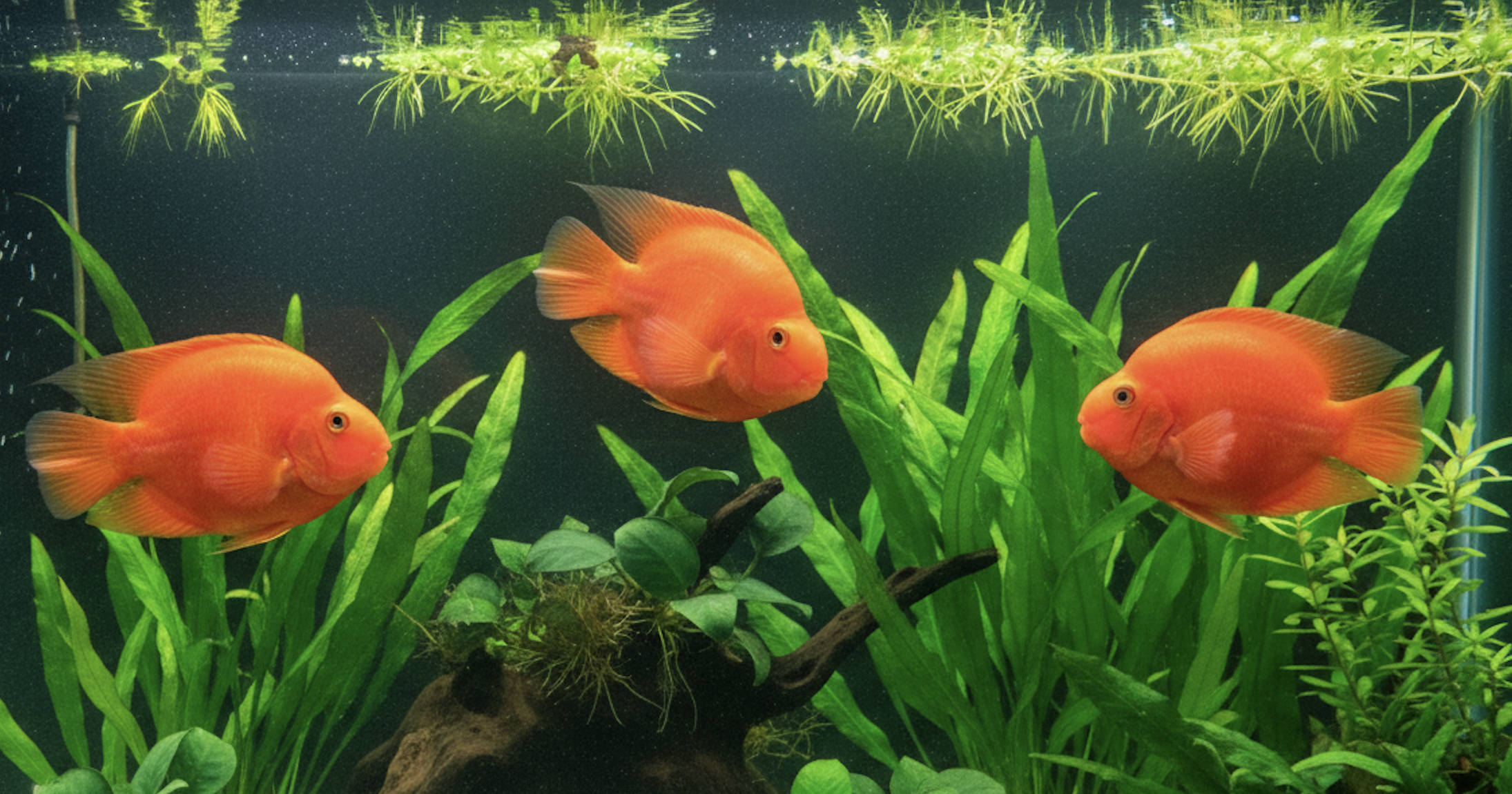
The first time I saw a Blood Parrot, I felt confused. It was a lumpy, oddly shaped, bright orange fish. Specifically, it possessed large eyes and a permanently open mouth. It swam awkwardly like a clumsy bumblebee. However, I could not look away. I watched as it followed its owner. In fact, it acted less like a fish and more like a puppy. Consequently, I learned a lesson. Natural beauty is not the only draw in this hobby. Sometimes, the quirky characters capture our hearts. Parrot Cichlids are man made hybrids. Furthermore, their existence remains a source of debate.
Are Parrot Cichlids good for beginners?
This question requires a nuanced answer regarding technical commitment. Specifically, these fish are very hardy regarding water parameters. However, they grow quite large and require significant space. Furthermore, a beginner must understand complex cichlid social behaviors. In fact, they are better for intermediate keepers. Consequently, they serve as a great “first large cichlid” for dedicated owners. Therefore, I prioritize your infrastructure readiness over the fish’s hardiness. As a result, you ensure long-term success.
How intelligent are Parrot Cichlids?
Parrot Cichlids are incredibly intelligent and interactive animals. Specifically, this cognitive depth is their primary appeal. They quickly learn to recognize their owners. Furthermore, they will come to the glass to greet you. In fact, you can train them to eat from your hand. Consequently, they display many quirky and attention-seeking behaviors. Therefore, they provide a personal “wet pet” experience. As a result, they become central members of the family.
Are Parrot Cichlids aggressive or territorial?
Parrot Cichlids are territorial cichlids that will claim specific caves. Specifically, they can become aggressive bullies during feeding or spawning attempts. However, their unique mouth shape makes them less effective fighters. Furthermore, this physical deformity prevents them from delivering lethal bites. In fact, they are more likely to push and shove rivals. Consequently, they rarely inflict serious damage on robust tank mates. Therefore, I recommend providing ample hiding spots to manage social stress.
Why do some people dislike Parrot Cichlids?
The controversy surrounding Parrot Cichlids is divided into three analytical categories. Specifically, purists dislike man made hybrids because they are unnatural. Furthermore, many criticize the physical deformities like the “O” mouth. In fact, these fish possess a compressed, balloon-like spine. Consequently, this hybridization has led to unethical practices like dyeing. Therefore, you must avoid “Jelly Bean” or “Love Heart” varieties. As a result, we promote ethical animal care.
Types and Variations of Parrot Cichlids

The classic bright orange or red variety.

Not a different type, but a larger grade of Blood Parrot that has been selectively bred for size.

A leucistic variation that is a beautiful solid white or pale yellow.

A newer, popular hybrid, likely a cross between a Parrot Cichlid and a Convict Cichlid. They are smaller than Blood Parrots and have a stunning metallic blue coloration with convict-like barring.

These are crosses between Parrot Cichlids and Flowerhorns. They have the Parrot Cichlid’s body shape but often display the pearl patterns and developing nuchal hump (kok) of a Flowerhorn.

These are NOT a natural color. They are Platinum Parrots that have been cruelly artificially dyed by injection. This process is stressful, harms their immune system, and fades over time. Avoid these at all costs.

This is a variety that has had its tail surgically amputated when young to create a heart shape. This is an unethical and cruel practice that severely impairs the fish’s ability to swim. Avoid these at all costs.
What is the minimum tank size for Parrot Cichlids?
A single Parrot Cichlid needs a minimum of 208 liters (55 gallons). Specifically, a pair requires at least 283 liters (75 gallons). Furthermore, larger tanks help dilute the massive waste they produce. In fact, space is essential to establish territories and reduce aggression. Consequently, horizontal swimming room is more important than tank height. Therefore, I prioritize high-volume systems to ensure stability. As a result, you prevent ammonia spikes.
Do Parrot Cichlids need hiding spots and caves?
Providing multiple caves is absolutely crucial for their mental well being. Specifically, terracotta pots and smooth rockwork are excellent choices. Furthermore, large pieces of driftwood create secure territories. In fact, they feel most safe when they can retreat into darkness. Consequently, a well-decorated tank significantly reduces social aggression. Therefore, I recommend a complex hardscape for their security. As a result, the fish remain calm.
Are Parrot Cichlids safe for planted tanks?
Generally, Parrot Cichlids are not suitable for traditionally planted tanks. Specifically, they love to dig and redecorate the substrate. Furthermore, they will uproot and destroy most rooted plants. In fact, your only chance is with very tough species like Anubias. Consequently, these must be securely attached to driftwood. Therefore, I prioritize hardscaping with rocks rather than delicate greenery. As a result, the aquarium remains organized.
What are the ideal water parameters?
Parrot Cichlids are very hardy but need clean, warm water to thrive. Specifically, aim for a stable temperature between 26°C and 29°C. Furthermore, maintain a pH between 6.5 and 8.0. In fact, they are messy fish that produce significant waste. Consequently, large weekly water changes of 50% are necessary. Therefore, I prioritize high-end mechanical and biological filtration. As a result, nitrates stay at safe levels.
What should I feed my Parrot Cichlids?
A high quality, protein rich sinking pellet should serve as their staple diet. Specifically, their small, deformed mouths make it difficult to eat floating flakes. Furthermore, sinking food allows them to forage more naturally. In fact, supplement their diet with frozen krill and bloodworms. Consequently, these treats will enhance their brilliant orange coloration. Therefore, I recommend feeding them small portions twice daily. As a result, you prevent environmental pollution.
Why is my fish turning black?
Black splotches on the skin are very common indicators of stress. Specifically, this often follows a move or a change in water quality. Furthermore, bullying from tank mates can trigger these spots. In fact, they usually fade away within a few weeks. Consequently, you should test your water parameters immediately when they appear. Therefore, I prioritize environmental stability as the primary cure. As a result, the spots disappear naturally.
What fish produced the hybrid?
The exact genetic recipe remains a closely guarded trade secret. Specifically, breeders in Taiwan first created them in the 1980s. Furthermore, researchers believe they result from a Midas and Redhead cross. In fact, some varieties may include Red Devil genetics. Consequently, they display a mix of traits from several Neotropical species. Therefore, I categorize them as a multi-species hybrid. As a result, they lack a wild origin.
Are Parrot Cichlids sterile?
Male Parrot Cichlids are almost always biologically sterile. Specifically, this is a common trait in hybrid animals. However, females are fertile and will readily lay eggs. Furthermore, they often pair with other cichlid species. In fact, they may even pair with other females. Consequently, these eggs will never hatch without a fertile male. Therefore, I recommend keeping them as pets rather than breeders. As a result, you avoid frustration.
Which tank mates are compatible for a community?
You must choose tank mates with great analytical care. Specifically, select other semi aggressive fish that are robust. Furthermore, Severums and Silver Dollars make excellent companions. In fact, Angelfish and large Plecos are also good choices. Consequently, you must avoid small fish like Neon Tetras. Therefore, I recommend avoiding hyper-aggressive species like Flowerhorns. As a result, you maintain a peaceful social balance.
Parrot Cichlid FAQ
Start with a 55-gallon tank for a single specimen. Add 20 gallons for each additional Parrot. These fish are chunky. They produce significant bioload. Small tanks lead to stunted growth and toxic nitrate spikes. They are slow swimmers but need horizontal space to roam. Don’t cram a 10-inch fish into a 29-gallon cube.
Their mouths are a structural deformity from hybrid breeding. Most cannot close their mouths completely. They use a “scooping” motion to feed. Use high-quality sinking pellets. Choose a pellet size small enough to fit their restricted gap. Avoid large, hard wafers that they can’t crush. Watch them during mealtime. Faster tank mates will steal their food while they are still trying to line up a shot.
No. They have zero defensive capabilities. Their mouths cannot lock or bite effectively. An aggressive Oscar or Jaguar Cichlid will bully them into a corner. Stick to semi-aggressive or peaceful neighbors. Severums and Silver Dollars are perfect. Even a pushy Firemouth is risky. They are essentially the “punching bags” of the cichlid world if housed poorly.
This is usually a sign of stress or ammonia burns. Juvenile Parrots often show black markings during growth spurts.Constant black patches on an adult indicate poor water quality. Test your parameters immediately. Check for high nitrates. Provide more hiding spots. A stressed fish is a dull fish. Clean the water and the spots usually vanish.
They will try. Most males are completely infertile due to their hybrid nature. Females frequently lay eggs on flat rocks or in pots. The eggs almost always turn white and fungus over within 48 hours. Occasionally, a male Convict or Midas Cichlid will fertilize them. Don’t expect a colony of purebred Parrot fry. You are mostly watching a tragic, doomed romance.
Some are. Avoid “Jellybean” or “Bubblegum” Parrots. These are often Pink Convict hybrids or chemically dyed fish. Dyeing involves acid dipping or needle injections. It is barbaric. It shortens their lifespan. Natural Blood Parrots range from pale yellow to deep orange-red. If the color looks like a highlighter, walk away. Don’t fund the industry’s bad habits.
Sources
- Seriously Fish
https://www.seriouslyfish.com/species/amphilophus-citrinellus/ - Aquarium Source
https://www.aquariumsource.com/blood-parrot-cichlid/ - Aquarium Care Basics
https://www.aquariumcarebasics.com/freshwater-aquarium-fish/blood-parrot-cichlid/
Leave a Reply
You must be logged in to post a comment.