You’ve done everything right. Your tank is cycled, your filter is running perfectly, and you’ve chosen your fish carefully. Yet, for some mysterious reason, some of your fish thrive while others seem to struggle and fade away. Often, the culprit is an invisible force you haven’t considered: your aquarium water’s hardness. In fact, the chemical makeup of your tap water is one of the most crucial and overlooked aspects of fishkeeping. This guide will delve into the world of hard and soft water. It will help you understand your tap water. You will learn to choose fish that will truly flourish in it.
Understanding Your Aquarium Water Chemistry
I am the proud keeper of several, very different aquatic worlds. In one tank, my livebearers are throwing a non-stop, vibrant party. They are breeding, they are thriving, and they are happy. In contrast, in another tank, my South American cichlids are the picture of serene, majestic grace.
The secret? They are living in completely different water. Consequently, my life has become a hilarious exercise in aquatic alchemy. I have bags of crushed coral to create liquid-rock for my hard-water lovers. I also have a stash of catappa leaves and driftwood to create a soft, tea-colored brew for my Amazonian natives. Ultimately, it’s a constant reminder that for fish, water isn’t just water. It’s their air, their home, and their lifeblood, and getting it right is the ultimate secret to success.
What is Water Hardness? A Beginner’s Guide to GH and KH
When we talk about “water hardness,” we are primarily talking about two different measurements:
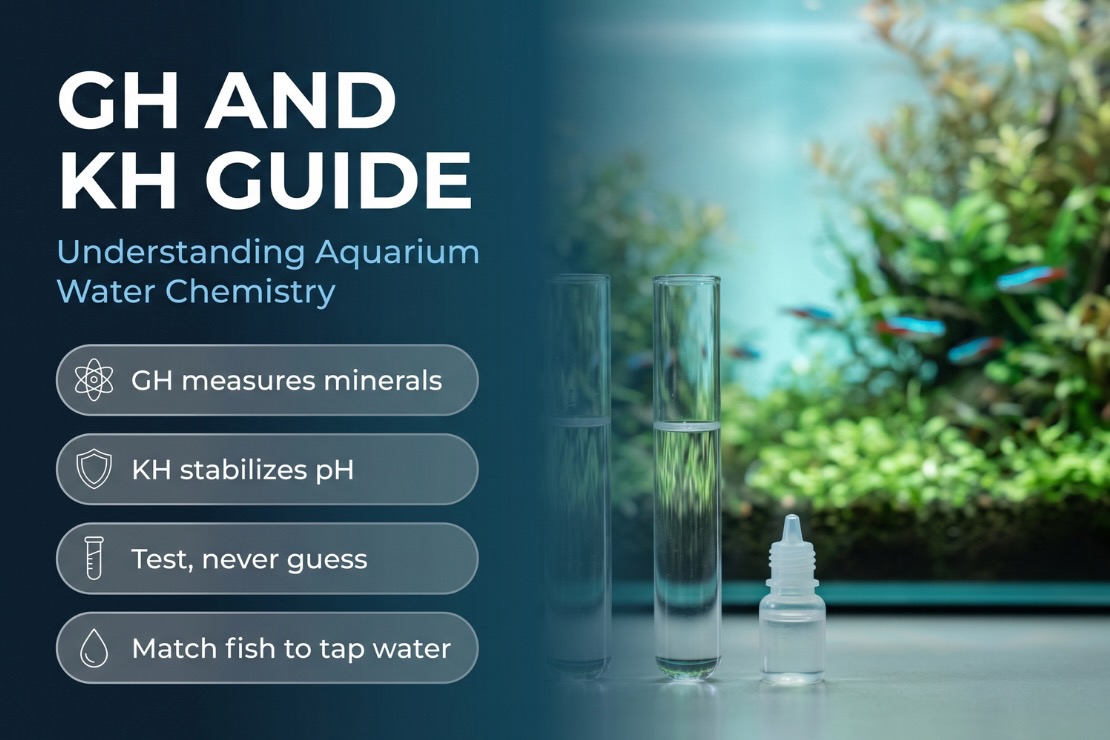
General Hardness (GH): You can think of this as the “mineral content” of your water. It is a measure of the dissolved calcium and magnesium. Fish and invertebrates need these essential minerals for healthy bone and shell growth. They also need them for a biological process called osmoregulation (maintaining a stable internal water/salt balance).
Carbonate Hardness (KH): Conversely, think of this as the water’s “pH stability.” It is a measure of the carbonate and bicarbonate ions. These compounds act as a buffer, thereby preventing your pH from swinging wildly. A tank with a very low KH is prone to a dangerous “pH crash.”
In other words, General Hardness (GH) represents the total concentration of divalent metal ions (Ca2+ and Mg2+). Carbonate Hardness (KH) specifically measures the buffering capacity (alkalinity). Without KH, acids produced by the nitrogen cycle consume the water’s limited buffering capacity, leading to a “pH crash.”
How Do I Know if My Water is Hard or Soft?
You cannot tell by looking. Therefore, the only way to know for sure is to test it. To do this, you can purchase a liquid GH & KH Test Kit, which is an essential tool for any serious aquarist. As a general guideline, the results should fall within these ranges:
- Soft Water: 0-6 dGH
- Moderately Hard Water: 7-12 dGH
- Hard Water: 13-20 dGH
- Very Hard Water: 20+ dGH
Which Fish Thrive in Hard, Alkaline Water?
These fish have evolved in environments with a high mineral content and high pH, and they need it to be healthy. Specifically, the following groups thrive in hard water:
- Fancy Goldfish: They are very adaptable but generally do better in harder, more alkaline water.
- Livebearers (Guppies, Platys, Mollies, Swordtails): This is the classic hard-water group. They thrive in hard, alkaline water. Keeping them in soft, acidic water can lead to a weakened immune system. It may also cause a “shivering” or “wasting” disease.
- African Rift Lake Cichlids (Mbuna, Peacocks): The water in Lakes Malawi and Tanganyika is famously hard and alkaline, often called “liquid rock.” Consequently, these cichlids require a high pH (7.8-8.5) and very hard water to show their best colors and health.
- Central American Cichlids: Similarly, many popular cichlids from Central America, like Convicts, also prefer moderately hard water.
Which Fish Prefer Soft, Acidic Water?

These fish hail from river systems like the Amazon, where the water is stained with tannins from decaying leaves and is naturally very low in minerals. This includes the following groups:
- Rasboras: In addition, many popular species from Southeast Asia also prefer softer, more acidic conditions.
- Tetras (Neons, Cardinals, Rummynose): These are the quintessential soft-water fish. They will be much more vibrant and are more likely to breed in the soft, acidic water they are accustomed to.
- Discus Fish: The “King of the Aquarium” is famous for its need for very soft, warm, and acidic water to truly thrive.
- Angelfish: Like their Discus cousins, Angelfish show their best health and are more likely to breed in softer water.
- Dwarf Cichlids (Rams, Apistogramma): These small, beautiful South American cichlids are famously sensitive and require a soft, acidic environment.
What Happens if I Keep a Fish in the Wrong Aquarium Water Type?
This is a recipe for chronic stress. Specifically, a soft-water fish in a hard-water tank (or vice versa) is in a constant, invisible battle. Its body is working overtime trying to manage its internal salt/water balance (osmoregulation). This constant stress leads to a weakened immune system, thereby making the fish highly susceptible to diseases like Ich, fin rot, and bacterial infections. Ultimately, it is a leading cause of mysterious, unexplained fish deaths.
Can I Change My Aquarium Water Hardness?
Yes, but one is much easier than the other.
- How to Harden Soft Water (Easy): Fortunately, this is simple. You can add buffering substrates like crushed coral or aragonite sand to your tank or a media bag of crushed coral to your filter. These methods will slowly and safely leach minerals into the water, raising the GH, KH, and pH.
- How to Soften Hard Water (Difficult): Conversely, this is a much more advanced process. The only truly effective way is to use a Reverse Osmosis/Deionization (RO/DI) filter to strip your tap water of all its minerals, thereby creating a “blank slate.” Afterward, you must re-mineralize this pure water with specific products to achieve your desired softness. Simply adding driftwood or peat moss will lower the pH slightly, but it will not significantly reduce the GH of very hard water.
Which is Better for a Beginner?
The single best piece of advice for a new hobbyist is this: Work with the water you have. First, test your tap water to find out your natural GH and pH, and then choose fish that are a perfect match for those parameters. Fighting your water chemistry is a constant, frustrating, and expensive battle. Conversely, embracing it is the secret to a successful and enjoyable aquarium.
Aquarium Water Chemistry FAQ
GH (General Hardness) measures dissolved calcium and magnesium — the minerals fish and invertebrates need for healthy growth and osmoregulation. KH (Carbonate Hardness) measures the water’s buffering capacity, which prevents dangerous pH crashes. Both are essential measurements for any aquarium keeper to understand.
You cannot tell by looking. The only accurate method is to test it using a liquid GH and KH test kit. Soft water reads 0 to 6 dGH, moderately hard water reads 7 to 12 dGH, hard water reads 13 to 20 dGH, and very hard water reads above 20 dGH.
Livebearers including guppies, platys, mollies, and swordtails are the classic hard water group. African Rift Lake cichlids from Lakes Malawi and Tanganyika require very hard, alkaline water with a pH of 7.8 to 8.5. Fancy goldfish and many Central American cichlids also prefer harder water conditions.
Tetras including neon, cardinal, and rummynose are quintessential soft water fish. Discus, angelfish, dwarf cichlids like rams and apistogramma, and many rasbora species all originate from soft, tannin-stained river systems and thrive in low mineral, acidic conditions.
The fish enters a state of chronic stress as its body constantly fights to maintain internal salt and water balance. This weakens the immune system and makes the fish highly susceptible to diseases like ich, fin rot, and bacterial infections. It is one of the most common causes of unexplained fish deaths in home aquariums.
The only truly effective method is a Reverse Osmosis or Deionization filter, which strips tap water of all minerals creating a blank slate. You then re-mineralize this pure water to your desired level. Adding driftwood or peat moss lowers pH slightly but does not significantly reduce GH in very hard water.
No. The best advice for beginners is to test your tap water first and then choose fish that naturally match those parameters. Fighting your water chemistry is expensive, frustrating, and rarely fully successful. Working with the water you already have is the single most reliable path to a healthy, thriving aquarium.
Sources
- Aquarium Co-Op (pH, GH, and KH Guide)
https://www.aquariumcoop.com/blogs/aquarium/ph-gh-kh - University of Florida (Fish Osmoregulation)
https://edis.ifas.ufl.edu/publication/FA153 - Practical Fishkeeping (The Shimmies)
https://www.practicalfishkeeping.co.uk/features/understanding-and-treating-shimmies/ - Cichlid Forum (Rift Lakes Chemistry)
https://www.cichlid-forum.com/articles/lake_malawi_setup.php - Seriously Fish (Neon Tetra Profile)
https://www.seriouslyfish.com/species/paracheirodon-innesi/ - The Spruce Pets (How to Soften Hard Water)
https://www.thesprucepets.com/how-to-soften-hard-water-1381885
Leave a Reply
You must be logged in to post a comment.