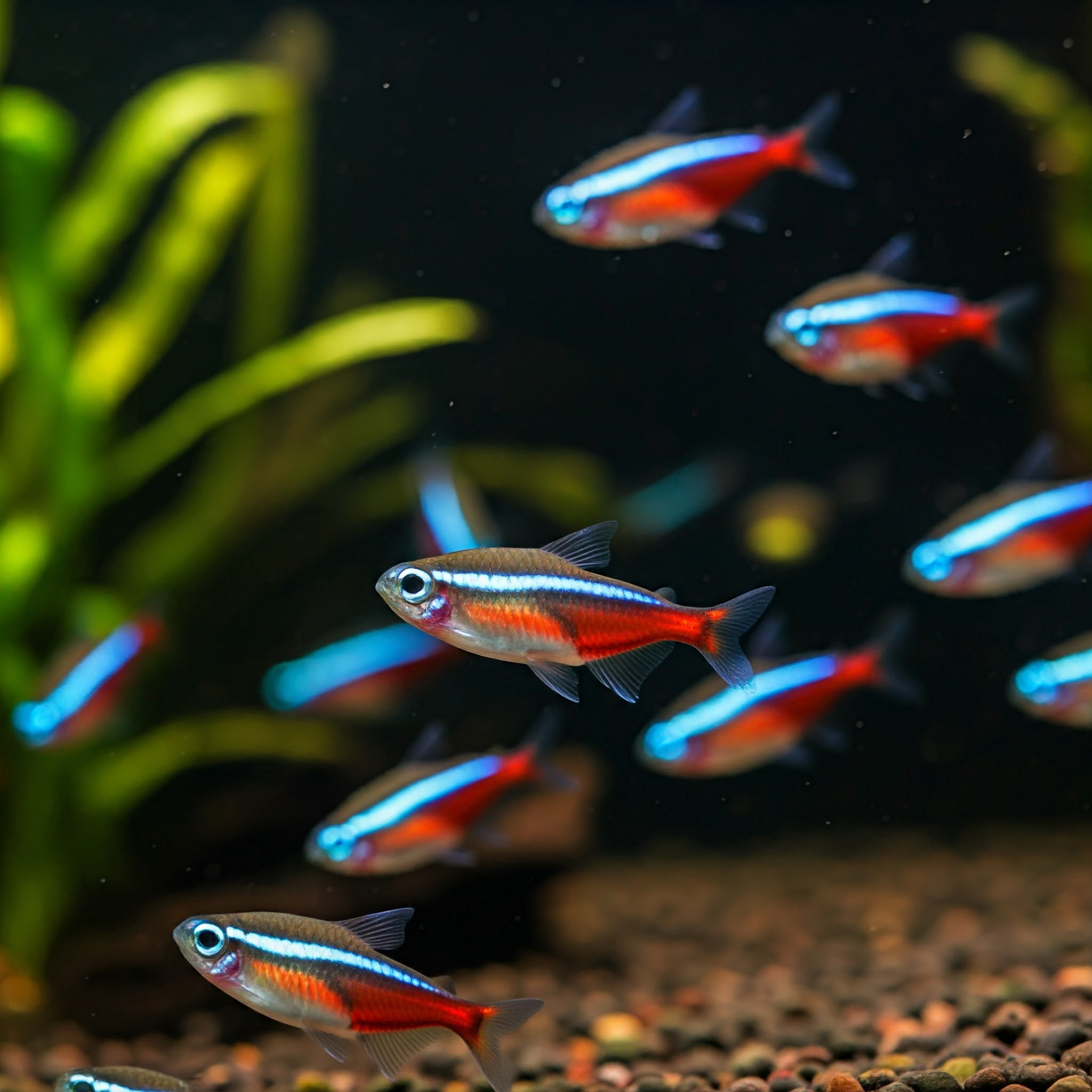
It is the fish that defines a classic aquarium: a shimmering, synchronized school of electric blue and vibrant red, darting through a planted tank. The Neon Tetra (Paracheirodon innesi) is a tiny icon, a living jewel that brings a sense of life and energy to any aquatic world. But their delicate beauty is a hint at their sensitive nature. This guide is your complete introduction to their care, from building the perfect Amazonian-inspired habitat to understanding their complex health needs.
What is the absolute minimum tank size for Neon Tetra Fish?
The Neon Tetra is a highly active species that requires significant horizontal swimming space to thrive. Specifically, a 10-gallon tank is the absolute minimum for a small group. Furthermore, a 20-gallon long aquarium is highly recommended for long-term stability. Consequently, a larger water volume prevents the dangerous ammonia spikes that these sensitive fish cannot tolerate. Therefore, you must provide a long environment to accommodate their natural schooling behavior. In fact, a cramped tank leads to chronic stress and a shortened lifespan.
Why is the “Schooling Rule” non-negotiable for this species?
The Neon Tetra is an obligate schooling fish that relies on its group for psychological security. Specifically, you must keep a group of at least six individuals at all times. Furthermore, the species truly flourishes and displays its best colors when kept in schools of fifteen or more. Consequently, a solitary tetra will become terrified and hide constantly. Therefore, isolation is essentially a death sentence for this social creature. As a result, providing a large school ensures the fish feel confident enough to explore the mid-water levels.
What constitutes the ideal Amazonian-style habitat?
You should aim to replicate the “blackwater” streams of the Amazon to ensure your fish thrive. Specifically, a heavily planted tank with Java Fern or Anubias provides essential cover. Furthermore, adding driftwood releases beneficial tannins that naturally soften the water. Consequently, these tannins mimic the acidic environment where the species evolved. Therefore, you must also provide dim lighting via floating plants to prevent stress. In fact, bright, sterile tanks often cause the fish to lose their vibrant pigmentation.
What are the critical water parameters for a sensitive Neon Tetra?
This species is notoriously sensitive and must never be added to a newly set up aquarium. Specifically, they require a mature, fully cycled environment with zero ammonia and nitrites. Furthermore, they thrive in soft, acidic water with a pH between 6.0 and 7.0. Consequently, you must maintain stable temperatures between 72–78∘F (22–26∘C). Therefore, regular testing is required to ensure these delicate parameters do not fluctuate. In fact, sudden water chemistry changes are the leading cause of sudden death in this species.
What should you feed Neon Tetra to maintain the vibrant electric blue line?
The Neon Tetra is an omnivore that requires a varied diet to display its best health. Specifically, high-quality micro-pellets or crushed flakes should serve as the nutritional staple. Furthermore, you must supplement their meals with frozen daphnia or baby brine shrimp. Consequently, these high-protein treats significantly enhance the iridescence of their blue and red stripes. Therefore, you should only feed small amounts that the fish can consume within sixty seconds. As a result, overfeeding is avoided, which keeps the water chemistry pristine.
Which tank mates are compatible with a peaceful school of Neons?
Choosing the right tank mates is essential to prevent your tetras from being bullied or eaten. Specifically, other peaceful species like Corydoras and Kuhli Loaches are excellent choices. Furthermore, you must avoid any fish large enough to fit a tetra in its mouth. Consequently, adult Angelfish are often risky neighbors despite their common pairing in the hobby. Therefore, keeping them with Bettas is also discouraged for beginners due to potential nipping behavior. In fact, the best community is one where every species shares similar water requirements and temperaments.
What are the symptoms and prevention methods for Neon Tetra Disease?
Neon Tetra Disease is a devastating parasitic condition with no known medical cure. Specifically, symptoms include a curved spine, body cysts, and a fading of the electric blue stripe. Furthermore, the parasite is highly contagious and can quickly wipe out an entire aquarium. Consequently, the only effective “treatment” is a strict quarantine of all new fish for six weeks. Therefore, you must remove any symptomatic fish immediately to protect the remaining school. In fact, prevention through rigorous biosecurity is the only way to safeguard your tank.
Why do these fish lose their color or die suddenly?
A loss of color during the day is the primary biological warning that your fish are under extreme stress. Specifically, this often indicates poor water quality or the presence of a predator. Furthermore, while it is normal for them to appear pale at night, daytime pallor requires immediate water testing. Consequently, identifying the stressor quickly can prevent a mass die-off. Therefore, consistent maintenance is the only way to ensure a three to five-year lifespan. As a result, stability is the most important factor in keeping this species alive.
Neon Tetra FAQ
10 gallons is the absolute minimum for a small group, but a 20-gallon long tank is strongly recommended for long-term stability. A larger water volume prevents the ammonia spikes that these sensitive fish cannot survive.
A minimum of six is non-negotiable — Neon Tetras are obligate schooling fish that rely on their group for psychological security. They truly thrive and display their best colors in schools of fifteen or more. A solitary Neon Tetra will hide constantly and deteriorate rapidly.
No — Neon Tetra Disease is a parasitic condition with no known medical cure. Symptoms include a curved spine, body cysts, and a fading blue stripe. The only effective approach is strict prevention: quarantine all new fish for six weeks and remove any symptomatic fish immediately to protect the rest of the school.
Daytime color loss is a direct warning sign of extreme stress — usually caused by poor water quality or the presence of a threatening tank mate. It is normal for Neons to appear pale at night, but daytime pallor requires immediate water testing and identification of the stressor.
It is a risky pairing. Adult Angelfish are large enough to eat Neon Tetras and frequently do. While it is a common combination in the hobby, beginners should avoid it. Safer tank mates include Corydoras, Kuhli Loaches, and other peaceful species with similar water requirements.
Sources
- Aquarium Source
https://www.aquariumsource.com/neon-tetra/ - University of Florida
https://edis.ifas.ufl.edu/publication/FA041 - Seriously Fish
https://www.seriouslyfish.com/species/paracheirodon-innesi/ - Aquarium Science
https://aquariumscience.org/index.php/17-3-neon-tetras/

Leave a Reply
You must be logged in to post a comment.