
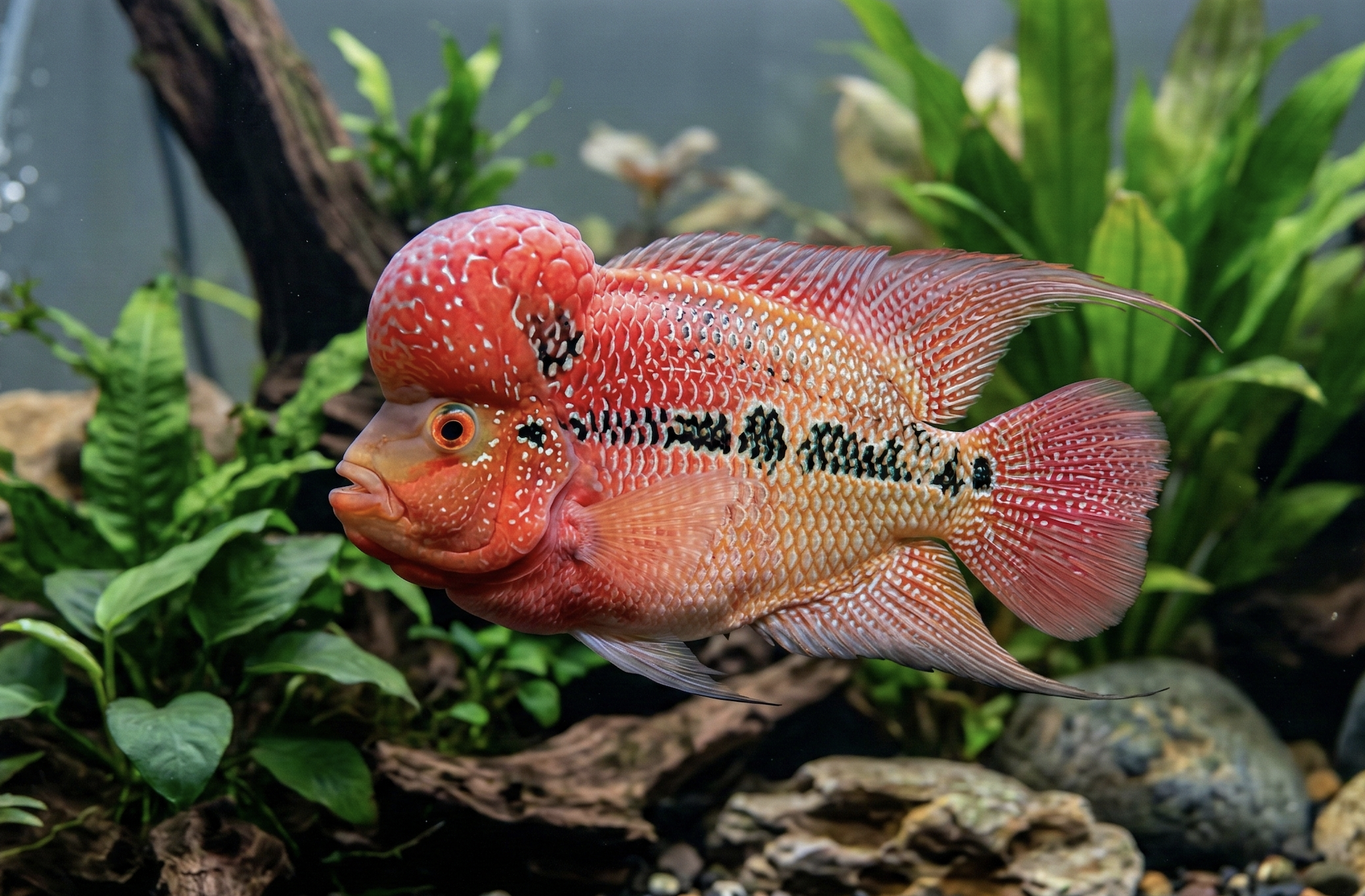
The Flowerhorn cichlids (Amphilophus hybrid) represents a unique intersection of human selection and cichlid intelligence. Specifically, these man made hybrids are prized for their vibrant colors and interactive personalities. Furthermore, they are not suitable for those who prioritize a peaceful community tank. In fact, their extreme territoriality requires a specialized management strategy. Consequently, I reject the assumption that they are “easy” pets for casual keepers. Therefore, this guide provides a purely analytical look at their demanding husbandry. As a result, you will foster a healthy and responsive “wet pet.”
Are Flowerhorn cichlids a good pet for beginners?
No, Flowerhorn Cichlids is strictly for intermediate to expert keepers with significant resources. Specifically, their massive adult size and extreme aggression make them a complex responsibility. Furthermore, a beginner would likely be overwhelmed by the rigorous filtration and maintenance requirements. In fact, their behavioral needs demand constant observation to prevent self injury or environmental stress. Consequently, I prioritize experienced hobbyists for their care. Therefore, you must be prepared for a decade of specialized stewardship.
How intelligent are Flowerhorn Cichlids and do they bond with owners?
Flowerhorn Cichlids are exceptionally intelligent animals that quickly learn to recognize their specific owners. Specifically, they will follow movement along the glass and can be trained to eat from a keeper’s hand. Furthermore, they often engage in play behaviors, such as pushing objects around their environment. In fact, this responsiveness is the primary reason they are called “wet pets.” Consequently, they form a strong associative link with their human providers. Therefore, I recommend consistent interaction to maintain their mental stimulation.
Are Flowerhorn Cichlids aggressive or territorial?
Flowerhorn Cichlids are notoriously aggressive and will fiercely defend their entire aquarium as their personal territory. Specifically, this behavior is a biological carry over from their ancestral Central American cichlid roots. Furthermore, they will likely kill any fish that is not robust enough to defend itself. In fact, most specimens must be kept in solitary, species-only aquariums for their safety. Consequently, cohabitation is a high-risk endeavor that often ends in fatality. Therefore, I prioritize a single-occupant setup for this species.
How long do Flowerhorn Cichlids live and what is their adult size?
In a stable and clean environment, Flowerhorn Cichlids can live for ten to twelve years. Specifically, they grow into massive predators that frequently reach fifteen to sixteen inches in length. Furthermore, you must provide a high-volume aquarium to accommodate their bulk and high metabolism. In fact, their growth rate is remarkably fast during the first year of life. Consequently, they will outgrow small “starter” tanks within months. Therefore, I recommend planning for a 100-gallon system from the beginning.
What is the minimum tank size and proper setup?
A 75 gallon tank is the absolute analytical minimum, though a 125 gallon tank is far superior for adult Flowerhorn Cichlids. Specifically, you should use a soft sand substrate to accommodate their natural digging instincts. Furthermore, you must avoid sharp decorations that could tear their flowing fins or damage their eyes. In fact, they are known to change their environment and rearrange the rocks daily. Consequently, heavy or jagged items present a significant physical risk. Therefore, I prioritize smooth river stones and open swimming space.
What type of filtration and water maintenance is required?
You require industrial strength, massive filtration to handle the bioload of Flowerhorn Cichlids. Specifically, a powerful canister filter rated for twice your tank’s volume. Furthermore, you must perform large weekly water changes of at least 50% to keep nitrates low. In fact, pristine water is crucial for maintaining their vibrant colors and health. Consequently, poor water quality will lead to lethargy and the fading of their pearls. Therefore, I prioritize a rigorous and consistent maintenance schedule.
What are the ideal water parameters and diet?
Flowerhorn Cichlids thrive in warm, stable water between 80–86∘F with a pH of 7.4 to 8.0. Specifically, their diet should consist of high quality, protein rich pellets formulated for large cichlids. Furthermore, you can enhance their reds and pearls by offering foods containing krill and spirulina. In fact, supplementing with frozen bloodworms or brine shrimp provides essential variety. However, they are prone to overeating and digestive bloating. Consequently, you should feed two to three small meals daily to prevent health issues.
What does the nuchal hump (kok) signify?
The nuchal hump is a fatty deposit. Specifically, a large hump is often a sign of a well-cared-for male with superior genetics. Furthermore, females typically do not develop a significant hump at all. In fact, its size can fluctuate based on the fish’s stress levels or reproductive state. However, a small hump does not necessarily mean the fish is sick. Consequently, you should look for vibrant colors and active behavior as better health markers.
How do you distinguish between males and females?
Male Flowerhorn Cichlids are typically larger and more colorful with a significantly more pronounced nuchal hump. Specifically, they will develop a pointed breeding tube when they are ready to spawn. Furthermore, females are usually smaller and display more subdued coloration. In fact, females possess a wider and flatter breeding tube for laying eggs. However, sexing juveniles is extremely difficult and often requires expert vent inspection. Consequently, choosing a male is often the preference for those seeking the classic “humped” look.
Which tank mates are compatible for these fish?
In the vast majority of cases, an adult specimen is best kept alone. Specifically, they are too aggressive for typical community setups and will harass other inhabitants. Furthermore, if you attempt cohabitation, you require a tank of at least 150 gallons. In fact, only large and robust species like a Midas Cichlid or a large Pleco might survive.
Flowerhorn Cichlids FAQ
Yes — they are among the most aggressive freshwater fish in the hobby. They will fiercely defend the entire aquarium as their personal territory and will likely kill any fish not robust enough to defend itself. Most specimens must be kept in solitary, species-only setups. Cohabitation is a high-risk endeavour that frequently ends in fatality.
75 gallons is the absolute minimum, but a 125-gallon tank is far superior for a healthy adult. They grow to 15–16 inches and outgrow starter tanks within months. Plan for a 100-gallon system from day one. Smooth substrate and open swimming space matter as much as volume — avoid sharp decorations that can damage their fins and eyes.
The nuchal hump (kok) is a fatty deposit. A large hump typically indicates a well-cared-for male with good genetics. Females rarely develop a significant hump. Its size can fluctuate with stress levels or reproductive state — a smaller hump alone does not indicate illness. Vibrant colour and active behaviour are the more reliable health indicators.
Yes — they are exceptionally intelligent and quickly learn to recognise specific individuals. They follow movement along the glass, can be trained to eat from a keeper’s hand, and engage in play behaviours like pushing objects around. This responsiveness is why they are called “wet pets” and is the primary appeal of keeping this species.
In a stable, clean environment with proper care, Flowerhorn Cichlids live for 10–12 years. Their growth rate is rapid during the first year, and they produce a very high bioload requiring industrial-strength filtration and 50% weekly water changes to maintain the water quality necessary for their colour and long-term health.
Sources
- Aquarium Co-Op
https://www.aquariumco-op.com/blogs/aquarium/flowerhorn-cichlid-care-guide - Tropical Fish Hobbyist
https://www.tfhmagazine.com/articles/freshwater/the-flowerhorn-phenomenon - Aquarium Source
https://www.aquariumsource.com/flowerhorn-cichlid/ - Animal Diversity Web
https://animaldiversity.org/accounts/Cichlidae/
Leave a Reply
You must be logged in to post a comment.