
In the bustling city of a community aquarium, the flashy, mid-water swimmers often get all the attention. But on the ground floor, a whole other world is at work. This is the realm of the bottom dwellers. The diligent sifters, the secretive scavengers, and the powerful giants that patrol the substrate. It is important to recognize that they are not just “cleanup crew”; they are, in fact, a vital and fascinating part of a balanced ecosystem. This guide will, therefore, introduce you to the diverse inhabitants of the aquarium’s lower level, from the tiniest nano-fish to the true river monsters.
The Secret Service
My 10-gallon tank is a peaceful, well-run kingdom. King Sky, my betta, majestically patrols the open water, his flowing fins a symbol of his benevolent rule. But the real work? That happens on the ground floor, run by a highly specialized team of bottom dwellers.
Specifically, the Bristlenose Pleco is the royal groundskeeper, meticulously cleaning every surface. However, the Kuhli Loaches? They are the secret service. They operate in the shadows, emerging at night to handle “problems” (akaleftover food pellets), their noodle like bodies slipping unseen through the substrate. Ultimately, they are the silent, efficient heroes of the kingdom. It’s a hilarious and constant reminder that the most important work in an aquarium is often done by the weirdest looking employees. This guide is a tribute to those unsung heroes.
What is the True Role of a Bottom Dweller Fish?
Many beginners buy bottom dwellers thinking they’re living vacuum cleaners. However, this is a common and harmful misconception.
Do bottom dwellers eat fish poop? Absolutely not. Let’s be very clear: Almost no fish, snail, or shrimp in the hobby eats fish feces. Therefore, you are still the janitor of your aquarium; regular gravel vacuuming and water changes are your job.
They are Scavengers, Not Janitors: Instead, bottom dwellers play the vital role of scavenging leftover food that falls past the mid-water fish. This crucial action prevents uneaten food from rotting and causing an ammonia spike.
Who Are the Best Bottom Dwellers for My Tank?
The Peaceful Cleanup Crew
Corydoras Catfish (Corydoras sp.)

Role: They serve as the quintessential peaceful community bottom dweller. They are active, charming, and spend their days tirelessly sifting sand for leftover morsels.
Needs: However, they must be kept in a social group of 6 or more and require a soft sand substrate to protect their delicate barbels (whiskers).
Diet: Their primary diet should be a high-quality sinking wafer or pellet.
Kuhli Loach (Pangio sp.)

Role: They fill the role of the shy, nocturnal “noodle fish.” They are expert scavengers that can get into tiny crevices other fish can’t reach.
Needs: For comfort, they require a social group of 6 or more, a sand substrate to burrow in, and a tight-fitting lid, since they are expert escape artists. Furthermore, filter intakes must be covered with a sponge to prevent accidents.
Diet: Their diet consists of sinking pellets and frozen foods, and these should be preferably fed after the tank lights go out.
The Solitary Workers and Algae Eaters
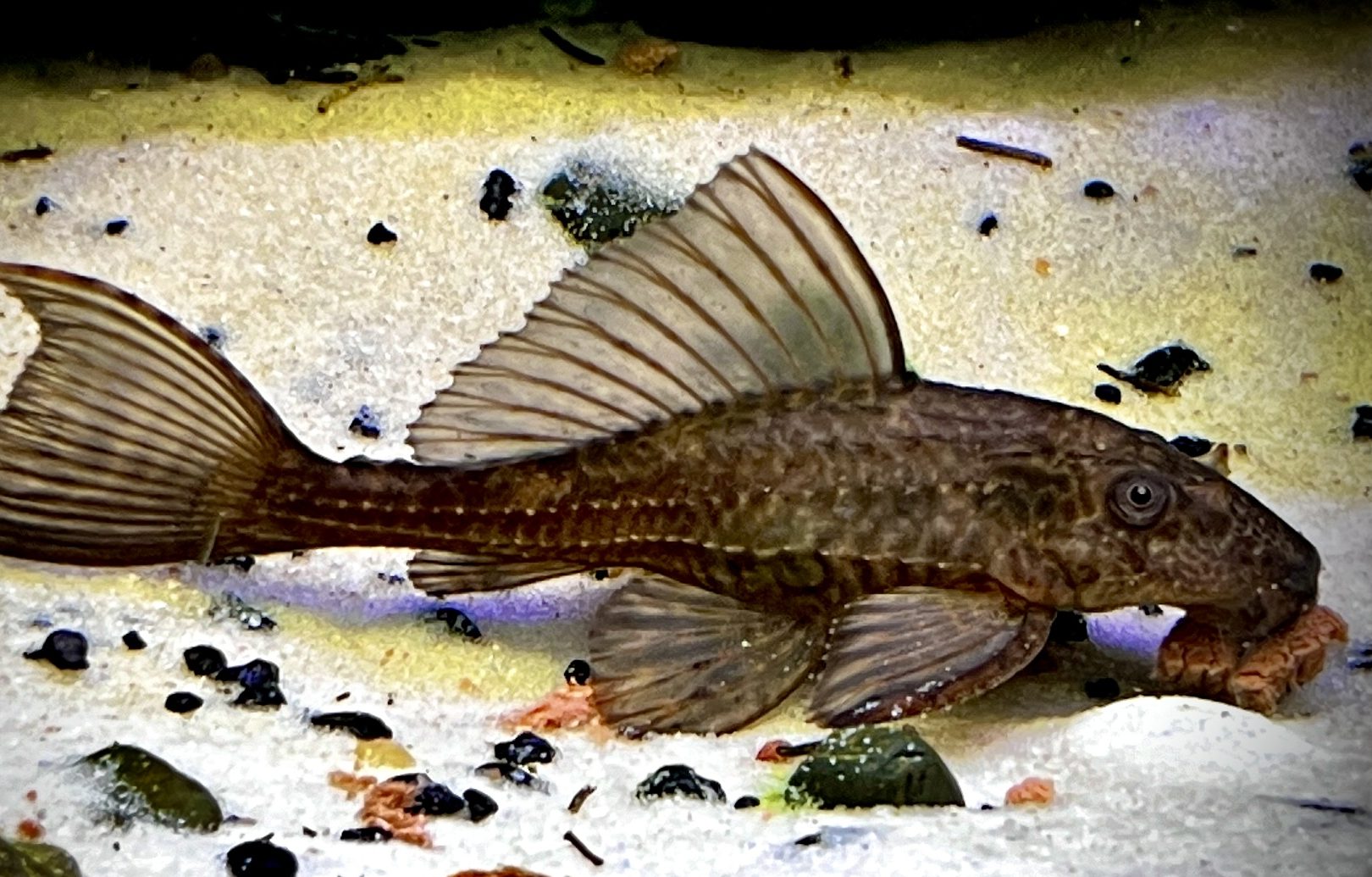
Bristlenose Pleco (Ancistrus sp.)

Role: They hold the role as the best and most manageable of most bottom dwellers. They are the “Pleco” for the vast majority of aquariums. Furthermore, they are primarily algae and biofilm eaters, constantly rasping on driftwood and decor.
Needs: They are solitary and territorial towards their own kind. The one essential requirement, however, is a piece of driftwood in the tank, which they graze on for fiber.
Important Note: Crucially, do not confuse them with the “Common” Pleco, which is often sold as a cute 2-inchbaby but grows into a 2-foot-long, tank-busting monster that is unsuitable for almost all home aquariums.
The Centerpiece Bottom Dwellers
Geophagus Species (Earth-eaters)
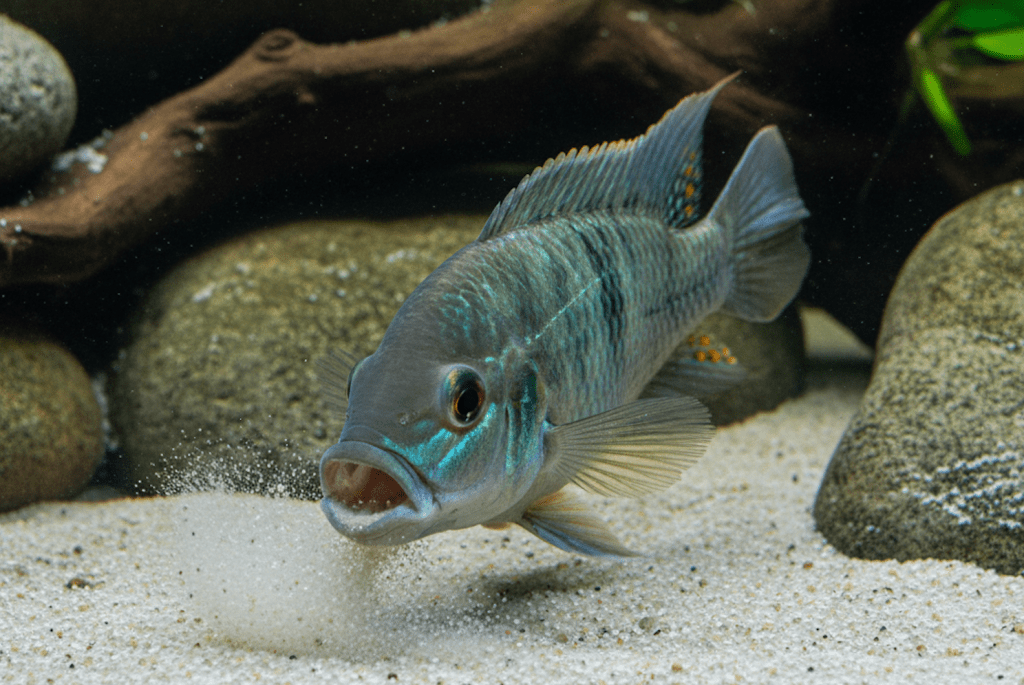
Role: These are not cleanup crew; they are, in fact, the main attraction. Species like the Red Head Tapajos arebreathtakingly beautiful. Their essential role is to constantly landscape the tank.
Needs: For their well-being, a large tank (75g+) with a deep, soft sand bed is mandatory. This is because their entire life is spent sifting sand. Despite their size, they are generally peaceful cichlids.
Diet: They require a fine-grained, high-quality sinking cichlid pellet.
The Titans: The Monster Fish
Redtail Catfish (Phractocephalus hemioliopterus)
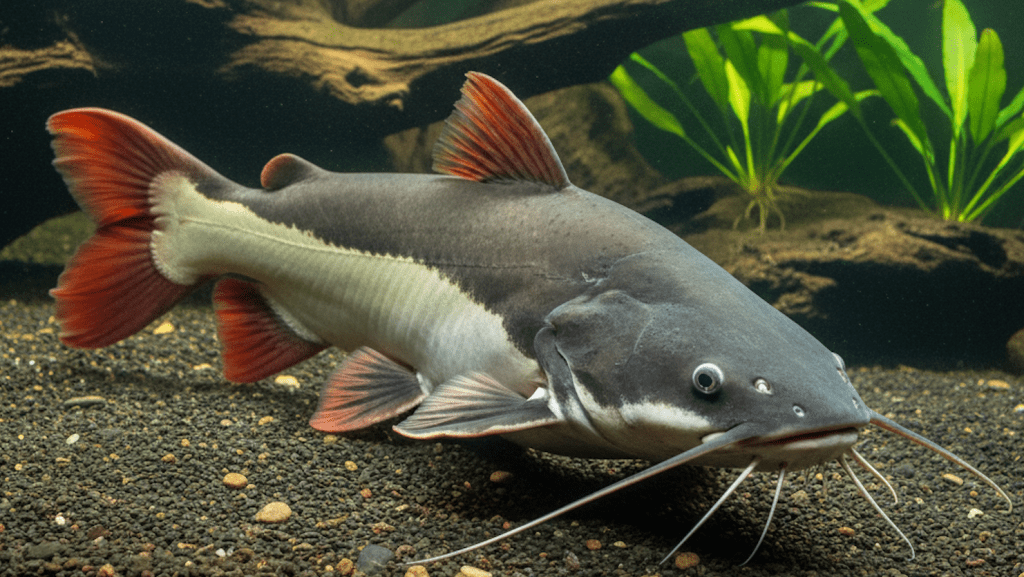
Role: They function as a true apex predator of the river bottom. Their role is to be a single, majestic, andimmensely powerful wet pet. It is crucial to note that they are not cleanup crew; they are, rather, the end of the line.
Needs: Consequently, they require a pond-sized aquarium of 300 gallons or more. While they are incredibly hardy, they will eat, without exception, any tank mate that can fit into their cavernous mouth. Therefore, this fish is for experts only.
Diet: They are Carnivores. Their diet consists of large pellets, fish fillets, and other meaty foods.
How Do I Choose the Right Bottom Dweller?
- Match the Substrate: Crucially, if you have gravel, do not get Corydoras or Kuhli Loaches. Sand is a must for these bottom dwellers.
- Match the Temperament: Likewise, do not put a peaceful, shy Kuhli Loach in with a boisterous, aggressive Cichlid that will bully it.
- Match the Size: Always research the adult size. Remember that adorable little catfish might grow into a tank-busting monster.
- Social Needs: Finally, respect their social structure. While Corydoras and Kuhli Loaches are lost and stressed without a group, a Bristlenose Pleco is stressed with a group.
Bottom Dwelling Fish FAQ
No bottom dweller eats fish feces. Their actual role is to scavenge leftover food that sinks past mid-water fish, preventing rotting waste from causing ammonia spikes. Regular gravel vacuuming and scheduled water changes remain the keeper’s responsibility regardless of how many bottom dwellers occupy the tank.
Corydoras catfish constantly sift the substrate using sensitive barbels, the delicate whisker-like organs around their mouths. Gravel abrades these barbels, causing physical damage and creating entry points for bacterial infection. A soft sand bed is a non-negotiable requirement, not an optional upgrade.
Kuhli Loaches require a social group of six or more to feel secure and display their natural behavior. A solitary loach will hide continuously and show signs of chronic stress. A sand substrate, sponge-covered filter intakes, and a tight-fitting lid are equally critical safety requirements for this species.
Common Plecos are sold as small juveniles but grow into two-foot-long animals that outgrow almost every home tank. Their adult bioload and space requirements make them suitable only for expert keepers with pond-scale setups. The Bristlenose Pleco is the correct alternative for virtually all home aquariums.
Yes — driftwood is a dietary requirement for Bristlenose Plecos, not a decorative choice. They continuously rasp on wood to obtain the cellulose fiber necessary for healthy digestion. A tank without driftwood will result in nutritional deficiency and progressive digestive problems over time.
Geophagus species are centerpiece fish that command the aquarium floor through constant sand-sifting, not cleanup bottom dwellers. They require a minimum 75-gallon tank with a deep sand bed to perform this defining behavior naturally. Despite their size, Geophagus are generally peaceful and compatible with other non-aggressive species.
Match the bottom dweller’s substrate needs to the tank first — sand is mandatory for Corydoras and Kuhli Loaches. Research each species’ adult size before purchasing, since small juveniles of certain catfish grow into tank-incompatible animals. Social requirements also matter: some bottom dwellers demand groups while others are strictly solitary.
Sources
- Aquarium Co-Op (Cleanup Crew Myths)
https://www.aquariumcoop.com/blogs/aquarium/cleanup-crew - Practical Fishkeeping (Corydoras Care)
https://www.practicalfishkeeping.co.uk/features/a-beginners-guide-to-corydoras/ - Seriously Fish (Pangio semicincta)
https://www.seriouslyfish.com/species/pangio-semicincta/ - Monster Fish Keepers (Redtail Catfish)
https://www.monsterfishkeepers.com/forums/threads/red-tail-catfish-care-guide.66724/


Leave a Reply
You must be logged in to post a comment.