
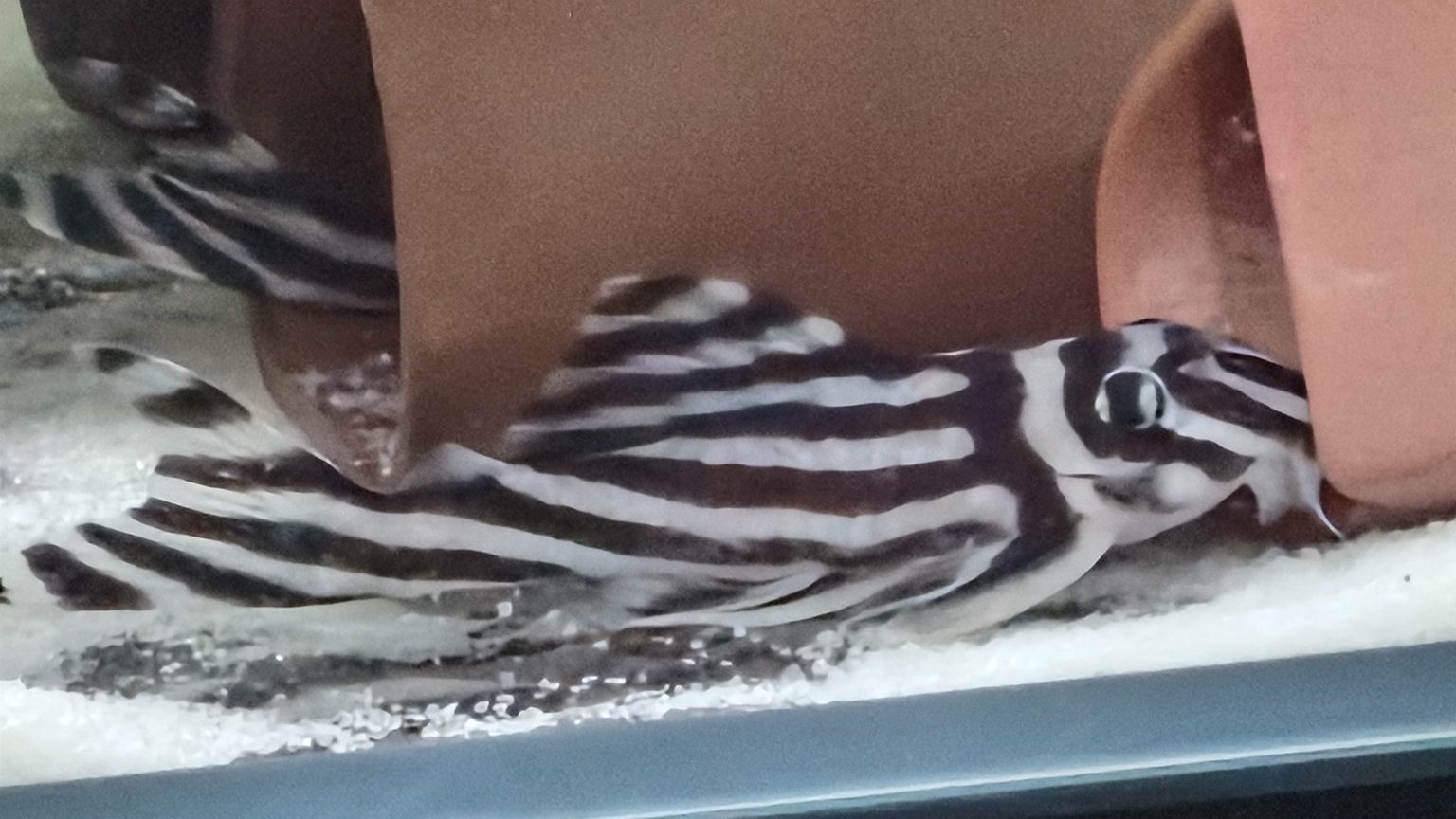
In the vast world of ornamental fish, there are the everyday beauties, and then there are the legends. For me, therefore,the Zebra Pleco has always been a legend. I remember the first time I saw one in person: it was tiny, no bigger than my thumb, but the price tag was astronomical. I watched it in its small tank, a perfect, impossible creature of stark, porcelain-white and jet-black lines. It wasn’t just a fish; rather, it was a piece of living opaline, an animal so perfectly designed that it looked more like a sculptor’s creation than a product of evolution. I knew right then that this was not a fish you simply “buy.” Instead, it was a fish you aspire to, a creature that demands you elevate your skills as a keeper to a level of near-perfection to be worthy of its care.
The Zebra Pleco (Hypancistrus zebra), which hobbyists know by its L-number, L046, is a small catfish from the fast-flowing, warm waters of the Rio Xingu in Brazil. Consequently, its breathtaking beauty and specific needs make it the ultimate prize for the dedicated aquarist.
General Information and Temperament
Are Zebra Plecos good for beginner hobbyists?
No, absolutely not. The Zebra Pleco is an expert-level fish. Specifically, its high price, combined with extreme sensitivity to water quality, specific dietary needs, and a requirement for high temperatures, consequently make it completely unsuitable for anyone new to the hobby.
What is the average lifespan of a Zebra Pleco?
In a pristine, well-maintained aquarium, consequently, a Zebra Pleco can live for 10 to 15 years, which makes it a very long-term investment.
How large do they get?
This is one of their most appealing, and yet deceptive, traits. Ultimately, a Zebra Pleco stays very small, only reaching a maximum adult size of only 3 to 3.5 inches (about 8−9 cm).
What is the temperament of a Zebra Pleco?
They are shy, peaceful, and reclusive. They will not bother any mid-water swimming fish. However, males can be very territorial and aggressive towards their own kind and other similarly shaped plecos, especially when competing for prime cave real estate.
Are they nocturnal?
Yes, they are highly nocturnal and will spend the vast majority of the daylight hours hidden in their caves. Therefore, a hiding Zebra Pleco is a normal, comfortable Zebra Pleco.
Housing: A Five-Star Cave System
What is the minimum tank size for a Zebra Pleco?
While the fish is small, its need for stable, pristine water means you shouldn’t go too small. Specifically, for a small group, a 20-gallon (75 liters) long tank is the absolute minimum. However, a 30 or 40-gallon (110 to 150 liters) breeder-style tank provides much more stability and, consequently, we highly recommend it.
What kind of filtration and flow do they need?
This is critical. They come from a fast-flowing, highly oxygenated river. You need powerful filtration and high water flow. A canister filter combined with a powerhead or wavemaker is the ideal setup to ensure the water is clean and rich with oxygen.
Do they need hiding spots?
Yes, they absolutely need caves to survive. Therefore, the most important part of their setup is providing multiple, tight-fitting caves. Specifically, stacked slate or commercial “pleco caves” with small openings are perfect. The fish should be able to just barely squeeze inside; ultimately, this makes them feel secure.
Water Parameters: The Xingu in a Box
What are the ideal water parameters?
This is where their expert-level status becomes clear. They need a recreation of their native Rio Xingu.
- Temperature: They need hot water. A stable temperature between 80-86°F (27-30°C) is mandatory.
- pH: 6.5 to 7.5.
- Pristine Water is Non-Negotiable: This is the most important rule. The tank must be fully cycled with 0 ammonia and 0 nitrite. You must perform large, weekly water changes of 50% or more to keep nitrates as close to zero as humanly possible. They are incredibly sensitive to any buildup of nitrates.
Diet: The Carnivore in Disguise
Do Zebra Plecos eat algae?
NO! This is the single biggest and most fatal myth about this fish. The Zebra Pleco is a carnivore/omnivore, not an algae-eater. Consequently, it will starve to death in a tank with plenty of algae if you do not feed it the proper diet.
What should I feed my Zebra Pleco?
They need a high-protein diet. Therefore, to keep them healthy, you should feed a variety of:
- High-quality sinking pellets with a high protein content (such as those for carnivores or specialized plecos).
- Gel foods like Repashy Soilent Green or Grub Pie.
- Frozen and live foods like bloodworms, daphnia, and brine shrimp.
Why is a sunken belly a red flag?
The best sign of health is a plump, rounded belly. A Zebra Pleco with a sunken or concave stomach is a sign of starvation or internal parasites, and it is a critical emergency. This fish is not getting enough to eat.
Breeding: The Ultimate Goal
Breeding the Zebra Pleco is the pinnacle of achievement for many specialist keepers. Specifically, it requires a dedicated breeding tank with a group of adults (ideally more females than males), a large number of tight-fitting pleco caves, pristine water, and a diet rich in high-quality foods. Subsequently, a male will claim a cave and then trap a willing female inside to spawn. Furthermore, the male is a dedicated father; he will guard the cave, fanning the eggs until they hatch, and will also protect the fry in their vulnerable early days.
Tank Mates
Tank mates must be chosen with extreme care, as they must be able to tolerate the very high water temperatures required by the Zebra Pleco.
- Excellent tank mates: Cardinal Tetras, Rummy Nose Tetras, and Discus all thrive in the same warm, clean water.
- Fish to avoid: Other bottom-dwellers, especially other plecos. A male Zebra Pleco will view any similar fish as a threat to its territory. Also avoid any cool-water or aggressive fish.
L-Numbers and a Conservation Warning
The Zebra Pleco is so iconic that its L-number, L046, is almost more famous than its common name. The “L” stands for Loricariidae, the family of armored catfish.
It is crucial to know that the Zebra Pleco is listed as Critically Endangered in the wild due to habitat destruction from dam construction on the Rio Xingu. The Brazilian government has banned their export, meaning all true L046 you see for sale today must be captive-bred. This is why they are so expensive and why every single one is so precious.
Zebra Pleco (L046) Care FAQ
Zebra Plecos are expert-level fish and are completely unsuitable for beginners. Their high price, extreme nitrate sensitivity, specific high-temperature requirements, and carnivorous diet demand experienced and meticulous aquarium management. A mistake in water quality or diet with a Zebra Pleco carries a very high financial and ethical cost.
Zebra Plecos are carnivores and do not eat algae under any circumstances. A Zebra Pleco placed in an algae-filled tank with no high-protein food will starve to death. This is the single most dangerous misconception about this species and must be corrected before any purchase is made.
Zebra Plecos require a high-protein diet built around quality sinking pellets, gel foods like Repashy, and frozen foods. Bloodworms, daphnia, and brine shrimp should be offered regularly to maintain health and breeding condition. A plump, rounded belly confirms adequate feeding; a sunken belly indicates starvation and requires immediate intervention.
Zebra Plecos require a precise recreation of their native Rio Xingu: hot, clean, and highly oxygenated water. Temperature must stay between 80 and 86°F or 27 to 30°C, with pH between 6.5 and 7.5. Ammonia and nitrite must register at zero, with weekly 50 percent water changes keeping nitrates minimal.
Wild-caught Zebra Plecos are not legally available for purchase anywhere in the world. Brazil banned their export due to critical habitat destruction from dam construction on the Rio Xingu, where they are listed as Critically Endangered. Every L046 available for sale today is captive-bred, which explains their high cost and makes responsible sourcing essential.
Zebra Plecos require multiple tight-fitting caves as an absolute survival necessity, not a decorative option. Each cave opening should be just large enough for the fish to barely squeeze inside, which provides maximum security. Males claim individual caves and defend them aggressively, so the number of caves must exceed the number of males.
Zebra Pleco tank mates must tolerate high temperatures of 80 to 86°F to match their strict water requirements. Cardinal Tetras, Rummy Nose Tetras, and Discus are all ideal companions in these warm, pristine conditions. Other bottom-dwellers and plecos must be excluded, as males treat any similar fish as a direct territorial threat.
Sources
- Seriously Fish (L046 Zebra Pleco)
https://www.seriouslyfish.com/species/hypancistrus-zebra/ - Practical Fishkeeping (Breeding the Zebra Pleco)
https://www.practicalfishkeeping.co.uk/features/breeding-the-zebra-pleco/ - Mongabay (The Impact of Belo Monte on Xingu Fish)
https://news.mongabay.com/2021/01/brazils-belo-monte-dam-is-starving-the-xingu-river-of-life/ - Aquarium Co-Op (What are L-Number Plecos?)
https://www.aquariumcoop.com/blogs/aquarium/pleco-l-numbers
Leave a Reply
You must be logged in to post a comment.