
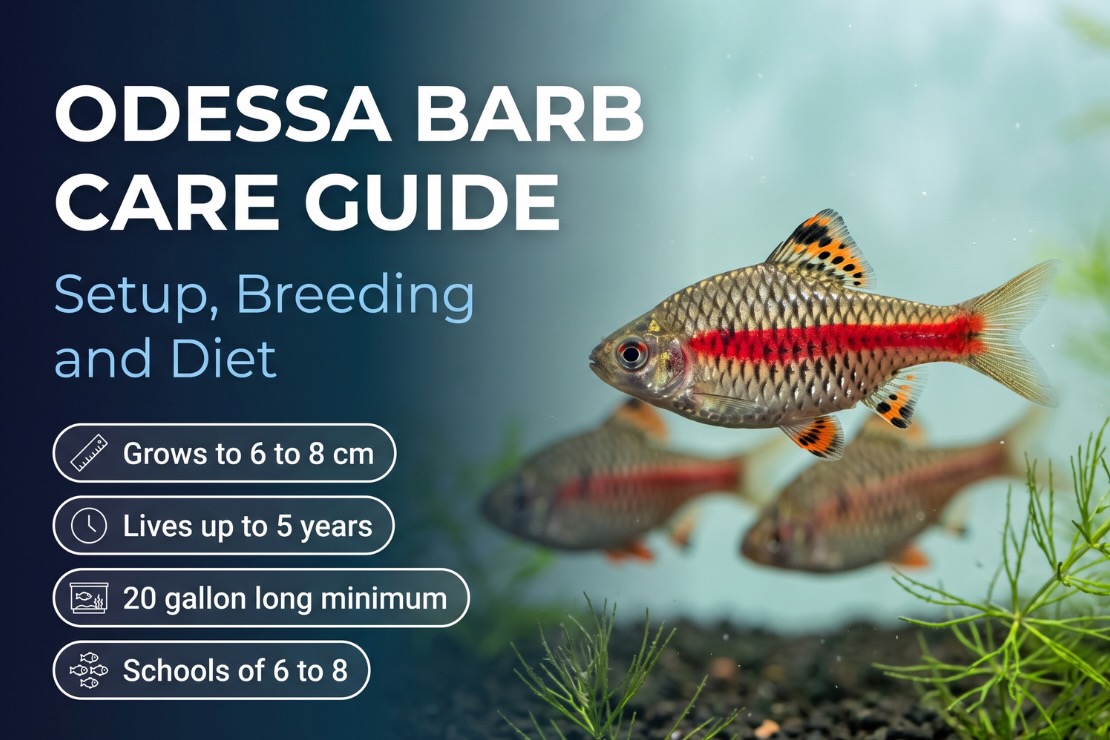
Odessa Barbs (Pethia padamya) originate from the high altitude streams of Myanmar. They bring an intense ruby red flash to the tank, darting around with chaotic, endless energy. Identifying them correctly ensures you provide the proper specialized care their biology demands. They remain an absolute staple for any serious aquarist exhausted by bland, inactive setups. Enthusiasts constantly seek out these specific vibrant cyprinids to inject life into their displays.
Physical Features of Odessa Barbs
To begin with, their intense red horizontal pigmentation completely defines their popular market name. Male Odessa Barbs display a brilliant ruby red stripe running straight from head to tail. Their silver gold scales feature a distinct dark, reticulated pattern throughout. Moreover, their dorsal and pelvic fins highlight prominent black spots and orange accents. However, females appear significantly larger and present a much more muted, silver brown coloration. This is why, their bright appearance creates a striking visual contrast against dark aquarium substrates.
Are Odessa Barbs Suitable for Beginners?
Novices often struggle when ignoring basic water chemistry requirements. To clarify, Odessa Barbs possess hardy constitutions but absolutely require perfectly cycled and stable water parameters to survive. Moreover, their highly active nature makes them incredibly prone to jumping out of open aquariums. Inexperienced keepers frequently trigger aggression by housing too few individuals together. Therefore, managing their health demands a fully cycled and well oxygenated aquatic environment.
Lifespan and Size Expectations
Understanding their biological growth prevents unexpected overcrowding issues down the line. Adult Odessa Barbs reach approximately 6 to 8 cm in total length. Likewise, they grow relatively quickly during their first year of life. Providing a healthy environment maximizes their overall life span effectively. It’s worth mentioning, that a perfectly maintained fish will easily live for up to five years.
Understanding the Temperament of Odessa Barbs
Broadly speaking, they exhibit highly active and energetic shoaling behaviors. They patrol the middle water column continuously searching for food and social interaction. Interestingly enough, sudden external movements rarely spook these incredibly confident, medium sized fish. However, their temperament dictates they should absolutely not share tanks with slow, long finned fish. Because of this, they demand a highly structured environment with plenty of open swimming space. Thus, providing ample horizontal room prevents unnecessary physical stress.
Do Odessa Barbs Need to Be Kept in Groups?
When it comes to housing, you must objectively evaluate their complex social dynamics. Odessa Barbs thrive perfectly only when kept in proper schools. Worth noting, keeping a solitary individual guarantees the fish will remain permanently hidden and stressed. For this reason, you should strictly maintain a group of at least six to eight individuals. This specific social structure actively encourages them to explore the tank more frequently. This is why, managing their school size requires vigilant planning.
Minimum Tank Size and Setup
To start, standard small tanks fail their spatial needs entirely. A small school strictly requires a minimum 20 gallon (75 liters) long aquarium. Besides, they function as incredibly effective community members in well established planted setups. Crucially, you must absolutely secure the habitat with a tight lid. Larger tanks provide much more stable water parameters for active fish. Also, more water volume actively prevents sudden toxic ammonia spikes.
Ideal Water Parameters for Odessa Barbs
Highly stable water chemistry prevents sudden behavioral shifts. Specifically, you must rigidly maintain tropical water temperatures between 22 and 26°C. Odessa Barbs prefer consistent, slightly acidic to neutral pH levels. As a result, their environment demands absolute zero ammonia and zero nitrite. Therefore, you must perform regular weekly water changes without scheduled exceptions. Ultimately, pristine oxygenated water prevents deadly bacterial infections.
Proper Diet for This Species
Optimizing their nutrition requires a highly varied, protein rich menu. For instance, they eagerly consume high quality flakes, pellets, and frozen bloodworms efficiently. You must measure their food carefully to prevent severe water fouling. In practice, feeding them small amounts twice daily works perfectly. Additionally, offering specialized vegetable-based treats occasionally boosts their complex immune systems. Overall, a diverse diet accurately mimics their natural foraging habits.
Common Health Problems in Odessa Barbs
Historically, environmental stress and poor water quality cause highly preventable ailments quickly. Odessa Barbs frequently develop parasitic Ich in cold or unstable settings. Furthermore, poor water quality quickly induces lethal lethargy and sudden mass death. Neglecting their strict schooling requirements invites constant, devastating immune system suppression. Maintaining impeccable water conditions prevents these devastating health issues entirely. In short, proper school sizes serve as their absolute best medicine.
Breeding and Spawning Requirements
You will likely breed them successfully only in dedicated breeding setups. That is to say, breeding them requires soft water and dense fine-leaved plants for egg-scattering. Females become noticeably plump when carrying hundreds of non-adhesive eggs. As a result, the adults will eagerly consume their own developing offspring. Instead, you must remove the parents once the spawning process finishes. Ultimately, keeping this species offers a highly fascinating and rewarding breeding challenge.
Compatible Tankmates for Odessa Barbs
Introducing other peaceful fish requires highly basic biological considerations. In particular, you must avoid any slow moving or long finned species. Other peaceful barbs and danios offer highly successful and safe tank compatibility. Also, bottom dwelling Corydoras also share their environments quite peacefully. Peaceful gouramis also share their setups without issue. In conclusion, careful selection actively prevents highly stressful and fatal tank dynamics.
Sources
- Seriously Fish
https://www.seriouslyfish.com/species/pethia-padamya/ - Aquarium Source
https://www.aquariumsource.com/odessa-barb-care/ - Fishkeeping World
https://www.fishkeepingworld.com/odessa-barb/ - Tropical Fish Care Guides
https://tropicalfishcareguides.com/aquarium-fish/odessa-barb-care/ - Aquatic Arts
https://aquaticarts.com/products/odessa-barb - Wikipedia
https://en.wikipedia.org/wiki/Odessa_barb
Leave a Reply
You must be logged in to post a comment.