
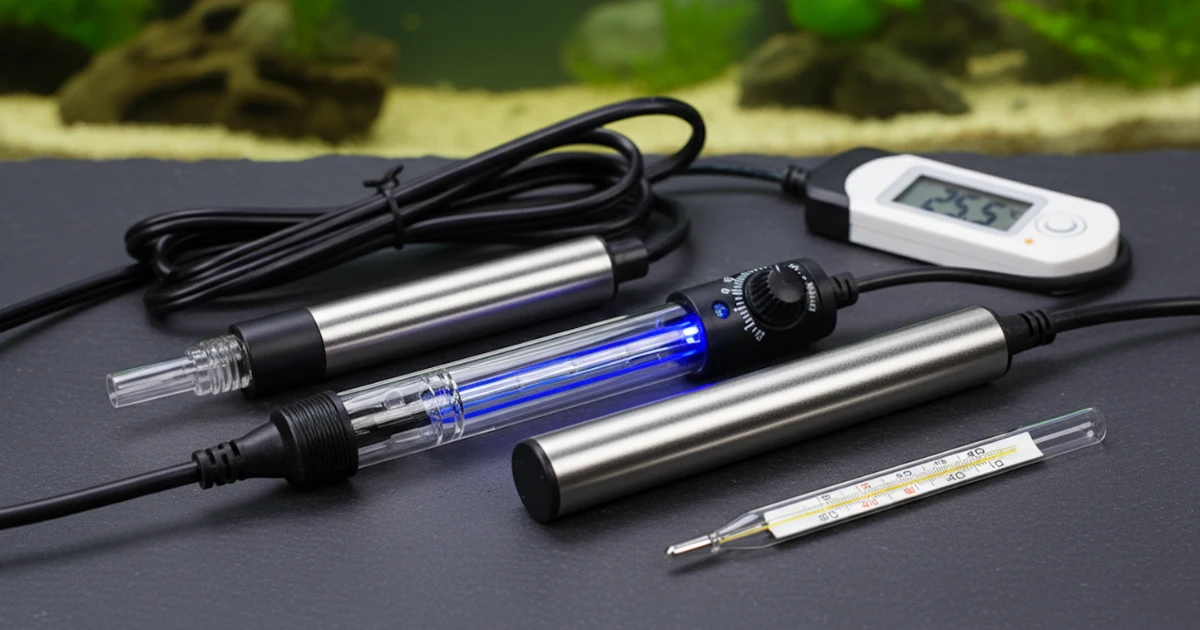
An Aquarium Heater functions as a primary life support system by maintaining consistent tropical water temperatures. Most tropical fish lack the biological ability to regulate their own internal body heat. Sudden fluctuations in the water column trigger immediate and often fatal metabolic stress. Consequently, this guide utilizes verifiable aquatic evidence to ensure your selection meets professional standards. Therefore, you must recognize that your choice of hardware dictates the overall stability of your ecosystem.
How to Choose the Right Aquarium Heater
Selecting the correct hardware requires a rigorous evaluation of your specific environmental variables. Specifically, you must consider the ambient room temperature and the total water volume of your system. Furthermore, selecting a model with an external controller provides a necessary secondary safety layer against internal thermostat sticking. Consequently, choosing a high quality glass or titanium unit prevents common structural failures under high heat. Therefore, you must prioritize reliability over cost when selecting an Aquarium Heater. As a result, a premium device ensures long-term livestock safety.
How Many Watts Do I Need?
Calculating the correct wattage prevents both under heating and catastrophic overheating of the water column. Specifically, the standard industry recommendation is to utilize exactly 3 to 5 watts of power per 4 liters of water. Furthermore, if your room remains exceptionally cold, you should prioritize the higher end of this power spectrum. Consequently, an undersized Aquarium Heater will run constantly and fail prematurely due to mechanical exhaustion. Therefore, you must verify your total system volume before selecting a wattage rating. As a result, proper sizing ensures efficient thermal management.
Where Should I Place the Heater?
Placement determines the overall uniformity of the temperature throughout the entire aquatic environment. Specifically, you should position the Aquarium Heater near a high flow area, such as a filter intake or return. Furthermore, horizontal placement near the bottom of the tank facilitates natural heat convection as the warm water rises. Consequently, this prevents “cold spots” that can stress sedentary or ground dwelling species. Therefore, you must avoid dead zones where the water remains stagnant and uncirculated. As a result, strategic placement maximizes the efficiency of the device.
Do I Need to Leave the Aquarium Heater on All the Time?
You must leave the Aquarium Heater powered on continuously to allow the internal thermostat to operate correctly. Specifically, the device is designed to cycle on and off automatically as it senses minute temperature shifts. Furthermore, utilizing a manual timer can lead to dangerous thermal swings during the night or cooler hours. Consequently, the internal sensor serves as the primary guardian of your tank’s biological stability. Therefore, you should only disconnect power during active maintenance or water changes. As a result, constant power ensures a predictable and safe thermal environment.
What is the Best Type of Aquarium Heater?
The “best” type depends largely on your specific tank size and livestock requirements. Specifically, submersible glass heaters like the Eheim Jager are widely considered the gold standard for accuracy and durability. Furthermore, titanium heaters offer superior resistance to physical breakage and are ideal for large, aggressive species. Consequently, inline heaters provide a cleaner aesthetic by remaining completely hidden within the filtration plumbing. Therefore, you must evaluate the risk of physical impact before choosing an Aquarium Heater material. As a result, material selection prevents accidental glass shattering.
Why Did My Aquarium Heater Break?
Most failures occur due to internal thermostat sticking or physical thermal shock during water changes. Specifically, if you fail to unplug the Aquarium Heater before draining the tank, the glass will overheat and shatter upon contact with cool air. Furthermore, calcium buildup on the heater’s surface can cause “hot spots” that lead to internal electronic failure. Consequently, the internal relay can become fused in the “on” position, leading to a fatal “boil” of the tank. Therefore, you must monitor the device for any signs of condensation inside the tube. As a result, preventative maintenance saves your livestock.
Should I Use Multiple Heaters?
Using multiple smaller units provides a critical redundant safety net for your aquarium. Specifically, if one Aquarium Heater fails in the “on” position, a smaller unit is less likely to overheat the entire volume. Furthermore, if one unit fails “off,” the second heater prevents the temperature from plummeting to lethal levels. Consequently, this “redundancy strategy” is highly recommended for any system exceeding 200 liters in volume. Therefore, you should split your total required wattage between two distinct devices. As a result, your system gains a significant layer of biological protection.
Common Pitfalls and Troubleshooting
Ignoring the device until a disaster occurs is the most common and fatal pitfall in the hobby. Specifically, failing to verify the temperature with a secondary digital thermometer leads to inaccurate data collection. Furthermore, utilizing a heater that is significantly oversized for the tank increases the risk of a rapid and lethal overheat. Consequently, you must regularly inspect the power cord for signs of fraying or damage. Therefore, performing a “touch test” during weekly maintenance ensures the Aquarium Heater is functioning correctly. As a result, vigilance prevents systemic thermal failure.
Sources
- Aquarium Co-Op
https://www.aquariumcoop.com/blogs/faqs/how-to-choose-an-aquarium-heater - Bulk Reef Supply
https://www.bulkreefsupply.com/content/post/how-to-choose-the-right-size-heater-for-your-aquarium - Seriously Fish
https://www.seriouslyfish.com/aquarium-heaters-explained/ - Fishkeeping World
https://www.fishkeepingworld.com/aquarium-heater/ - Practical Fishkeeping
https://www.practicalfishkeeping.co.uk/features/how-to-pick-the-right-heater-for-your-tank/


Leave a Reply