
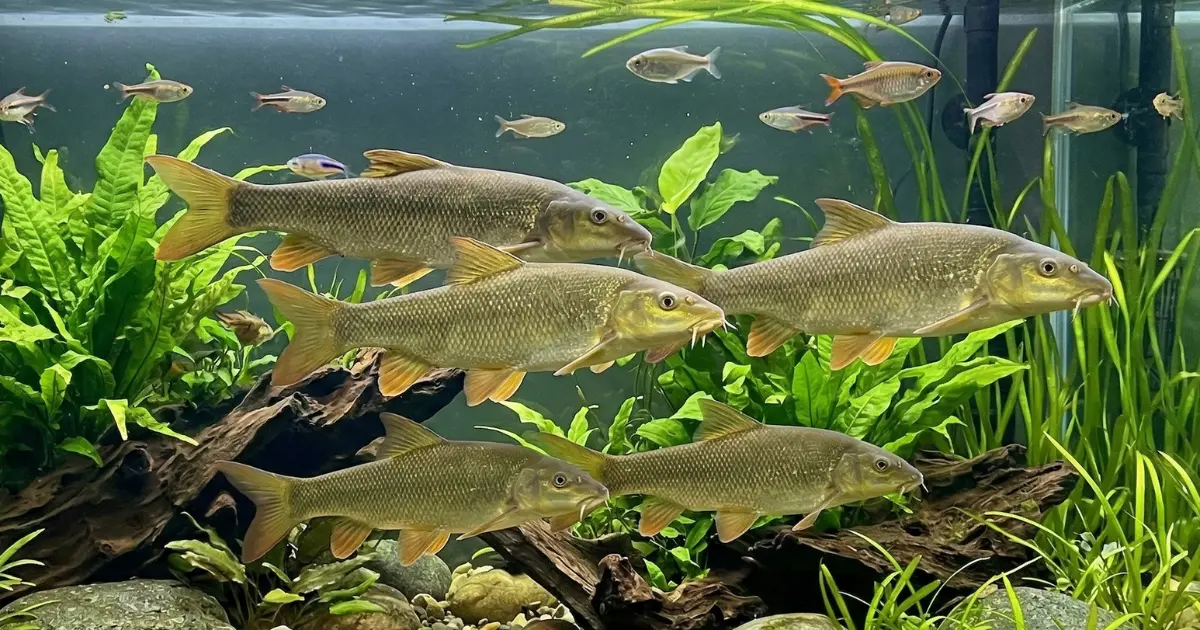
Common Barbs (Barbus barbus) originate from the fast flowing, oxygen rich rivers across Europe and Western Asia. They belong directly to the Cyprinidae family. These energetic fish are fast, boisterous, and completely unapologetic about the space they take up. They demand a specialized cold water setup and are certainly not for the faint of heart. If you are prepared for the sheer scale of their care, they make fascinating, long term companions.
Physical Features of Common Barbs
To begin with, their powerful, elongated bodies perfectly define their popular market name. Specifically, Common Barbs display a tapered, torpedo shaped profile with a golden brown or bronze coloration. Additionally, they feature four thick, sensitive barbels around their specialized downturned mouths. Thanks to these barbels, they allow them to detect prey hidden deep within gravel or rocky substrates. Furthermore, they possess large, muscular fins designed for navigating intense river currents effortlessly. Overall, their imposing physical presence makes them dominant residents in specialized cold water setups.
Are Common Barbs Suitable for Beginners?
Admittedly, beginners often struggle when ignoring their massive spatial and oxygen requirements. To clarify, Common Barbs possess hardy constitutions but grow much too large for standard starter tanks. Moreover, their active nature makes them incredibly prone to jumping out of open enclosures. As a result, inexperienced keepers frequently stunt their growth by providing inadequate housing. Therefore, managing their health demands a massive, specialized aquarium setup from the beginning. Ultimately, dedicated aquarists must research their adult size before purchasing.
Lifespan and Size Expectations
Crucially, understanding their biological growth prevents unexpected spatial disasters. For example, adult Common Barbs reach approximately 60 to 90 centimeters in total length. Likewise, they grow significantly faster than smaller community species. In practice, providing a massive environment maximizes their overall lifespan. Indeed, a perfectly maintained individual will easily live for up to twenty years. For this reason, you must commit to a strict two decade care plan.
Understanding Their Temperament
Broadly speaking, Common Barbs exhibit highly active and energetic foraging behaviors constantly. More specifically, they patrol the bottom water column continuously searching for invertebrates and small crustaceans. Interestingly enough, sudden external movements rarely spook these incredibly confident fish. However, their boisterous temperament dictates they may accidentally stress smaller, shy tankmates. Because of this, they demand a highly structured environment with massive open swimming space. Thus, providing ample horizontal room prevents unnecessary physical stress.
Minimum Tank Size for Common Barbs
To start, standard small glass boxes fail their spatial needs entirely. In particular, a group strictly requires a minimum 250 gallon aquarium for long term health. Furthermore, Common Barbs function as incredibly powerful and frequent swimmers. For this reason, you must absolutely secure the habitat with a tight, weighted lid. Likewise, larger tanks provide the necessary room for their high speed bursts. Consequently, more water volume actively prevents sudden toxic ammonia spikes.
Ideal Water Parameters
First, highly stable water chemistry prevents sudden behavioral shifts. Specifically, you must rigidly maintain cold water temperatures between 10 and 20°C. In addition, they prefer consistent, slightly alkaline to neutral pH levels. As a result, their environment demands absolute zero ammonia and zero nitrite constantly. Therefore, you must perform regular massive weekly water changes without scheduled exceptions. Ultimately, pristine oxygenated water prevents deadly opportunistic bacterial infections.
Proper Diet for Common Barbs
Initially, optimizing their nutrition requires a highly varied, protein rich menu. For instance, they eagerly consume high quality sinking pellets, earthworms, and frozen mussels. Equally important, you must measure their food carefully to prevent severe water fouling. In practice, feeding them small amounts twice daily works perfectly. Additionally, offering specialized meaty treats occasionally boosts their complex immune systems. Overall, a diverse diet accurately mimics their natural foraging habits.
Common Health Problems
Historically, environmental stress and poor water quality cause highly preventable ailments. For example, Common Barbs frequently develop parasitic Ich in warm or unstable settings. Furthermore, poor water quality quickly induces lethal lethargy and sudden death. Consequently, neglecting their strict schooling and spatial requirements invites constant immune system suppression. Therefore, maintaining impeccable water conditions prevents these devastating health issues entirely. In short, proper habitat sizing serves as their absolute best medicine.
Breeding and Spawning Requirements
To be fair, you will almost never breed them successfully in standard home setups. That is to say, breeding them requires massive, river like environments and precise seasonal triggers. Moreover, Common Barbs are gravel dwelling egg scatterers that provide zero parental care. As a result, any eggs laid will likely be consumed by the adults immediately. Instead, most individuals in the hobby originate from commercial fish farms. Ultimately, keeping this species guarantees a strictly controlled, non-expanding population.
Essential Equipment
Most importantly, skipping vital equipment guarantees a highly unstable aquatic ecosystem. Specifically, they absolutely require high powered canister filters to manage waste. Plus, a dedicated powerhead ensures the strong water flow they require constantly. Furthermore, they demand high dissolved oxygen levels provided by large air stones. Accordingly, you must also utilize accurate liquid testing kits immediately upon setup. In conclusion, proper gear secures their physical health safely.
Sources
- Seriously Fish
https://www.seriouslyfish.com/species/barbus-barbus/ - FishBase
https://www.fishbase.se/summary/Barbus-barbus.html - Canal & River Trust
https://canalrivertrust.org.uk/enjoy-the-waterways/fishing/fish-species/barbel - GBIF
https://www.gbif.org/species/2366657 - Britannica
https://www.britannica.com/animal/barbel-fish-genus-Barbus - The Spruce Pets
https://www.thesprucepets.com/barb-species-1378310
Leave a Reply
You must be logged in to post a comment.