
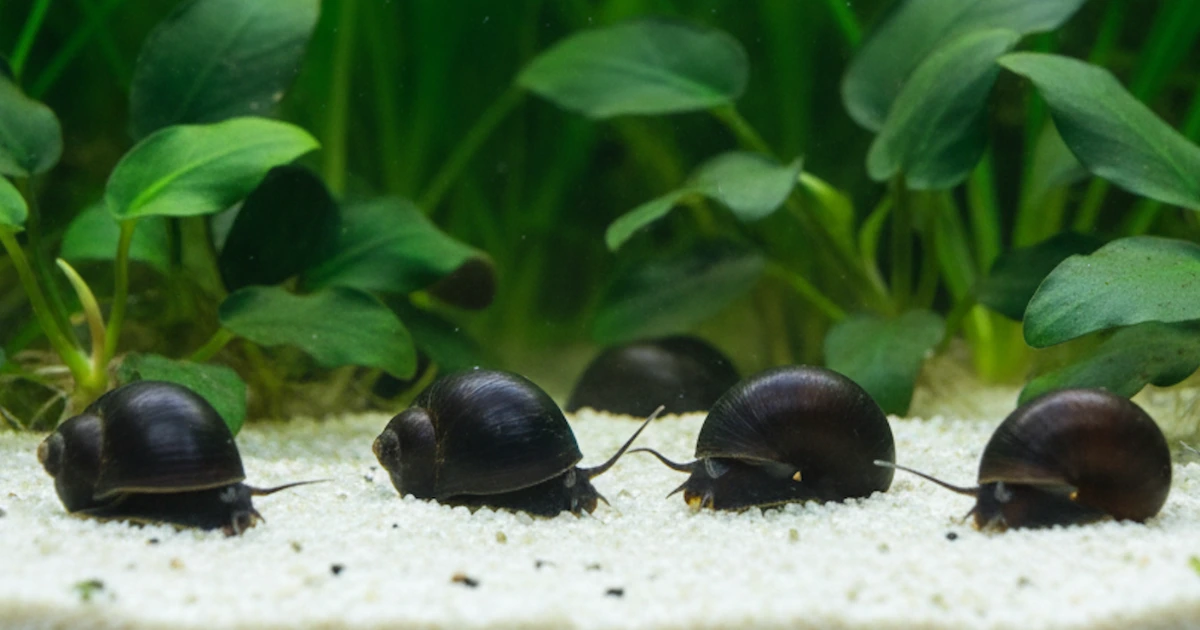
Black Nerite Snails (Vittina turrita) are elite algae eating machines for the modern freshwater aquarium. They consume green spot algae and hair algae with clinical precision. They maintain pristine glass surfaces without harming delicate live plants. These snails rarely exceed 3 cm in total diameter. Therefore, they fit perfectly into small and large setups alike. They come from the coastal tidal areas of the Indo Pacific region. Consequently, they require specific water chemistry to maintain their shells. Their peaceful temperament makes them ideal for community tanks. You will often find them patrolling the glass for edible biofilm. They are a vital asset for any serious planted tank enthusiast.
Physical Features of Black Nerite Snails
Black Nerite Snails possess smooth, rounded shells with a deep obsidian or mahogany coloration. Indeed, these dark shells lack the ridges found on other species. They look like polished river stones. Therefore, they contrast beautifully against bright green plants.
Are Black Nerite Snails Suitable for Beginners?
Beginners can succeed if they provide a mature aquarium with established biofilm and stable water. However, these snails will starve in brand-new tanks. As a result, you must cycle the tank thoroughly first. Therefore, only introduce them once algae growth is visible.
Lifespan and Size
Black Nerite Snails reach a maximum size of 3 cm in diameter. Furthermore, they grow slowly compared to pest snails. Consequently, a stable environment allows them to live for 4 years. Their small size suits many tank setups.
Understanding Their Temperament
These snails exhibit peaceful and solitary behaviors at all times. Furthermore, they spend every hour searching for edible biofilm on surfaces. Consequently, they never bother fish or shrimp tank mates. Therefore, they remain ideal for community aquariums. In fact, they ignore live plants. However, they are active explorers.
Do Black Nerite Snails Reproduce in Aquariums?
Black Nerite Snails cannot reproduce in pure freshwater environments. Their larvae strictly require brackish water for development. Consequently, you will never face an infestation. However, females still lay small white eggs everywhere. Therefore, you must manually scrape these eggs off decorations.
Minimum Tank Size and Setup
A single snail requires a minimum of a five gallon aquarium. Larger tanks provide more natural grazing area. Therefore, you must secure the habitat with a tight lid. In fact, these snails frequently climb out of open containers. As a result, escaping leads to fatal dehydration.
Ideal Water Parameters for Black Nerite Snails
You must maintain tropical temperatures between 22 and 28°C. Furthermore, these snails require hard, alkaline water for shell growth. In fact, acidic water causes severe shell pitting. Consequently, you must keep ammonia and nitrite at zero. As a result, regular water testing ensures their survival. Also, calcium levels matter.
Proper Diet for This Species
Their primary food source is natural green spot and hair algae. Furthermore, you should supplement their diet with exactly 1 gram of sinking wafers. Offering blanched zucchini provides extra nutrients. Therefore, do not rely solely on tank glass for food. In fact, they are extremely efficient foragers. As a result, they stay healthy.
Common Health Problems in Black Nerite Snails
Shell erosion is the most common health issue for these snails. This occurs when the water stays too soft or acidic. Hence, the snails become lethargic and eventually die. Therefore, you must add supplemental calcium to the water. In fact, starvation is another major risk.
Compatible Tankmates
Small tetras and rasboras make excellent companions for these snails. Furthermore, peaceful dwarf shrimp share the environment without issues. However, you must avoid predatory loaches or puffer fish. Consequently, aggressive tankmates will eat your snails. Therefore, choose your inhabitants carefully. Peaceful dynamics ensure a thriving ecosystem. As a result, everyone survives.
Sources
- Aquarium Breeder
https://aquariumbreeder.com/neritina-pulligera-detailed-guide-care-diet-and-breeding/ - Wikipedia
https://en.wikipedia.org/wiki/Vittina_turrita - AquaHoy
https://aquahoy.com/freshwater-snails-aquariums-care-types-reproduction/


Leave a Reply