
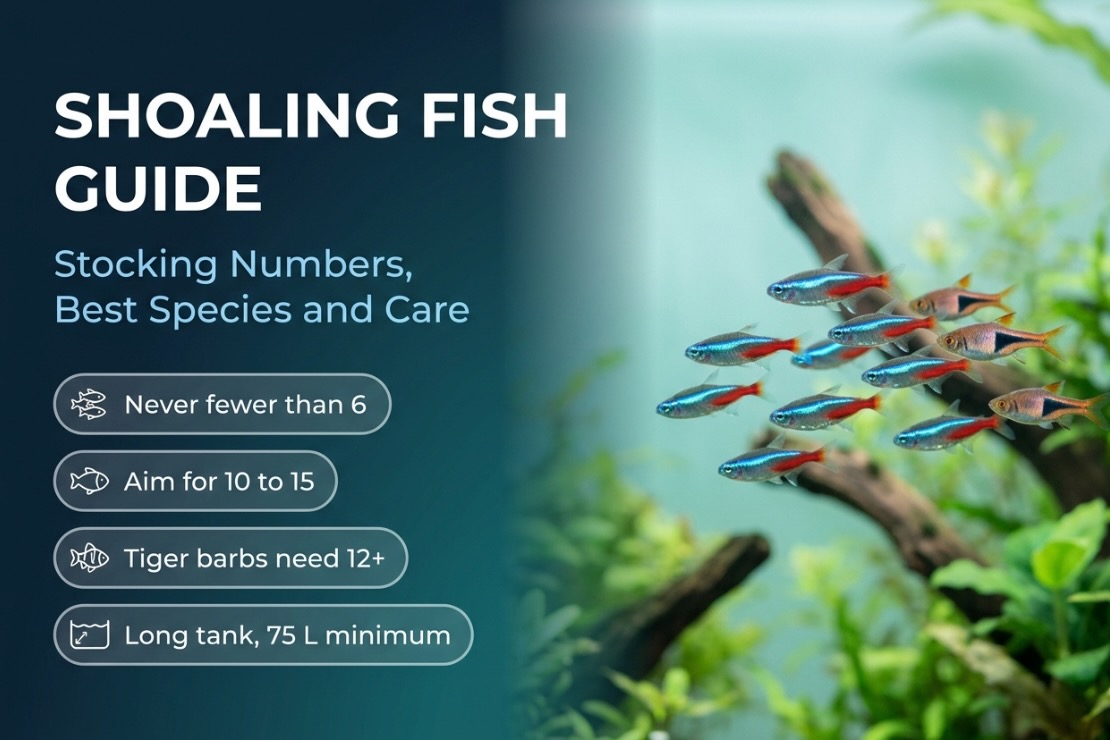
A shoal simply represents any group of fish remaining together for social reasons. A school represents a highly coordinated group moving synchronously in the same direction. Therefore, all schools function as shoals, but not all shoals function as schools. As a result, maintaining Shoaling Fish requires understanding their specific preference for loose or tight formations.
Why They Require Social Groups
Shoaling Fish rely entirely upon sheer numbers for their psychological and physical survival. Specifically, remaining within a large group drastically reduces their individual chances of predatory consumption. Furthermore, this numerical dilution effect lowers their baseline stress levels drastically. Consequently, isolating them triggers massive cortisol spikes that completely destroy their fragile immune systems. Therefore, providing a proper group size absolutely prevents deadly opportunistic bacterial infections effectively.
Do They Stop Coordinating in Captivity?
Highly coordinated swimming frequently ceases when they feel completely safe from predators. Specifically, tightly synchronized movement requires immense energy and primarily functions as an active defense mechanism. Furthermore, a relaxed group of tetras will naturally drift apart to explore their environment comfortably. Consequently, forcing them to constantly swim in tight formations indicates severe environmental terror. As a result, occasional loose grouping actually proves your aquarium provides a highly secure habitat.
Obligate vs Facultative Shoaling Fish
Understanding this crucial taxonomic distinction prevents devastating stocking errors completely. Specifically, obligate shoalers must remain within a group constantly to survive their environment. Furthermore, isolating an obligate species guarantees their rapid death from sheer psychological terror. Therefore, you must research their exact biological classification before attempting to house them alone. As a result, properly identifying your Shoaling Fish prevents unnecessary aquatic fatalities.
Minimum Stocking Numbers
Standard pet store advice frequently recommends dangerously low numbers. Specifically, maintaining a group of exactly six individuals represents the absolute bare minimum. Furthermore, you should truly aim for a minimum of 10 to 15 individuals always. Providing massive numbers drastically improves their natural coloration and complex behavioral displays. Therefore, understocking them guarantees constant hiding and severely shortened lifespans inevitably. As a result, you must fully commit to purchasing large groups simultaneously.
Mixing Different Shoaling Fish Species
Mixing different species frequently results in fragmented, highly stressed groups. Specifically, different species use entirely different visual cues and swimming patterns. Furthermore, a neon tetra will never truly coordinate with a tiger barb safely. Consequently, keeping three individuals of four different species creates absolute visual and behavioral chaos. Therefore, you must focus on building one massive group of a single species. As a result, combining different Shoaling Fish usually fails to satisfy their strict social requirements.
The Best Options for Beginners
Beginners should strictly prioritize highly resilient, peaceful species always. Specifically, Harlequin Rasboras offer incredible hardiness and highly active grouping behaviors. Cherry Barbs provide brilliant coloration and adapt easily to standard water parameters safely. Consequently, you must avoid highly sensitive species like Rummy Nose Tetras during your initial attempts. Mastering the basics with sturdy species prevents highly expensive and tragic learning curves. As a result, careful selection actively guarantees a successful introduction to complex aquatic social dynamics.
Popular Shoaling and Schooling Fish Examples
Choosing the correct species requires understanding their specific social dynamics and environmental thresholds. Many hobbyists fail to provide the necessary group sizes, leading to chronic stress and systemic immune failure. Therefore, You must strictly adhere to minimum stocking requirements to observe their natural behaviors. The following examples represent the most common social species within the modern aquarium hobby.
Neon Tetras

Neon Tetra (Paracheirodon innesi): These iconic Tetras are classic facultative schoolers. Specifically, they form tight, shimmering groups when they perceive a threat or during active swimming phases. Furthermore, they tend to drift into loose shoals when they feel entirely secure in a heavily planted environment. You must keep them in groups of 10 or more to prevent severe psychological isolation.
Harlequin Rasbora

Harlequin Rasbora (Trigonostigma heteromorpha): These Rasboras are renowned for their highly disciplined coordinated swimming. Specifically, they maintain a consistent mid water position and move as a single unit more frequently than many other small cyprinids. Indeed, their triangular black markings provide a uniform visual cue that enhances their “oddity effect” defense.
Rummy Nose Tetras

Rummy Nose Tetra (Hemigrammus rhodostomus): The Rummy Nose Tetra represents the gold standard for schooling behavior in freshwater aquariums. In fact, they are obligate schoolers that rarely break formation, even in the absence of predators. Furthermore, their bright red heads serve as a biological “health gauge,” as the color fades instantly if water parameters deteriorate or the group size is insufficient.
Corydoras Catfish

Corydoras Catfish (Corydoras spp.): These bottom dwelling Corydoras are dedicated shoaling fish. Specifically, they do not swim in synchronized schools but instead forage and rest in close physical proximity to one another. Furthermore, they exhibit a “follow the leader” dynamic where the entire group shifts across the substrate simultaneously to locate food. Consequently, keeping a single Corydoras is a form of gross neglect that leads to severe behavioral depression.
Tiger Barbs

Tiger Barb (Puntigrus tetrazona): Tiger Barbs exhibit a complex, often aggressive social hierarchy within their shoal. Specifically, they establish a “pecking order” through constant chasing and minor nipping. Keeping them in large groups of 12 or more is strictly necessary to disperse this internal aggression. Therefore, understocking them usually results in the dominant individual fatally bullying the subordinates one by one.
The Oddity Effect in Shoaling Fish
This fascinating biological phenomenon dictates how predators select their exact targets. Specifically, any individual standing out from the group becomes an immediate, prime target. Predators easily focus upon a single differently colored fish among a uniform group. Maintaining differently colored variations of the same species actively endangers the unique individuals. Therefore, you must keep visually identical Shoaling Fish to maximize their predator confusion defenses. As a result, creating a highly uniform group ensures their absolute psychological safety.
Aquarium Space Requirements
Cramming these active swimmers into tall, narrow aquariums demonstrates severe spatial ignorance. Specifically, a standard group strictly requires a minimum 20-gallon (75-liter) long aquarium footprint. Furthermore, fast moving species like Zebra Danios demand at least 36 inches (91.4 centimeters) of horizontal space. Consequently, providing insufficient length stifles their natural darting and synchronized swimming behaviors. Therefore, you must prioritize horizontal footprint over vertical height when purchasing their glass enclosure. Adequate space actively prevents severe physical atrophy and behavioral depression.
Ideal Environments for Shoaling Fish
Mimicking their natural habitats reduces their baseline anxiety levels drastically. Specifically, most small Shoaling Fish originate from heavily shaded, heavily vegetated river systems natively. Furthermore, you must provide a dark sandy substrate to enhance their natural vibrant colors. Consequently, adding massive amounts of live aquatic plants provides necessary visual security constantly. Therefore, using floating plants to heavily diffuse the harsh aquarium light works perfectly. As a result, creating a highly naturalistic environment ensures their complex biological functions operate properly.
Do They Need Hiding Spots?
Paradoxically, providing numerous hiding spots actively encourages them to swim openly. Specifically, knowing they can instantly retreat to safety drastically boosts their overall confidence. Furthermore, you must add large pieces of twisted driftwood to break their sight lines. Consequently, a completely barren tank terrifies them and forces them into the bottom corners. Therefore, integrating dense vegetation and hardscape materials creates a highly dynamic, safe territory. Providing extensive cover actively promotes their most fascinating open-water behaviors.
Understanding Schreckstoff in Shoaling Fish
This incredible chemical alarm signal dictates their ultimate survival responses. Specifically, injured individuals instantly release this specific “fright substance” directly from their damaged skin. Smelling Schreckstoff triggers absolute, blind panic throughout the entire aquarium. Therefore, preventing physical injuries prevents the accidental release of this highly disruptive alarm pheromone. As a result, maintaining peaceful tankmates actively stops this terrifying chemical cascade completely.
Why Are They Not Grouping?
Their complete lack of coordination frequently indicates profound environmental comfort. Specifically, if they feel safe, they simply drop their defensive schooling formations. Furthermore, poor water quality or severe illness can also completely destroy their social dynamics. Consequently, you must test your water parameters to rule out deadly ammonia spikes. Therefore, highly relaxed drifting generally represents a successful, stress free aquatic environment.
Managing Odd Numbers of Shoaling Fish
Keeping an odd number rarely causes severe issues within adequately massive groups. Specifically, once your group exceeds 15 individuals, odd or even numbers become entirely irrelevant. Furthermore, keeping exactly three individuals often results in two violently bullying the weakest third. Consequently, the actual total number matters significantly more than odd or even mathematical properties. Therefore, you must simply focus upon maximizing their total population within your specific spatial limits. As a result, providing a massive shoal of Shoaling Fish automatically resolves minor numerical imbalances.
Why Are They Hiding at the Bottom?
Clustering tightly at the bottom almost always indicates severe, immediate physiological terror. Specifically, newly introduced fish frequently huddle near the substrate until they learn their new surroundings. Furthermore, sudden temperature drops or highly aggressive tankmates force them downward instantly. You must immediately verify your heater functionality and observe other fish for bullying behaviors. Therefore, hiding constantly at the bottom violates their natural mid water swimming instincts. Resolving the underlying environmental stress restores their natural swimming levels.
Sources
- MB Store
https://mbstore.uk/schooling-vs-shoaling-difference/ - Wikipedia
https://en.wikipedia.org/wiki/Shoaling_and_schooling - Wikipedia
https://en.wikipedia.org/wiki/Schreckstoff - RateMyFishTank.com
https://www.ratemyfishtank.com/blog/stocking-your-tank-with-schooling-fish - PLOS One
https://journals.plos.org/plosone/article?id=10.1371/journal.pone.0014819
Leave a Reply
You must be logged in to post a comment.