
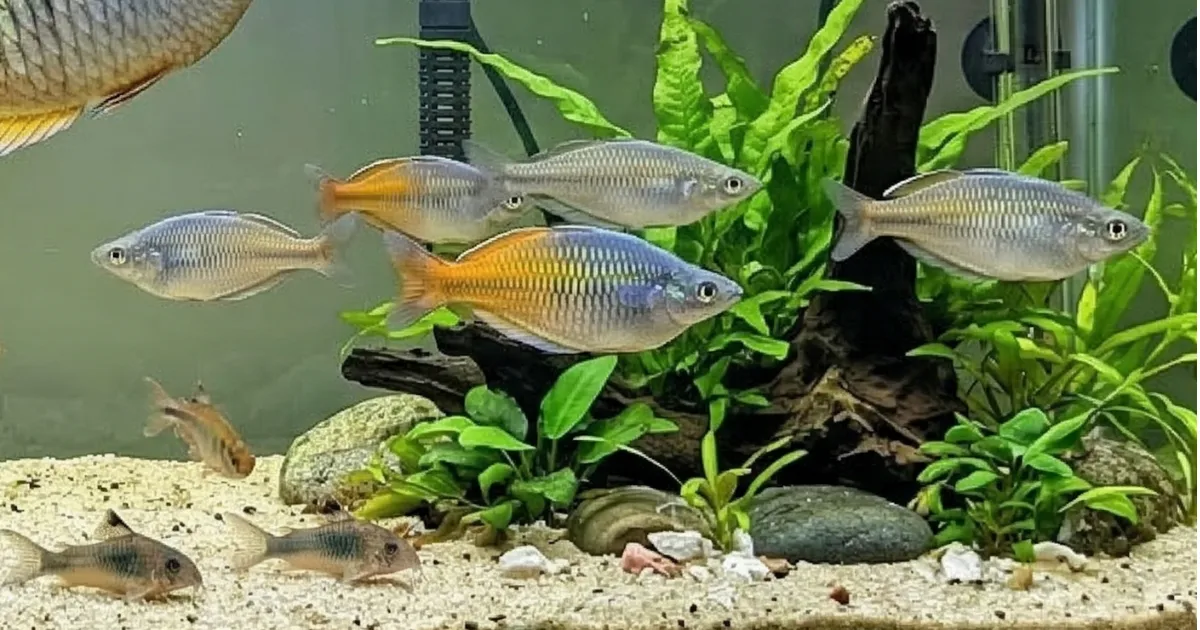
Rainbowfish (Melanotaeniidae) originate exclusively from Australasia. They populate highly vegetated, clear fresh water environments. Many beginners purchase them for their brilliant colors. However, these hobbyists often ignore their need for massive swimming space. Putting a hyperactive sprinter in a tiny cube is biological cruelty. Therefore, This guide relies strictly upon verifiable scientific evidence to help you learn the exact realities of maintaining their environments safely. Mastering their care requires absolute dedication to complex water parameters.
Physical Features of Rainbowfish
Their compressed bodies and distinct double dorsal fins define their anatomy. Specifically, male Rainbowfish display incredibly brilliant, iridescent scales. These scales reflect light beautifully across the aquarium. Furthermore, females generally exhibit much duller, silvery colorations. This clear sexual dimorphism allows aquarists to identify breeding groups. They possess specialized, upward facing mouths designed for surface feeding. As a result, their vibrant appearance creates a dynamic visual display.
Are They Suitable for Beginners?
Beginners often succeed when providing a properly sized aquatic environment. These fish adapt well to captivity under the right conditions. They will actively tolerate a wide range of standard water parameters safely. Inexperienced keepers frequently trigger stress by failing to provide horizontal space. Hence, Managing their health demands a highly specialized, elongated aquarium setup. Therefore, dedicated novices must research their spatial requirements thoroughly.
Lifespan and Size of Rainbowfish
Understanding their biological growth prevents unexpected spatial crowding. Adult larger Rainbowfish generally reach approximately 10 to 15 cm long. Pristine water and proper nutrition accelerate their growth rate. Consequently, providing a highly stable environment maximizes their overall lifespan. A perfectly maintained individual will easily live for up to eight years. Therefore, you must commit to a strict, rigorous multi year care plan.
Understanding Their Temperament
They exhibit highly peaceful but intensely active behaviors. Dominant males will actively flash their brightest colors. This display serves to attract observing females. Furthermore, sudden introductions of slow moving fish result in intense food competition. Also, their boisterous temperament dictates you must select tank mates carefully. This deliberate selection actively prevents timid fish from starving. As a result, managing their environment requires constant behavioral observation safely.
Do Rainbowfish Need Groups?
You must objectively evaluate their complex social dynamics carefully. Rainbowfish thrive perfectly well only in large, active schools. Housing a solitary individual guarantees severe psychological stress. The isolated fish will constantly hide from open water. Consequently, you should strictly maintain a group of six or more individuals. This specific social structure actively encourages natural confidence. Therefore, managing their social layout requires adequate tank space.
Minimum Tank Size and Setup
Standard tall glass boxes fail their spatial and biological needs entirely. A small school strictly requires a minimum 40 gallon elongated aquarium. They function as incredibly powerful swimmers demanding open water sections. You must absolutely use tight aquarium lids. This barrier prevents fatal jumping accidents during feeding times. Dense aquatic plants provide necessary hiding spaces along the perimeter. A horizontally focused water volume prevents severe stress.
Ideal Water Parameters for Rainbowfish
Highly stable water chemistry prevents sudden physiological shock. You must rigidly maintain tropical water temperatures between 23 and 27°C. Most Rainbowfish strictly demand slightly alkaline, moderately hard water. Furthermore, their environment demands absolutely zero ammonia and zero nitrite strictly. You must use crushed coral to naturally buffer the water hardness. Pristine, mineral rich water prevents deadly bacterial infections.
Proper Diet for This Species
Optimizing their nutrition requires a highly varied, high quality menu. Their narrow throats process small meaty foods and plant matter. They eagerly consume floating flakes and specialized frozen foods easily. Specifically, feeding them exactly 3 grams of mixed matter twice daily works. Offering live daphnia occasionally boosts their complex immune systems. Consequently, a strict, balanced diet absolutely prevents severe nutritional deficiencies.
Common Health Problems in Rainbowfish
Environmental stress and poor water quality cause highly preventable ailments. Rainbowfish frequently develop lethal bacterial ulcers in highly acidic water. Severe physiological deterioration from high nitrates leads to rapid deaths. Therefore, neglecting their demand for pristine water invites population crashes. Maintaining impeccable water conditions prevents these health issues entirely. As a result, massive weekly water changes serve as their best medicine.
Compatible Tankmates
Introducing other fish requires highly careful biological considerations. You must avoid any highly aggressive, large cichlids entirely. Similarly sized, active species like Congo Tetras offer successful tank compatibility. Furthermore, Corydoras catfish also share their planted environments quite peacefully. Avoid housing them with slow, long finned Angelfish that suffer from their activity. Consequently, careful selection actively prevents highly stressful and unbalanced tank dynamics.
Sources
- Aqueon
https://www.aqueon.com/resources/care-guides/rainbowfish - Aquarium Co-Op
https://www.aquariumcoop.com/blogs/aquarium/top-10-rainbowfish - WebMD
https://www.webmd.com/pets/what-to-know-about-rainbowfish - Boodleshire Aquatics
https://www.boodleshireaquatics.com/post/fish-profile-the-boesemani-rainbowfish-melanotaenia-boesemani


Leave a Reply
You must be logged in to post a comment.