
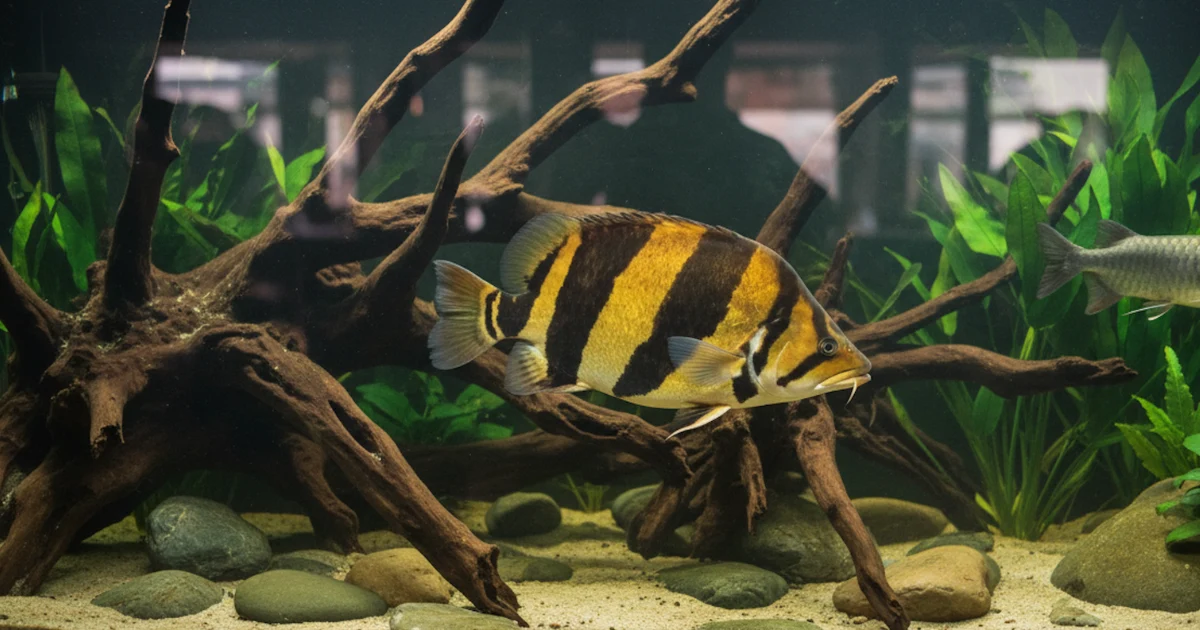
Tiger Datnoid Fish (Datnioides) belong to the family Datnioididae, comprising five distinct species across Southeast Asia and New Guinea. This guide utilizes verifiable scientific evidence to ensure your husbandry meets formal standards.
Physical Features of Tiger Datnoid Fish
Their deep, laterally compressed bodies and distinct vertical bands define their anatomy completely. Specifically, Tiger Datnoid Fish display a gold or bronze background coloration naturally. Furthermore, they feature several bold, dark brown or black vertical bars across their entire flanks. Consequently, their unique ability to “stable” their colors represents a primary indicator of their overall comfort. Therefore, a stressed individual will frequently turn dark or “unstable” to camouflage with the environment. As a result, their vibrant, striped appearance creates a highly dynamic visual display.
Are Tiger Datnoid Fish Good for Beginners?
Beginners should generally avoid this species due to their highly specific environmental and dietary requirements. Specifically, these fish possess incredibly sensitive physical constitutions that demand pristine water conditions. Furthermore, their slow growth and large adult size require a long term commitment that novices often underestimate. Consequently, inexperienced keepers frequently trigger fatal stress by failing to provide adequate security. Therefore, this species remains strictly recommended for advanced hobbyists with significant experience. As a result, novices must prioritize hardier species.
Lifespan and Size of Tiger Datnoid Fish
Understanding their biological growth prevents unexpected spatial crowding completely. Specifically, adult Tiger Datnoid Fishgenerally reach approximately 30 to 45 centimeters in length depending on the species. Furthermore, pristine water and proper nutrition accelerate their growth rate steadily over several years. Consequently, providing a highly stable environment maximizes their overall lifespan effectively. Therefore, a perfectly maintained individual will easily live for up to 15 years safely. As a result, you must commit to a strict, rigorous multi year care plan.
Understanding Their Temperament
They exhibit highly cautious and predominantly peaceful behaviors toward tank mates they cannot consume. Specifically, dominant individuals will actively claim sheltered areas around preferred driftwood or large rocks. Furthermore, sudden movements outside the glass frequently result in immediate retreat entirely. Consequently, their mellow temperament dictates they act as ambush predators rather than active chasers. Therefore, they only display severe territorial aggression during intense competition for limited hiding spaces. As a result, managing their environment requires providing numerous secure visual barriers.
Do Tiger Datnoid Fish Need Groups?
They exhibit highly social tendencies when kept in appropriately sized groups. Specifically, you should keep Tiger Datnoid Fish in groups of five or more to disperse minor social aggression. Furthermore, keeping only two individuals often results in the dominant fish bullying the submissive one fatally. Consequently, keeping them in a shoal promotes much higher confidence and “stable” coloration. Therefore, you must provide a massive aquarium to accommodate their combined social and spatial needs. As a result, a larger group ensures a more balanced social dynamic.
Minimum Tank Size and Setup
Standard small glass boxes fail their spatial and biological needs entirely. Specifically, a single adult strictly requires a minimum 473 liter aquarium footprint. Furthermore, housing a full shoal strictly demands an aquarium of at least 681 liters safely. Consequently, you must absolutely utilize soft, fine sand to protect their delicate ventral regions. Therefore, adding massive pieces of natural driftwood and large rocks provides necessary visual security. As a result, a larger water volume actively dilutes their heavy biological waste.
Ideal Water Parameters
Highly stable water chemistry prevents sudden physiological shock entirely. Specifically, you must rigidly maintain tropical water temperatures between 24 and 28°C. Furthermore, they strictly demand neutral to slightly alkaline water with a pH of 7.0 to 8.0. Consequently, maintaining a general hardness between 5 and 15 dGH prevents osmotic stress effectively. Therefore, performing 50% weekly water changes remains mandatory for nitrate control. As a result, pristine, well oxygenated water prevents deadly bacterial infections effectively.
Proper Diet for Tiger Datnoid Fish
Optimizing their nutrition requires a highly varied, protein rich menu strictly. Specifically, their robust digestive tracts process meaty foods like whole shrimp and small fish efficiently. Furthermore, you should utilize high quality sinking carnivore pellets to ensure balanced nutrition. Consequently, feeding them exactly 5 grams of mixed matter daily works perfectly for sub adults. Therefore, offering live earth worms or frozen silversides occasionally boosts their complex immune systems. As a result, a balanced diet prevents severe nutritional deficiencies.
Common Health Problems
Poor water quality quickly leads to chronic stress and immune collapse. Specifically, they are highly susceptible to “skin cloudiness” and secondary fungal infections. Furthermore, they may experience digestive blockages if fed an inappropriately low fiber diet. Consequently, maintaining pristine water and fiber rich snacks like blanched peas remains a wise preventative measure. Therefore, you must monitor their coloration daily for any signs of “instability” or lethargy. As a result, early intervention prevents minor issues from becoming fatal.
Breeding Tiger Datnoid Fish in Home Aquariums
There are virtually no documented cases of successful, consistent captive breeding within the hobby. Furthermore, they are believed to migrate for spawning in the wild, which is impossible to replicate in tanks. Consequently, almost every Tiger Datnoid Fish in the trade originates from wild caught stock or massive commercial ponds. Therefore, you should prioritize their general longevity over unrealistic breeding expectations. As a result, they remain a high level challenge for dedicated keepers.
Compatible Tankmates
Introducing other fish requires highly careful biological considerations always. Specifically, you must avoid any fish small enough to be consumed entirely. Furthermore, similarly sized, peaceful giants like Bichirs or Silver Arowanas offer successful tank compatibility. Consequently, large Plecos also share their bottom level environments quite peacefully. Therefore, avoid housing them with aggressive cichlids that will bully their shy nature. As a result, careful selection actively prevents highly stressful tank dynamics.
Essential Equipment and Filtration
Their massive waste production demands heavy duty, oversized filtration systems. Specifically, you should utilize high capacity canister filters like the Fluval FX6 to ensure water clarity. Furthermore, a submersible heater with a protective guard is essential to prevent accidental burns. Consequently, you must also use a gravel vacuum for those mandatory weekly water changes. Therefore, high quality gear prevents equipment failure in a high energy tank environment. As a result, maintaining high oxygen levels supports their high metabolism.
Distinguishing Male and Female Tiger Datnoid Fish
Identifying the sex of Tiger Datnoid Fish remains extremely difficult for hobbyists. Specifically, they exhibit almost zero external sexual dimorphism visible to the naked eye. Furthermore, both males and females grow to similar sizes and display identical coloration. Consequently, the only reliable way to identify gender is through invasive veterinary procedures or observing spawning. Therefore, you must assume your shoal contains a mix of both. As a result, gender specific housing remains unnecessary for their general care.
Intelligence and Interaction
They are widely considered highly observant and intelligent “sentinels” within the tank. Specifically, they will follow your movements across the room and recognize their keepers. Furthermore, they are known to investigate any new additions to their environment highly carefully. Consequently, they provide a level of interaction that few other shy predators can match. Therefore, they require mental stimulation through environmental complexity or varied feeding techniques. As a result, they form a unique, observant bond with their keepers over time.
Aggression and Territoriality
Their aggression is almost exclusively limited to intra species competition for territory. Specifically, they will squabble with other Tiger Datnoid Fish over the best hiding spots. Furthermore, they are virtually harmless to any tankmate that is too large to eat. Consequently, their predatory nature is purely nutritional rather than based on malice or rage. Therefore, providing excess hiding spaces effectively eliminates most territorial violence. As a result, their calm nature makes them excellent candidates for large community setups.
Safe for Planted Tanks?
They are perfectly safe for planted tanks as they do not consume vegetation. Specifically, they will not uproot or shred your aquatic plants like many large cichlids. Furthermore, providing dense vegetation actually helps them feel more secure and “stable” in their colors. Consequently, using tall Amazon swords or floating plants provides necessary shaded exploration areas. Therefore, integrating plants into their habitat promotes a more naturalistic and healthy ecosystem. As a result, a well planted tank actively supports their psychological well-being.
Premium Growth Formulations
These pellets are designed for maximum protein density to support the rapid growth rates of large river predators.
The Hikari Tropical Massivore Delite is a top tier choice for large carnivores. It is a highly porous, sinking wafer that absorbs water quickly to mimic the texture of live prey, which helps in transitioning picky eaters.
- Best For: Rapid growth and transitioning wild caught fish.
- Key Protein: 47% crude protein from high quality fish meal.
The NorthFin Carnivore Formula utilizes marine protein sources (Antarctic Krill and Herring) as its primary ingredients. It contains no fillers or artificial pigments, ensuring your fish receive bioavailable nutrients for optimal immune function.
- Best For: Clean digestion and natural health.
- Key Protein: 45% protein with balanced amino acids.
Color and Immune Support
These options prioritize long-term vitality and the “stable” coloration essential for species like Datnoids.
Omega One Sinking Cichlid Pellets utilize fresh seafood proteins like salmon and halibut. The inclusion of salmon skins provides high levels of natural astaxanthins, which are critical for maintaining the vibrant oranges of the Red Devil and the golds of the Datnoid.
- Best For: Enhancing reds and golds naturally.
- Key Feature: High levels of Omega-3 and Omega-6 fatty acids.
The Fluval Bug Bites Cichlid Formula uses Black Soldier Fly Larvae as its first ingredient. This mimics the natural insect based diet many cichlids encounter in the wild, providing a highly palatable and sustainable protein source.
- Best For: Mimicking wild foraging diets.
- Key Feature: Rich in calcium and healthy fats from insects.
Sources
- Seriously Fish
https://www.seriouslyfish.com/species/datnioides-microlepis/ - Fishkeeping World
https://www.fishkeepingworld.com/tiger-fish/ - Aquarium Source
https://www.aquariumsource.com/tiger-datnoid/ - The Aquarium Wiki
https://www.theaquariumwiki.com/wiki/Datnioides_microlepis - Practical Fishkeeping
https://www.practicalfishkeeping.co.uk/features/the-tiger-fish-genus-datnioides/
Leave a Reply
You must be logged in to post a comment.