
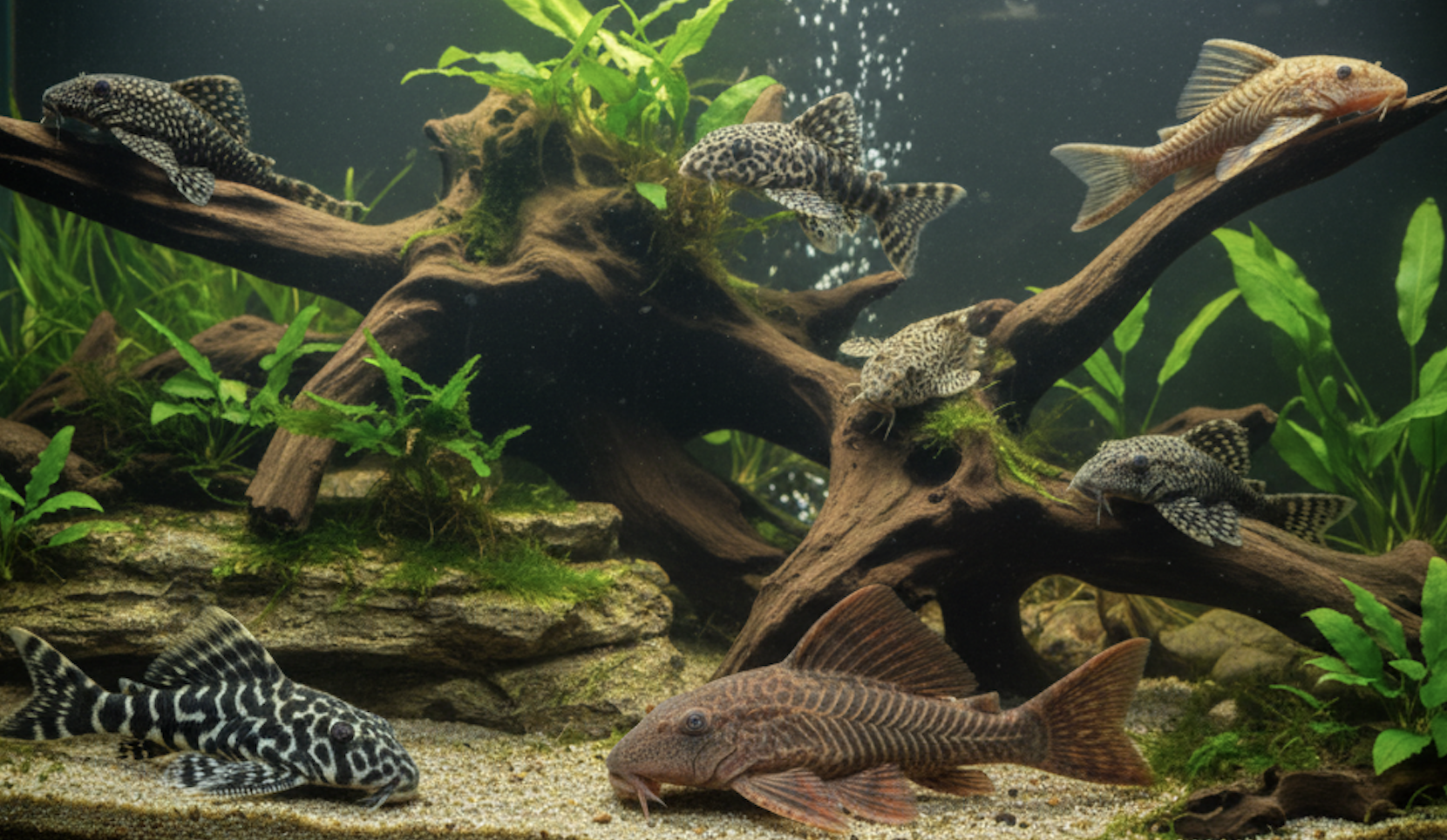
The Plecostomus Catfish, or “plecos,” represents a diverse family of South American armored catfish known as Loricariidae. Specifically, understanding the vast world under this single name is the key to successfully keeping these useful fish. Furthermore, they provide unique biological functions within a balanced ecosystem. In fact, their armor-like scutes and sucker mouths are remarkable evolutionary adaptations. Consequently, I reject the assumption that they are simple “tank cleaners.” Therefore, this guide provides the technical precision required for their ethical care.
Are Plecos good for beginner hobbyists?
Specifically, this suitability depends entirely on the chosen Plecostomus Catfish. Furthermore, a small Bristlenose Pleco is an excellent, hardy, and manageable fish for a beginner. However, a Common Pleco is one of the worst choices due to its massive adult size. In fact, most novices cannot provide the infrastructure required for a two foot fish. Consequently, you must research the specific L-number before purchase. Therefore, I prioritize species identification as the first step in successful ownership.
What is the temperament of Plecos?
Most Plecos are peaceful bottom-dwellers that ignore mid-water swimming fish. Specifically, they can become very territorial and aggressive toward other plecos of a similar shape. Furthermore, older specimens of large species often become grumpy and boisterous. In fact, they may bulldoze decorations and chase other bottom-dwellers away from favored caves. Consequently, you must provide multiple hiding spots to reduce social friction. Therefore, I recommend dedicated territories for every armored catfish in the tank.
Do Plecos need hiding spots and driftwood?
Specifically, Plecos require secure caves and dark crevices to feel safe during daylight hours. Furthermore, many common species are specialized wood-eaters that possess unique gut bacteria. In fact, they must rasp on driftwood to digest cellulose as a vital part of their metabolic health. Consequently, a pleco without driftwood is often a biologically unhealthy one. Therefore, I prioritize the inclusion of natural Malaysian or Mopani wood in their setup. As a result, the fish maintains its digestive integrity.
What is the minimum tank size for a pleco?
Specifically, tank requirements vary wildly based on the maximum adult length of the species. Furthermore, dwarf species like the Clown Pleco require at least 20 gallons. However, medium species like the Gold Nugget need 75 gallons or more to thrive. In fact, a Common Pleco requires a minimum of 180 gallons to accommodate Plecos massive body. Consequently, horizontal footprint is the primary analytical metric for their housing. Therefore, I recommend sizing the tank based on the fish’s full potential growth.
What type of filtration is needed?
You require powerful and oversized filtration because Plecos are notorious “waste machines.” Specifically, they produce a high volume of solid waste compared to other tropical fish. Furthermore, a powerful canister filter rated for twice your tank volume is mandatory. In fact, poor water turnover leads to rapid ammonia spikes and environmental collapse. Consequently, high-flow mechanical filtration is the only way to maintain clean water. Therefore, I prioritize oversized sump systems or dual canister filters for their health.
What are the ideal water parameters?
Plecos thrive in stable, warm water generally ranging from 74–80∘F with a pH of 6.5 to 7.5. Specifically, many “fancy” species require temperatures reaching 86∘F to maintain their high metabolism. Furthermore, you must provide well-oxygenated water through the use of air stones or powerheads. In fact, they are sensitive to accumulated nitrates on the substrate floor. Consequently, regular weekly water changes of 30% are necessary. Therefore, I prioritize pristine water quality as a primary health diagnostic.
Do Plecostomus Catfish eat only algae?
It is a common myth that Plecos can survive on aquarium algae alone. Specifically, many species are omnivores or even carnivores that require dedicated supplemental protein. Furthermore, high-quality sinking wafers and blanched vegetables should serve as their staple food. In fact, specialized species like the Zebra Pleco require frozen bloodworms and brine shrimp. Consequently, relying on glass algae results in systemic starvation over time. Therefore, I recommend a varied diet rich in both fiber and protein.
The Perfect Janitors
(The species most people should get)
Bristlenose Pleco (Ancistrus sp.)

The undisputed king of the cleanup crew. Stays a manageable 4-5 inches, is a fantastic algae eater, and comes in many varieties (Albino, Super Red, Longfin). Easily the best all-around pleco for a community tank.
Clown Pleco (Panaqolus maccus)

A beautiful, small wood-eating pleco that only reaches about 3-4 inches. It’s more of a driftwood specialist than an algae eater, but its small size makes it perfect for smaller tanks (20+ gallons).
Rubber Lip Pleco (Chaetostoma sp.)

Another great, hardy algae eater that stays small, around 4-5 inches.
Gentle Plecos Giants (The species most beginners accidentally buy)
Common Pleco (Hypostomus plecostomus & Pterygoplichthys species)

This is the “river monster.” This is the tiny brown fish that will grow to be 18-24 inches long, produce mountains of waste, and require a massive pond-like aquarium. Avoid this fish unless you have a 125+ gallon tank.
The Showstoppers (The Living Jewels)
Zebra Pleco (Hypancistrus zebra, L046)

A stunningly beautiful, carnivorous pleco with bold black and white stripes. They are not algae eaters and require pristine water and a protein-rich diet. They are a true collector’s fish.
Gold Nugget Pleco (Baryancistrus sp.)

A gorgeous black pleco covered in brilliant yellow or white spots. They are primarily algae and biofilm eaters but require very warm, clean, well-oxygenated water. They can reach 8-10 inches.
Queen Arabesque Pleco (Hypancistrus sp., L260)

A smaller “fancy” pleco with an intricate, maze-like pattern of black and white lines. Like the Zebra, it is more of an omnivore/carnivore.
The Extreme Specialists (The Chainsaws of the Tank)
Royal Pleco (Panaque nigrolineatus)

A magnificent, large pleco that is a true wood-eating specialist. Its powerful, spoon-shaped teeth are designed to shred driftwood. They are not great algae eaters but are fascinating for their unique diet. They can grow over 16 inches.
Why do they sometimes dart to the surface?
Darting to the surface for air is unusual for this species and indicates a potential emergency. Specifically, it often signals very poor water quality or dangerously low dissolved oxygen. Furthermore, some Plecos species can utilize their stomachs for air-breathing in extreme wild conditions. In fact, seeing this in an aquarium suggests your filtration or aeration has failed. Consequently, you must test for ammonia and nitrite immediately. Therefore, I prioritize increasing surface agitation to restore proper oxygen levels.
What are the signs of a healthy Plecos?
A healthy Plecostomus Catfish will possess a plump, full belly and clear, bright eyes. Specifically, a sunken or concave stomach indicates starvation or internal parasites. Furthermore, their coloration should be strong and consistent across the body plates. In fact, a healthy pleco is often active and visible during evening hours. Consequently, lethargy during feeding times is an analytical indicator of stress. Therefore, I recommend monitoring their abdominal profile daily as a key health metric.
Plecos FAQ
It entirely depends on the species. A Bristlenose Pleco (Ancistrus sp.) is an excellent beginner choice that stays under 5 inches. A Common Pleco (Hypostomus plecostomus) is one of the worst choices, growing to 24 inches and requiring a massive tank most beginners cannot provide.
No — this is one of the most damaging myths in fishkeeping. Many Pleco species are omnivores or carnivores that require sinking wafers, blanched vegetables, and even frozen protein like bloodworms. Relying on tank algae alone will cause systemic starvation over time.
Many species do, and for some it is a biological necessity. Wood-eating species like the Clown and Royal Pleco possess specialized gut bacteria that require cellulose from driftwood to function. Without wood, these species suffer serious digestive health problems.
Tank size depends entirely on the adult size of the species. Dwarf species like the Clown Pleco need at least 20 gallons. Medium species like the Gold Nugget need 75 gallons. Common Plecos require a minimum of 180 gallons to accommodate their full adult size.
Plecos require powerful, oversized filtration — a canister filter rated for at least twice your tank volume is the minimum. They produce exceptionally high volumes of solid waste and fine wood debris that will overwhelm standard filters and cause rapid ammonia spikes.
Sources
- Seriously Fish
https://www.seriouslyfish.com/species/pterygoplichthys-pardalis/ - Aquarium Source
https://www.aquariumsource.com/plecostomus-care/
Leave a Reply
You must be logged in to post a comment.