
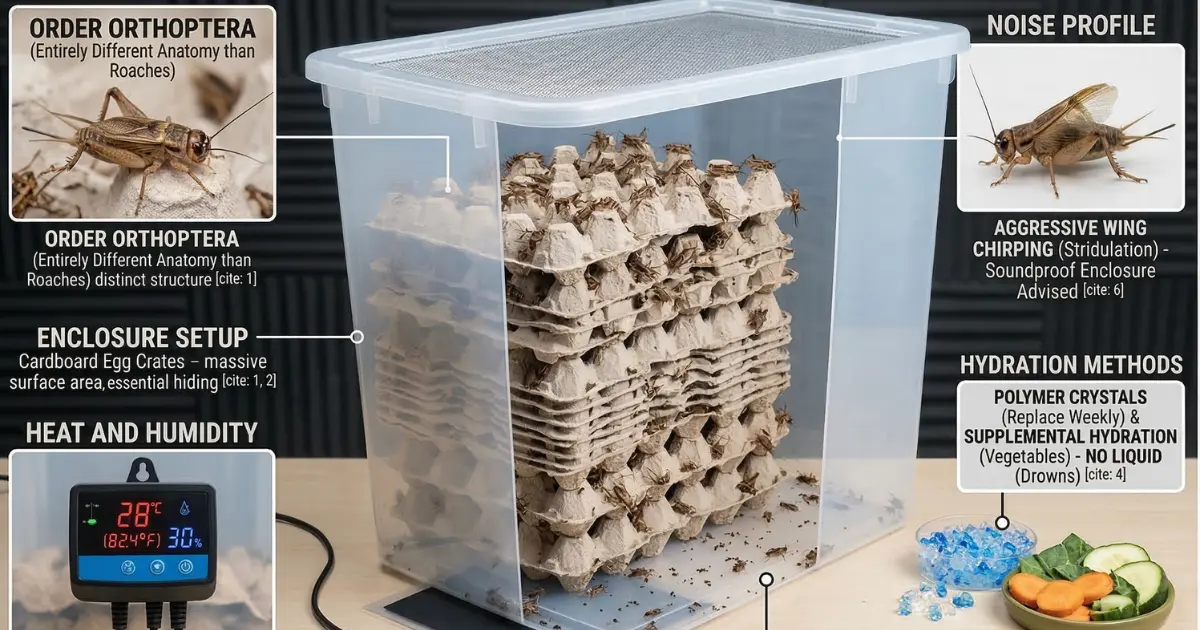
Crickets (Acheta domesticus) belong to the order Orthoptera. They possess entirely different anatomical structures than any roach species. Therefore, expecting them to behave like roaches constitutes pure biological ignorance. As a result, you must treat these fragile jumping insects uniquely.
Enclosure Setup for Crickets
You must use a tall, smooth sided plastic tub. Specifically, these jumping insects require massive vertical space to prevent escapes. Furthermore, providing a highly ventilated mesh lid reduces lethal moisture accumulation. Consequently, you must stack dozens of cardboard egg crates. Therefore, this cardboard architecture provides massive surface area for essential hiding. As a result, a highly secure tote prevents disastrous household infestations.
Heat and Humidity Requirements
You must maintain intense ambient temperatures between 26 and 32 degrees Celsius. Specifically, they require stable warmth to metabolize food and breed successfully. Furthermore, you must maintain extremely low ambient humidity levels strictly around 30%. Consequently, inadequate ventilation and high moisture cause fatal bacterial infections. Therefore, using an under tank heating pad regulated by a digital thermostat remains mandatory. As a result, stable, dry warmth guarantees a productive feeder colony.
Hydration Methods for Crickets
Crickets will absolutely drown in shallow liquid. Furthermore, you must utilize specialized polymer water crystals to provide solid hydration safely. Consequently, offering heavily moisture rich vegetables provides excellent supplemental hydration naturally and effectively. Therefore, replacing these polymer crystals weekly prevents disgusting, lethal bacterial accumulation. As a result, strict liquid management keeps your colony alive.
Substrate Rules
You must strictly avoid using any loose dirt substrate. Specifically, bare plastic bottoms allow for rapid, effortless cleaning of accumulated insect frass. Furthermore, dirt traps deadly moisture and encourages massive fungal spore growth. Consequently, filthy substrate directly kills your colony and creates unbearable odors. Therefore, sweeping the bare plastic floor weekly constitutes proper, hygienic insect husbandry. As a result, a sterile floor prevents catastrophic colony collapse.
The Noise Profile of Crickets
Adult male Crickets produce an incredibly loud, relentless chirping noise. Specifically, they rub their wings together aggressively to attract female mates. Furthermore, this biological process called stridulation creates massive noise pollution inside your home. Consequently, you must isolate their breeding enclosure in a sound proofed room. Therefore, failing to plan for this noise will disrupt your sleep. As a result, sensitive keepers frequently switch to completely silent roach alternatives.
Gut Loading Crickets
Gut loading represents the critical process of packing feeders with dense nutrients. Specifically, a starved insect provides absolutely zero biological value to your captive reptile. Furthermore, you must feed them heavily for 48 hours strictly before offering them as prey. Consequently, whatever the insect consumes directly enters your chameleon’s sensitive digestive tract. Therefore, treating the feeder’s diet as your reptile’s actual diet remains an absolute necessity. As a result, aggressive gut loading prevents fatal metabolic bone disease.
Best Foods for Gut Loading
You must provide a highly varied diet of fresh, organic vegetables. Specifically, sweet potatoes, dark leafy collard greens, and vibrant carrots offer massive vitamin concentrations. Furthermore, you must provide a dry commercial insect chow for stable caloric energy. Consequently, measuring exactly 15 to 30 grams of fresh produce prevents severe cage rot. Therefore, heavily washing all produce removes lethal agricultural pesticides completely before feeding. As a result, high quality inputs guarantee a vastly superior feeder insect.
Foods to Avoid
You must strictly ban high protein dog or cat kibble from their diet. Specifically, excess protein causes agonizing, fatal uric acid buildup and gout in your reptiles. Furthermore, you must absolutely avoid feeding them toxic onions, garlic, or acidic citrus fruits. Consequently, these harsh chemicals destroy the insect’s gut flora and poison your lizard. Therefore, rigorous dietary policing remains your absolute best defense against accidental poisoning. As a result, keeping their diet simple and plant based protects your fragile reptiles.
Health and Maintenance of Crickets
You must proactively remove uneaten fresh food every 24 hours without fail. Specifically, rotting vegetables attract highly invasive fruit flies and deadly mold spores. Furthermore, you must meticulously remove dead insects daily to prevent lethal viral outbreaks. Consequently, ignoring this basic hygiene forces your colony to live in toxic, decaying matter. Therefore, failing to clean the tote constitutes pure laziness and neglect on your part. As a result, pristine environmental conditions prevent catastrophic colony wipeouts directly.
Nutritional Facts and Comparisons
Crickets offer vastly inferior nutritional density compared to premium Dubia roaches. Specifically, they boast significantly less protein and considerably higher indigestible chitin levels. Their sharp, hard legs frequently cause dangerous intestinal impactions in sensitive geckos. Consequently, they die much faster and smell significantly worse than any modern feeder roach. Therefore, replacing these foul smelling jumpers with highly efficient roaches represents an undeniable biological upgrade. As a result, their rapid movement remains their only redeeming feeder quality.
Sources
- Fluker Farms
https://flukerfarms.com/reptile-u/care-sheets/cricket-care-sheet - Reptiles Magazine
https://reptilesmagazine.com/gut-loading-feeder-insects/ - The Spruce Pets
https://www.thesprucepets.com/raising-crickets-for-reptile-food-1237227 - Josh’s Frogs
https://joshsfrogs.com/catalog/blog/2010/05/how-to-keep-crickets-alive/ - Dubia.com
https://dubiaroaches.com/blogs/feeder-insects/crickets-vs-dubia-roaches


Leave a Reply