

From the brilliant electric blue of the Neon Tetra to the majestic sweep of a Congo Tetra’s fins, this diverse family of fish represents the vibrant heart of the freshwater hobby. They are the quintessential community fish, peaceful, active, and beautiful. But their needs can be more specific than many beginners realize. This guide will, therefore, answer all your questions, helping you create a thriving, shimmering school of these aquatic gems.
I’ll never forget the first time I successfully created a true, multi-layered community tank. The centerpiece was a graceful pair of Angelfish, and I desperately wanted to pair them with a vibrant school of Cardinal Tetras. Many warned me, however, that the Angels would simply see the Cardinals as snacks.
But I was determined to make it work. In a large, tall tank with plenty of space for everyone, I added a big school of Cardinals and a group of Panda Corydoras for the bottom. Through this experience, I learned that the old rules can sometimes be bent with the right environment. By keeping my Angelfish well-fed and providing the Tetras with the security of a large, confident school, a peaceful balance was struck. In the wild, Angelfish prey on Neon/Cardinal Tetras. However, many hobbyists successfully keep them together if the Tetras are full-grown before the Angelfish are introduced. Your anecdote is plausible but remains a calculated risk. Ultimately, it taught me that a successful community isn’t just about choosing peaceful fish; it’s about creating a world where everyone feels safe.
What Are the Different Kinds of Tetra Fish?
The “Tetra” family is massive, but here are some of the most popular available in the hobby:
- Neon Tetra: The most famous, with a stunning iridescent blue stripe and a red tail.
- Cardinal Tetra: Often confused with Neons, but their red stripe runs the full length of their body. They are slightly larger and often considered a bit more robust.
- Ember Tetra: A beautiful, nano-sized fish with a deep, fiery orange-red color.
- Black Skirt Tetra: A larger, hardier species with a distinct black “skirt.” Also available in a long-fin variety.
- Rummy Nose Tetra: Known for its bright red nose, which is an excellent indicator of water quality and the fish’s health.
- Congo Tetra: A larger, more majestic Tetra from Africa, famous for the male’s flowing, iridescent fins.
How Many Tetras Should I Keep Together?
Tetras are obligate shoaling fish. This means they feel safe, confident, and show their best colors when kept in a group.
The Golden Rule: Therefore, you must keep a minimum of 6 or more of the same species. A larger school of 10-15 is even better and will create a breathtaking, synchronized display of movement. Conversely, keeping them alone or in a small group causes immense stress.
What is the Ideal Tank Setup for Tetra Fish?
Tank Size: This depends on the species. For instance, Nano tetras like Embers can live in a 10-gallon (40-liter) tank. However, most common tetras like Neons and Cardinals need a 20-gallon (75-liter) long tank or larger to have adequate swimming space.
Ideal Water Parameters: Most tetras are from the soft, acidic waters of South America. Therefore, they thrive in a pH of 6.0-7.5 While this range is safe for most, you must note a distinction between Neons and Cardinals. Neon Tetras, specifically, prefer cooler water between 68-78°F (20-26°C). Cardinal Tetras, however, require warmer water between 73-81°F (23-27°C). Consequently, keeping Neons constantly at the high end of 78°F+ (26°C+) can shorten their lifespan.
Decorations and Substrate: A “blackwater” biotope with a dark sand substrate, driftwood, and dried botanicals (like Indian almond leaves) will bring out their colors beautifully. Ultimately, a well-planted tank with open swimming space is ideal.
What Should I Feed My Tetras?
Tetra Fish are omnivores.
Diet: A high-quality micro-pellet or crushed flake food is a perfect staple. However, to boost their health andvibrant colors, supplement their diet with frozen or live foods like daphnia and brine shrimp.
How Often Should I Feed Them? Feed a small amount once a day, but ensure they completely consume it in about a minute.
What Are Good Tank Mates for Tetras?
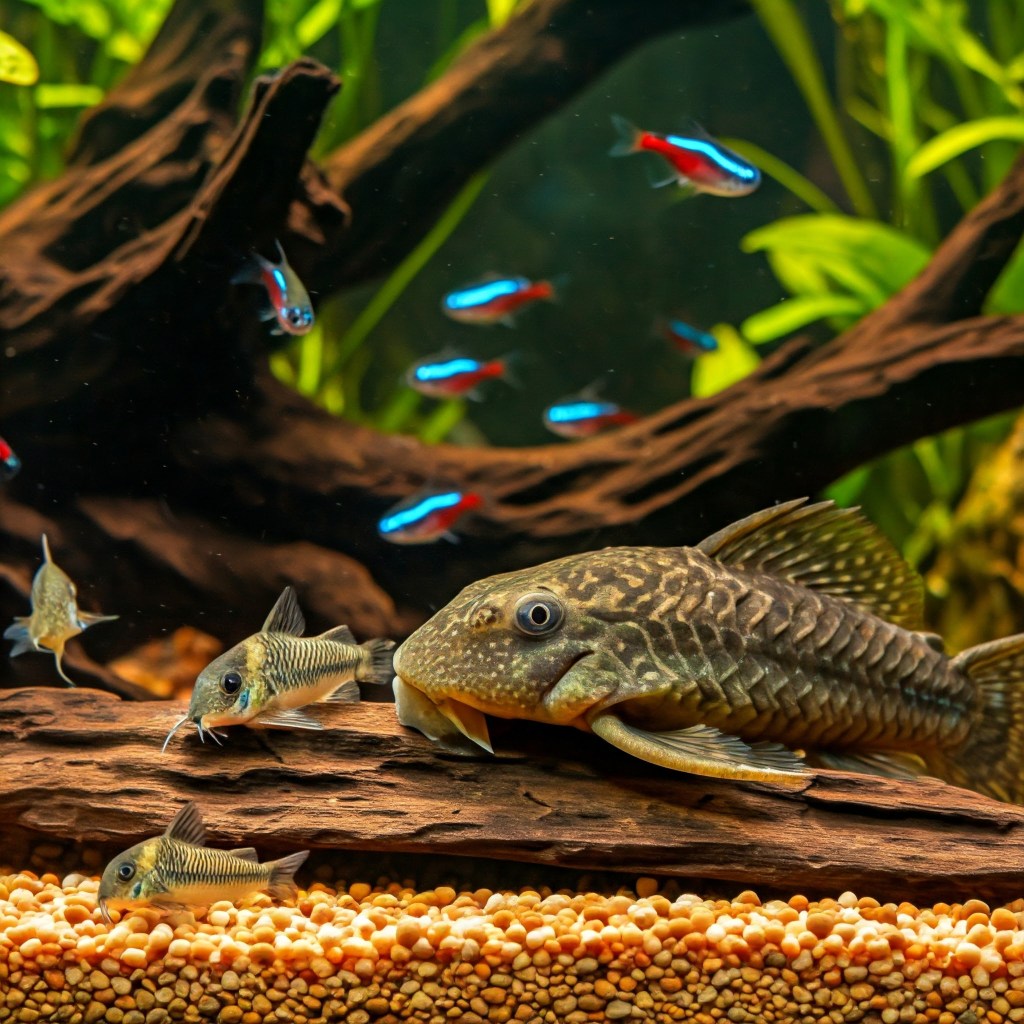
Best Choices: Look for other peaceful community fish like Corydoras, Guppies, Platys, and Bristlenose Plecos.
A Common Problem: Why are my tetras nipping fins? Fin nipping is usually a sign of stress. In fact, the most common cause is keeping them in a school that is too small. Therefore, a larger, more confident school is far less likely to be nippy. It is also worth noting that larger species like Black Skirt Tetras can sometimes be nippy towards slow-moving, long-finned fish.
What Are Common Tetra Fish Health Problems?
Why are my tetras dying? The most common cause of sudden death is stress from poor water quality (ammonia/nitrite spikes). Always ensure your tank is fully cycled before adding them.
What is Neon Tetra Disease? This is a highly contagious and devastating parasitic disease with no reliable cure. Symptoms include a loss of color, a curved spine, and difficulty swimming. The best “treatment” is prevention: quarantine all new fish for 4-6 weeks before adding them to your main tank.
Why Are My Tetras Losing Their Color or Hiding?
This is almost always a sign of stress. The common causes include poor water quality, bullying from incompatible tank mates, or even being kept in a school that is too small. To address this, test your water parameters immediately andobserve the tank dynamics.
How Long Do Tetras Live?
With proper care in a healthy environment, most common tetra species can, in fact, live for 3 to 5 years.
Tetra Fish Care FAQ
Tetra fish are obligate shoaling species that must be kept in a minimum group of six individuals of the same species. Groups smaller than six cause chronic stress, suppressed coloration, and erratic behavior including fin nipping. A school of 10–15 Tetras produces the synchronized, shimmering movement that showcases the species at its visual best.
Neon Tetra Disease is a highly contagious and incurable parasitic infection caused by Pleistophora hyphessobryconis, affecting Neons, Cardinals, and other small Tetras. Symptoms include progressive color loss, a curved or kinked spine, and difficulty maintaining normal swimming position. Prevention through a strict 4–6 week quarantine for all new fish is the only reliable defense.
Most Tetra fish thrive in a temperature range of 68–81°F (20–27°C), but individual species have distinct requirements that must be respected. Neon Tetras prefer cooler water between 68–78°F (20–26°C), while Cardinal Tetras require warmer water between 73–81°F (23–27°C). Keeping Neons consistently at 78°F or above can significantly shorten their lifespan.
Fin nipping in Tetra fish is almost always a symptom of a shoal that is too small, not an inherent behavioral flaw. Stressed fish in groups of fewer than six redirect aggression outward toward tank mates. Expanding the shoal to 10 or more individuals resolves most cases before any relocation becomes necessary.
Tetra fish tank requirements vary by species. Nano species like Ember Tetras thrive in a 10-gallon (40-liter) tank, while Neons and Cardinals require at least a 20-gallon (75-liter) long tank. Long, horizontally oriented aquariums are preferred over tall tanks, as Tetras are active mid-water lateral swimmers.
Hiding and color loss in Tetra fish are reliable stress indicators with three primary causes: poor water quality, incompatible or aggressive tank mates, and an undersized shoal. Testing water parameters and observing tank dynamics for bullying are the required first diagnostic steps. Improving water quality, expanding the shoal, or separating incompatible species resolves most cases.
Tetra fish are omnivores that thrive on high-quality micro-pellets or crushed flake food as their dietary staple. Coloration and immune health improve significantly with regular supplementation of frozen daphnia and brine shrimp. Feed a small amount once daily, removing any uneaten food within one minute to prevent water quality deterioration.
Sources
- Aquarium Co-Op
https://www.aquariumcoop.com/blogs/aquarium/cardinal-tetra-care-guide - Seriously Fish
https://www.seriouslyfish.com/species/paracheirodon-innesi/ - The Spruce Pets
https://www.thesprucepets.com/neon-tetra-paracheirodon-innesi-1381835 - Fishkeeping World
https://www.fishkeepingworld.com/angelfish-tank-mates/ - Aquarium Nexus
https://www.aquariumnexus.com/neon-tetra-disease/ - Aquarium Source
https://www.aquariumsource.com/neon-tetra/


Leave a Reply