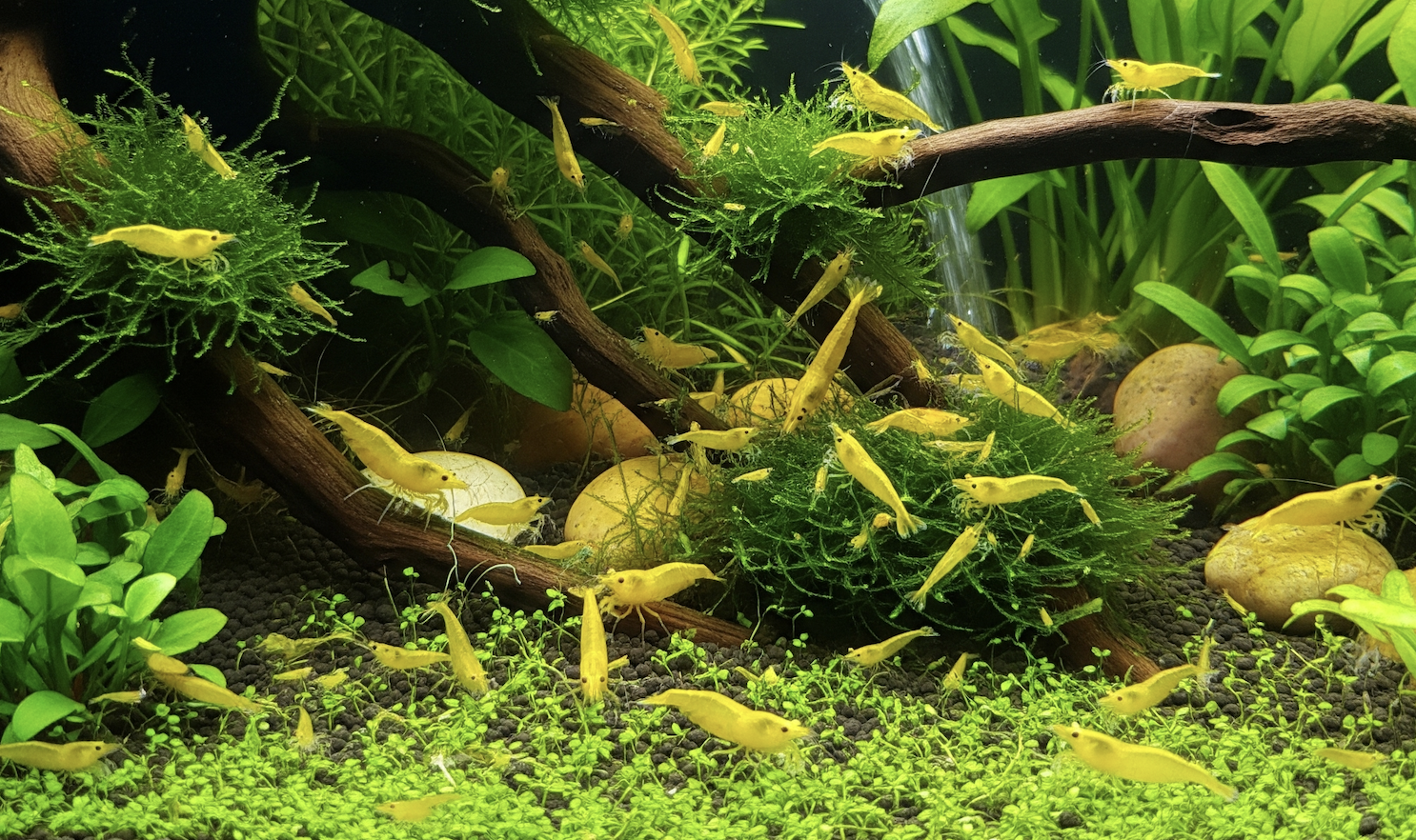
One day I set up a new tank with beautiful driftwood. Within days, a weird, slimy white film appeared, and my heart sank. This biofilm occurrence was a reminder of the interactions between algae and biofilm. I thought, “Here we go again, another battle to fight.” But then I learned the secret that every veteran hobbyist knows: that slimy film wasn’t a problem, it was a victory. It was the welcome mat for the beneficial bacteria that are the life blood of a healthy tank.
Learning to distinguish between the “good slime” (biofilm) and the “bad algae” was a huge level up moment in my journey. This guide is here to give you that same superpower. While often confused, algae and biofilm are distinct entities within your tank’s ecosystem. Both can be beneficial or detrimental, depending on their balance. Key Differences include Composition. Biofilm is primarily bacterial, while algae are plant like organisms. Another difference is growth. Biofilm can grow in low light conditions, while algae require light for photosynthesis. Finally, biofilm is often controlled through water changes and filtration. While algae can be managed by adjusting light, nutrients, and introducing algae eating organisms. By understanding the nuances between them, aquarists can better maintain a balanced and healthy ecosystem. Now let’s talk about each one of them in more details.
What Are Biofilms?
Biofilm is a complex microbial community, primarily made of bacteria, that attaches to surfaces. Fundamentally,these colonies produce a sticky substance (made of sugars and proteins) that forms slimy layers on surfaces in aquatic environments.
The Dual Role of Biofilm
Biofilm plays a dual role in the fish tank:
- Beneficial Role: Biofilms are essential components of healthy ecosystems. They aid in natural biological filtration and nutrient cycling, and they also serve as a food source for many aquatic organisms.
- Harmful Role: However, biofilms can become problematic if left unchecked. They often appear as a slimy or fuzzy coating on surfaces like rocks, plants, and glass. Furthermore, they can consume oxygen, potentially leading to fish suffocation and even damaging beneficial nitrifying bacteria. Additionally, biofilms can harbor harmful pathogens.
Prevention and Control
To prevent excessive biofilms, you must maintain a balanced aquarium. Specifically, follow these guidelines: Finally, perform regular maintenance, including water changes and filter cleaning, to maintain proper water flow. Avoid overfeeding, as uneaten food contributes to waste buildup. Introduce clean-up crews like snails and shrimp to help remove detritus. Regularly remove dead plant matter and limit the amount of driftwood, since these provide surfaces and nutrients for biofilm growth. Use a lid to prevent dust from entering the tank.
Is Algae Bad for my Fish Tank?
They are photosynthetic organisms that use sunlight to produce energy. Despite their vilification, these organisms are essential to aquatic ecosystems, since they produce oxygen and feed numerous life forms. Unlike plants, they lack specialized structures like stems and roots.
Therefore, excessive growth requires you to address underlying causes instead of just removing it. Common culprits include too much light, ammonia spikes, and poor filtration. Keep in mind that high nitrate and phosphate levels do not primarily cause blooms; similarly, fertilizers stimulate it’s growth even while helping plants. To ensure a healthy aquarium, aquarists must understand algae’s growth requirements to proactively control blooms.
Green Spot Algae (Choleochaete)
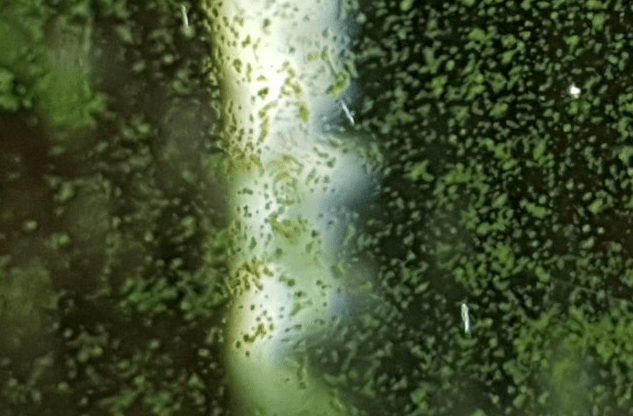
They appear as small, brown spots on aquarium surfaces, particularly on glass and slow-growing plants like Anubias. Despite their unsightly appearance, they are actually a sign of a healthy aquarium environment. Specifically, they thrive in conditions of strong lighting, low carbon dioxide, and low phosphate levels. Due to their tenacious nature, many algae-eating fish struggle to remove them. However, certain snail species may be effective in consuming some of the algae growth.
Green Fuzz Algae (Oedogonium)
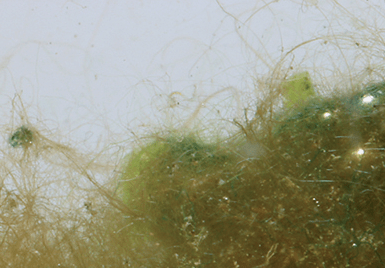
a type of thread algae, often appears in aquariums with low or fluctuating carbon dioxide levels. It grows as thin, hair-like strands on plant leaves. Many algae-eating fish and shrimp species find it a tasty treat.
Green Beard Algae

Another type of hair algae, forms dense, slimy mats on plant surfaces. While it’s a favorite food for many algae-eating fish and shrimp, it can quickly overwhelm a planted tank if left unchecked. One common cause is excessive lighting. Reducing the daily light cycle to 8 hours can help mitigate the problem. Additionally, low nitrate levels can contribute to its growth.
Brown Algae (Diatoms)
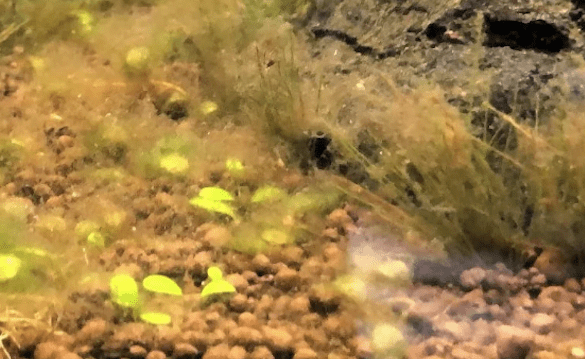
Caused by low light conditions in low-tech aquariums or high ammonia levels in newly set-up tanks, can manifest in two forms: a slimy surface film or thin, thread-like growths. While both types can be easily removed with a gentle scrubber, many aquatic organisms also enjoy consuming it. To address brown algae in low-tech aquariums, increasing the duration of light exposure can be beneficial. In newly established high-tech tanks, the issue typically resolves on its own as the ecosystem matures. However, the persistence of brown algae in well-lit, established tanks often indicates poor water quality or elevated silicate levels.
Green Dust Algae
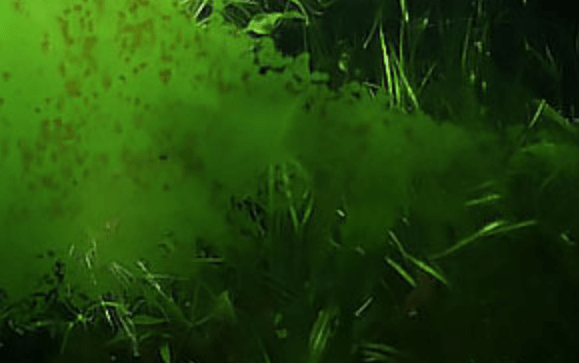
Green dust algae, a common occurrence in high-tech aquariums, presents as a fine, dusty layer on aquarium glass and hardscape. It typically arises from low carbon dioxide and nutrient levels. The most effective method to remove it is to allow it to form a thick layer over a couple of weeks. At this stage, it can be easily scraped off without spreading. Early removal can lead to fragments floating and recolonizing other surfaces.
Black Brush Algae (Audouinella Sp.)
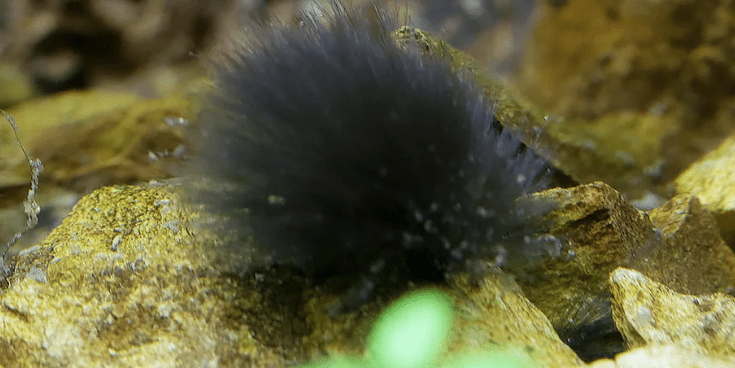
Characterized by small, dark hair-like growths on aquarium hardscape, can be a persistent problem, even in well-established tanks. While Chinese algae eaters and certain shrimp species may consume it, complete eradication can be challenging. This type thrives in areas with strong water flow. To discourage its growth, consider reducing water flow by turning off the filter or increasing carbon dioxide injection. As it turns red, it will eventually die off.
Water Silk (Spirogyra)

Long, stringy algae that appear in aquariums that have experienced an ammonia spike. Commonly caused by the decomposition of organic matter like uneaten food or dead fish. This type can be particularly stubborn and is not favored by many algae-eating organisms. To effectively combat long thread algae, a blackout period of 3-4 days combined with the use of liquid carbon treatments can be helpful.
Staghorn Algae (Compsopogon Sp.)
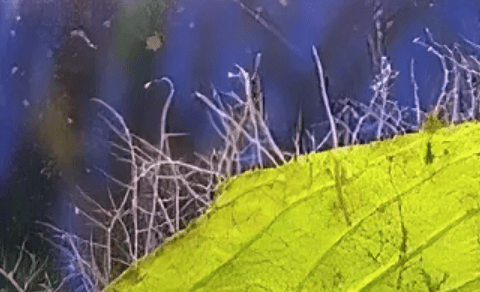
Blue-green algae, characterized by its distinctive horn-like strands, is often a symptom of high ammonia levels, low water flow, and nutrient imbalances. To combat this type, increasing water flow, adding liquid carbon, and siphoning the substrate can be effective. Additionally, removing infected plant leaves can help prevent further spread. As the algae turns red, it will eventually die off.
Green Water
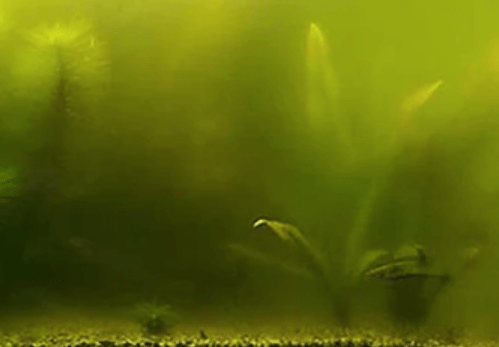
Caused by a rapid proliferation of free-floating algae, can quickly cloud an aquarium. This often occurs due to ammonia spikes, nutrient deficiencies, or low carbon dioxide levels. Water changes alone are typically ineffective in clearing green water. A 4-day blackout period is often necessary to starve it. However, it’s important to maintain high aeration during this time to prevent oxygen depletion and a subsequent ammonia spike from the decaying algae. UV sterilizers can also be helpful in treating green water.
Green Thread Algae
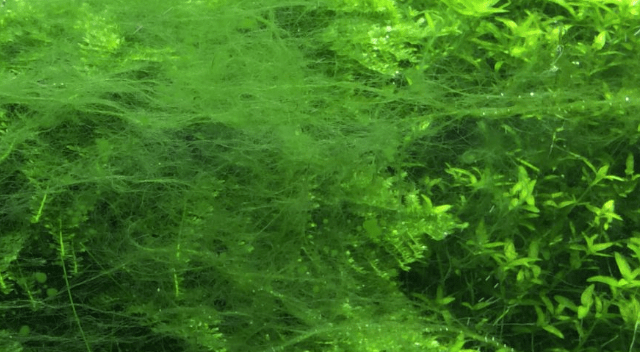
Long, stringy algae, often collected using cotton swabs or toothbrushes, can sometimes be a sign of excess iron in the aquarium water. This type frequently appears alongside hair algae.
Blanket Weed (Cladophora)
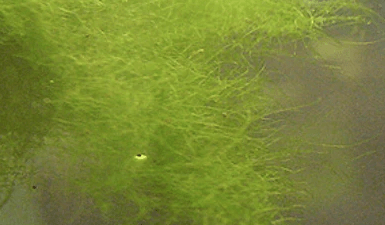
A type of rough, branching algae that resembles moss, can often be controlled by increasing water flow and reducing light intensity.
Hair Algae (Rhizoclonium)
Cotton-like algae, often appearing as green or gray threads, can be a sign of low nutrient levels, low carbon dioxide, or poor water flow. Fortunately, many algae-eating fish and shrimp species enjoy consuming this type.
Aquarium Algae And Biofilm FAQ
Biofilm is a bacterial community that attaches to surfaces and grows without light, while algae are photosynthetic plant-like organisms that require light to survive. Biofilm is held together by a sticky matrix of sugars and proteins; algae produce oxygen through photosynthesis. Both are frequently confused but require entirely different management approaches.
The white slimy film on new driftwood within days of setup is biofilm — a normal and beneficial bacterial community, not a problem. It represents early biological filtration establishment and serves as a food source for shrimp, snails, and many fish. It does not require removal and naturally reduces as the tank matures.
Brown algae — diatoms — appears in new aquariums due to elevated ammonia during the nitrogen cycle establishment, or in low-light conditions in mature tanks. It presents as a soft coating easily wiped away and is consumed by many aquatic organisms. In newly established tanks, it resolves on its own as ammonia levels stabilize.
Green water is caused by a free-floating algae bloom and requires a four-day complete blackout to starve it effectively — water changes alone do not work. Maintaining strong aeration throughout the blackout is non-negotiable, as decaying algae will otherwise deplete oxygen and trigger an ammonia spike. UV sterilizers provide an effective supplementary treatment.
Black brush algae (Audouinella sp.) thrives in areas of strong water flow and typically indicates elevated ammonia or nutrient imbalances. Reducing water flow and increasing CO2 injection are the primary management strategies — the algae turns red and dies as conditions become unfavorable. Complete eradication is difficult, with shrimp species providing only partial control.
Excessive biofilm poses a genuine risk to fish when it consumes dissolved oxygen faster than the tank can replenish it, potentially causing suffocation. Dense biofilm can also damage beneficial nitrifying bacteria and harbor harmful pathogens. Regular water changes, filter maintenance, and a clean-up crew of snails and shrimp are the primary management controls.
Sources
- Aquarium Co-Op (Algae Guide)
- The 2Hr Aquarist (Green Dust Algae)
- Green Aqua (The Ultimate Algae Guide)
- Aquarium Science (Staghorn Algae)
- Aquarium Breeder (Biofilm)
- Swell UK
- Aquarium Co-Op

Leave a Reply
You must be logged in to post a comment.