
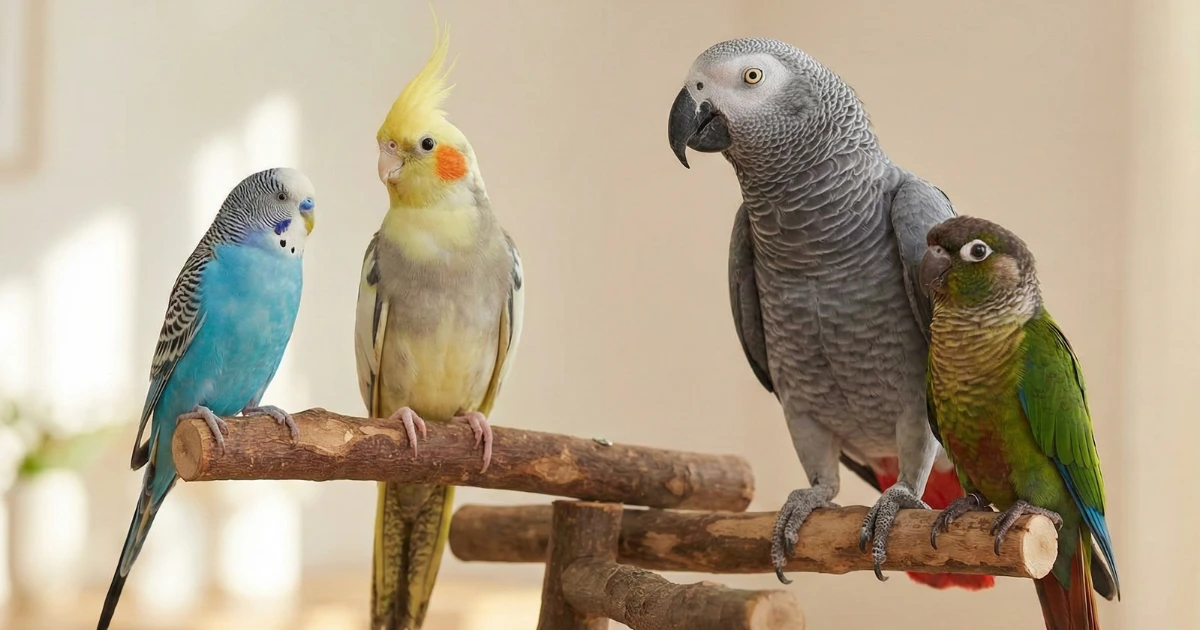
Pet birds represent a flash of living color and a burst of intelligent song. Therefore, pet birds often attract novice owners. However, pet birds are not simple pets. Specifically, every bird is a long-lived and emotionally complex creature. Furthermore, pet birds require a profound commitment. Consequently, this guide introduces the most popular species to help you decide. As a result, you must research specific biological and social needs. In fact, research is vital for avian care. Therefore, analyze species needs now. Specifically, check all environmental requirements. Furthermore, evaluate your own social capacity. Consequently, you will act responsibly. As a result, your bird will succeed. In fact, preparation is everything. Therefore, start your journey with these facts. Specifically, read this guide carefully. Choose a bird that fits your home. Furthermore, provide proper care and attention. As a result, enjoy a healthy partnership.
Part 1: The Best Small Birds for Beginners
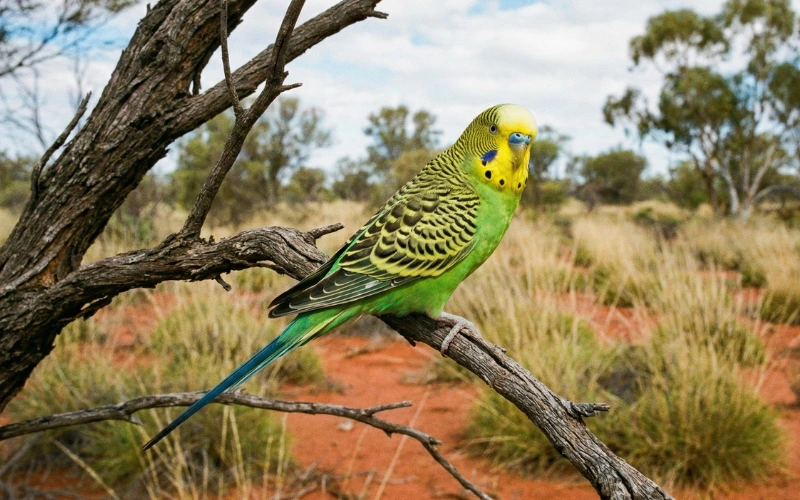
Budgie (Melopsittacus undulatus)
Budgies rank among the most popular pet birds on the planet. They originate from the dry scrublands of Australia, where they travel in massive wild flocks. Consequently, they are deeply social creatures and suffer from loneliness when kept alone. A single budgie needs daily interaction and at least one hour of supervised time outside its cage. Furthermore, keeping a pair or a small group dramatically improves their behavioral health. Males are generally more vocal and quicker to learn human speech. In fact, a well trained male budgie can learn several hundred words with consistent daily practice. Their diet must center on a quality formulated pellet, which should make up 60 to 70% of all food intake. Additionally, fresh vegetables including leafy greens, carrots, and broccoli supply essential micronutrients. Seeds work best as occasional treats and not daily staples. A seed only diet leads directly to fatty liver disease and a shortened lifespan. Therefore, pellets and vegetables are non negotiable parts of budgie nutrition. The cage must allow horizontal flight, since budgies exercise primarily through lateral movement. A minimum cage size of 45 x 45 x 60 cm suits one bird, though larger is always better. Moreover, foraging toys, bells, and mirrors provide the mental stimulation this species genuinely needs. Without enrichment, budgies develop feather destructive behavior and repetitive movements. Their average lifespan in captivity reaches 7 to 15 years with proper care. However, poor diet and small enclosures often cut that figure short by several years.
2. Cockatiel

Cockatiel (Nymphicus hollandicus)
Cockatiels rank as one of the most affectionate and trainable birds in the parrot family. They originate from the semi arid interior of Australia, where they form bonded pairs and family groups in the wild. Consequently, they require consistent daily social interaction from their keeper to remain emotionally healthy. A cockatiel left alone for long stretches will often develop screaming or feather destructive behavior. Furthermore, they communicate their emotional state clearly through their head crest.
A raised, fanned crest signals excitement or high alertness. A crest pressed tightly flat against the skull signals fear, anger, or severe stress. Their diet must move away from an all seed base, as this commonly causes obesity and nutritional deficiencies in captivity. In fact, a pellet based diet combined with fresh vegetables represents the current nutritional gold standard for this species. Dark leafy greens, cooked egg white, and sweet corn all make suitable daily additions. However, avocado, onion, chocolate, and caffeine are toxic to all parrots and must never enter their environment.
Cockatiels are capable whistlers and can memorize complete tunes with patient repetition from their keeper. Males generally develop stronger vocal ability than females. Moreover, female cockatiels are prone to chronic egg laying, which depletes calcium rapidly and requires active veterinary management. Their lifespan in captivity typically reaches 15 to 25 years with proper nutrition and regular veterinary care. Therefore, potential owners must understand this is a commitment spanning decades and not a casual hobby.
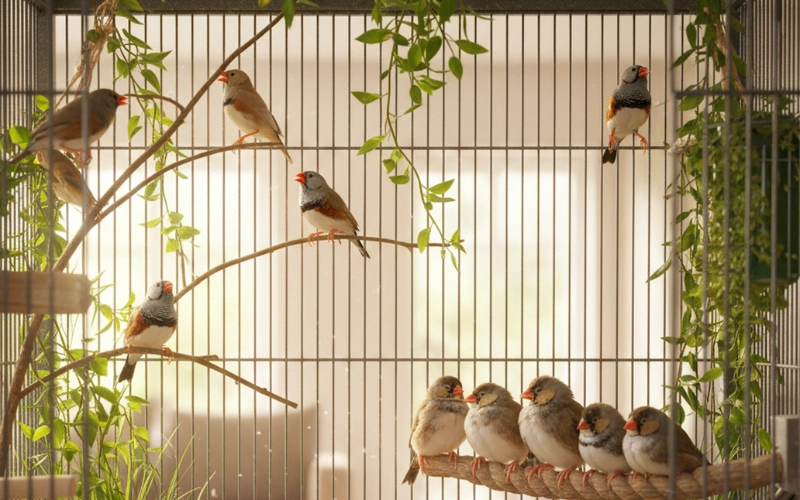
Finches birds
Finches are observational birds that thrive best in the company of their own kind rather than in close contact with humans. Zebra finches (Taeniopygia guttata) originate from Australia, while Society finches (Lonchura domestica) are a fully domesticated species with no known wild counterpart. Consequently, both species are entirely content without human handling and actually find excessive physical interaction stressful. Their primary need is the consistent company of other finches. In fact, keeping a solitary finch is genuinely unkind and produces visible signs of distress.
A pair or a small colony represents the correct and more humane minimum setup. Furthermore, the cage must be wide enough to allow full, sustained flight, since finches exercise exclusively through continuous movement through the air. A flight cage measuring at least 90 cm in width is the recommended starting point for a pair.
Their diet centers on a quality finch seed mix supplemented with fresh greens, sprouted seeds, and cuttlebone for calcium. Additionally, egg food provides a valuable protein boost especially during breeding season. These birds breed readily in captivity, which means population management becomes a genuine responsibility for the keeper. However, their housing requirements remain modest compared to parrot species. As a result, finches suit keepers who prefer active, visually beautiful birds without the social demands of a hands on parrot. Their lifespan ranges from 5 to 10 years depending on the species and quality of daily care.
4. Canary
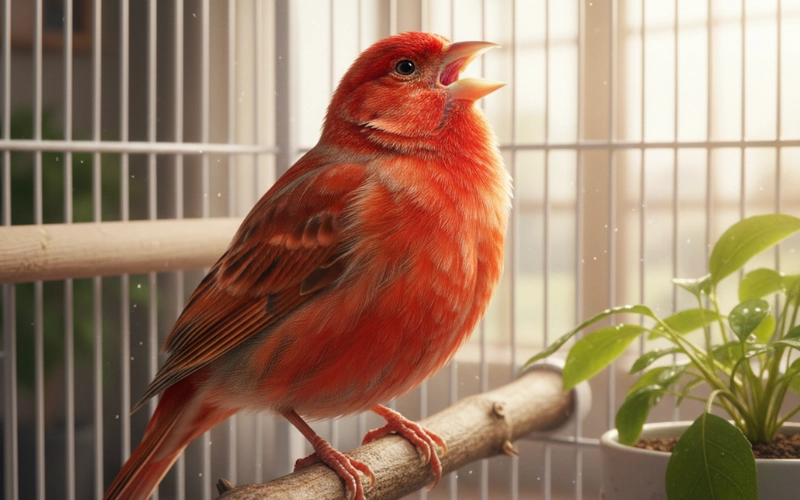
Canaries (Serinus canaria domesticus) are domesticated birds descended from the wild Atlantic canary native to the Macaronesian Islands. They represent centuries of selective breeding across three main categories: song, color, and type. Consequently, not all canaries look or sound alike, and choosing the right variety matters considerably.
Song canaries such as the Roller and the Spanish Timbrado produce the melodic, complex songs the species is famous for worldwide. Type canaries are bred purely for physical form, while color canaries are selected for rare pigmentation including red factor coloration. Furthermore, only male canaries sing with full complexity and range. Females produce quieter, simpler vocalizations and are less commonly kept for their song.
Their diet should consist of a quality canary seed mix alongside fresh greens, sprouted seeds, and soft foods such as cooked egg. Additionally, cuttlebone supplies the calcium essential for maintaining the skeletal and muscle health of a singing bird. A flight cage is mandatory, as free movement is critical for maintaining their physical condition. However, canaries generally do not tolerate handling and become highly stressed when restrained. Therefore, interaction should remain limited to daily observation and cage maintenance. Their historical use in coal mines as gas detectors reflects an extreme respiratory sensitivity that remains relevant today. Cooking fumes, scented candles, aerosol sprays, and non stick cookware fumes can kill a canary rapidly through respiratory failure. Their average lifespan in captivity reaches 10 to 15 years under proper conditions.
Part 2: Medium Parrots with Big Birds Personalities
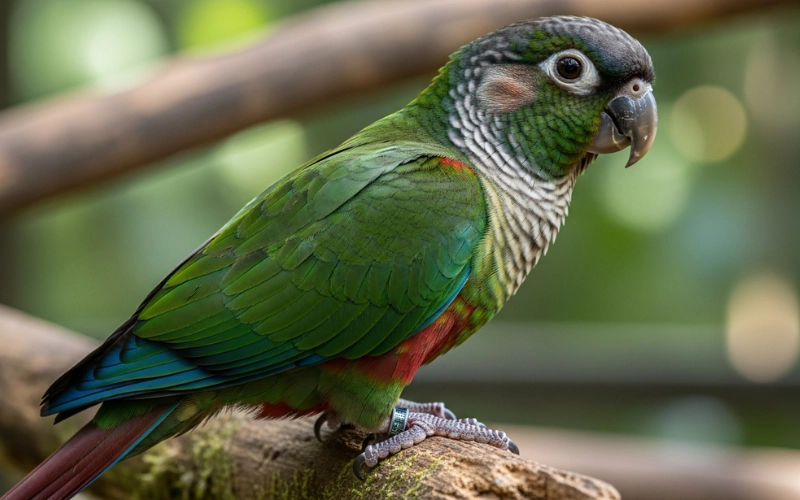
Green cheeked conures (Pyrrhura molinae) originate from the forests and woodlands of South America, primarily Bolivia, Brazil, and Argentina. They rank among the quieter conure species, which makes them better suited to apartment living than their louder relatives. However, quiet is a relative term with conures. They still produce frequent contact calls and will vocalize persistently when ignored or bored. Consequently, mental stimulation and regular social interaction remain non negotiable daily requirements.
These birds bond intensely with their keeper and actively seek physical contact, often crawling under shirt collars or nesting in hair. Furthermore, they learn physical tricks more readily than many other conure species, making training sessions a genuinely rewarding activity for both bird and keeper.
Their diet must include a quality small parrot pellet as its foundation. Fresh vegetables, leafy greens, and limited fruit complete a nutritionally balanced daily menu. Seeds should account for no more than 10 to 15% of total food intake to prevent obesity and vitamin deficiency. Moreover, they are available in several color mutations including turquoise, yellow sided, and pineapple. Each mutation carries the same behavioral and dietary requirements as the wild type bird.
They are also playful, affectionate, and are known specifically for enjoying being held upside down and tucked into pockets. Their lifespan in captivity typically reaches 20 to 30 years, representing a substantial commitment. Therefore, understanding their emotional demands before acquiring one is absolutely essential.
6. Quaker Parrot (Monk Parakeet)
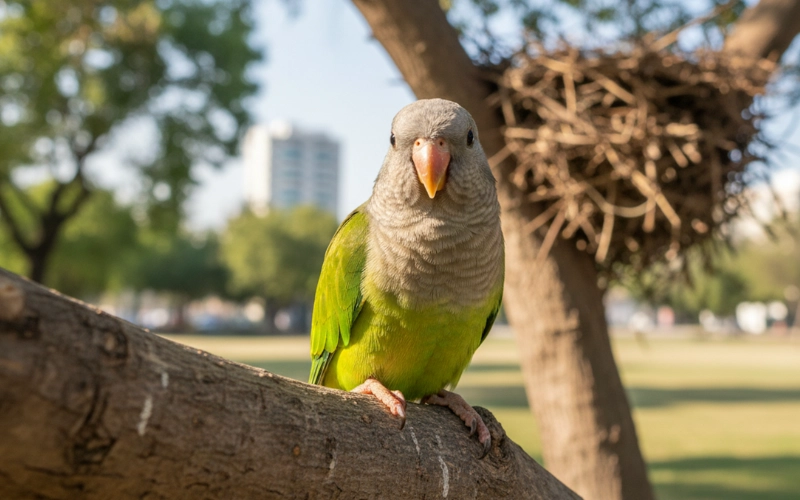
Quaker Parrots also known as Monk Parakeets (Myiopsitta monachus)
Quaker parrots (Myiopsitta monachus) are the only parrot species in the world that builds communal stick nests rather than using tree cavities. This unique behavior reflects a remarkably developed spatial and architectural intelligence. Wild colonies construct enormous, multi chambered nest structures that entire flocks inhabit year round. Consequently, they are highly territorial of any space they consider their personal domain.
In captivity, this means the cage often becomes the center of intense possessive behavior toward other birds and sometimes toward unfamiliar people. Furthermore, Quakers are among the most talkative of all medium parrot species, with a vocabulary that frequently exceeds 50 to 100 words with consistent daily training. Their speaking voice tends to be clear and relatively easy for humans to understand.
Their diet should center on a quality formulated pellet supplemented with fresh vegetables and limited fruit. Seed mixes should serve only as an occasional supplement and not a dietary staple. Moreover, Quakers are notoriously prone to fatty liver disease when fed a high fat diet, and body weight must be monitored regularly. Their average weight ranges from 90 to 150 grams. However, prospective owners must verify local regulations before acquiring this species.
They are classified as invasive in several US states including California, Pennsylvania, and Georgia, where ownership is entirely illegal. Established feral colonies now exist across parts of Europe, South America, and North America. Their lifespan in captivity commonly reaches 20 to 30 years with appropriate nutrition and veterinary care.
7. Lovebird
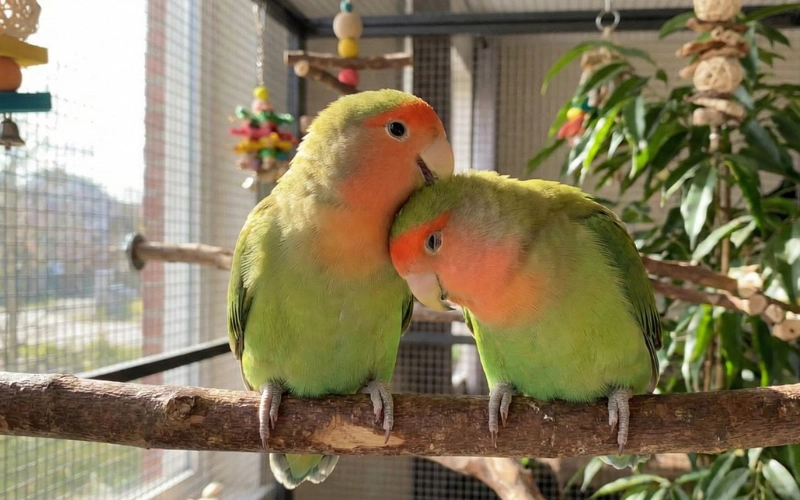
Lovebirds (Agapornis)
Lovebirds (Agapornis spp.) form a genus of nine small parrot species native to the African continent and Madagascar. Their name originates from the strong pair bonding behavior observed in wild mated pairs, who preen each other and maintain constant close physical contact. However, a single lovebird does not require a mate to thrive in captivity. In fact, a hand raised single lovebird will often redirect its full bonding instinct toward its human keeper. This can result in extremely intense territorial behavior toward other people or animals in the household. Socialization from a young age is essential to prevent aggression from becoming unmanageable over time.
Lovebirds are available in numerous color mutations including peachface, Fischer’s, and masked varieties, each with slightly distinct personality tendencies. Furthermore, their small size is deeply deceptive. They possess strong beaks relative to their body mass and will bite firmly when frightened or overstimulated. Their diet should consist of a quality small parrot pellet as its foundation alongside daily fresh vegetables and limited fruit portions. Seeds remain appropriate only as occasional treats and not as a dietary base.
Their cage must allow free movement and exercise, with a minimum floor space of 60 x 40 cm for a single bird. Moreover, foraging toys and wood for chewing are necessary to prevent boredom related behavior. Lovebirds are also highly active bathers and must have access to shallow water for bathing several times per week. Their average lifespan in captivity reaches 10 to 15 years under proper care conditions.
8. Caique
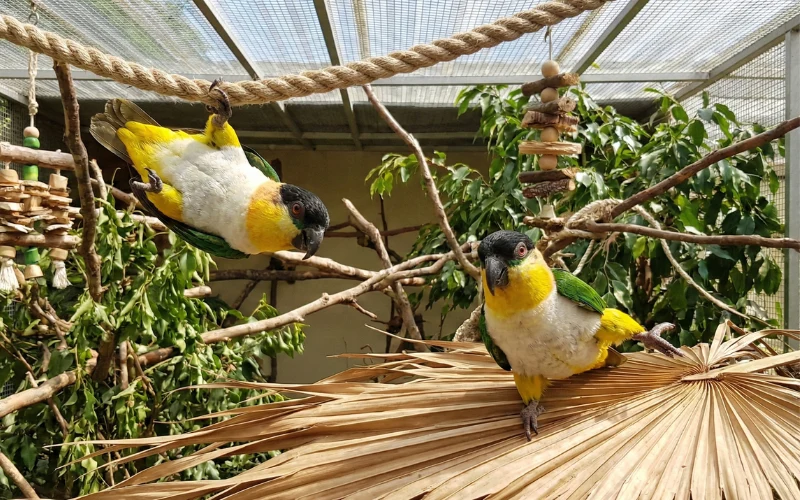
Caiques (Pionites)
Caiques belong to the genus Pionites and divide into two main species: the white bellied caique (Pionites leucogaster) and the black headed caique (Pionites melanocephalus). Both originate from the Amazon Basin and surrounding tropical forests of South America. They are among the most physically active parrots kept in captivity, with an energy level that genuinely surprises unprepared owners. Consequently, caiques require several hours of supervised interaction and active play outside their cage every single day.
They do not simply sit on a perch and look decorative. Instead, they roll, wrestle, surf on hands, and explore every available surface with relentless curiosity. Furthermore, caiques are known to play on their backs, which alarms new owners but is entirely normal and characteristic behavior for this species. Their diet must include a quality formulated pellet as the dietary base. Fresh vegetables, leafy greens, and limited fruit complete their daily nutritional requirements. However, caiques carry a notable behavioral characteristic worth understanding before purchase.
They are prone to sudden, intense aggression toward other bird species in multi bird households. As a result, housing caiques alongside other parrots requires extreme caution and rarely works over extended time. Their cage must be large, structurally sturdy, and stocked with a rotating selection of toys. Caiques destroy soft wood and rope toys rapidly, so a realistic toy replacement budget is a genuine ongoing expense. Their lifespan in captivity reaches 25 to 40 years with excellent nutrition and consistent veterinary oversight.
Part 3: Large Parrots – Lifelong, Intelligent Companions

African grey parrots (Psittacus erithacus) divide into two recognized subspecies. The Congo African grey is larger with bright red tail feathers and pale grey plumage. The Timneh African grey is smaller with darker charcoal plumage and a maroon tail. Consequently, both represent a profound and demanding commitment suited only to experienced bird keepers with genuine long term capacity.
Research conducted at the Alex Foundation demonstrated that Alex, a Congo African grey, possessed cognitive abilities comparable to a human child between 4 and 6 years of age. He understood color, shape, material, and quantity, and communicated through original constructed sentences. Furthermore, African greys are exceptionally sensitive to environmental changes, routine disruptions, and emotional tension within their households. They routinely mirror the stress levels of the humans around them.
Their diet requires particular attention to calcium and Vitamin D3 balance, as African greys are uniquely prone to hypocalcemia. This condition represents a potentially fatal drop in blood calcium that occurs far more readily in this species than in other comparable parrots. A pellet based diet rich in calcium, combined with appropriate UVB lighting exposure, represents current best practice. Fresh dark leafy greens, legumes, and limited fruit round out their daily nutritional requirements. Moreover, African greys bond deeply with one primary person and often show intense anxiety around strangers or changes in household composition. Their average lifespan in captivity reaches 40 to 60 years. Acquiring one is genuinely a lifelong arrangement for most owners.
10. Amazon Parrot
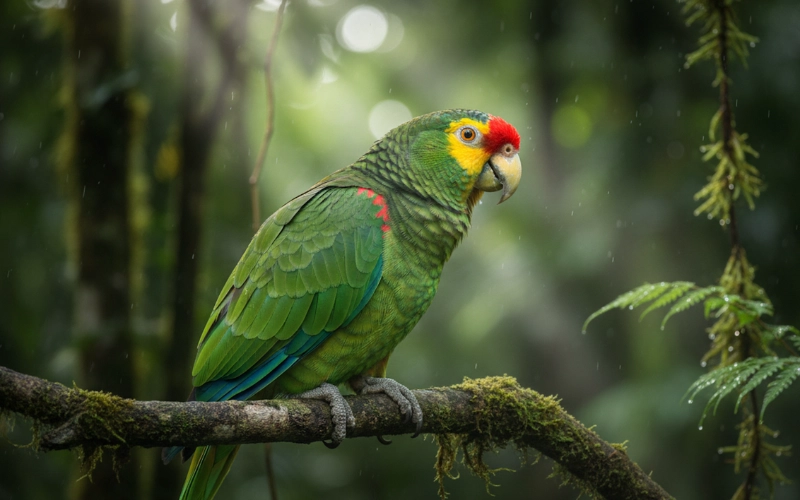
Amazon Parrot (Amazona autumnalis)
Amazon parrots encompass approximately 30 species in the genus Amazona, though only a handful appear regularly in the pet trade. The most commonly kept species include the yellow naped Amazon (Amazona auropalliata), the blue fronted Amazon (Amazona aestiva), and the double yellow headed Amazon (Amazona oratrix).
They originate from the forests and woodlands of Central America, South America, and the Caribbean. Consequently, they are adapted to warm and humid conditions and struggle noticeably in cold or dry indoor environments. Amazon parrots are regarded as among the finest vocal mimics in the parrot world. Their vocal reproduction includes melody, pitch variation, and tonal accuracy that many owners describe as startlingly realistic. Furthermore, they enter a behavioral phase called hormonal behavior during breeding season each year. During this period, even previously gentle birds may become territorial, bite without warning, and display aggressive posturing. Understanding and managing this predictable seasonal cycle is a non negotiable aspect of responsible Amazon ownership.
Their diet must be high in Vitamin A, as deficiency in this nutrient is the single most common nutritional disease in Amazon parrots kept in captivity. Dark orange and green vegetables including sweet potato, carrot, and kale deliver this essential nutrient effectively. However, Amazons are also highly prone to obesity, which demands strict portion control and regular physical activity outside the cage.
Their lifespan in captivity commonly reaches 40 to 70 years. In fact, this species regularly outlives its first owner and requires advance planning regarding future care.
11. Cockatoo
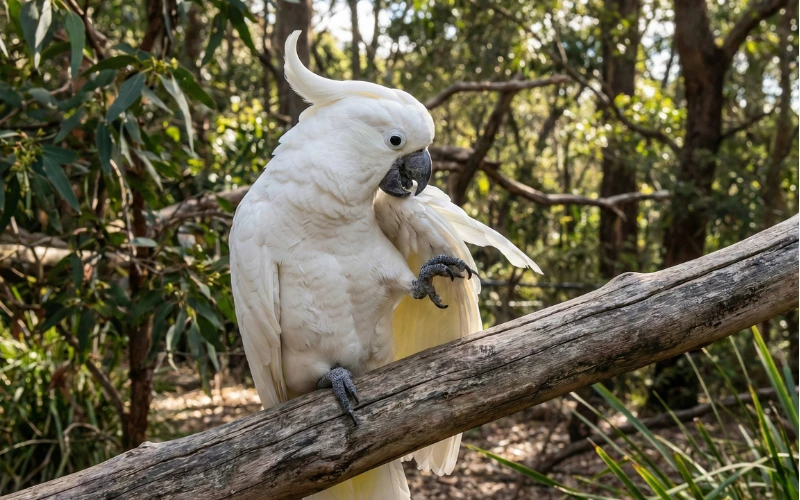
Cockatoos belong to the family Cacatuidae and include 21 recognized species. The most commonly kept in captivity are the sulphur crested cockatoo (Cacatua galerita), the umbrella cockatoo (Cacatua alba), the Moluccan cockatoo (Cacatua moluccensis), and the Goffin’s cockatoo (Cacatua goffiniana).
They originate from Australia, New Guinea, and the surrounding island chains. Consequently, they evolved within extensive social flock structures that demanded continuous interaction and communication. In captivity, this translates directly into an extraordinary and non negotiable demand for human attention.
A cockatoo that does not receive several hours of direct daily interaction will develop serious behavioral problems with near certainty. These problems include incessant screaming, aggressive biting, and severe feather destructive behavior including plucking and self mutilation. Furthermore, once feather destructive behavior escalates to self mutilation, it becomes extremely difficult to reverse even with expert veterinary intervention.
Their diet must center on a quality formulated pellet to prevent the nutritional deficiencies common in seed fed birds. Fresh vegetables, leafy greens, nuts in moderation, and limited fruit complete their daily nutritional requirements. Moreover, cockatoos produce a fine white powder from their feathers called feather dust, which is a significant respiratory allergen for some people. Their beak strength is considerable, and an unsupervised cockatoo will methodically destroy furniture, baseboards, and woodwork.
Their lifespan in captivity spans 40 to 80 years depending on the species, meaning they frequently outlive their original owners and require long term guardianship planning.
12. Macaw

Green-Winged Macaw (Ara chloroptera)
Macaws belong to the tribe Arini and include both large and miniature species. The most commonly kept large species include the blue and gold macaw (Ara ararauna), the scarlet macaw (Ara macao), the green winged macaw (Ara chloroptera), and the hyacinth macaw (Anodorhynchus hyacinthinus). Miniature macaws such as the Hahn’s macaw (Diopsittaca nobilis) offer a more manageable alternative without sacrificing intelligence or personality. Consequently, prospective owners must honestly assess their living situation before selecting any macaw species.
Large macaws require walk in aviaries or extremely large custom enclosures. Standard commercial cages are wholly inadequate for any large macaw species. Furthermore, their beak force is genuinely dangerous. A large macaw exerts between 500 and 700 PSI of crushing pressure, enough to crack Brazil nuts, damage structural wood, and cause serious injury.
Their vocalizations carry significant volume and travel across considerable distances, making them unsuitable for apartment living. Their diet must include a quality large parrot pellet supplemented with fresh vegetables, fruit, and nuts as daily enrichment. The hyacinth macaw specifically requires a palm nut based diet and does not thrive on standard commercial parrot pellets alone. Moreover, macaws are highly intelligent and require continuous behavioral enrichment through foraging challenges, wood for destruction, and sustained daily social interaction.
Their lifespan in captivity varies by species but commonly reaches 30 to 60 years for large species. Therefore, acquiring a large macaw is a commitment that frequently spans multiple generations of the same family.
Part 4: Other Fascinating Feathered Friends

Ring necked parakeets (Psittacula krameri) are one of the most widely distributed parrot species in the world. Their native range spans a broad continuous band from West Africa across India and into Sri Lanka. However, established feral populations now exist across the United Kingdom, the Netherlands, Belgium, Germany, and parts of the Middle East. Consequently, this species demonstrates exceptional climate adaptability that is uncommon among tropical parrot species. They are sexually dimorphic.
Adult males develop a distinctive rose and black neck ring that appears between years 2 and 3 of age. Females and immature males lack this ring entirely. Furthermore, ring necked parakeets are capable talkers and can develop a vocabulary exceeding 200 words with consistent daily training. Their voice tends to be clear and relatively high pitched, making their speech easy to understand. Their diet should consist of a quality small to medium parrot pellet alongside fresh vegetables, leafy greens, and limited fruit. Seeds suit them best as an occasional supplement rather than a dietary foundation. Moreover, they are not naturally cuddly or physically affectionate birds.
Wild caught or poorly socialized individuals often remain hand shy throughout their lives despite patient handling attempts. Hand raised individuals are significantly more tractable and genuinely receptive to human interaction. Their lifespan in captivity commonly reaches 25 to 30 years under appropriate care conditions.
14. Pionus Parrot
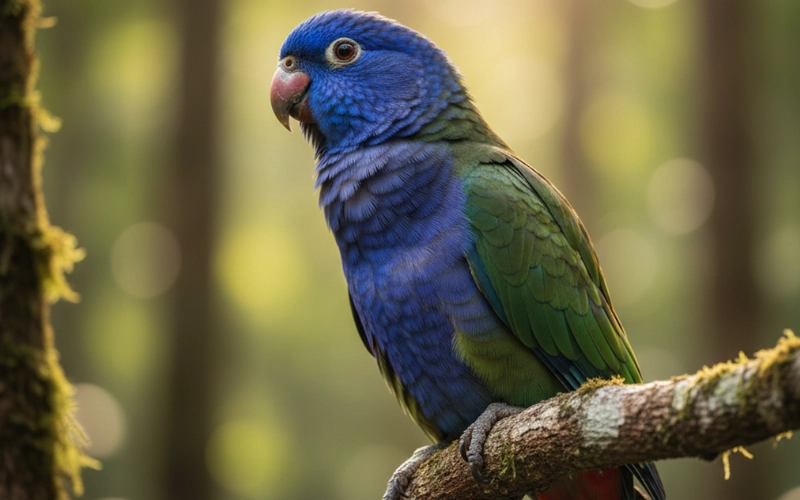
Pionus parrots comprise eight species in the genus Pionus, originating from Mexico, Central America, and South America. The most commonly kept species include the blue headed pionus (Pionus menstruus), the bronze winged pionus (Pionus chalcopterus), and the Maximilian’s pionus (Pionus maximiliani). They represent a genuine middle ground between the highly demanding Amazon parrot and a more manageable companion bird. Consequently, they attract experienced keepers who want a substantial and intelligent bird without extreme noise levels.
Pionus parrots are notably calm and steady in temperament compared to most other medium parrot species. However, they produce a characteristic wheezing or hissing sound when frightened or stressed. This sound alarms many new owners who mistake it for a respiratory illness. In fact, it is a completely normal fear response for this genus and not a symptom of disease.
Their plumage contains iridescent feathers that shift color visibly under different lighting conditions, a feature often missed entirely in photographs. Furthermore, they are prone to obesity and aspergillosis, a respiratory fungal infection, if kept in damp or poorly ventilated indoor environments.
Their diet must center on a quality formulated pellet with fresh vegetables making up a significant daily portion. Vitamin A rich vegetables such as sweet potato and dark leafy greens are particularly important for maintaining health in this genus. Moreover, they are among the quieter medium parrot species, though they are far from silent birds. Their lifespan in captivity reaches 25 to 40 years under proper care.
15. Eclectus Parrot
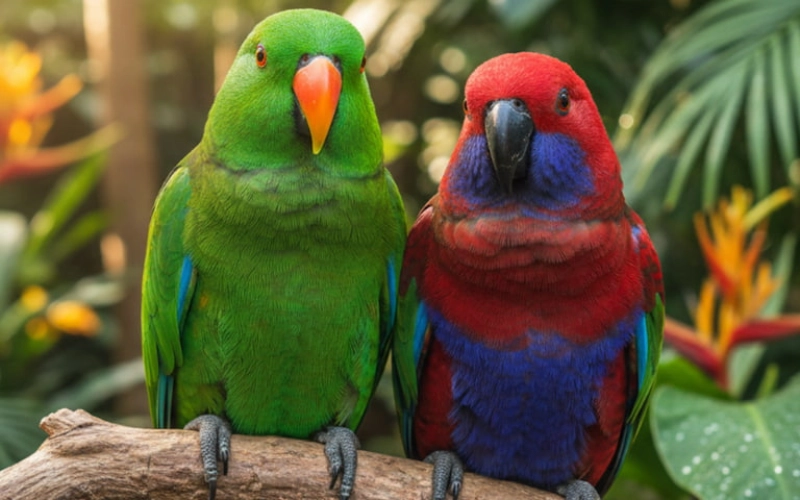
Eclectus parrots (Eclectus roratus) represent one of the most visually dramatic examples of sexual dimorphism in the entire bird world. Males display brilliant emerald green plumage with a candy corn orange upper beak and accents of blue and red along the wings.
Females are entirely royal red with a deep purple chest band and a solid black beak. Consequently, the two sexes were classified as completely separate species by early naturalists before the true relationship was properly understood. Their natural range spans New Guinea, the Moluccas, the Solomon Islands, and the Cape York Peninsula of Australia. Furthermore, the Eclectus possesses an unusually long digestive tract compared to other parrot species.
This anatomical difference means their diet must consist primarily of fresh whole foods rather than heavily processed pellets. In fact, a heavily pellet based diet has been directly linked to neurological problems and feather destructive behavior in Eclectus parrots. Fresh fruit, vegetables, leafy greens, sprouted seeds, and cooked grains form the correct dietary foundation for this species.
Their housing must be large enough to allow full wing extension and free movement, with a minimum cage size of 90 x 60 x 120 cm for a single bird. Moreover, Eclectus parrots are highly sensitive to artificial light cycles. Inconsistent or excessively long light exposure disrupts hormonal cycles and triggers chronic egg laying in females, which causes significant physical damage over time.
Their lifespan in captivity typically reaches 30 to 40 years. Therefore, dietary management and lighting control are genuine health priorities for this species and not optional details.
16. Diamond Dove

Diamond doves (Geopelia cuneata) are the smallest dove species kept in captivity and one of the smallest birds native to Australia. They inhabit the arid and semi arid grasslands of central and northern Australia, where they depend on reliable water sources throughout the year. Consequently, fresh clean water must always be available in captivity, as these birds drink frequently throughout the day.
Diamond doves are entirely non aggressive and among the most peaceful birds a keeper can house in a home environment. They do not bite, scream, or exhibit territorial aggression under normal circumstances. Furthermore, their gentle cooing is quiet and rhythmic, making them genuinely suitable for apartments and shared living spaces. Their plumage is soft blue grey with distinctive white spotted wing markings that give the species its common name. However, they are sensitive to cold temperatures and require an environment above 15°C at all times. Below this threshold they become lethargic and highly susceptible to respiratory illness.
Their diet consists primarily of small seeds, particularly millet and canary grass seed, supplemented with grit and cuttlebone for calcium and mineral balance. Moreover, fresh greens and occasional small insects provide additional nutritional variety throughout the week.
A flight cage is essential for maintaining their physical condition, as they rely on continuous movement for both exercise and mental stimulation. They can be housed in aviaries alongside other peaceful small birds, provided no larger or more aggressive species are present in the same space. Their lifespan in captivity reaches 10 to 15 years under appropriate conditions.
17. Pigeon

Domestic pigeons (Columba livia domestica) descend from the wild rock pigeon and represent one of the oldest domesticated bird species in recorded human history. Selective breeding over thousands of years has produced an extraordinary range of breeds including fantails, tumblers, homers, and pouters, each with distinct physical characteristics and behavioral traits. Consequently, choosing the right breed matters as much as choosing the right species when selecting any other pet bird.
Pigeons are significantly more intelligent than their urban reputation suggests. Research has demonstrated their ability to recognize individual human faces, distinguish between Monet and Picasso paintings, and navigate across hundreds of kilometers using magnetic field detection and solar positioning. Furthermore, they bond genuinely with their keepers when raised with regular positive interaction from a young age. Their dietary requirements are straightforward. A quality pigeon grain mix supplemented with grit, fresh greens, and clean water forms the complete nutritional foundation for most breeds. Moreover, homers and sporting breeds require specific conditioning diets during active training and racing seasons.
Pigeons are robust birds with a strong immune system when housed in clean, dry, and well ventilated conditions. However, they are susceptible to Paramyxovirus type 1 and Pigeon Pox, both of which are manageable through consistent preventive vaccination programs. Indoor housing suits tame individual birds kept specifically as companions. Loft housing suits larger collections or actively exercised sporting breeds.
Their lifespan in captivity commonly reaches 10 to 15 years for companion birds, with some exceptional individuals reaching 20 years.
18. Mynah Bird

Common mynahs (Acridotheres tristis) and hill mynahs (Gracula religiosa) represent the two species most frequently encountered in the companion bird trade, though their care requirements differ considerably. Hill mynahs are the more vocally celebrated of the two and are widely regarded as the most talented vocal mimics in the entire bird world.
They replicate human speech, laughter, and environmental sounds with a tonal accuracy that frequently startles first time listeners. Consequently, hill mynahs attract keepers specifically for their extraordinary vocal ability. However, they are not physically affectionate birds. They rarely enjoy handling and prefer to observe their environment from a perch rather than seek direct human contact.
Their dietary needs are highly specific and represent the most genuinely challenging aspect of their captive care. Hill mynahs are uniquely prone to iron storage disease, a progressive condition that causes fatal liver and organ damage when dietary iron intake is excessive. Commercial mynah pellets formulated specifically for low iron intake must form the dietary base. Fresh fruit with naturally low iron content, such as papaya, apple, and grapes, supplements their meals appropriately. Bananas, stone fruits, and dried fruit must be strictly excluded due to their high iron content. Moreover, their droppings are liquid and extremely frequent, which demands a cage design that allows rapid and thorough daily cleaning.
Their cage must provide enough space for full body movement and wing extension without restriction. Their lifespan in captivity reaches 12 to 25 years with correct dietary management and appropriate housing.
19. Toucan

Toucans belong to the family Ramphastidae, which includes over 40 species distributed across the tropical forests of Central and South America. The most commonly kept pet species include the toco toucan (Ramphastos toco), the channel billed toucan (Ramphastos vitellinus), and smaller species such as the emerald toucanet (Aulacorhynchus prasinus).
Their iconic oversized beak is lightweight and primarily composed of hollow bone filled with a network of structural supports and blood vessels. Consequently, despite its dramatic visual size, the beak is not a powerful crushing instrument. Instead, it functions as a tool for reaching fruit on thin branches and for regulating body temperature through heat exchange.
Toucans are specialist birds and represent one of the most demanding captive species in terms of housing, diet, and veterinary requirements. Furthermore, their housing must be room sized. A standard bird cage is wholly inadequate for any toucan species. A minimum indoor aviary measuring 3 x 2 x 2 meters suits a single bird, with larger dimensions strongly preferred for the bird’s welfare. Their dietary requirement is the most critical management factor for this species.
Toucans are iron sensitive to an extreme degree, even more so than hill mynahs. A diet elevated in iron causes fatal hemochromatosis, a progressive liver disease with no effective cure once the condition becomes advanced. Their entire diet must consist of low iron fruit such as papaya, watermelon, blueberries, and grapes alongside specially formulated low iron toucan pellets. Citrus fruit must be entirely excluded, as Vitamin C dramatically accelerates iron absorption through the digestive tract. Moreover, they require access to shallow bathing water daily for plumage maintenance. Their lifespan in captivity reaches 20 to 25 years with correct and consistent management.
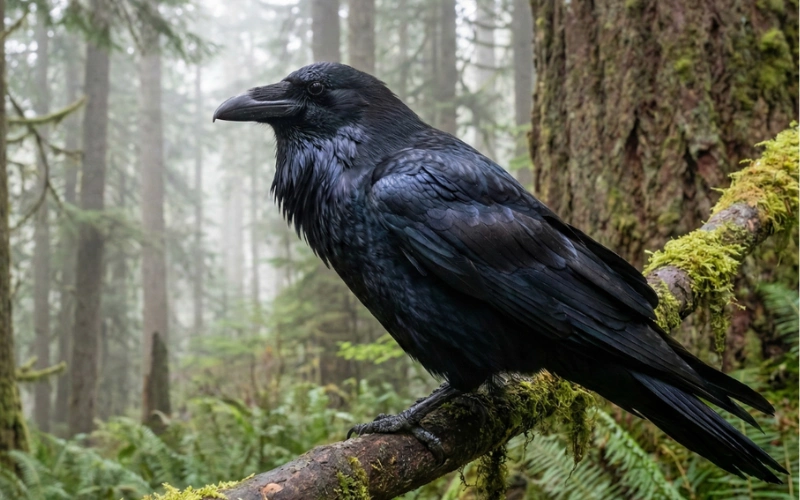
Corvids comprise the family Corvidae, which includes crows, ravens, rooks, jackdaws, jays, and magpies. This family represents the undisputed pinnacle of avian intelligence. Research consistently places corvids alongside great apes and cetaceans in standardized cognitive ability assessments. Ravens (Corvus corax) demonstrate causal reasoning, tool manufacture, future planning, and theory of mind.
Theory of mind is the capacity to understand that other individuals hold their own separate beliefs and intentions. Consequently, corvids occupy a cognitive and ethical category entirely separate from conventional companion birds. Furthermore, wild corvids are protected under strict national and international legislation across virtually their entire range.
In the United States, the Migratory Bird Treaty Act makes it illegal to own, possess, or keep any native corvid species under most circumstances. In the United Kingdom, the Wildlife and Countryside Act provides equivalent and enforceable protection. Therefore, acquiring a wild caught or locally collected corvid in these regions is a criminal offense and not simply an ethical grey area. Some falconry licensed individuals may keep ravens under specific regulated conditions in certain jurisdictions. However, these arrangements require formal training, dedicated purpose built facilities, and ongoing regulatory compliance. Moreover, no commercially bred or domesticated corvid population exists for the general pet trade.
Any corvid offered for sale through unregulated channels is almost certainly wild caught or illegally sourced. Their extraordinary cognitive complexity means that even where ownership might be technically legal, the welfare demands of a captive corvid exceed what most private keepers can realistically and ethically provide.
Sources
- Scientific American
https://www.scientificamerican.com/article/bird-brains-are-far-more-complex-than-previously-thought/ - US Fish & Wildlife Service
https://www.fws.gov/law/migratory-bird-treaty-act-1918 - VCA Animal Hospitals
https://vcahospitals.com/know-your-pet/cockatiels-feeding - San Diego Zoo Wildlife Alliance
https://animals.sandiegozoo.org/animals/parrot


Leave a Reply
You must be logged in to post a comment.