
You bought the perfect new fish. It’s vibrant, active, and looks completely healthy. The temptation is overwhelming, you just want to get it home and see it swimming in your beautiful, established display tank. So, you float the bag and let it go. For a few days, everything seems fine. Then, you see a single white spot. Then another. And just like that, you’ve accidentally introduced a plague into your aquatic paradise. This scenario is the moment every hobbyist learns the hard lesson of quarantine. Therefore, this guide is your essential blueprint for setting up and using a quarantine and hospital tank, the single most important tool in responsible fishkeeping.
Aquatic Russian Roulette
For years, I got away with it. I’d buy a new fish, give it a quick look over, and pop it into one of my established community tanks. In reality, I was playing aquatic Russian Roulette and didn’t even know it. It wasn’t until a single new addition brought a nasty case of Ich into my favorite American Cichlids tank that I learned my lesson.
The weeks of stress, the expensive medications that stained my silicone blue, the constant worry, it was a nightmare.More importantly, it was a completely avoidable nightmare. I now see a quarantine tank not as an optional extra, but as the most important piece of equipment I own. It is the locked door between my beautiful, stable worlds and the potential chaos of the outside. This guide is my sermon on the topic.
What is a Quarantine Tank, and Do I Really Need One?
Yes, you absolutely, 100% need one. A quarantine (QT) tank is a separate, simple aquarium where all new fish, plants, and invertebrates are housed for a period of 4 to 6 weeks before they are introduced to your main display tank. Fundamentally, its purpose is observation.
Why is a quarantine tank non-negotiable?
Disease Prevention: First and foremost, it is the only way to guarantee you do not introduce devastating diseases likeIch, Velvet, or internal parasites into your established, healthy aquarium. A fish can look perfectly healthy at the store but actually be a ticking time bomb of parasites that are in an early stage of their life cycle.
Safe Acclimation: In addition, a QT tank is a calm, stress-free environment for a new fish to acclimate, recover from the stress of transport, and learn to eat your specific food without competition.
Observation: Finally, it allows you to closely observe the new fish’s behavior and health. For instance, is it eating well? Is its poop normal? Is it showing any signs of illness? You can spot and treat a problem here, without risking your entire collection.
What is a Hospital Tank, and How is it Different?
A hospital (or treatment) tank is a separate aquarium where you move a fish that is already in your main tank and has become sick.
Why use a hospital tank?
Protects Your Biological Filter: Many fish medications, especially those containing copper or antibiotics, will kill the beneficial bacteria in your main tank’s filter, causing your nitrogen cycle to crash.
Safe for Invertebrates and Plants: These medications can also be lethal to your snails, shrimp, and live plants.
Accurate Dosing: It allows you to use a smaller, more precise dose of medication in a smaller volume of water, which is more effective and saves money.
Can I Use the Same Tank for Both Quarantine and a Hospital?
Yes! A single small tank can serve both functions, just not at the same time. In fact, the setup is virtually identical. When the tank isn’t being used to quarantine new arrivals, it sits empty, clean, and ready to be deployed as a hospital tank at a moment’s notice.
How Do I Set Up a QT/Hospital Tank? The Simple Guide
The goal is functional and sterile, not beautiful.
- Tank Size: For this purpose, smaller is better. A simple 10-gallon (40-liter) glass tank is perfect for most situations.
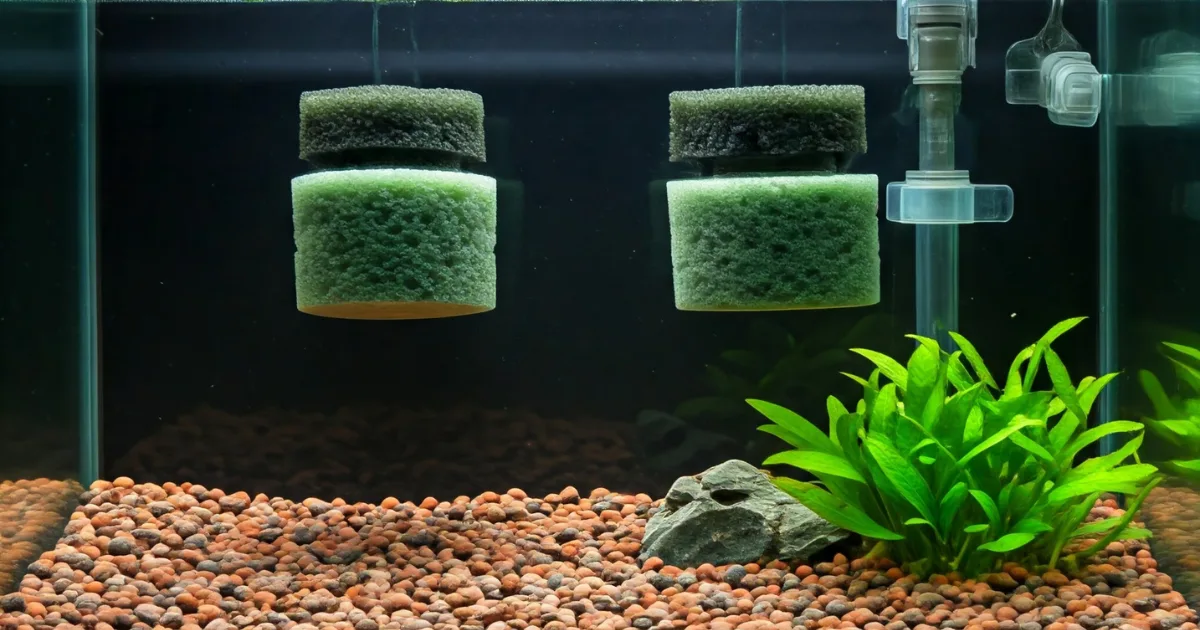
- Filtration: A sponge filter is the undisputed champion. It provides gentle, effective biological filtration and won’t be harmed by medications. To ensure instant readiness, you can keep the sponge filter running in the sump of your main tank so it stays seeded with beneficial bacteria.
- Heater: Next, an adjustable submersible heater is essential to maintain a stable, tropical temperature.
- Substrate: Do not use substrate. A bare-bottom tank is crucial for keeping the tank sterile and allowing you to easily observe waste and uneaten food.
- Decorations: Provide simple, non-porous hiding spots that are easy to clean. For example, PVC pipe fittings, plastic pots, and artificial plants are perfect. Be sure not to use driftwood or porous rocks, as they will absorb medications.
- Lighting: Finally, no special light is needed. Ambient room light is fine.
The Quarantine Process: A Step-by-Step Guide
- Setup: Set up your QT tank with water from your established display tank. This ensures the parameters are identical and reduces shock. While this is correct for parameter matching (pH, GH, KH) to reduce osmotic shock, it does not “cycle” the tank. Beginners often think the water contains the beneficial bacteria. As long as you understand the bacteria are in the filter (the seeded sponge you mentioned), using display tank water is a safe way to start.
- Acclimate: Drip acclimate your new fish to the QT tank.
- Observe: For 4-6 weeks, watch the fish closely. Feed them well and perform regular water changes. This time period is long enough for the life cycle of most common parasites (like Ich) to complete.
- Medicate (Optional): Some keepers choose to proactively treat all new fish with a general anti-parasitic and anti-bacterial medication during the final weeks of quarantine.
- The Final Move: If, after 4-6 weeks, the fish shows zero signs of illness, it is finally safe to move it to your main display tank.
How Long Should I Quarantine New Fish?
The minimum recommended quarantine period is four weeks. Six weeks is even safer and is the gold standard for ensuring no latent diseases are present.
Quarantine And Hospital Aquariums FAQ
A quarantine tank is a separate aquarium where new fish are isolated for four to six weeks before joining the display tank. Its purpose is to catch and treat diseases before they can spread to established residents. A single un-quarantined fish can silently infect an entire healthy community.
The minimum safe quarantine period is four weeks, but six weeks is the gold standard for disease elimination. This duration covers the complete life cycle of most common parasites, including Ich. Any fish showing no symptoms after six weeks is safe to transfer to the main display tank.
A ten-gallon bare-bottom tank fitted with a sponge filter and an adjustable heater covers all the essential requirements. Simple non-porous hiding spots, such as PVC pipe sections, provide shelter without absorbing medication. No substrate and no specialty lighting are needed, as sterility and function take priority over aesthetics.
Yes, one small tank performs both roles effectively, provided it does not handle both functions at the same time. The setup is identical — a bare-bottom, sponge-filtered tank that stays empty and clean between uses. Keeping it ready at all times ensures immediate deployment when a sick fish needs isolation.
A quarantine tank houses healthy new arrivals for observation before they enter the display tank. A hospital tank is where fish already living in the main aquarium are moved for safe treatment once illness develops. The setup is identical, but their timing and purpose are entirely different.
Medicating the main tank destroys beneficial bacteria in the biological filter, crashing the nitrogen cycle and harming every inhabitant. Copper and antibiotic medications are also lethal to invertebrates and live plants. A hospital tank protects the established ecosystem while allowing precise dosing in a smaller water volume.
Consistent feeding behavior, clear eyes, undamaged fins, normal feces, and active swimming across the full quarantine period confirm good health. Any scratching against surfaces, clamped fins, or visible spots signal an illness that must be treated before the fish joins the main tank.
Sources
- University of Florida IFAS (Quarantine Procedures)
https://edis.ifas.ufl.edu/publication/FA001 - Practical Fishkeeping (Quarantine Setup)
https://www.practicalfishkeeping.co.uk/features/how-to-quarantine-your-fish/ - Aquarium Co-Op (How to Quarantine)
https://www.aquariumcoop.com/blogs/aquarium/quarantine-tank - Seachem (Medication FAQ)
https://seachem.zendesk.com/hc/en-us/articles/115000133994-FAQ-Cupramine-Will-Cupramine-harm-the-bacteria-in-the-bio-filter - The Spruce Pets (Setting Up a QT)
https://www.thesprucepets.com/quarantine-tank-setup-1381313
Leave a Reply
You must be logged in to post a comment.