
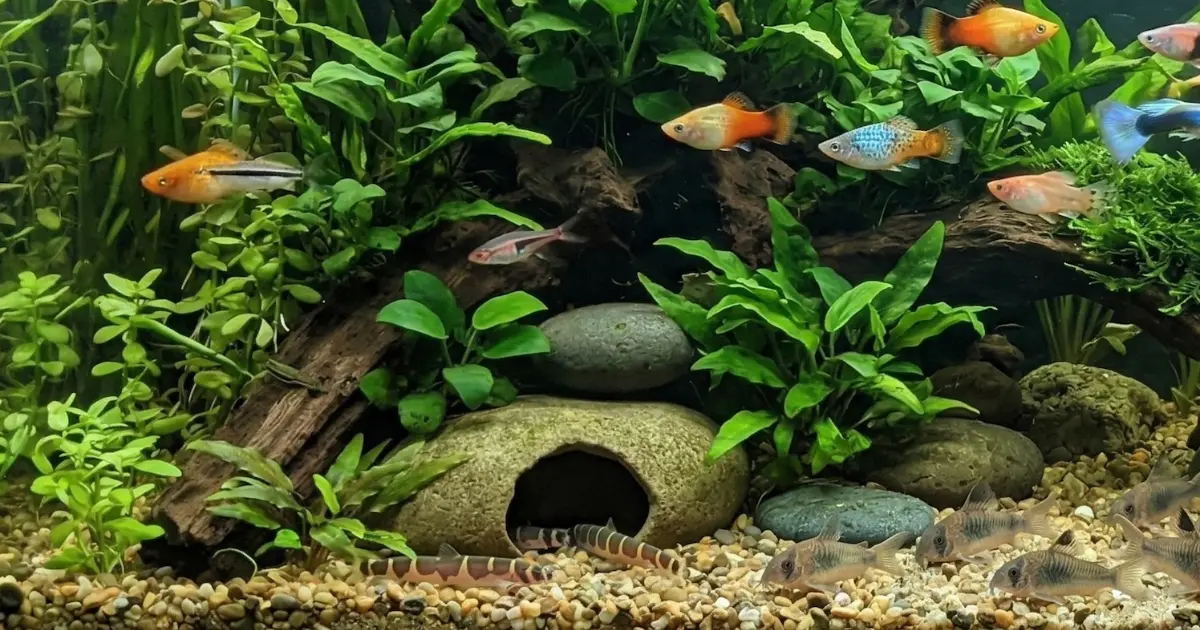
A community fish aquarium is a carefully balanced microcosm of diverse aquatic life. As such, it can be a captivating and rewarding addition to any home. The key to a successful community tank is understanding fish compatibility, which also involves maintaining a peaceful environment and appreciating the unique roles different species play within the ecosystem.
I used to think I was an expert in managing a “community.” After all, I successfully navigated the complex social dynamics of fifteen rescue cats, each with their own dramas, alliances, and feuds. My house was a living, breathing feline soap opera, and I was the lead peacekeeper.
Consequently, when I started my first community fish tank, I thought it would be easy. Just pick the pretty ones, right? However, I learned very quickly that you can’t reason with fish. They don’t form committees or respect personal space. A fish tank isn’t a soap opera; instead, it’s a delicate dance of chemistry, biology, and instinct.
My cats taught me about personality, but my fish taught me about parameters. I realized then that a peaceful aquarium isn’t created by hope or luck; it’s built with research, careful planning, and a deep respect for the invisible rules of their world. This guide is that rulebook. It’s here to help you become the architect of a thriving, peaceful world, not just a referee for tiny, colorful chaos.
What fish can live together to have a peaceful community fish aquarium?
The foundation of a peaceful community aquarium is selecting compatible fish species. Compatibility encompasses several factors:
- Temperament: First and foremost, avoid housing aggressive or territorial species with peaceful, docile fish. For instance, Tiger Barbs are known for their fin-nipping behavior, making them unsuitable tank mates for long-finned fish like Bettas or Angelfish.
- Size: Next, consider the adult size of each species. Large fish may prey on smaller tank mates; conversely, smaller fish may feel intimidated or stressed by much larger companions.
- Water Parameters: Crucially, ensure all chosen species thrive in similar water conditions, including temperature, pH, and hardness. Always research the specific requirements of each species to avoid stressing fish due to incompatible water chemistry.
- Swimming Level: Finally, consider the swimming level each species prefers. Some fish, like Corydoras catfish, primarily inhabit the bottom of the tank. Others, such as tetras, prefer the middle or upper levels. Choosing fish that occupy different areas of the tank maximizes space utilization and reduces competition for territory.
How to reduce stress in a community fish tank?
Beyond selecting compatible species, several strategies contribute to a peaceful community tank:
Stocking ideas for a peaceful community fish aquarium
Different fish species fulfill various roles within the aquarium ecosystem:
Algae Eaters: These fish include Otocinclus catfish and Siamese algae eaters. They help control algae growth. This keeps the tank clean and aesthetically pleasing.
Bottom Dwellers: Fish like Corydoras catfish and kuhli loaches scavenge the bottom of the tank for leftover food. They also remove detritus. This behavior helps to maintain a clean substrate.
Dither Fish: Active, peaceful fish, such as tetras or rasboras, can help reduce shyness. They encourage more timid species to come out into the open.
How to choose compatible fish?
When selecting fish for a community tank and introducing new fish to an established community tank, there are three critical steps. First, if you are new to fish keeping, start with hardy species. These species are more forgiving of minor fluctuations in water parameters. Second, research the specific needs and temperament of each species before introducing them to your tank. And finally, quarantine new arrivals. You must quarantine new fish for several weeks since this is important to prevent the spread of disease to the main tank.
Examples of Compatible Community Fish
Tetras: Neon tetras, cardinal tetras, and ember tetras are peaceful, schooling fish that add vibrant color to the tank.
Rasboras: Harlequin rasboras and espei rasboras are peaceful and active fish that thrive in groups.
Corydoras Catfish: These bottom-dwelling catfish are peaceful scavengers that help keep the substrate clean.
Platies and Guppies: These livebearing fish are peaceful and come in a variety of colors and patterns.
Conclusion
Establishing and maintaining a thriving community fish aquarium requires careful planning, research, and ongoing maintenance. By prioritizing fish compatibility, you can create a peaceful environment. Furthermore, understanding the roles different species play is essential. This combined effort allows you to create a captivating underwater world that brings joy and tranquility to your home.
Note: This article provides general guidelines for creating a community fish aquarium. Always research the specific needs of each species you plan to keep to ensure their well-being.
Aquarium Community Fish FAQ
Compatible community fish share similar water parameters, match in temperament, and occupy different tank zones to reduce territory competition. Species must thrive in the same pH range, temperature, and hardness without one stressing the other. Researching adult size and fin-nipping tendencies before purchasing prevents costly mistakes that stress or kill existing fish.
Neon tetras, harlequin rasboras, corydoras catfish, platies, and guppies are the most beginner-friendly community fish available. All tolerate minor water parameter fluctuations better than more sensitive species, making them forgiving while beginners develop tank management skills. Each species is also widely available, affordable, and well-documented for care requirements.
Large and small community fish can coexist safely only when no species is small enough to fit in another’s mouth. Even a fish with a peaceful reputation will eat smaller tank mates given the opportunity. Research adult sizes before purchasing and verify the smallest species is not a natural prey item for the largest.
Bottom-dwelling community fish like corydoras and kuhli loaches scavenge the substrate for uneaten food and debris, acting as the tank’s cleaning crew. This behavior reduces substrate waste buildup and lowers the risk of ammonia spikes between water changes. They also occupy a tank zone ignored by most mid-water and surface species, minimizing territorial conflicts.
Reducing aggression in a community fish tank requires adequate space, multiple hiding spots, and sight-line breaks using plants, rocks, or driftwood. Overstocking creates territorial pressure even among peaceful species — more fish does not reduce aggression when space is limited. Removing any chronically aggressive individual is always preferable to redecorating the tank repeatedly to no effect.
Community fish must share compatible temperature ranges, pH levels, and water hardness to coexist without chronic stress. A tank mixing soft-water tetras with hard-water African cichlids will permanently stress one group, regardless of how carefully chemistry is managed. Always verify the parameter overlap between species before pairing them together in any tank.
Dither fish are active schooling species like tetras or rasboras that signal safety to timid tank mates through their open, uninhibited movement. Nervous fish read the dither fish’s behavior as a cue that no predator threat is present. Their presence draws reclusive species out of hiding and into visible, natural behavior patterns in the tank.


Leave a Reply