
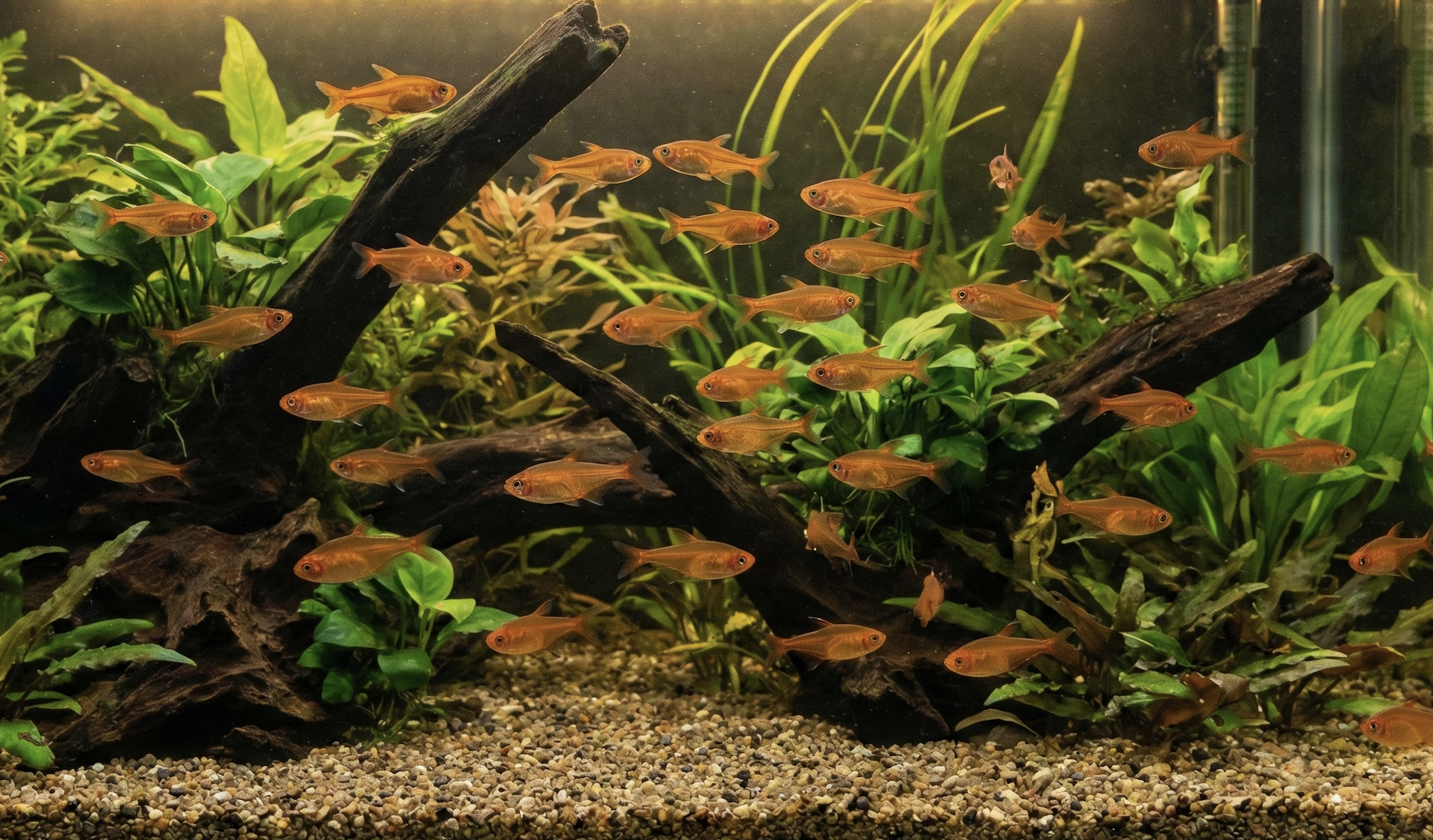
In the world of nano aquariums, few fish can match the fiery charm of the Ember Tetra (Hyphessobrycon amandae). They are tiny, peaceful, and when kept in a proper school, they create a breathtaking display of living fire against a backdrop of green plants. But their small size belies a delicate nature that requires a stable, well maintained environment to truly shine. This guide will be your deep dive into the world of these tiny orange sparks, from creating the perfect planted habitat to choosing their ideal tank mates.
What is the absolute minimum tank size for a school of Ember Tetra?
The Ember Tetra is a micro predator that requires adequate horizontal swimming space despite its small physical stature. Specifically, a 10 gallon aquarium is the analytical minimum for a small group, but I advocate for a 20 gallon long setup. Furthermore, larger volumes of water provide the thermal and chemical stability these delicate fish require to thrive. Consequently, I reject the assumption that they can be housed in tiny “desktop” bowls or unfiltered containers. Therefore, providing ample room for schooling behavior is the first step toward a successful display. In fact, a larger footprint allows the school to move with natural confidence.
Why is the “Rule of Ten” non negotiable for Ember Tetra schooling behavior?
Maintaining a school of at least ten Ember Tetras is essential for their psychological welfare and color manifestation. Specifically, these fish utilize “safety in numbers” to navigate their environment and reduce individual cortisol levels. Furthermore, a solitary tetra will remain in a state of chronic fear, leading to a suppressed immune system and total loss of vibrancy. Consequently, I prioritize a group of 15 to 20 individuals to witness their most impressive “shimmering cloud” behavior. Therefore, you must never purchase just two or three of these social animals. As a result, you ensure a bold and active presence in your aquascape.
What is the ideal “Blackwater” setup for these fiery fish?
Creating a naturalistic habitat for the Ember Tetra involves a precise focus on dense vegetation and organic tannins. Specifically, you should utilize live plants like Java Moss and Hornwort to provide secure hiding zones. Furthermore, the addition of driftwood and catappa leaves will release humic acids that darken the water and lower the pH. Consequently, their brilliant orange coloration pops dramatically against a darker, tannin-stained background. Therefore, I prioritize the use of gentle sponge filters to avoid creating strong currents that would exhaust these small swimmers. In fact, a “cluttered” tank is where they feel most at home.
How do you manage the delicate water parameters for Ember Tetra?
The Ember Tetra requires soft, acidic water and extreme parameter stability to maintain its long-term health. Specifically, you must maintain a pH between 5.5 and 7.0 and keep the temperature around 76∘F. Furthermore, they are hyper-sensitive to ammonia and nitrite, meaning they should only be added to a mature, fully cycled aquarium. Consequently, large swings in water chemistry will lead to immediate stress and potential mortality. Therefore, I prioritize consistent, small water changes over large, infrequent ones. As a result, you maintain the pristine environment necessary for these sensitive tropical fish.
What is the scientifically balanced diet for maximizing fiery coloration?
Unlocking the deep red and orange hues of the Ember Tetra requires a diet rich in natural pigments and high-quality proteins. Specifically, you must provide micro-foods like baby brine shrimp and cyclops that match their tiny mouth size. Furthermore, rotating their staple diet with color-enhancing crumbles ensures they receive a complete nutritional profile. Consequently, relying on a single type of food will result in a dull, washed-out appearance over time. Therefore, I recommend feeding two to three times daily in very small amounts. In fact, their vibrancy is a direct analytical indicator of their internal health.
Which tank mates are analytically compatible with these tiny tetras?
Selecting compatible inhabitants for the Ember Tetra requires a focus on other peaceful nano species that will not outcompete them for food. Specifically, they are excellent companions for dwarf shrimp, as they rarely bother adult colonies. Furthermore, peaceful bottom-dwellers like Corydoras and Kuhli Loaches make perfect tank mates. Consequently, I strictly avoid housing them with aggressive species like large Bettas or semi aggressive barbs. Therefore, I prioritize a “shrimp-safe” community that respects the small size of these delicate characins. As a result, the entire aquarium remains peaceful and low-stress.
Why are your Ember Tetra losing color or hiding constantly?
A loss of color or excessive hiding in an Ember Tetra school is an analytical sign of environmental or social stress. Specifically, if the school size is too small, the fish will remain in a permanent state of high alert. Furthermore, bright, unshaded lighting can make them feel exposed to potential predators. Consequently, you must troubleshoot your water parameters and check for bullying from larger inhabitants immediately. Therefore, I prioritize the addition of floating plants to create the dappled light they prefer. In fact, their health is entirely dependent on the technical accuracy of your husbandry.
How do you achieve success in breeding this egg scattering species?
Breeding the Ember Tetra is a rewarding challenge that requires a dedicated breeding tank with specialized conditions. Specifically, you must use very soft, acidic water and dense clumps of moss to provide a spawning site. Furthermore, you must remove the adult fish immediately after spawning to prevent them from consuming the eggs. Consequently, the resulting fry are so tiny that they require microscopic foods like infusoria for their first week of life. Therefore, I prioritize a dim, quiet environment to encourage the parents to scatter their eggs. In fact, raising the fry to adulthood is a benchmark of success for the nano-fish specialist.
Ember Tetra FAQ
10 gallons is the analytical minimum for a small group, but a 20-gallon long tank is strongly recommended. Larger water volumes provide the thermal and chemical stability these sensitive fish require. Ember Tetras must never be kept in unfiltered desktop bowls or tiny containers.
A minimum of ten is non-negotiable, and a group of 15–20 produces the best results. Smaller groups keep the fish in a state of chronic fear, suppressing their immune system and draining all colour. A school of 15–20 creates the dramatic shimmering cloud behaviour the species is known for.
This is a direct sign of environmental or social stress. The most common causes are a school that is too small, bright unshaded lighting that makes them feel exposed, water parameter instability, or bullying from larger tank mates. Add floating plants, check parameters, and verify the school size immediately.
Yes — Ember Tetras rarely bother adult dwarf shrimp and are one of the most reliably shrimp-safe tetras available. They are small enough that adult shrimp pose no risk and large enough that adult shrimp are not attractive prey. Avoid housing them with aggressive species or large Bettas.
Yes, but it requires a dedicated breeding tank with very soft acidic water and dense moss for spawning. Remove the adults immediately after spawning as they will eat the eggs. The fry are extremely tiny and require infusoria as their first food for the initial week of life.
Sources
- Seriously Fish
https://www.seriouslyfish.com/species/hyphessobrycon-amandae/ - Aquarium Care Basics
https://www.aquariumcarebasics.com/freshwater-aquarium-fish/ember-tetra/ - Tropical Fish Hobbyist
https://www.tfhmagazine.com/articles/freshwater/hyphessobrycon-amandae-the-ember-tetra - Aquatic Arts
https://aquaticarts.com/pages/ember-tetra-care-guide


Leave a Reply
You must be logged in to post a comment.