
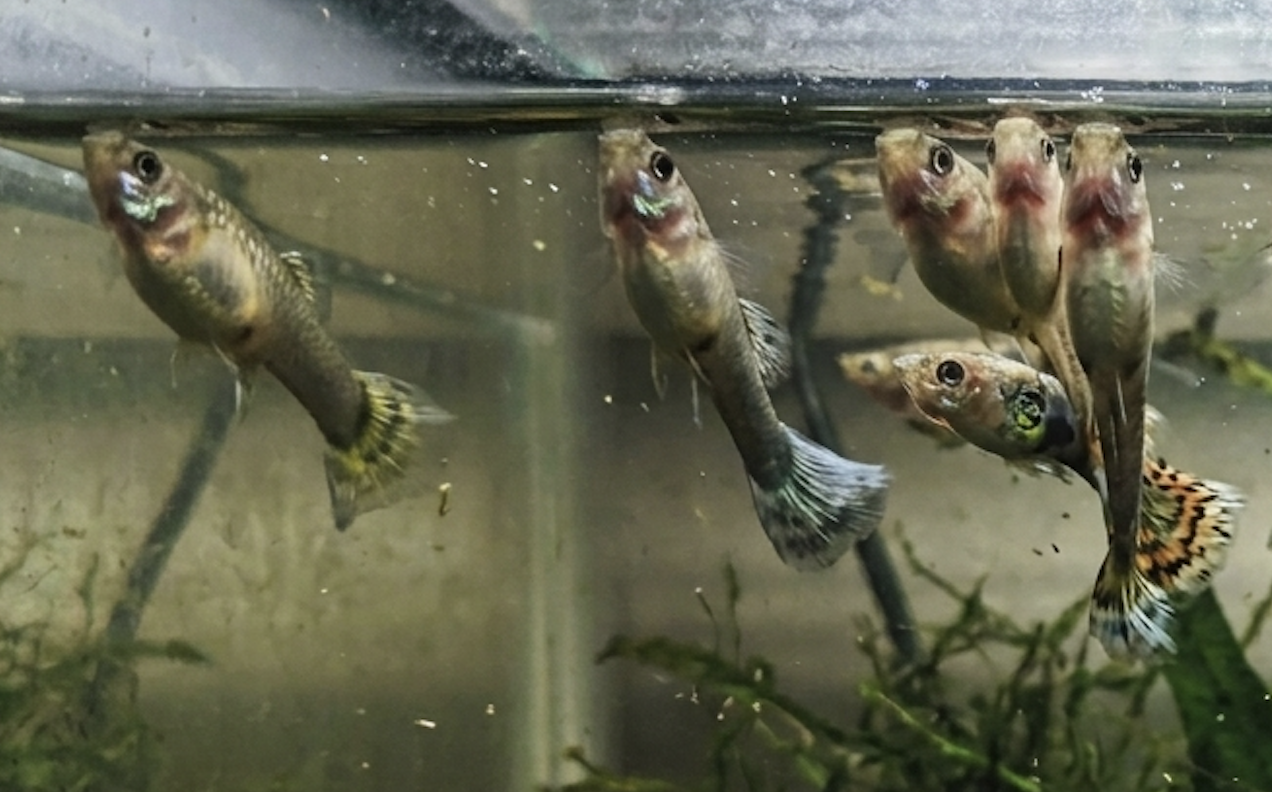
It’s a sight that sends a shiver of panic down any fishkeeper’s spine. Your beloved fish, hovering motionless or gasping desperately at the surface of the water. This is not normal behavior. Instead, it is a distress signal. In almost all cases, it is a sign that there is a serious problem with their environment, most often a lack of oxygen or a toxin in the water.Therefore, this guide will walk you through the causes, helping you diagnose the issue and take the right steps to save your fish.
The Silent Scream
I remember it vividly with my first two betta fish. I saw one of them, my beautiful Elephant Ear, just hanging at the surface, his mouth opening and closing. Crucially, it wasn’t the energetic “feed me!” wiggle; it was a slow, desperate gasp. It was a silent scream for help, but I had no idea what he was trying to tell me. Consequently, that single, terrifying observation sent me down the rabbit hole of water chemistry. It was my brutal introduction to the invisible toxins, ammonia and nitrite, and the all-important nitrogen cycle. I learned that the fish wasn’t just “getting some air”; his gills were being burned by the water he was swimming in, and the surface was his only, desperate escape. That moment of panic is what transformed me into a true aquarist. This guide is here to help you translate that silent scream.
Is it a Lack of Oxygen or Poor Water Quality?
The number one reason fish gasp at the surface is a lack of breathable oxygen. Essentially, this can be caused by two main problems: either not enough oxygen in the water, or water that is so toxic their gills can’t absorb the oxygen that is there.
Why are my fish gasping for air?
Gasping is a clear sign of respiratory distress. It means their gills are working overtime, but they aren’t getting what they need. Therefore, your immediate first step should always be to test your water parameters.
Are high temperatures causing low oxygen?
Yes. Warm water holds significantly less dissolved oxygen than cool water. If your tank temperature has spiked, the oxygen level has dropped.
Is there enough surface agitation?
The most important gas exchange happens at the water’s surface. Therefore, a still, stagnant surface doesn’t allow oxygen to enter the water. To fix this, ensure your filter output is rippling the surface. If it isn’t, you need to lower the water level or add an air stone.
Is my nitrogen cycle working correctly?
This is a critical question. The presence of ammonia or nitrite in your water is toxic. This toxicity occurs because these chemicals damage a fish’s gills, thereby preventing them from absorbing oxygen, no matter how much is available. As a result, the fish will gasp at the surface as if it’s suffocating, which, in effect, it is.
Why are my fish still at the top even with an air pump?
If you have an air pump running but the fish are still gasping, it is an almost certain sign that the problem is ammonia or nitrite poisoning, not a lack of dissolved oxygen. In this scenario, the oxygen is there; however, their damaged gills just can’t use it.
Could My Fish Be Sick?
If you’ve tested your water and the parameters (ammonia, nitrite, nitrate) are perfect, the issue may be a health problem specific to the fish.
Do my fish have gill parasites?
Gill flukes are a common parasite that can cause respiratory distress. When a fish has flukes, it will often flash (rub its body against objects), have inflamed or red gills, and finally, gasp at the surface.
Could it be swim bladder disease?
While this usually affects buoyancy, a fish struggling with a swim bladder issue may become exhausted and float to the surface to rest.
Is This Normal Fish Behavior or a Sign of Trouble?
Sometimes, being at the surface isn’t a sign of panic. It’s important to know the difference.
Are my fish just waiting for food?
This is the most common “false alarm.” Fish are smart and will quickly learn to associate you with feeding time.
What’s the difference between gasping and waiting for food?
A fish waiting for food will be active, alert, and engaged, often wiggling excitedly and looking directly at you. A fish in distress will be lethargic, its mouth will be opening and closing rapidly and rhythmically, and its body may be tilted vertically.
Are my specific fish a surface-dwelling species?
Yes. Fish like Bettas, Guppies, and Hatchet fish naturally spend a lot of their time near the top of the tank. This is normal for them, but you should still learn to distinguish it from true gasping.
Could My Tank Setup Be the Problem?
Is my tank size appropriate?
An overcrowded tank leads to a massive production of waste, which causes ammonia spikes and depletes oxygen levels faster than the system can handle. This is one of the most common causes of this issue.
Could it be my lights?
Lights themselves don’t directly cause fish to gasp, but leaving them on for too long can contribute to algae blooms and stress, which indirectly affect water quality.
Why Is My Fish at the Top of the Tank? FAQ
Fish gasping at the surface of the tank indicates a serious oxygen crisis affecting their gills. The two most common causes are insufficient dissolved oxygen from poor surface agitation or the presence of ammonia and nitrite. These toxins chemically damage gill tissue, preventing oxygen absorption even when adequate oxygen exists in the water.
A fish gasping in distress will be lethargic with its mouth opening and closing rapidly and rhythmically at the water’s surface. A fish waiting for food behaves very differently — it swims actively, appears alert, and watches you with clear anticipation. The key difference is body posture and energy level, not just surface position.
Fish gasping at the top of the tank despite an active air pump almost certainly indicates ammonia or nitrite poisoning rather than a dissolved oxygen shortage. These toxins damage gill tissue so severely that fish cannot extract oxygen even from well-oxygenated water. Testing water parameters immediately is the required first action in this scenario.
Warm water holds significantly less dissolved oxygen than cool water, meaning a temperature spike directly reduces the oxygen available to your fish. A tank running above its target range can drop oxygen levels low enough to force fish to the surface. Adding surface agitation and lowering the temperature are the immediate corrective steps.
Yes, some fish are natural surface dwellers and spend most of their time near the top of the tank as a normal behavioral trait. Bettas, Guppies, and Hatchetfish are well-known examples. Learning the natural behavior patterns of your specific fish species prevents misidentifying normal surface activity as a sign of distress.
Gill flukes can cause respiratory distress severe enough to force fish to the surface to gasp for air. Infected fish will typically flash by rubbing their bodies against tank surfaces, display visibly red or swollen gills, and show persistent labored breathing. Gill fluke infections require specific antiparasitic treatment and are distinct from water quality problems.
Gas exchange, where oxygen enters the water and carbon dioxide exits, happens almost entirely at the water’s surface. A still, undisturbed surface traps carbon dioxide and dramatically reduces the oxygen entering the tank. Positioning a filter outlet to ripple the surface or adding an air stone restores adequate gas exchange and dissolved oxygen levels.
Sources
- University of Florida (IFAS) – Ammonia
https://edis.ifas.ufl.edu/publication/FA031 - US Geological Survey (Dissolved Oxygen)
https://www.usgs.gov/special-topics/water-science-school/science/dissolved-oxygen-and-water - Aquarium Co-Op (Aeration)
https://www.aquariumcoop.com/blogs/aquarium/how-to-increase-oxygen-in-fish-tank - The Spruce Pets (Gill Flukes)
https://www.thesprucepets.com/gill-flukes-4177309 - FishLab (Fish Gasping)
https://fishlab.com/fish-gasping-for-air/


Leave a Reply