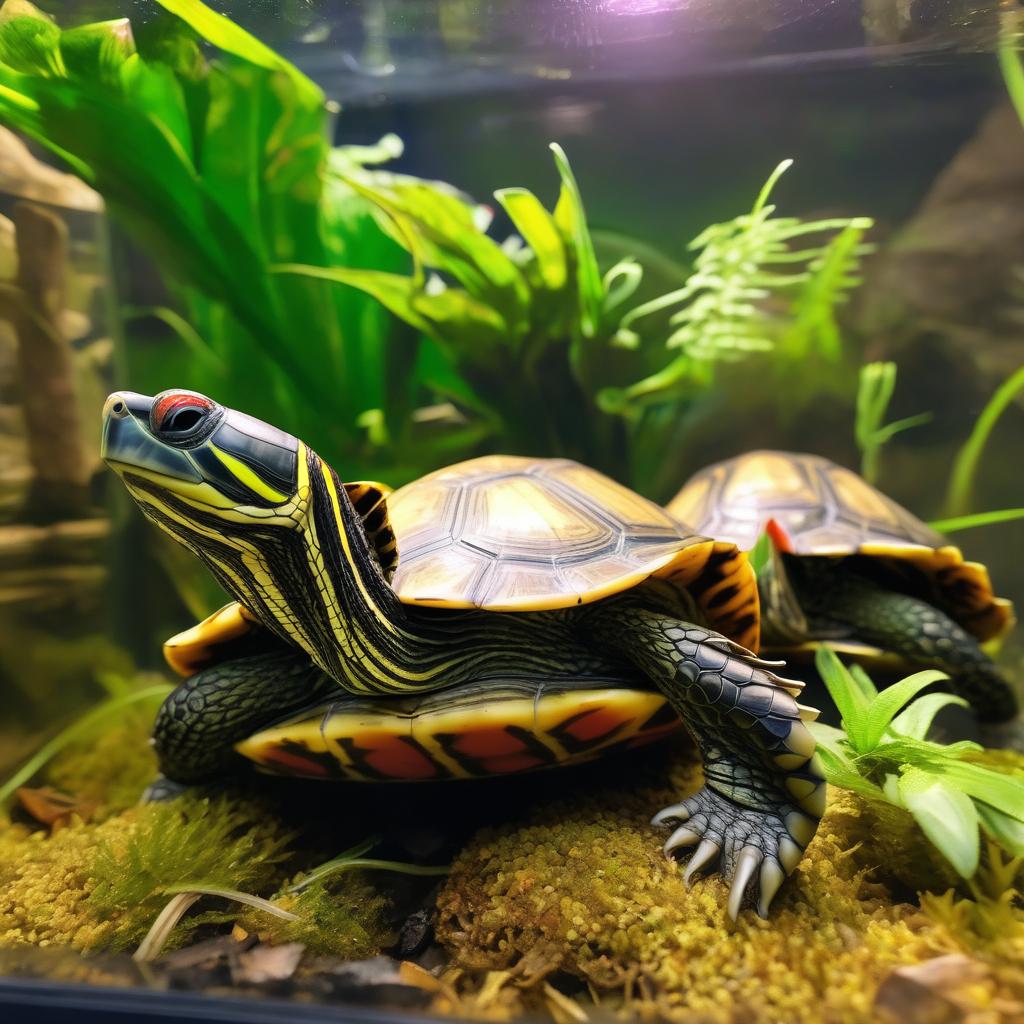
With their ancient, wise faces and graceful swimming, aquatic turtles are some of the most fascinating reptiles a person can keep. They are active, personable, and can become a true long-term companion. But their widespread availability in pet stores often hides the reality of their demanding care: they get big, they are messy, and they require a specialized habitat to thrive. Therefore, this guide will answer all of your questions, from initial setup to long-term health, ensuring you are fully prepared for this rewarding commitment.
The Pets That Built This House
To be completely honest, Exotastic Earth wouldn’t exist without two turtles named by my daughter, Mike and Frida. They came into my life at a time when I desperately needed to nurture something, and as a result, they became the spark that ignited my passion for reptiles. I thought, “How hard can a turtle be?” However, I was not prepared for the reality. The sheer size of the tank they would eventually need, the power of the filtration required to handle their mess, the specific science of UVB and heat lamps—it was a profound reality check. Ultimately, they were my first, most important lesson in what it means to be a reptile keeper. They taught me that you must build a world for the animal you will have, not just the one you have today. Consequently, this guide is built on that hard-won lesson.
A Look at Common Aquatic Freshwater Turtle Species
- Red-Eared Slider: The most popular pet turtle, but also one of the most high-maintenance due to its large adult size (up to 12 inches) and messy nature.
- Painted Turtle: North America’s most widespread turtle. They are smaller than sliders and beautifully colored.
- Map Turtle: Named for the map-like squiggles on their shell—because who needs GPS? These moderate-sized creatures are a bit bashful, much like that friend who avoids all social events but shows up for free snacks!
- Common Musk Turtle (“Stinkpot”): A fantastic choice for a smaller setup. These are small, primarily bottom-dwelling turtles that stay around 4-5 inches.
- Spotted Turtle: A beautiful, small turtle with yellow spots. They are a very long-term commitment, potentially living over 100 years, and their sale is often regulated.
- Softshell Turtle: A unique, flattened turtle with a leathery shell. They are powerful swimmers that require a large tank with a soft, sandy bottom.

What is the Appropriate Tank Size for an aquatic Turtle?
This is the #1 mistake new owners make. That tiny, cute turtle will grow, and it will grow quickly.
The Golden Rule for Tank Size
The standard guideline is 10 gallons of water for every inch of shell length.
Plan for the Adult
A male Red-Eared Slider can reach 8 inches, requiring an 80-gallon tank. Conversely, a female can reach 12 inches, meaning she will need a 125-gallon (473-liter) tank or larger. Therefore, it is best to buy a tank that can accommodate the turtle’s full size from the start, or be prepared to upgrade significantly.
What Kind of Filtration Does it Need?
Turtles are incredibly messy eaters and produce a lot of waste. Consequently, standard aquarium filters are not enough. You might want to consider a sump system.
The Over-filtration Rule
You need a powerful canister filter rated for at least two to three times the volume of your tank. For example, for a 75-gallon turtle tank, you should use a filter designed for a 150 or 200-gallon aquarium. This is the only way to keep the water clean and healthy.
Which Lighting is Best for an aquatic Turtle Tank?
You must provide three specific types of light.
- Heat Lamp: A basking spot is mandatory. Use a heat bulb to create a dry basking area with a temperature of 90-95°F (32-35°C).
- UVB Light: This is a special bulb that emits UVB rays, which is absolutely essential for their health. It allows them to synthesize Vitamin D3, which is necessary to absorb calcium. Without proper UVB, they will develop crippling Metabolic Bone Disease.
- UVA Light: is included in full-spectrum bulbs, and it contributes to their overall well-being and natural behaviors like feeding and breeding.
What Should I Use for Substrate and Decorations?
Substrate and Decorations
Substrate: The safest options are either a bare-bottom tank (which is very easy to clean) or a substrate of large, smooth river rocks that are too big for the turtle to swallow. Fine sand is another option, but avoid standard aquarium gravel, asturtles can ingest it and suffer from fatal impaction.
Decorations: The most important decoration is a basking dock. It must be large enough for the turtle to climb out of the water completely and dry off. Furthermore, cork bark and sturdy, anchored driftwood can also provide hiding spots and enrichment.
What Should I Feed My Turtle and How Often?
Most common aquatic turtles are omnivores.
Commercial Diet: A high-quality commercial turtle pellet should make up about 50% of their diet.
Greens: The other 50% should be a mix of leafy greens like red leaf lettuce and dandelion greens, as well as aquatic plants like Hornwort.
Protein: For juveniles, offer protein like dried shrimp or earthworms several times a week. For adults, protein should be a more occasional treat.
Frequency: Feed juveniles daily, and adults every other day.
Can I House Multiple Aquatic Turtles Together?
It is highly discouraged. Turtles are not social animals and do not get lonely. In fact, housing multiple turtles together often leads to competition for food and basking spots, and, consequently, it can result in serious aggression andbullying, with dominant turtles biting the tails and limbs of more submissive ones.
What Are the Signs of Common Health Issues?
Shell Rot: This appears as white, fuzzy, or pitted spots on the shell, and it is often caused by poor water quality or a basking spot that isn’t warm and dry enough.
Respiratory Infections: Symptoms include bubbles from the nose, gasping, and swimming lopsidedly. This is caused by cold water or a basking area that is not warm enough.
Vitamin Deficiencies: Swollen, puffy eyes are a classic sign of Vitamin A deficiency.
Shell Pyramiding: While more common in tortoises, it can also occur in aquatic turtles from a diet too high in protein and too low in calcium.
When do I need to see a vet? If you notice any of these signs, an immediate visit to a qualified veterinarian is necessary.
Can Aquatic Turtles Transmit Salmonella?
Yes. Most reptiles carry Salmonella bacteria naturally on their skin without it harming them. Therefore, it is crucial to practice good hygiene. Specifically, always wash your hands thoroughly with soap and water after handling your turtle or any of its equipment.
Aquatic Turtles Care FAQ
Common Musk Turtles stay small at 4 to 5 inches, making them ideal for moderate setups. Spotted Turtles also remain compact but require lifetime commitments due to their century-long lifespan. Map Turtles fall in the middle range, while Painted Turtles offer a beautiful, manageable size for most keepers.
The standard rule provides 10 gallons of water per inch of shell length for aquatic turtles. A male Red-Eared Slider at 8 inches needs 80 gallons minimum, while females at 12 inches require 125 gallons. Plan for adult dimensions from the start rather than upgrading repeatedly.
Painted Turtles and Red-Eared Sliders should not live together due to size differences and aggression risks. Sliders grow larger, eat more, and bully smaller tankmates aggressively. Solo housing eliminates competition for basking spots, food, and territory, since aquatic turtles are not social creatures.
Aquatic turtles need oversized filtration rated for 2 to 3 times their actual tank volume because they produce massive amounts of waste. A 75-gallon turtle tank requires a filter rated for 150 to 200 gallons. Underpowered filters cause ammonia spikes, shell rot, and respiratory infections.
Shell pyramiding in aquatic turtles produces raised, pyramid-like scutes on the shell from excess protein and insufficient calcium. Diets heavy in commercial pellets without proper greens often trigger this deformity. Once formed, pyramiding cannot reverse, though dietary correction prevents further progression in growing turtles.
Softshell Turtles differ from other aquatic turtles through their leathery, flexible shell and powerful swimming ability. They require sandy substrate for burrowing rather than rock or bare-bottom setups. Their aggressive temperament, sharp claws, and quick bites make them poor choices for beginner keepers entirely.
Aquatic turtles carry Salmonella bacteria naturally on their skin without showing illness themselves. Hand washing with soap and water after every interaction prevents transmission to humans. Children under five, elderly people, and immunocompromised individuals face higher infection risks and should avoid direct contact entirely.
A baby aquatic turtle starts in a 30 to 40-gallon tank, but planning for adult dimensions saves money long-term. Hatchling Red-Eared Sliders grow rapidly during their first two years, often outgrowing starter tanks within months. Buy the adult-sized enclosure upfront whenever budget allows.
Sources
- LafeberVet
https://lafeber.com/vet/basic-care-red-eared-slider/ - Aquarium Co-Op
https://www.aquariumcoop.com/blogs/aquarium/the-nitrogen-cycle - Journal of Herpetological Medicine and Surgery
https://herpmed.org/doi/abs/10.5811/westjem.2011.5.2273 - MSD Veterinary Manual
https://www.msdvetmanual.com/exotic-and-laboratory-animals/reptiles/respiratory-diseases-of-reptiles - University of Florida
https://edis.ifas.ufl.edu/publication/UW447
Leave a Reply
You must be logged in to post a comment.