
Meet the Six-Tubercled Amazon River Turtle
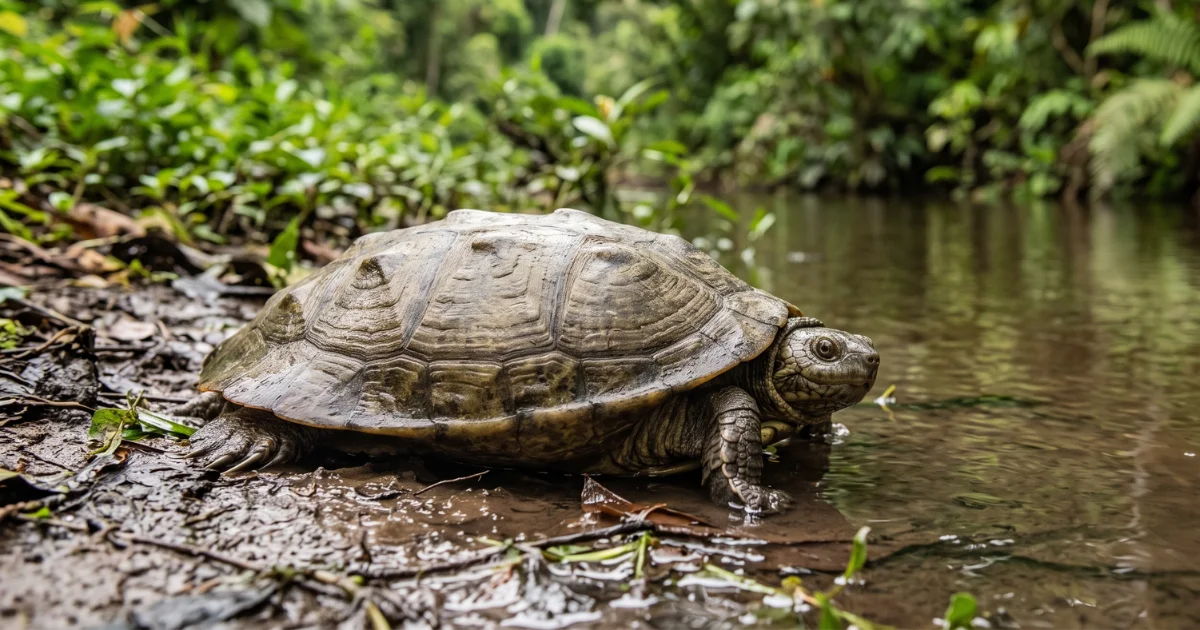
Why does the six-tubercled Amazon river turtle new status matter? The six-tubercled Amazon river turtle (Podocnemis sextuberculata) is a freshwater side-necked turtle. It belongs to the family Podocnemididae, within the order Testudines. Locally, it goes by several names, including cágado-iaçá, tracajá, pitiú, and cupiso, depending on the region. It is one of the smallest members of the Podocnemis genus, reaching only about 34 centimeters in length and 3.5 kilograms in weight. Juveniles carry six bony bumps on their plastron, which is exactly where the species gets its name. Those tubercles fade with age, so adults lose the feature entirely. In July 2026, Brazil’s Ministry of Environment and Climate Change moved this species from “near threatened” to “endangered.” That is the first time any Amazonian freshwater turtle has reached that classification in the country’s history.
Native Range of the Six-Tubercled Amazon River Turtle
Where does this turtle actually come from, and which countries share responsibility for it? This species is endemic to the Amazon basin. Its range spans Brazil, Colombia, and Peru, with possible presence in Ecuador. Within Brazil, the core population sits in Amazonas and western Pará, an area covering roughly 70 percent of the turtle’s entire distribution. It also occurs along the Juruá, Purus, Solimões, Trombetas, and Tapajós rivers. Consequently, any conservation plan for this species needs coordination across at least three national governments. That is rarely simple, and it certainly is not happening at the pace this turtle needs.
Diet, Habitat, and Daily Behavior

How does this turtle actually live day to day, and is it a calm or defensive species? The six-tubercled Amazon river turtle prefers calm, slow-moving water. Oxbow lakes, flooded forests, and quiet river margins with soft bottoms are its favorite habitats. Diet reports vary by study; some researchers describe the species as largely herbivorous, feeding on aquatic plants, algae, fruits, and seeds. However, at least one Brazilian captivity study found the opposite, showing a diet that leans almost entirely carnivorous in controlled conditions. In fact, this contradiction is common across Amazonian turtles, since wild and captive diets rarely match. Temperament-wise, this species is not aggressive toward humans and tends to flee rather than fight when disturbed. Still, wild specimens are skittish, and that instinct is precisely what makes them easy targets for hand capture during nesting season.
Breeding and Nesting Biology
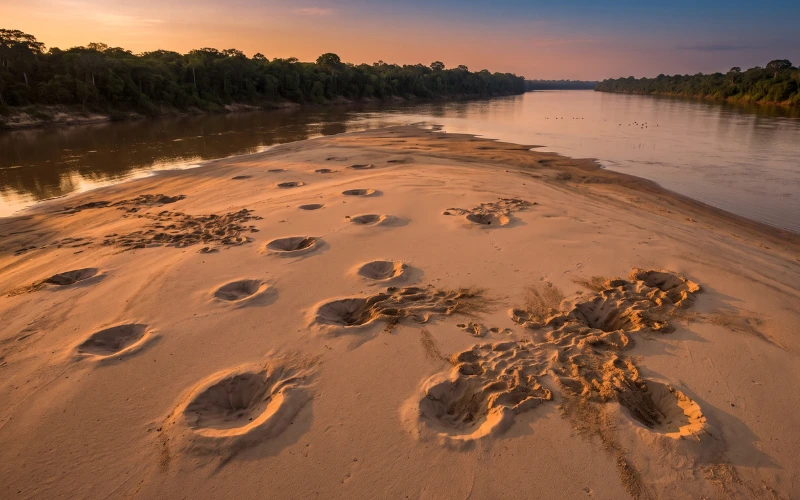
How and when does this turtle reproduce, and what makes its nesting season so risky? Mating occurs during the rainy season, and nesting follows once water levels drop, typically between August and November. Females select sandy riverbanks and lay clutches averaging around 16 eggs. Genetic studies have also confirmed multiple paternity within single nests, meaning females mate with more than one male per season. Therefore, a single nest can carry several fathers’ genetic material, which likely boosts overall population resilience. Unfortunately, this reproductive strategy cannot outpace the current rate of egg poaching and adult female capture, both of which peak during the exact same nesting window.
The History Behind the Six-Tubercled Amazon River Turtle’s Decline
What actually happened over time to push this specific turtle into endangered status? For decades, this turtle was a dietary staple for Amazonian communities. It was consumed alongside two more common relatives, the yellow-spotted river turtle and the giant Amazon river turtle. Because it was so widespread, the species had long been classified as merely “near threatened,” a status that suggested stability. However, ICMBio’s official Biodiversity Extinction Risk Assessment System told a different story. Over 36 years, roughly three generations for this turtle, the population fell by more than 50 percent across its core range. That decline happened despite existing protection programs, which is the most damning detail in this entire story. Protection existed. It simply was not enough.
The Real Threats: Food, Trade, and Habitat Loss
What is actually driving this decline, beyond the population statistics themselves? Subsistence hunting remains a major pressure, and ICMBio has been explicit that traditional communities depend on this species for food. Habitat loss adds another layer, as deforestation and river disruption shrink usable nesting beaches. Wildlife trafficking compounds both problems, and it is badly under-documented. According to Brazil’s National Network Against the Trafficking of Wild Animals, more than 38 million animals are taken from the country’s terrestrial biomes every year. Seizure data only captures a fraction of that total, since enforcement agencies rarely share information with one another. As a result, nobody actually knows the true scale of illegal turtle and egg extraction happening right now.
Conservation Needs for the Six-Tubercled Amazon River Turtle
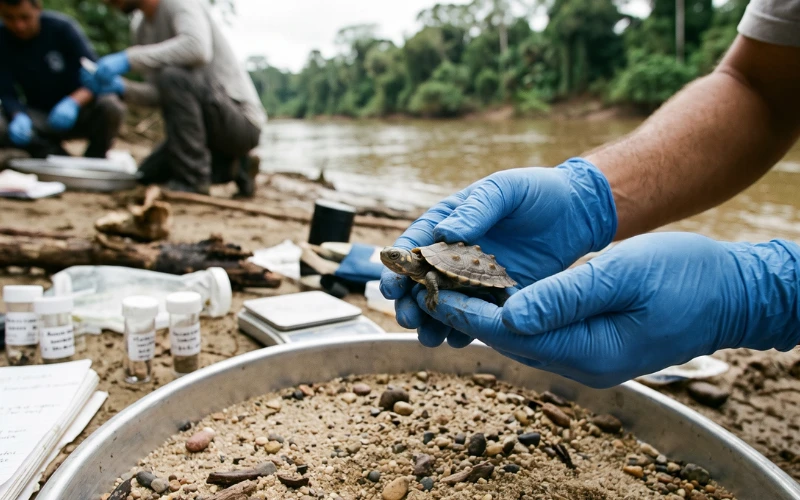
What does real, effective conservation look like for this specific species? Brazil’s endangered listing now carries legal weight, restricting capture, trade, and export of the species. That is a meaningful first step. However, ICMBio’s own conservation coordinator has stressed that enforcement must not simply punish the traditional communities who have coexisted with this turtle for generations. Nesting beach protection, seasonal monitoring during the August-to-November window, and stronger cross-border coordination with Colombia and Peru are all necessary. Community-based management programs, where local people are paid or incentivized to protect nests rather than raid them, have worked for other Amazonian turtles and deserve serious investment here.
Animal Welfare and Animal Rights in This Story
Where do animal welfare and animal rights actually collide in this specific case? This is genuinely the most uncomfortable part of the story. Animal rights advocates would argue this species should not be captured or consumed at all, given its new endangered status. Animal welfare, however, is a narrower and more immediate concern, focused on how captured turtles and harvested eggs are actually treated before death or sale. Wild-caught turtles destined for illegal trade frequently endure poor handling, overcrowded transport, and prolonged confinement without water or food. That reality exists regardless of whether hunting is for subsistence or profit. Consequently, any welfare-focused response must separate the ethics of legal, regulated subsistence use from the welfare failures of illegal trafficking, because those are two very different problems requiring two very different solutions.
My Experience: A Note From the Aquarium and Reptile Side
I do not keep this exact species, and I want to be upfront about that. My own chelonian experience comes from a breeding pair of red-eared sliders, alongside an African chameleon and a long history of planted aquarium tanks. Even so, this story hit close to home, because I have watched how quickly public perception of a “common” species can lag behind its actual population reality. Red-eared sliders are invasive in many regions and abundant in captivity, so it is easy to assume every turtle species shares that resilience. The six-tubercled Amazon river turtle proves otherwise. A species can look stable in local markets for decades while quietly losing half its population in the wild. That gap between visibility and vulnerability is exactly why independent, evidence-based reporting on species status matters, and why I do not take a government’s “near threatened” label at face value anymore.
Six-Tubercled Amazon River Turtle FAQ
No. Brazil’s endangered listing legally restricts capture, trade, and export of this species. It is not a realistic or ethical pet choice, and it was never common in the international hobby trade to begin with.
It was not sudden. Official data tracked a 50-percent population drop over 36 years, roughly three generations. The classification simply caught up to a decline that had been happening quietly the entire time.
No. It is a shy, defensive species that flees rather than confronts. That same skittish behavior unfortunately makes it easier for people to capture during nesting season.
Reports differ. Field studies describe a mostly herbivorous diet of plants, fruit, and algae, while at least one captivity study recorded largely carnivorous feeding. Diet likely shifts between wild and controlled environments.
Regulations are evolving, and ICMBio has stated that enforcement must avoid unfairly targeting subsistence use. Policy specifics are still being worked out, so local guidance should always take priority over general assumptions.
Females typically lay around 16 eggs per clutch. Nesting happens as water levels drop, usually between August and November, depending on the specific river system.
Sources
- Mongabay
https://news.mongabay.com/2026/07/brazil-lists-the-amazon-river-turtle-as-endangered-for-the-first-time/ - Wikipedia
https://en.wikipedia.org/wiki/Six-tubercled_Amazon_River_turtle - WCS Brazil
https://brasil.wcs.org/en-us/wildlife/amazonian-turtles.aspx - The Turtle Hub
https://theturtlehub.com/turtle-database/podocnemis-sextuberculata/


Leave a Reply