
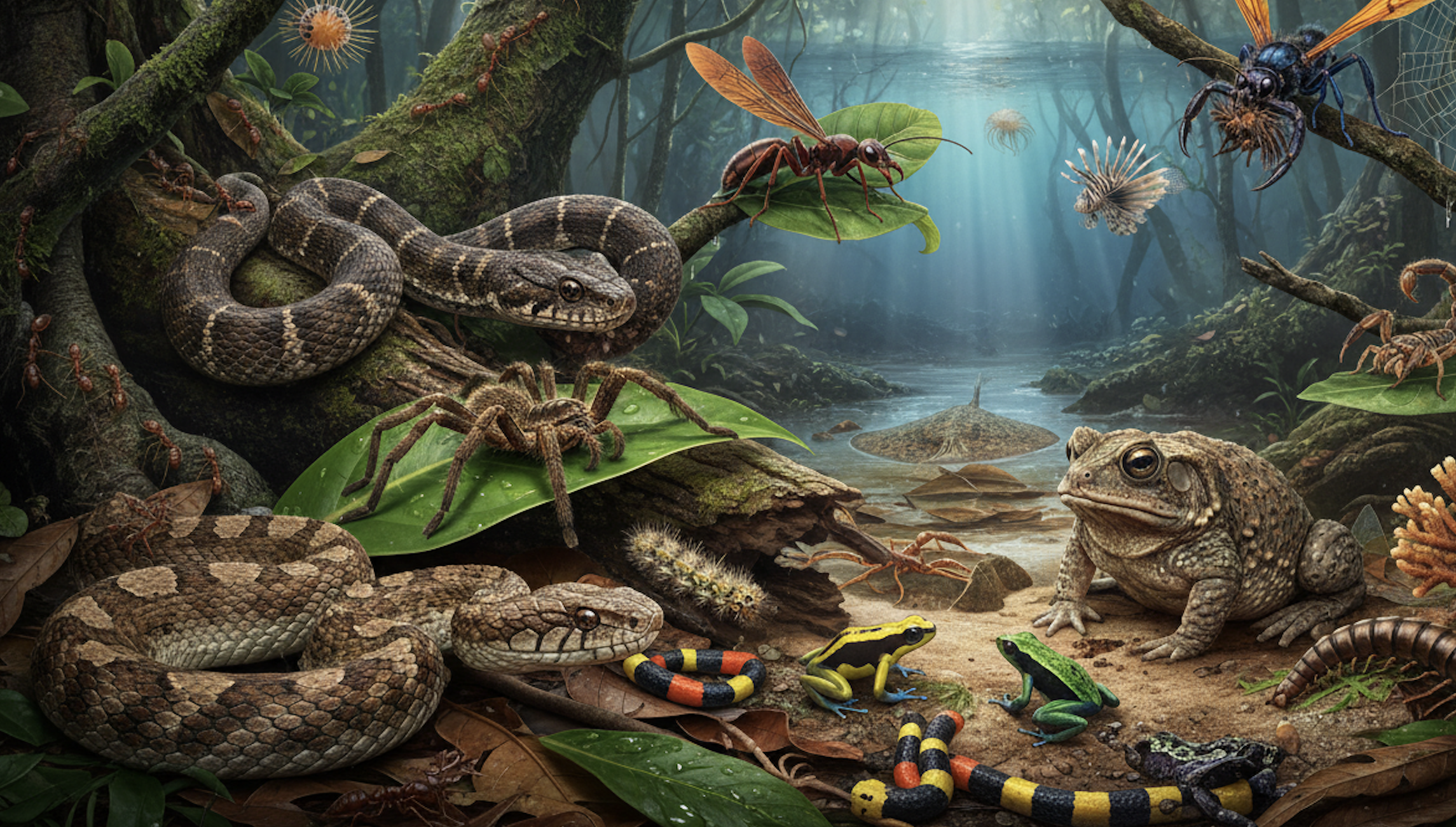
Brazil is a land of superlatives. Specifically, it is home to the world’s largest rainforest and the mighty Amazon River. It contains a staggering, almost unimaginable, concentration of life. Therefore, a journey here is a deep dive into the heart of the natural world. It is a place of vibrant macaws and playful river otters. Furthermore, one may find the elusive jaguar. However, this unparalleled biodiversity also means it is home to some of the planet’s most highly evolved venomous creatures. They are masters of chemistry, camouflage, and survival. Consequently, this guide is your essential field manual. It is designed to foster a profound respect for the beautiful, and potentially dangerous, inhabitants of this incredible country.
Brazil Dangerous Snakes
Jararaca (Bothrops jararaca)

The most infamous snake in Brazil. This pit viper is responsible for the majority of snakebites in the region. Its potent hemotoxic venom can cause severe swelling, pain, and tissue damage. They are masters of camouflage on the forest floor.
Bushmaster (Lachesis muta)

The largest venomous snake in Brazil Western Hemisphere. A massive pit viper that is fortunately very rare to encounter. A bite from a large adult is a catastrophic medical event.
South American Rattlesnake (Crotalus durissus)

Unlike its North American cousins, this rattlesnake’s venom is primarily a powerful neurotoxin, making a bite extremely dangerous and fast-acting.
Coral Snakes (Micrurus species)

Brazil is home to numerous species of brightly-colored coral snakes. They possess a powerful neurotoxic venom. They are not aggressive but are deadly if handled. The “red on yellow” rhyme is not always reliable here due to species variation.
Dangerous Spiders and Scorpions
Brazilian Wandering Spider (Phoneutria species)

The Guinness World Record holder for the most venomous spider. These are not web-builders; they are aggressive, nocturnal hunters that hide in places like log piles, banana plants, and sometimes even homes. A bite is a serious medical emergency.
Brazil Brown Recluse Relatives (Loxosceles species)

Extremely shy spiders whose cytotoxic venom can cause painful, slow-healing necrotic (flesh-eating) wounds.
Black Widow Relatives (Latrodectus species)

These spiders also inhabit Brazil, with a neurotoxic venom that can be medically significant.
Brazilian Yellow Scorpion (Tityus serrulatus)

Considered the most dangerous scorpion in South America. Its sting is intensely painful, and its potent neurotoxic venom can be fatal, especially to children.
Brazil Poisonous Frogs and Toads
Poison Dart Frogs (Dendrobatidae)

These amphibians are poisonous, not venomous. Their skin secretes toxins that are dangerous if touched or ingested.
Yellow-banded Poison Dart Frog (Dendrobates leucomelas)

A beautiful frog with a striking pattern of yellow and black bands.
Splash-backed Poison Frog (Adelphobates galactonotus)

Comes in a variety of brilliant colors, from yellow and orange to red.
Cane Toad (Rhinella marina)

This invasive giant toad has massive glands on its back that secrete a milky-white toxin potent enough to be fatal to most predators, including dogs.
Brazil Other Creatures To Be Wary Of
Bullet Ant (Paraponera clavata)

The owner of the world’s most painful insect sting. Victims describe the pain as “pure, intense, brilliant pain… like walking over flaming charcoal with a 3-inch nail grinding into your heel.” The agony can last for 24 hours.
Puss Caterpillar (Flannel Moth larva)

An innocent-looking ball of fluff that is hiding a collection of venomous spines. A sting is excruciatingly painful.
Brazil Giant Centipede (Scolopendra species)

A massive, aggressive invertebrate that can deliver an intensely painful venomous bite with its forcipules.
Tarantula Hawk Wasp

A giant wasp that hunts tarantulas to lay its eggs in. Its sting is legendary, considered one of the most painful in the world.
Assassin Bug

Can deliver a painful bite and is a vector for the parasitic Chagas disease.
Freshwater Stingrays (Potamotrygonidae)

The Amazon River is home to several species of freshwater stingrays. Stepping on one will result in an agonizingly painful wound from the venomous barb on their tail. Always shuffle your feet when wading.
Lionfish (Pterois species)

Now an invasive species on the Brazilian coast, its beautiful fins are venomous spines that can deliver a very painful sting.
Portuguese Man o’ War (Physalia physalis)

Found on the coasts, their long, trailing tentacles deliver an intensely painful sting.
Fire Coral

Not a true coral, but a hydrozoan that will cause a burning, stinging rash upon contact.
What Should I Do If I Am Bitten or Stung?
You must first try to stay calm and get to safety. Specifically, move away from the animal immediately. You should also try to lower your heart rate to slow the spread of toxins. Therefore, seeking immediate medical attention is not optional for any venomous bite or severe sting. Brazil has a well-developed healthcare system with access to specific anti-venoms. Furthermore, you should identify the animal only if it is safe to do so. A photo or a clear description can be life-saving for the medical team. Consequently, following these steps ensures you receive the correct treatment as quickly as possible.
Sources
- Instituto Butantan
https://butantan.gov.br/conheca-o-butantan/serpentes-do-brasil - World Health Organization
https://www.who.int/news-room/fact-sheets/detail/snakebite-envenoming - Journal of Venomous Animals and Toxins
https://www.scielo.br/j/jvatitd/ - Guinness World Records
https://www.guinnessworldrecords.com/world-records/most-venomous-spider
Leave a Reply
You must be logged in to post a comment.