
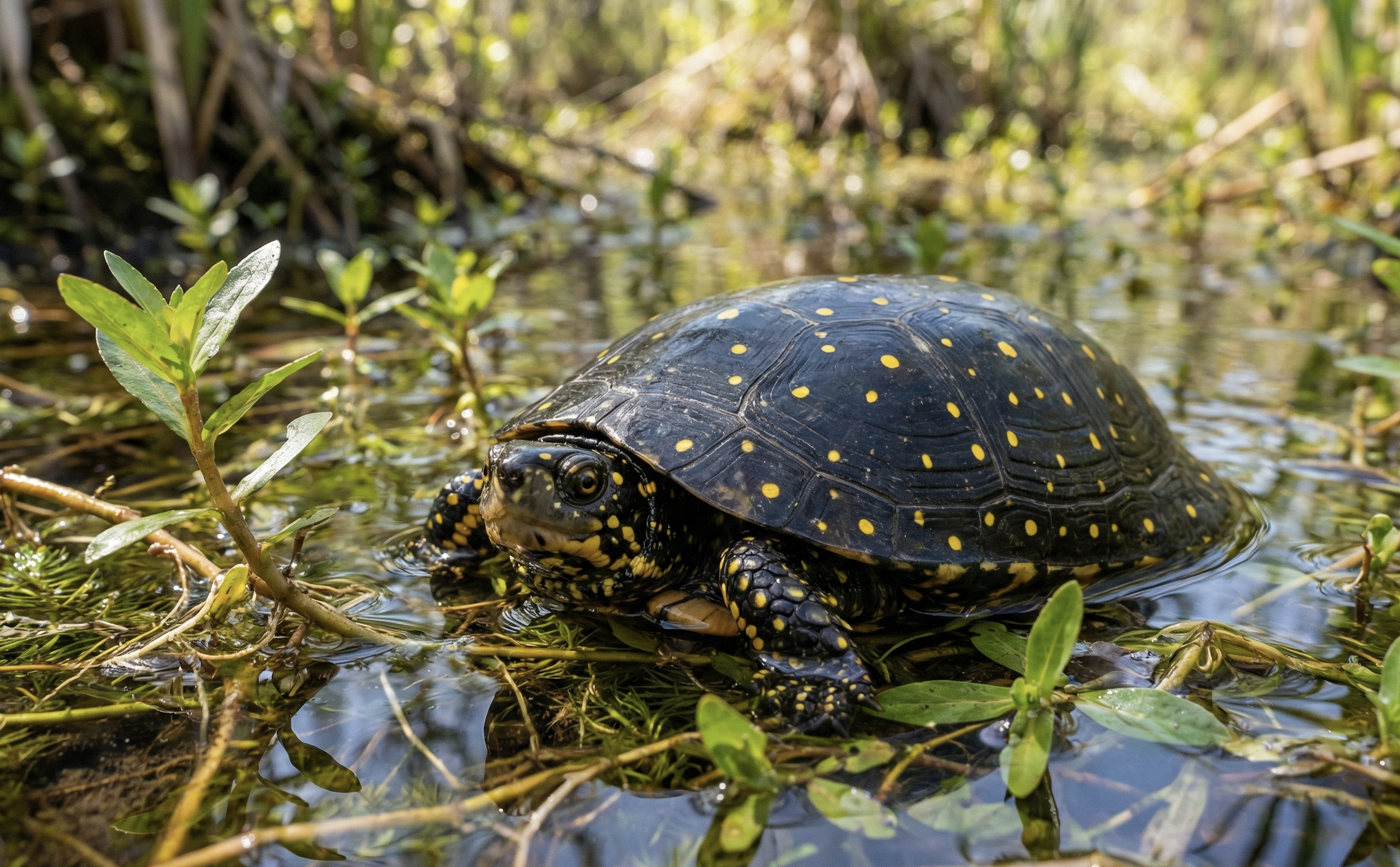
What is the current conservation status of the Spotted Turtle?
The Spotted Turtle (Clemmys guttata) is currently listed as Endangered by the IUCN. Specifically, habitat loss and illegal collection have caused massive population declines. Furthermore, these tiny reptiles are frequent targets for the black market pet trade. Consequently, wild populations remain extremely fragile across their entire North American range. Therefore, removing even one adult can devastate a local colony’s reproductive future. In fact, Spotted Turtle Conservationdepends entirely on the refusal to buy wild caught animals.
Why is captive breeding the only ethical way to own this species?
Buying from a reputable breeder ensures you do not support illegal poaching. Specifically, you must verify that your turtle is a captive bred offspring. Furthermore, wild caught turtles often carry heavy parasite loads and suffer from extreme stress. Consequently, these animals rarely thrive in a home environment. Therefore, you must demand documentation from any seller before making a purchase. In fact, ethical keeping is a vital part of Spotted Turtle Conservation.
What are the lifespan and size expectations for this turtle?
A Spotted Turtle is a significant long-term commitment lasting several decades. Specifically, these reptiles typically live between twenty-five and fifty years in captivity. Furthermore, they are one of the smallest turtle species in the world. Consequently, adults reach a maximum shell length of only nine to twelve centimeters. Therefore, they are ideal for keepers with limited space. As a result, you must be prepared for a lifetime of dedicated care.
What is the ideal enclosure setup for a Spotted Turtle?
You should house this species in a 50/50 land and water paludarium. Specifically, a 40-gallon breeder tank provides a large footprint for walking. Furthermore, the water depth must remain shallow at approximately ten to fifteen centimeters. Consequently, these bottom walking turtles can breathe without struggling to swim. Therefore, provide a mix of sphagnum moss and sand on the land side. In fact, shallow water prevents accidental drowning in this specific species.
What lighting and heating elements are non-negotiable?
Every setup must include a heat lamp and high-quality UVB lighting. Specifically, the basking spot should reach thirty-two degrees Celsius. Furthermore, UVB is essential for preventing metabolic bone disease and shell deformities. Consequently, your turtle cannot process calcium without proper light exposure. Therefore, you must replace your UVB bulbs every six months. In fact, artificial sunlight is the cornerstone of successful indoor turtle husbandry.
What should you feed a primarily carnivorous Spotted Turtle?
The diet of a Spotted Turtle must consist of high-protein items. Specifically, offer live or frozen-thawed earthworms, crickets, and feeder snails. Furthermore, high-quality commercial pellets can serve as a nutritional staple. Consequently, providing a variety of prey ensures a balanced intake of minerals. Therefore, you should dust their food with calcium powder twice a week. In fact, a diverse diet promotes vibrant shell coloration and growth.
How do you identify a healthy Spotted Turtle?
A healthy turtle displays clear eyes and a hard, smooth shell. Specifically, look for an active animal that is alert to its surroundings. Furthermore, avoid any turtle with swollen eyes or soft, foul-smelling shell spots. Consequently, these symptoms often indicate poor water quality or vitamin deficiencies. Therefore, maintain rigorous filtration to prevent bacterial and fungal infections. In fact, clean water is the best preventative medicine for aquatic reptiles.
Spotted Turtle Care FAQ
The Spotted Turtle is an endangered species highly targeted by the illegal black market pet trade. Removing even a single adult from the wild severely devastates fragile local colonies. Purchasing only verified captive-bred offspring is the sole ethical way to protect this species from extinction.
The water depth must remain shallow, strictly between ten to fifteen centimeters. Because Spotted Turtles are bottom-walkers rather than strong swimmers, deep water presents a severe drowning hazard. They must be able to easily reach the surface to breathe without struggling.
You must provide a high-quality UVB light and a dedicated heat lamp to create a 32°C (90°F) basking spot. This artificial sunlight is absolutely non-negotiable for calcium processing and preventing fatal Metabolic Bone Disease. You must replace these UVB bulbs every six months to guarantee effective output.
Despite their tiny adult size of just nine to twelve centimeters, these reptiles represent a massive multi-decade commitment. A well-cared-for Spotted Turtle will typically live between twenty-five and fifty years in captivity. You must be fully prepared to provide a lifetime of specialized care before acquiring one.
Spotted Turtles are primarily carnivorous and require a diverse, high-protein diet to thrive. You should offer a mix of live earthworms, feeder snails, crickets, and high-quality commercial aquatic pellets. Dusting their prey with calcium powder twice a week is essential for vibrant shell growth and mineral absorption.
Sources
- IUCN Red List
https://www.iucnredlist.org/species/4944/11145168 - Savannah River Ecology Laboratory
https://srelherp.uga.edu/turtles/clegut.htm - Animal Diversity Web
https://animaldiversity.org/accounts/Clemmys_guttata/ - Ontario Nature
https://ontarionature.org/programs/community-science/reptile-amphibian-atlas/spotted-turtle/ - Virginia Herpetological Society
https://www.virginiaherpetology.com/reptiles/turtles/spotted-turtle/spotted_turtle.php - U.S. Fish & Wildlife Service
https://www.fws.gov/species/spotted-turtle-clemmys-guttata
Leave a Reply
You must be logged in to post a comment.