
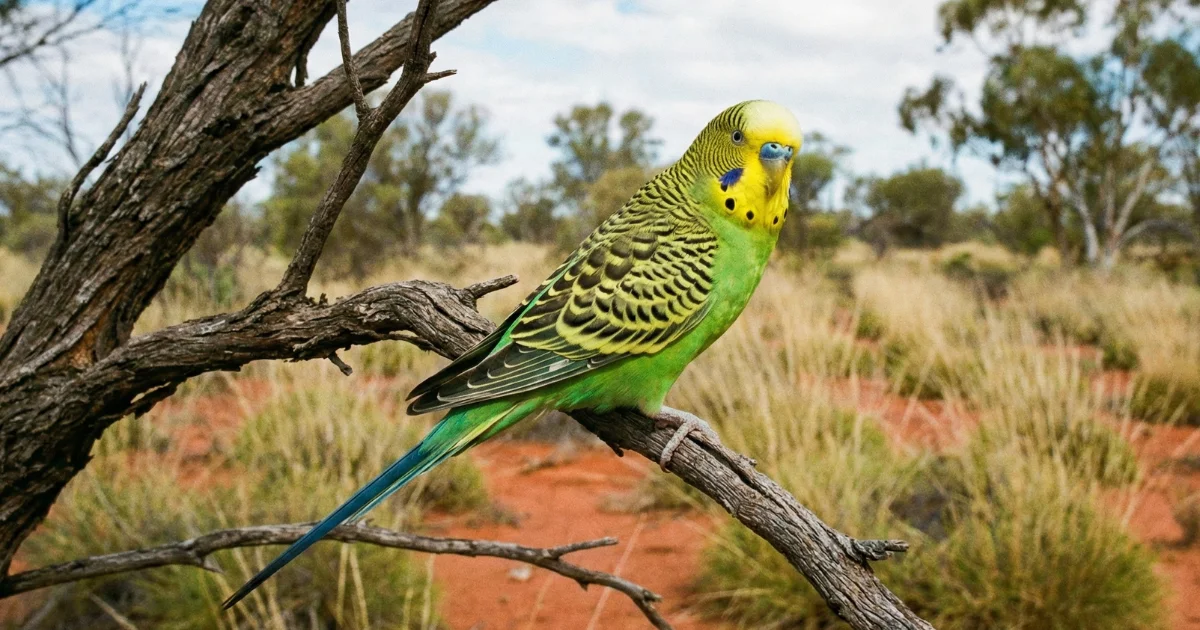
Before I learned the language of fish or reptiles, a bird taught me about companionship. This first lesson came in a flurry of blue and white feathers. Specifically, a tiny Budgie with a massive personality showed me the power of animal bonds. This little parakeet proved that intelligence does not belong only to large creatures. His cheerful chatter filled my house with a bubbling stream of life. In fact, his fierce grip on my finger left a lasting impression. I understood then that even the smallest pets leave the biggest imprints on our hearts.
The Budgie (Melopsittacus undulatus) is one of the most popular pet birds worldwide. Furthermore, they are tiny packages of immense charm and vibrant energy. However, their small size can be deceptive for new owners. Providing a fulfilling life requires dedication and specific knowledge. Therefore, you must look beyond a simple seed dish and a small cage. This guide explores everything you need to know to be a fantastic parent to a Budgie.
Budgie Species Information and Suitability
Is a Budgie a good pet for a beginner?
Many people wonder if a Budgie is a good pet for beginners. In fact, they are widely considered the best choice for first-time owners. These birds are small and relatively inexpensive to house. Furthermore, their care is less complex than that of larger parrots. Their intelligence and trainability make them incredibly rewarding companions. Specifically, they reward owners who put in the time to bond.
How long does a Budgie typically live?
The average lifespan of a Budgie depends heavily on diet and genetics. For instance, a bird on a poor seed-only diet may only live five years. However, a well-cared-for Budgie can live eight to fifteen years. Therefore, owning one is a significant long-term commitment. You must also decide between getting one bird or two. Specifically, a single Budgie will bond more intensely with its human owner. It will see you as its entire flock. Consequently, this requires a significant daily time commitment from you.
Should you keep Budgies in pairs or alone?
Keeping two birds ensures they always have companionship. In fact, watching their social interactions is a joy. They will still bond with their owner. However, their primary bond will be with each other. Therefore, taming and training might take a little longer. Getting two is often the more humane option for busy people. Furthermore, males are generally recommended for first-time owners. Specifically, males are more easy-going and less territorial. They are also known for being better talkers and singers. Females can be wonderful but are often more assertive.
What are the social and noise requirements for a Budgie?
A Budgie will suffer profoundly from loneliness if kept alone. Specifically, these are flock animals by nature. Lack of interaction leads to stress and boredom. Consequently, this can cause screaming, biting, or feather plucking. However, they are very suitable for apartment living. They are not loud like a Macaw or Cockatoo. Instead, they produce a constant and pleasant chatter. As a result, their noise level is typically acceptable to neighbors.
Budgie Communication and Behavior
Can a Budgie actually learn to talk?
A Budgie has an incredible capacity for mimicry. In fact, they can learn hundreds of words. The Guinness World Record holder, Puck, had a vocabulary of 1,728 words. Specifically, males are far more likely to talk than females. Furthermore, a Budgie can and does bite occasionally. However, their beaks are small. Consequently, a bite feels like a surprising pinch rather than a serious injury. Biting usually indicates fear or annoyance. Therefore, proper training can minimize this behavior.
How do Budgies bond with their human owners?
These birds form incredibly deep and loving bonds. Specifically, a bonded Budgie enjoys sitting on your shoulder. They might even preen your hair or share your food. However, you must provide the right environment for this bond to grow.
Enclosure and Habitat Needs
What are the space and sleep requirements for a Budgie?
Flight is essential for the health of a Budgie. Therefore, horizontal space is more important than height. For one bird, the minimum size is 18x18x18 inches. However, a pair requires at least 30 inches of width. In fact, a wider flight cage is always the best option. Furthermore, bar spacing must be no more than half an inch. You should also use a cage cover at night. This signals bedtime and blocks out light. Specifically, they need ten to twelve hours of uninterrupted sleep.
Where is the best place to put a Budgie cage?
Place the cage in a social area like the living room. Furthermore, keep it against a wall for security. Avoid direct sunlight and drafty areas. Specifically, keep them away from the kitchen. Cooking fumes can be toxic to a Budgie. You must also provide varying perch types. Specifically, natural wood perches like manzanita are a must. Rope perches are also soft and comfortable. One concrete perch can help file their nails. However, you must avoid plastic perches and sandpaper covers. These cause painful abrasions on their feet.
What is the best way to line and furnish the cage?
Simple paper liners are best for the cage bottom. Specifically, use paper towels or newspaper. This allows you to monitor droppings for signs of illness. Consequently, it is safe and easy to change daily. Avoid wood shavings or cat litter. Furthermore, provide lots of stimulation with toys. Specifically, use shredding toys made from paper or yucca. Foraging toys make them work for their food. They also love bells and noisy toys. Swings and ladders provide excellent exercise.
How do you maintain a clean and healthy environment for a Budgie?
A bird bath is essential for feather health. Therefore, offer a shallow dish of cool water weekly. Some birds also enjoy being gently misted. Furthermore, you must clean the cage regularly. Change food and water dishes daily. Specifically, perform a full scrub of the cage every week.
Diet and Nutrition
What should the base of a Budgie diet look like?
A proper diet for a Budgie focuses on pellets. In fact, pellets should make up seventy percent of their food. Fresh vegetables should comprise another thirty percent. Furthermore, seeds should only be used as treats. A seed-only diet is dangerously high in fat. Specifically, it leads to obesity and fatty liver disease. Consequently, this drastically shortens their lifespan. Pellets provide balanced nutrition in every bite.
Which fresh foods are safe or toxic for a Budgie?
Offer a daily “chop” of finely diced vegetables. Specifically, use leafy greens, broccoli, and carrots. Fruits like apples and berries are good in moderation. However, you must avoid toxic foods. Specifically, never feed them avocado, chocolate, or alcohol. Furthermore, keep them away from onions, garlic, and caffeine.
Does a Budgie need grit in its diet?
A common and dangerous myth is that a Budgie needs grit. In fact, they do not need it. They hull their seeds before eating them. Specifically, grit is only for birds that swallow seeds whole. Therefore, grit can cause a fatal impaction in a Budgie. You should keep pellets available all day. However, remove fresh vegetables after three hours to prevent spoilage.
Health and Training
How can you identify a happy or sick Budgie?
A happy Budgie is active and curious. Specifically, they will grind their beaks when relaxed. They also chirp and interact with toys. However, birds hide illness very well. Therefore, any sign of lethargy warrants a vet visit. Specifically, look for discharge from the eyes or nostrils. Tail bobbing with every breath is also a serious sign. Furthermore, watch for changes in their droppings.
What are common health issues and environmental needs?
Common health problems include fatty liver disease and mites. Specifically, scaly face mites cause crusty buildup. Respiratory infections and tumors are also common. You should also provide a night light. Specifically, this prevents “night frights” where the bird panics in the dark. Many birds also enjoy listening to music. Consequently, they will chirp along to the radio.
How do you bond with and train a Budgie?
Patience is everything when bonding with a Budgie. Specifically, start by sitting near the cage and talking. Offer treats like millet through the bars. Furthermore, use short and consistent training sessions. This process can take days or even months. You should also repeat words clearly to teach them to talk. Specifically, associate words with actions like “Good morning.”
How do you ensure a safe flight environment outside the cage?
Letting a Budgie fly safely requires proofing the room. Specifically, close all doors and windows. Furthermore, cover mirrors and turn off ceiling fans. Remove other pets and open water sources. This ensures the bird remains safe during exercise.
Budgie Breeding and Varieties
What are the requirements for breeding Budgies?
A Budgie can breed any time of year. However, casual breeding is strongly discouraged. It is complex and dangerous for the female. Specifically, it requires a large cage and a nest box. The diet must also be rich in calcium. Therefore, provide a cuttlebone and egg food. A responsible breeder only allows two clutches per year. Consequently, this protects the health of the bird.
What are the differences between English and American Budgies?
There are two main varieties of this bird. The American Budgie is sleek and active. In contrast, the English Budgie is larger and stockier. Specifically, the English variety has “puffy” feathers and a calmer temperament. There are also hundreds of color mutations. Specifically, Opaline affects the wing patterns. Pied birds have patches of clear feathers. Lutino and Albino birds have red eyes. However, color mutations do not affect the personality of the Budgie.
Check our article on
A Guide to the Top 20 Feathered Friends
Budgie Care FAQ
Yes — they are widely considered the best first bird for new owners. They are small, relatively affordable, and far less complex to care for than larger parrots. Their intelligence and trainability make them genuinely rewarding companions for anyone willing to invest time in bonding.
A well-cared-for Budgie lives 8–15 years. A bird raised on a seed-only diet, however, may only reach 5 years due to obesity and fatty liver disease. Diet is the single biggest factor determining how long your Budgie lives.
Both options work — but require different commitments. A single Budgie bonds intensely with its owner and becomes easier to tame, but demands significant daily interaction. A pair is more humane for busy owners but may bond more with each other than with you.
Yes — males are far more likely to talk than females, and some develop remarkable vocabularies. The Guinness World Record holder knew 1,728 words. Consistent, clear repetition and associating words with actions are the most effective teaching methods.
No — and this is a dangerous myth. Budgies hull their seeds before eating, so grit is unnecessary. Ingesting it can cause fatal intestinal impaction. Stick to quality pellets as the dietary base and remove grit from the cage entirely.
Sources
- Guinness World Records
https://www.guinnessworldrecords.com/world-records/70685-largest-vocabulary-for-a-bird-ever - VCA Animal Hospitals
https://vcahospitals.com/know-your-pet/budgies-feeding - The Spruce Pets
https://www.thesprucepets.com/introducing-the-budgie-390919 - World Parrot Trust
https://www.parrots.org/encyclopedia/budgerigar - Lafeber Company
https://lafeber.com/pet-birds/species/budgie-parakeet/


Leave a Reply