
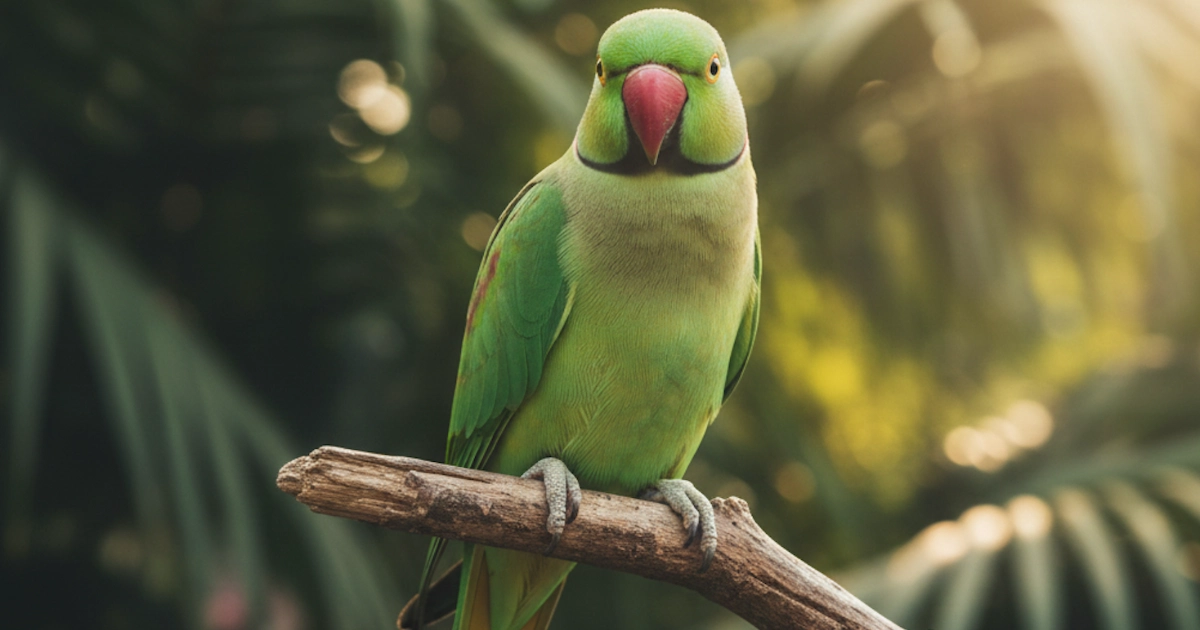
There are moments that define our passions. For me, a specific sound first sparked my wonder. Specifically, it was the sound of a bird. I remember visiting a family friend long ago. They owned a magnificent Indian Ring-necked Parakeet. Its color was an impossible green. In fact, it looked like a living jewel. I loved the bird’s sharp and intelligent gaze. Furthermore, it let out a clear and human-like whistle. This mesmerized me. It was not just a pet. Specifically, it was a vibrant and clever personality.
Ring-necked parakeets are charismatic and stunningly beautiful birds. They are also known as Rose-ringed parakeets (Psittacula krameri). They are profoundly intelligent. However, this intelligence makes them complex. Therefore, this guide walks you through every facet of their care. Consequently, you can decide if you are ready for this bird.
Species Information and Suitability
Are ring-necked parakeets a good pet for beginners?
This is a very nuanced question. Specifically, they are hardy birds. However, their strong personalities can be challenging. A ring-neck might suit a dedicated beginner. But they are not a simple starter pet. Owners must prepare for demanding social needs. Furthermore, they must handle loud vocalizations. You should also expect a challenging bluffing phase.
What is the average lifespan of a pet ring-necked parakeet?
They have a surprisingly long lifespan. Specifically, it ranges from 20 to 30 years. Therefore, this is a lifetime commitment. It is similar to getting a dog or cat. Consequently, consider this factor before bringing one home.
Ring-necked Parakeet Temperament and Vocalization
What is the temperament like?
Ring-necks are highly intelligent and curious. Furthermore, they are often comical. They form strong bonds with their owners. However, they are not typically cuddly birds. They show affection on their own terms. Specifically, they might sit on your shoulder. They also enjoy head scratches. They can be independent and aloof. Therefore, they are content to play with toys alone.
Are they very noisy?
Yes, this is not a quiet bird. Specifically, Ring-necked Parakeet has charming chirps and whistles. However, their natural call is a loud screech. It is a piercing sound. Consequently, you can hear it from a distance. They use this call for attention. Furthermore, they communicate excitement this way. Potential owners in apartments must consider this.
Pros and Cons of Ring-necked Parakeet Ownership
Pros:
- They are highly intelligent and learn tricks.
- They are stunning with many color mutations.
- They are relatively hardy birds.
- They form strong and interactive bonds.
Cons:
- They are very loud and screech.
- They go through a challenging bluffing phase.
- They can be nippy and require training.
- They are not typically a cuddly pet.
- They require significant daily out-of-cage time.
Do males and females differ?
Yes, general differences exist. Male Ring-necked Parakeets are typically better talkers. Specifically, they learn an extensive vocabulary. They also develop a distinct neck ring. This happens at maturity around 3 years. Females are also wonderful birds. However, they may be more assertive. Specifically, they are territorial during the breeding season.
Ring-necked Parakeet Habitat and Enclosure Needs
What is the minimum cage size?
Bigger is always better for these birds. Specifically, the minimum size is 24 inches wide. It should be 24 inches deep and 36 inches high. However, a larger flight cage is highly recommended. Bar spacing should be 1/2 to 5/8 inch.
Do they need horizontal space?
Yes, Ring-necked Parakeets need both vertical and horizontal space. Ring-necks are active and love to climb. However, horizontal width is more critical. Specifically, it gives them room to stretch. Use stainless steel for the cage material. Consequently, it is durable and safe. Avoid galvanized cages. Zinc coating is toxic to birds.
Does a ring-neck need toys?
Absolutely. A bored ring-neck is destructive. Therefore, provide a wide variety of toys. Use foraging toys for problem-solving. Furthermore, provide shredding toys made of wood. Puzzle toys challenge their intelligence.
How much out-of-cage time is needed?
Ring-necked Parakeets need 3 to 4 hours daily. Specifically, this time must be supervised. It is crucial for their social health. Furthermore, it allows them to explore. Is it safe to house multiple birds together? You must approach this with caution. Ring-necks are territorial. Consequently, they may become aggressive. House them separately unless they are a bonded pair.
Ring-necked Parakeet Diet and Nutrition
What is the proper diet?
A healthy diet is the foundation of life. Specifically, use high-quality pellets for 70% of their food. Fresh vegetables should make up 20%. Therefore, provide a daily chop of greens. Use broccoli, carrots, and bell peppers. Furthermore, add sweet potatoes and peas.
Fruits and treats should be 10%. Use apples without seeds. Specifically, offer mango, papaya, and berries. Avoid toxic foods like avocado and chocolate. Furthermore, onion and garlic are dangerous. An average bird eats 1/4 cup daily. Pellets should stay available all day. However, remove fresh food after a few hours. This prevents spoilage.
Health and Behavior
How can I tell if my bird is sick?
A healthy Ring-necked Parakeet is active and alert. Specifically, they have clear eyes and clean feathers. A sick bird looks fluffed up. Furthermore, they are lethargic. Look for changes in droppings. Consequently, contact a vet if you see discharge. Tail bobbing while breathing is also a bad sign.
What are common health issues?
Feather plucking is a major concern. Specifically, it signals boredom or stress. Furthermore, they can get respiratory infections. Fatty liver disease is common on seed diets. Therefore, avoid high-fat seeds.
Do they go through a bluffing phase?
Yes, this is a challenging aspect. Specifically, it happens between 4 months and 2 years. They may bite and scream. Consequently, this requires immense patience. Do not react loudly to bites. Instead, place the bird down calmly. Walk away for a minute. Therefore, use positive reinforcement to teach behavior.
Training and Species Variants
How do you tame a ring-neck?
Taming requires patience and trust. Start with short sessions. Specifically, sit by the cage and talk softly. Use target training with a chopstick. Consequently, they will eventually step up. How do you teach them to talk? Repetition is the key. Specifically, speak clearly. Associate words with objects like apples.
What are the different color mutations?
Breeding has produced many colors. Specifically, Lutino birds are bright yellow. Furthermore, Albino birds are pure white. You can find blue and violet variations. Indian and African ring-necks are subspecies. Specifically, the Indian version is larger. It has a more prominent beak. Furthermore, the African version has a darker body.
Ring-necked Parakeet Care FAQ
Ring-necked Parakeets are hardy but have very strong, independent personalities, making them a “challenging” choice for a beginner. While they are resilient, they require owners who are prepared for loud vocalizations, a high need for social interaction, and a complex hormonal adolescent phase. They are best suited for a dedicated first-time owner or someone with some previous bird experience.
Bluffing is a hormonal developmental stage that typically occurs between 4 months and 2 years of age. During this time, an otherwise sweet bird may suddenly become aggressive, nippy, and prone to screaming. This is a temporary phase that requires immense patience; owners should avoid reacting loudly to bites and use positive reinforcement to maintain trust until the bird matures.
They are known for being very vocal and are generally not recommended for apartment living. While they can produce charming whistles and human-like speech, their natural call is a piercing, high-pitched screech that can be heard from a significant distance. They use these loud calls to communicate excitement or to demand attention from their owners.
The foundation of their diet should be high-quality formulated pellets (70%), supplemented by a daily “chop” of fresh vegetables (20%) like broccoli, carrots, and bell peppers. Fruits and healthy treats should only make up about 10% of the diet. Avoid high-fat seed mixes, as Ring-necks are prone to obesity and fatty liver disease when fed a seed-only diet.
Unlike Cockatoos or some Conures, Ring-necked Parakeets are not typically “cuddly” birds. They form deep bonds with their owners and enjoy being in the same room or sitting on a shoulder, but they often prefer head scratches over full-body handling. They are independent and value their personal space, showing affection on their own terms.
A Ring-neck needs a cage at least 24 inches wide, 24 inches deep, and 36 inches high, but a larger flight cage is highly recommended. Because they are active climbers and explorers, they also require a minimum of 3 to 4 hours of supervised out-of-cage time daily to maintain their physical and mental health.
Sources
- Lafeber Company
https://lafeber.com/pet-birds/species/indian-ring-necked-parakeet/ - PetMD
https://www.petmd.com/bird/care/indian-ringneck-parakeet-facts - World Parrot Trust
https://www.parrots.org/encyclopedia/rose-ringed-parakeet
Leave a Reply
You must be logged in to post a comment.