My first encounter with a Vinegaroon was at a reptile and invertebrate show. Specifically, I was completely transfixed. It looked like a creature from a sci-fi movie. It possessed powerful scorpion claws and a flattened spider body. Furthermore, a long whip-like tail replaced a stinger. It moved with a slow and deliberate grace. Specifically, it used feathery front legs to feel the air. I felt a sense of awe rather than fear. This bizarre animal was not aggressive. In fact, it was a quiet and ancient survivor. It taught me that intimidating creatures are often misunderstood. Specifically, the world of invertebrates is full of gentle oddities.
The Vinegaroon or Whip Scorpion is a fantastic entry into arachnids. Specifically, they are hardy and non-venomous pets. Their unique appearance makes them captivating display animals. Therefore, this guide explores everything about this wonderful invertebrate.
Species Information and Unique Traits
What is the correct common name?
Many people use the term Whip Scorpion. However, the more accurate name is Vinegaroon. This name comes from their defensive liquid. Specifically, the spray smells strongly of vinegar. Is a whip scorpion a true scorpion? No, they are not. While both are arachnids, Vinegaroons are in a distinct order. Specifically, they belong to the order Thelyphonida.
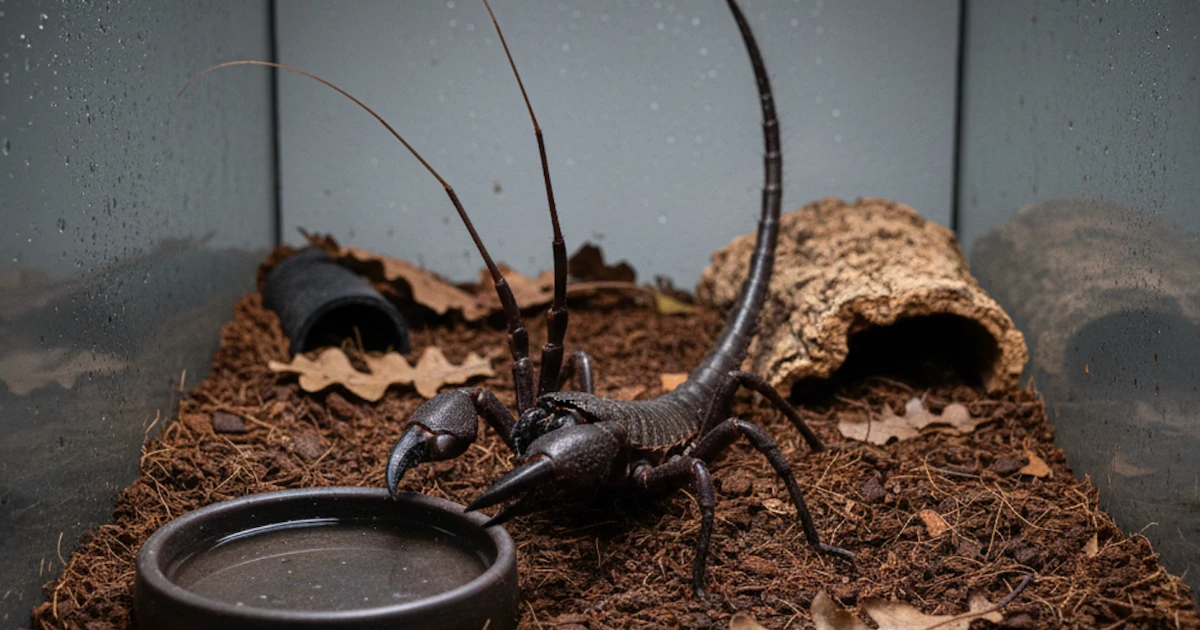
Several key characteristics differentiate them from true scorpions. First, consider the tail. True scorpions have a segmented tail with a venomous stinger. Specifically, this is called a telson. Vinegaroons have a thin and non-venomous whip-like tail. Consequently, it acts as a sensory organ. It also helps aim their defensive spray. Second, look at the claws. A Vinegaroon’s pedipalps are robust for grabbing prey. Furthermore, their front legs act like antennae. They use them to feel their way around.
What is the difference between males and females?
It is very difficult to tell visually. However, males often have longer pedipalps. Specifically, the Giant Vinegaroon (Mastigoproctus giganteus) shows this trait. They reach a body length of 3 inches. Furthermore, they can live for 7 to 10 years.
Vinegaroon Temperament and Defensive Behavior
Are they good pets for beginners?
Yes, they are excellent for new keepers. Specifically, they are hardy and easy to care for. They are non-venomous and very docile. Therefore, they are one of the best first arachnids. Their primary instinct is to flee or hide. Consequently, they are not naturally aggressive.
Will they bite or sting?
They cannot sting because they have no stinger. They can deliver a pinch with their strong claws. However, this only happens if they feel trapped. Their main defense is a fine mist of acetic acid. Specifically, they spray this from the base of their tail. It is essentially concentrated vinegar. Therefore, it is irritating to eyes or mouths. Furthermore, it smells very strong. You should wash your area with water if sprayed.

Vinegaroon Habitat and Enclosure Needs
What is the minimum enclosure size?
A 10-gallon glass terrarium is perfect for an adult. Specifically, you must provide a secure and well-ventilated lid. What kind of substrate do they need? They are burrowing animals. Therefore, they require a deep layer of 6 inches. Specifically, use moisture-retentive material like coconut fiber or peat moss.
How much humidity do they need?
They require high humidity of 80%. Specifically, you must mist the enclosure regularly. Keep the substrate damp but not waterlogged. Proper humidity is critical for successful molting. Furthermore, keep the temperature between 70 and 80 degrees. Most homes are warm enough for them. They are nocturnal animals. Consequently, they do not require special UVB lighting. Always provide a very shallow and stable water dish.
Diet and Nutrition: Feeding the Insectivore
What do whip scorpions eat?
They are strictly insectivores. Specifically, their diet consists of feeder insects. Good options include crickets and Dubia roaches. Furthermore, they enjoy mealworms and other soft invertebrates. Feed an adult 3 prey items once a week. However, they may stop eating before a shed. Specifically, this is a pre-molt fast. Consequently, they refuse food for several weeks. This is normal behavior for the species.
Vinegaroon Health and Husbandry
A healthy Vinegaroon is responsive and plump. Specifically, they should eat regularly. A sick animal may look shriveled or lethargic. Most health issues stem from improper husbandry. Specifically, a bad molt is the most common problem. This is called dysecdysis. Low humidity usually causes this fatal condition. Therefore, maintain the environment carefully.
Are they communal animals?
No, they are cannibalistic. Specifically, you must house them individually. Are they easy to handle? They are best as hands-off display animals. Handling can be stressful for them. Furthermore, they may use their defensive spray. Therefore, treat them with respect.
Vinegaroon Care FAQ
No, Vinegaroons (also known as Whip Scorpions) are not true scorpions. While both are arachnids, Vinegaroons belong to the order Thelyphonida. Unlike true scorpions, they lack a venomous stinger; instead, they possess a thin, whip-like tail that acts as a sensory organ and helps aim their defensive spray.
The spray is a fine mist of concentrated acetic acid, which gives it a strong vinegar smell. While it is not venomous, it is an irritant. If it gets in your eyes or mouth, it will sting significantly. If you are sprayed, simply wash the affected area with water. The spray is a defensive mechanism, not an aggressive one.
An adult Vinegaroon needs a minimum of a 10-gallon glass terrarium with a secure, ventilated lid. Because they are burrowing animals, you must provide a deep substrate layer of at least 6 inches using moisture-retentive materials like coconut fiber or peat moss. They also require high humidity (around 80%) to ensure successful molting.
Vinegaroons are strictly insectivores. In captivity, they should be fed high-quality feeder insects such as crickets, Dubia roaches, or mealworms. An adult typically requires about three prey items once a week. Be aware that they may stop eating for several weeks before a molt; this is a normal “pre-molt fast.”
No, Vinegaroons are cannibalistic and highly territorial. They must be housed individually to prevent them from attacking or eating one another. While they are docile toward humans and make excellent display pets, they are best kept as solitary inhabitants in their own enclosures.
Sources
- American Museum of Natural History
https://www.amnh.org/explore/news-blogs/news-posts/vinegaroons-thelyphonida - University of Florida IFAS
https://entnemdept.ufl.edu/creatures/MISC/giant_vinegaroon.htm - National Park Service
https://www.nps.gov/articles/vinegaroon.htm - Zoo Med Laboratories
https://zoomed.com/vinegaroon-care-sheet/
Leave a Reply
You must be logged in to post a comment.