
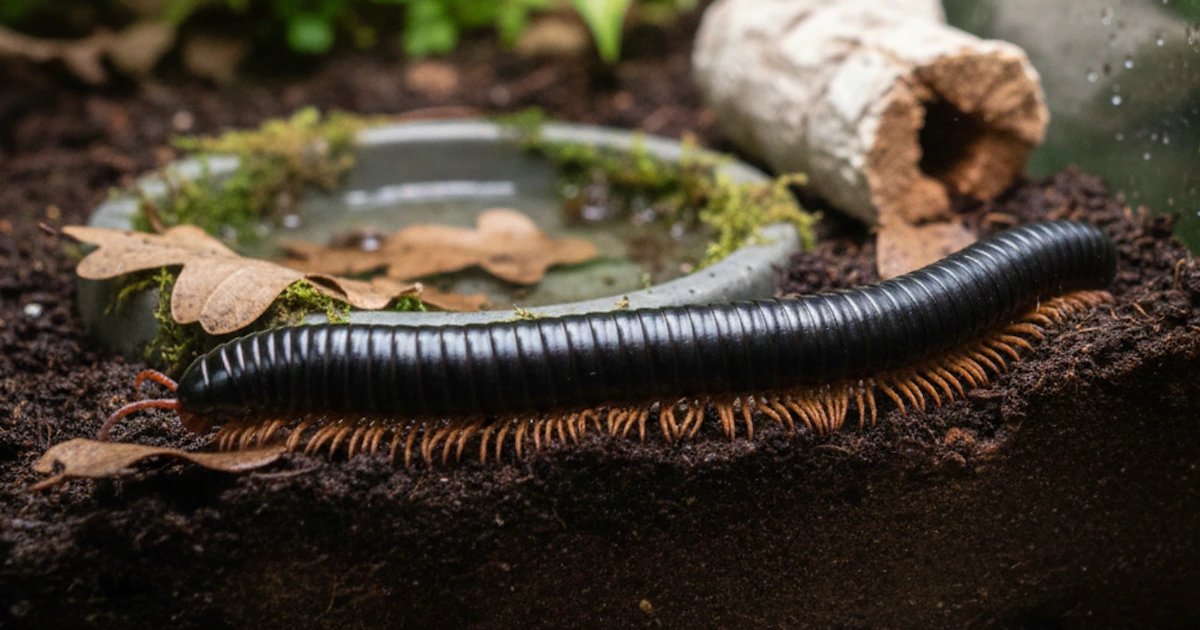
In a world of high-energy pets, a quiet charm exists in forest floor animals. My first time holding a Giant African Millipede was a lesson in gentle strength. I expected something creepy. However, I felt the calm movement of hundreds of legs. They worked in perfect unison like a living wave. There was no fear or aggression. Specifically, I held a peaceful creature exploring my hands. That millipede taught me a valuable lesson. Fascination comes from a quiet and meditative presence. These animals are perfectly designed as gentle decomposers of the earth.
The Giant African Millipede (Archispirostreptus gigas) is a very impressive invertebrate. They are peaceful and fascinating to watch. Furthermore, they are incredibly easy to care for. Consequently, they make an ideal first bug for keepers of all ages. Therefore, this guide walks you through their essential care.
Species Information
What is the difference between a millipede and a centipede? This is a very common question. Specifically, the differences are crucial for your safety. Millipedes are slow-moving detritivores. They eat decaying matter. Furthermore, they have rounded bodies. They possess two pairs of legs per body segment. Consequently, they are harmless to humans. Centipedes are fast-moving predators. They have flattened bodies. Specifically, they possess only one pair of legs per segment. They are venomous and deliver a painful bite. Therefore, you must identify them correctly.
What is the average lifespan?
In captivity, they live for 5 to 10 years. Therefore, they are a long-term commitment. Are they communal animals? Yes, they are communal. Specifically, you can house them in groups. Watching them burrow together is a rewarding experience. How do you tell the sexes apart? Look at the underside of the 7th body segment. Specifically, the male has modified hook-like legs called gonopods. The female’s legs are all uniform.
Giant African Millipede Suitability and Temperament
Are they good pets for beginners?
Yes, they are one of the best choices. Specifically, they are docile and hardy. Their care requirements are simple and inexpensive. Furthermore, they tolerate gentle handling well. They do not seek affection. However, they will walk calmly across your arms. Therefore, use a gentle scooping motion when picking them up.
Do they bite or sting?
No, they cannot bite or sting. Their mouths only chew decaying plant matter. However, they have a unique defense. They curl into a tight spiral when threatened. Specifically, they secrete a mild defensive fluid from their pores. This liquid can stain your skin temporarily. It is a mild irritant. Therefore, you should wash your hands after handling. Be careful not to touch your eyes. Consequently, you will avoid irritation.
Enclosure and Habitat Requirements
What is the minimum tank size?
A 20-gallon long glass terrarium is perfect for adults. Specifically, floor space is more important than height. You must also provide a secure lid. What kind of substrate do they need? This is the most important part of their care. Specifically, they burrow and eat their substrate. Therefore, you need a deep layer of 6 inches.
The Perfect Substrate Mix For A Giant African Millipede
- Coconut fiber: Use this for moisture retention.
- Peat moss: Add this for a natural feel.
- Leaf litter: Specifically, use oak or maple leaves.
- Decaying hardwood: Use sterilized chunks for food.
Do they need a water dish?
You can provide a shallow dish. However, they get most moisture from the damp substrate. Ensure the dish is shallow. Consequently, you will prevent drowning. They need high humidity of 80%. Specifically, keep temperatures between 70 and 80 degrees. You may need a heat pad in the winter. Therefore, mist the enclosure daily to maintain humidity. They are nocturnal and prefer dark environments. Consequently, they do not need special lighting.
Diet and Nutrition: Feeding the Decomposer
What do African millipedes eat?
Their primary food source is the substrate. Specifically, they feed on decaying hardwood and leaves. Do they need supplements? Yes, calcium is essential for a strong exoskeleton. Therefore, place a piece of cuttlebone in the tank. You can also sprinkle crushed calcium on their food.
Can they eat fresh produce?
Yes, supplement their diet a few times a week. Specifically, use cucumber, squash, and lettuce. Banana and melon are also good choices. Always remove uneaten food within 24 hours. Consequently, you will prevent mold growth.
Giant African Millipede Health and Husbandry
A healthy millipede is plump and active at night. Specifically, they should have a good appetite. A sick animal looks shriveled or lethargic. Furthermore, you might see tiny white mites on their body. Most issues are related to husbandry. Fungal infections occur if the substrate stays too wet. Specifically, difficult molts can be fatal. This happens when humidity is too low. Therefore, provide a perfect and stress-free habitat. Consequently, you will prevent most health problems.
Giant African Millipede Legality and Ethics
Is it legal to own one?
Yes, they are legal in most places. However, the US has restrictions on importation. Specifically, most available animals are captive-bred. Therefore, always purchase captive-bred animals. This ensures the animal is healthy. Furthermore, it does not impact wild populations. Consequently, you support ethical pet keeping.
African Millipede Care FAQ
Yes, they are exceptionally docile and cannot bite or sting. However, they may secrete a mild defensive fluid from their pores if they feel threatened. While this liquid is not dangerous, it can temporarily stain your skin and irritate eyes, so always wash your hands thoroughly after handling sessions.
The substrate is the most vital component because millipedes both live in and consume it. You must provide at least six inches of a specialized mix containing coconut fiber, peat moss, leaf litter, and decaying hardwood. This setup supports their burrowing instincts while providing the essential nutrients needed for healthy growth.
While they primarily eat their substrate, you should supplement their diet with fresh produce and calcium. Offer cucumber, squash, or melon a few times weekly to provide variety. Most importantly, keep a cuttlebone in the enclosure, as consistent calcium intake is required to maintain a strong and healthy exoskeleton.
Sexing is done by examining the legs on the underside of the seventh body segment. Males possess specialized, hook-like legs called gonopods used for mating, whereas females have uniform, standard legs throughout that segment. Identifying the sex is crucial if you plan to house these social invertebrates in communal groups.
Maintain a consistent humidity level of around 80% through daily misting to ensure successful molting. Temperatures should stay between 70 and 80 degrees Fahrenheit, as extreme cold can lead to lethargy. Because they are nocturnal, they do not require special lighting, but they do need a damp, dark environment.
Sources
- National Geographic
https://www.nationalgeographic.com/animals/invertebrates/facts/millipedes - University of Florida IFAS
https://entnemdept.ufl.edu/creatures/MISC/millipedes.htm - USDA APHIS
https://www.aphis.usda.gov/aphis/ourfocus/planthealth/import-information/permits/plant-pests/sa_insects/insects-permits - Reptiles Magazine
https://reptilesmagazine.com/giant-african-millipede-care-sheet/
Leave a Reply
You must be logged in to post a comment.