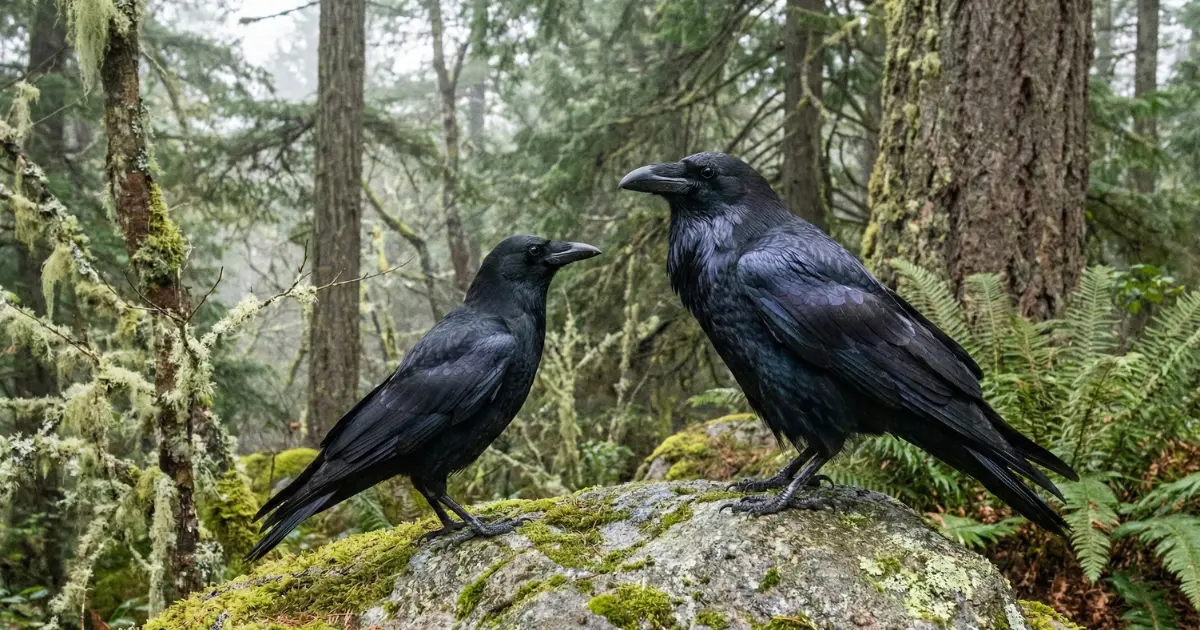
Corvids are the undisputed geniuses of the bird world. Specifically, this family includes crows and ravens. They possess jet-black feathers and an intelligent gaze. Furthermore, their brains can solve complex puzzles. They are the stars of viral videos and ancient folklore. Many people dream of forming a bond with such a creature. However, is it even possible? More importantly, is it legal? This guide provides an unflinching look at this forbidden world.
My Experience: An Intellectual Mismatch
I am the proud owner of fifteen cats. Specifically, I believe three of them are geniuses. Furthermore, my dog has trained me perfectly. I am always surrounded by clever animals. But I am under no illusions. A crow could definitely do my taxes.
The intelligence of a corvid is on a different level. Specifically, it is a humbling and almost alien intellect. I admire them from a profound and legal distance. The dream of a raven companion is a beautiful fantasy. However, the reality is that these are not pets. Specifically, they are wild and complex minds. They belong to the sky. This guide explores that fascinating and forbidden world.
Part 1: The Giant Red Flag
Corvids Legality and Sourcing
Is it legal to own a native crow?
For most people in North America, the answer is no. Specifically, it is an emphatic no. These birds are protected under the Migratory Bird Treaty Act. Therefore, it is illegal to capture or harm them. You cannot even keep their feathers without a federal permit. Specifically, the law protects almost all native species.
Can you get a permit for Corvids?
No, you cannot. Specifically, permits are for research or education. You must be a licensed nature center or rehabilitator. What if you find an injured baby crow? It is still illegal to raise it yourself. Furthermore, improper imprinting is a massive risk. The bird will lose its natural fear of humans. Consequently, it will never survive in the wild. You must contact a licensed rehabilitator immediately.
What about non-native Corvids species?
This is the only legal path for private citizens. Specifically, you can own an African Pied Crow. The White-necked Raven is also a possibility. These species are not protected by the MBTA. However, they are still expert-level animals. They require a massive commitment. Therefore, you must source them from a reputable breeder.
Part 2: The Reality of Corvids Care and Habitat
Corvids are not cage birds. Specifically, a crow requires a massive outdoor aviary. It should be the size of a small room. Furthermore, it must be incredibly durable. Their powerful beaks can destroy standard materials. You must also use secure latches. Crows are famous for cleverly opening cage doors.
What should you feed a pet crow?
They are omnivores with complex needs. Specifically, wild birds eat carrion, insects, and fruits. In captivity, you must provide specialized corvids pellets. Furthermore, supplement this with mice, eggs, and berries. Vegetables are also a vital part of their diet.
Do they need enrichment?
Yes, this is the most demanding task. A bored corvid is a destructive animal. Specifically, their brilliant minds require constant stimulation. Provide complex puzzle feeders and shiny objects. Furthermore, you must provide hours of interactive training. This must happen every single day. Consequently, your social commitment will be massive.
Part 3: The Incredible Corvids Mind
What is the difference between a crow and a raven?
Ravens are much larger birds. Specifically, they have a thicker and more curved beak. Look at the tail during flight. A raven has a wedge-shaped tail. However, a crow has a fan-shaped tail. Ravens usually travel in pairs. Specifically, crows are famous for huge social flocks.
Can they mimic human speech?
Yes, they are incredibly talented mimics. Specifically, they replicate speech and household sounds clearly. Their mimicry is often shockingly context-appropriate. Do they really hold grudges? Yes, they absolutely do. Specifically, studies prove they remember dangerous faces for years. They will even teach their flock to be wary of you.
Do Corvids give people gifts?
Kind of. Specifically, wild crows leave shiny objects for people who feed them. They might leave a bottle cap or a bone. Therefore, it is more of a social exchange. It is a clear sign of a unique bond. Do they make good companions? For a tiny handful of people, yes. Specifically, they form deep and interactive bonds. However, they are loud and messy. They demand the commitment of a human toddler. Furthermore, they live for 30 to 40 years. Consequently, this is a life-long responsibility.
Crows and Ravens FAQ
In most of North America, no. Native corvids are protected under the Migratory Bird Treaty Act — keeping one, even a rescued baby, is a federal offence. The only legal path for private owners is acquiring non-native species like the African Pied Crow from a reputable breeder.
Ravens are significantly larger with a thicker, curved beak and a wedge-shaped tail in flight. Crows have a fan-shaped tail and travel in large social flocks. Ravens typically travel in pairs and produce a deep, resonant croak rather than the crow’s sharper caw.
Yes — they are exceptionally talented mimics that replicate speech, household sounds, and environmental noises with striking clarity. Their mimicry is often context-appropriate rather than random repetition, which makes it genuinely unsettling to experience for the first time.
Yes — studies confirm they remember specific human faces for years and teach their flock to treat those individuals as threats. A crow that perceives you as dangerous will recruit allies against you. This memory and social coordination is what makes their intelligence genuinely extraordinary.
Kind of — wild crows leave shiny objects like bottle caps or small bones for people who feed them regularly. It is a social exchange rather than true gift-giving. It is, however, one of the clearest documented examples of a wild animal voluntarily initiating a reciprocal relationship with humans.
Sources
- U.S. Fish & Wildlife Service
https://www.fws.gov/law/migratory-bird-treaty-act-1918 - National Wildlife Federation
https://www.nwf.org/Home/Magazines/National-Wildlife/2013/Crows-Faces - BBC Science Focus
https://www.sciencefocus.com/nature/do-crows-give-gifts - Cornell Lab of Ornithology
https://www.allaboutbirds.org/guide/Common_Raven/lifehistory

Leave a Reply