The Common Musk Turtle (Sternotherus odoratus), affectionately known as the Stinkpot, is a small, hardy, and primarily aquatic turtle from North America. Their manageable size and unique, bottom-dwelling habits make them a fantastic, albeit feisty, choice for the dedicated keeper.
Are Common Musk Turtles the ideal choice for a beginner?
The Musk Turtle is an exceptional candidate for a novice reptile keeper seeking a manageable aquatic species. Specifically, their small adult size makes their spatial requirements significantly less demanding than those of larger sliders. Furthermore, their hardy nature allows them to thrive despite minor environmental fluctuations. Consequently, they are often viewed as the premier “apartment-sized” turtle for the modern hobbyist. Therefore, your primary focus should be on observation rather than physical interaction. In fact, their self-sufficient nature makes them a fascinating subject for a bioactive river-bottom display.
What is the realistic lifespan and growth projection for a Musk Turtle?
A Musk Turtle represents a half-century commitment to animal welfare. Specifically, a well-maintained individual can easily live for twenty to fifty years. Furthermore, their growth is slow but consistent, with adult males rarely exceeding four inches in shell length. Consequently, you must plan for a long-term presence in your living space. Therefore, their small size should never be equated with a “temporary” or “easy” pet status. As a result, providing a stable environment from the hatchling stage is critical for their skeletal development.
Why is a “river-bottom” setup essential for their behavior?
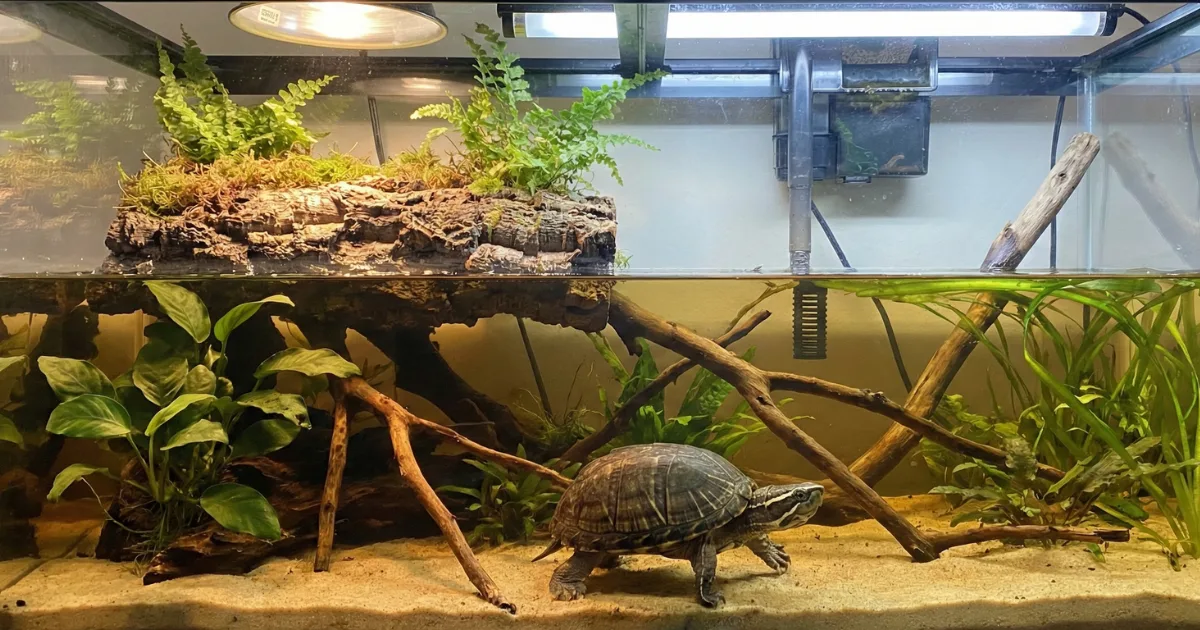
Replicating the slow-moving streams of North America is the only way to ensure psychological health. Specifically, a 20-gallon long aquarium is the absolute minimum for a single adult explorer. Furthermore, you must provide a complex network of driftwood and smooth rocks to accommodate their climbing instincts. Consequently, these turtles prefer to walk to the surface to breathe rather than swimming through open water. Therefore, a powerful canister filter is mandatory to manage the heavy bioload produced by their protein-rich diet. In fact, a messy tank is the leading cause of shell rot.
What are the modern standards for lighting and basking?
The Musk Turtle requires a specific balance of heat and ultraviolet radiation to facilitate calcium metabolism. Specifically, you must provide a basking platform that allows the animal to dry its shell completely. Furthermore, a dedicated T5 HO UVB light is non-negotiable for the prevention of Metabolic Bone Disease. Consequently, even though they are primarily aquatic, they still require access to Ferguson Zone 1-2 UV rays. Therefore, you should connect your heat lamp to a thermostat to maintain a basking spot of 90∘F (32∘C). As a result, proper lighting ensures a healthy, hard carapace.
What constitutes a scientifically balanced diet for a Musk Turtle?
These turtles are primarily carnivores that specialize in consuming aquatic invertebrates. Specifically, a high-quality commercial pellet should serve as the nutritional foundation. Furthermore, you should supplement their diet with live earthworms, snails, and frozen-thawed bloodworms. Consequently, adults should be fed every other day to prevent the development of obesity. Therefore, you must resist the urge to overfeed, as excess protein leads to rapid, unhealthy growth spurts.
Why is the “Stinkpot” nickname often misunderstood?
The famous “stink” is a concentrated chemical defense mechanism used only during moments of terror. Specifically, the turtle releases a foul-smelling fluid from glands located near its rear legs. Furthermore, captive bred individuals that are acclimated to their environment almost never utilize this defense. Consequently, you should not fear a malodorous tank if your husbandry is correct. Therefore, the nickname is more of a biological trivia point than a daily reality for the keeper. In fact, a clean tank will smell only of fresh water and driftwood.
How do you manage the “feisty” temperament of this species?
The Musk Turtle possesses a confident and occasionally spirited personality that adds to its charm. Known for their surprisingly long necks and a powerful, snapping bite, these turtles are truly fascinating creatures. While they may not “enjoy” handling like a domesticated mammal, this just means they thrive best when observed from a distance. By keeping physical interaction to a minimum, you can help reduce any stress and create a wonderful environment where they feel secure. Treating them as a delightful observation-only pet allows you to admire their unique beauty and behaviors, making for a rewarding experience for both the turtle and the observer.
Musk Turtle Care FAQ
Yes, they are an exceptional choice for novices because their small adult size of four inches makes spatial requirements manageable. However, you must treat them as an observation-only pet with a potential fifty-year lifespan. They are not temporary or easily handled animals.
A single adult requires a minimum 20-gallon long aquarium configured as a “river-bottom” setup. You must provide a complex network of driftwood and smooth rocks, as they prefer walking to the surface rather than swimming. A powerful canister filter is absolutely mandatory to prevent shell rot.
The famous “stinkpot” odor is a chemical defense mechanism released from their rear glands only during moments of extreme terror. Captive-bred turtles acclimated to proper husbandry almost never utilize this foul-smelling defense. A correctly maintained and filtered tank will only smell like fresh water and driftwood.
You must provide a dry basking platform heated to 90°F (32°C) connected to a reliable thermostat. A dedicated T5 HO UVB light is non-negotiable to facilitate calcium metabolism and prevent Metabolic Bone Disease. Proper lighting ensures healthy skeletal development and a hard carapace for this aquatic species.
Adults should only be fed a high-quality commercial pellet and supplemental aquatic invertebrates every other day. You must strictly resist the urge to overfeed this carnivorous species. Excess dietary protein leads directly to dangerous obesity and rapid, unhealthy growth spurts that compromise their internal organs.
Leave a Reply
You must be logged in to post a comment.