
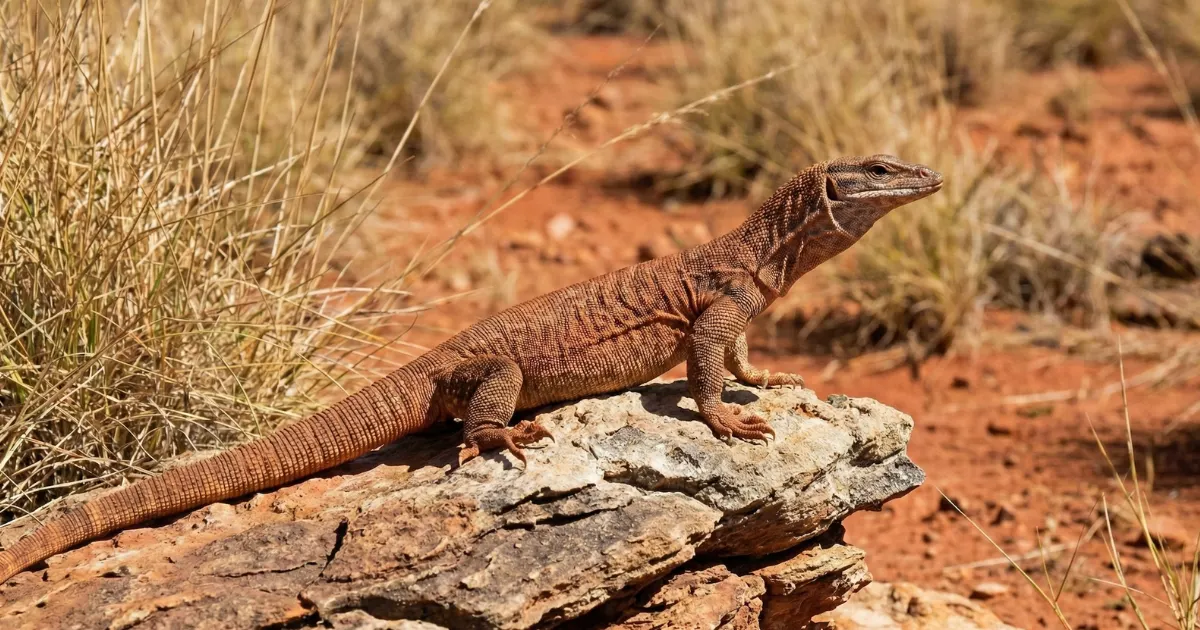
The Ackie Monitor (Varanus acanthurus), also known as the Spiny-tailed Monitor, is a small species from the arid regions of Australia. While it is widely considered the best “starter monitor,” it is crucial to understand that “starter monitor” is still an advanced-level reptile with very specific, non-negotiable needs.
Is the Ackie Monitor a suitable pet for beginners?
The Ackie Monitor represents a nuanced entry point into the world of monitor lizards. Specifically, they are not recommended as a first-time reptile for a casual hobbyist. Furthermore, they are the perfect “beginner monitor” for those who have mastered the care of bearded dragons. Consequently, you must be prepared for a significant increase in intelligence and environmental complexity. Therefore, this species is ideal for a dedicated keeper ready for a more interactive animal. In fact, their curiosity makes them one of the most rewarding reptiles to observe.
What are the realistic lifespan and size of the Ackie Monitor?
An Ackie Monitor is a long-term commitment that typically spans fifteen to twenty years. Specifically, their adult size is very manageable, reaching only eighteen to twenty-four inches in total length. Furthermore, a significant portion of this measurement consists of their long, spiny tail. Consequently, they provide the monitor experience without the requirement of a room-sized habitat. Therefore, they are highly popular among keepers with limited space. In fact, their compact size is their greatest appeal to urban herpetologists.
What are the absolute minimum housing requirements?
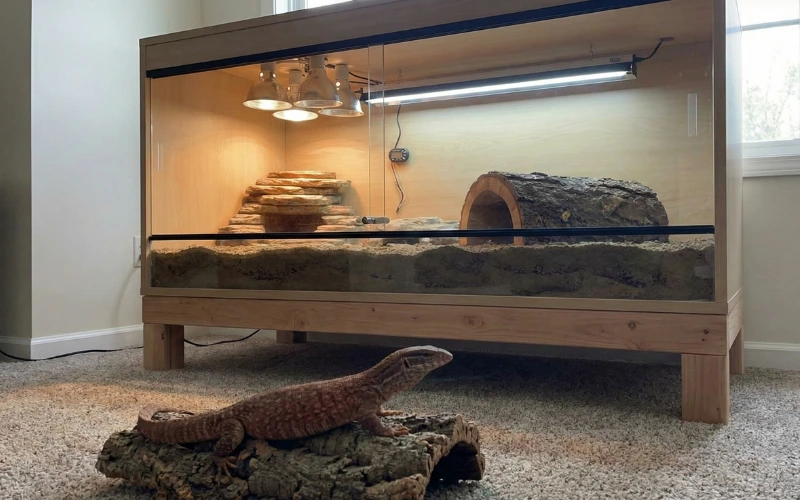
Active lizards like the Ackie Monitor require significant space to thrive in captivity. Specifically, an adult needs an enclosure that is at least four feet long and two feet wide. Furthermore, a deeper enclosure is now preferred to accommodate their intense burrowing behaviors. Consequently, a 120-gallon equivalent is the absolute baseline for a single adult. Therefore, you must provide a vertical height that allows for both deep substrate and climbing branches. In fact, a cramped environment leads to a stressed and lethargic animal.
Why is substrate depth the most important part of the habitat?
Ackie Monitors are obligate burrowers that spend a significant portion of their lives underground. Specifically, you must provide a substrate depth of at least ten to twelve inches. Furthermore, a mixture of play sand and organic topsoil is ideal for holding the structure of their tunnels. Consequently, these burrows provide a humid microclimate that is essential for proper shedding and hydration. Therefore, a shallow substrate layer will result in a chronically unhealthy monitor. In fact, tunneling is their primary natural behavior for security and thermoregulation.
How do you replicate the intense Australian sun?
Replicating the intense heat of the Australian outback is non-negotiable for this species. Specifically, you must use a cluster of halogen flood lamps to create a basking spot of 130–150∘F. Furthermore, a high-output T5 tube-style UVB bulb must span at least half the length of the tank. Consequently, these intense temperatures allow the monitor to digest high-protein insect meals efficiently. Therefore, you must utilize a dimming thermostat to maintain these precise thermal ranges. As a result, proper lighting prevents the onset of fatal Metabolic Bone Disease.
What constitutes a healthy diet for a dwarf monitor?
The Ackie Monitor is primarily an insectivore, and its diet should reflect this biological reality. Specifically, staples should include gut-loaded dubia roaches, crickets, and black soldier fly larvae. Furthermore, you should avoid feeding a regular diet of rodents, as they are far too high in fat. Consequently, obesity and gout are common results of a rodent-based diet in captive monitors. Therefore, a pinkie mouse should only be offered as a very rare, occasional treat. In fact, “gut-loading” insects for twenty-four hours ensures your lizard receives maximum nutrition.
How can a keeper build trust and handle an Ackie Monitor?
Building trust with an Ackie Monitor requires patience and a predictable handling routine. Specifically, you should never grab them from above, as this mimics the movement of a predator. Furthermore, you must scoop them up from below while supporting their entire body weight. Consequently, short and calm sessions will eventually teach the monitor that you are not a threat. Therefore, once they are tamed, they become incredibly interactive and inquisitive pets. In fact, they will often approach their owner in anticipation of food or enrichment.
Ackie Monitor Care FAQ
The Ackie Monitor reaches 18 to 24 inches in total length at maturity. Roughly half of that measurement is their long, spiny tail. Their compact adult size makes them the smallest commonly available monitor lizard species in the pet trade today.
The Ackie Monitor is the best “starter monitor” but never a first reptile for total beginners. Keepers should master bearded dragons or other intermediate species first. Their intelligence, burrowing needs, and 150°F basking temperatures place them above standard beginner-level husbandry.
Ackie Monitors live 15 to 20 years with proper husbandry and diet. This longevity matches many parrots and outlasts most cats or dogs. Prospective owners must commit to nearly two decades of intense lighting, deep substrate maintenance, and live insect feeding.
An adult Ackie Monitor requires a minimum enclosure of 4 feet long by 2 feet wide. A 120-gallon equivalent serves as the absolute baseline for one adult. Vertical depth matters as much as floor space because these lizards burrow 10 to 12 inches deep.
Ackie Monitors should rarely eat mice because their bodies evolved to process insect protein. A pinkie mouse offered every few weeks counts as an occasional treat at most. Regular rodent feeding causes obesity, fatty liver disease, and gout in this dwarf monitor species.
Ackie Monitors rarely bite once tamed but their teeth and claws can break skin. Hatchlings often display defensive behavior including tail whipping and gaping. Building trust through patient handling and underneath scooping motions reduces defensive responses dramatically over several months.
A captive bred Ackie Monitor costs $300 to $600 from reputable breeders. Annual care expenses dwarf the purchase price within months of ownership. A complete setup with proper enclosure, lighting, and deep substrate runs $1,500 to $3,000 before any lizard arrives.
Sources
- Reptiles Magazine
https://reptilesmagazine.com/ridge-tailed-monitor-care-sheet/ - Arcadia Reptile
https://www.arcadiareptile.com/lighting/creature-care/ackie-monitor/ - Advancing Herpetological Husbandry
https://www.facebook.com/groups/AdvancingHerpetologicalHusbandry/ - Reptile Mountain TV
https://www.reptilemountain.com/ackiemonitors - Federation of British Herpetologists
https://fbh.org.uk/care-sheets/


Leave a Reply