
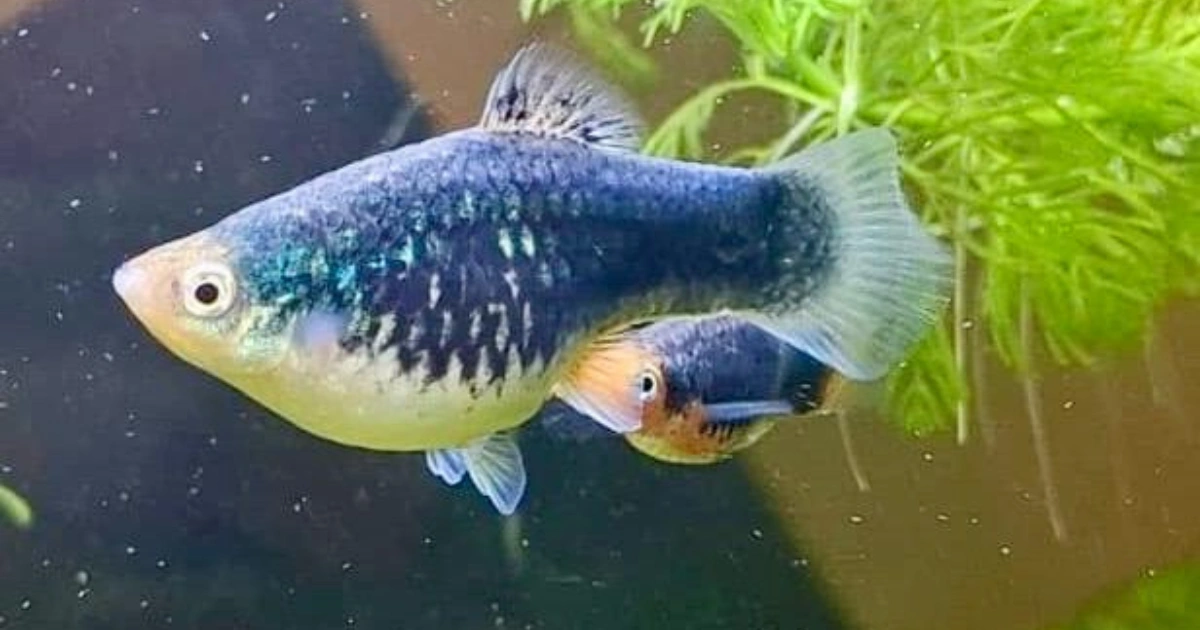
Platy fish (Xiphophorus maculatus) showcase a kaleidoscope of colors, a peaceful demeanor, and a hardy nature. These characteristics make them a beloved staple in the freshwater aquarium hobby. Consequently, they are the perfect residents for a vibrant community tank, providing a constant source of activity and color. This guide will, therefore,answer all your questions, from their simple care needs to the secrets of managing their ever-expanding families.
In one of my community tanks, a beautiful chaos reigns; it’s where my Guppies and Platys live together. While I adore the flashy, almost hyperactive energy of my Guppies and their flowing tails captivate me, I have, nevertheless, a special affection for the Platys.
I see them as the calm, cheerful cousins in the livebearer family. They have all the color and life, yet they maintain a sturdier, more grounded presence. In effect, they are the peaceful anchors in a tank of constant motion. Through observing them, I truly learned to appreciate the simple joy a beginner fish can bring. This joy is reliable even in an advanced hobbyist’s home.
What is the Ideal Tank Size and Environment for Platy Fish?
Tank Size: A 10-gallon (approx. 40 liters) tank is the minimum for a small group. However, a 20-gallon (75-liter) tank is highly recommended to give them comfortable swimming space and to better handle their bio-load as they breed.
Water Parameters: Platys are very hardy and forgiving, thus making them great for beginners.
- Temperature: A heater is recommended to keep the water stable between 70-77∘F (21-25∘C).
- pH: In terms of acidity, they are adaptable but prefer neutral to slightly alkaline water, with a pH of 7.0 to 8.2.
Plants and Decorations: They thrive in a well-planted tank. Consequently, live plants are essential. Floating varieties like Hornwort or Guppy Grass, for example, provide crucial hiding places for newborn fry.
How Do You Tell a Male Platy Fish From a Female?
Sexing Platys is quite straightforward once they mature.
- Males: In comparison, males are generally smaller and more slender. A crucial identifier is their modified, pointed anal fin, called a gonopodium, which is used for breeding.
- Females: On the other hand, females are noticeably larger, with a much rounder and fuller body shape. They display a standard, fan-shaped anal fin. As a reproductive sign, when pregnant, they will also develop a dark gravid spot.
How Do Platys Breed?
Like their livebearer cousins, breeding Platys is famously easy.
Pregnancy & Fry Protection: Pregnancy lasts about 24-30 days. During this time, the female’s belly will become larger and more “boxy.” Crucially, the parents will eat the fry. Therefore, to protect the fry, you must providedense thickets of floating plants. These plants offer them hiding spots. A breeder box is also an effective option.
Livebearers: This means that Platys do not lay eggs; instead, the female gives birth to live, fully-formed baby fish (fry).
Can females store sperm? Yes, and this is a key trait of livebearers. A female can store sperm for several months, allowing her to have multiple pregnancies from a single mating.
How Do I Prevent Platy Overpopulation?
Keep a Single-Sex Tank: The most effective method is to simply keep only males or only females.
Natural Control: Alternatively, in a busy community tank with fewer hiding places, the fry population remains low. This happens because predatory fish naturally control their numbers.
Rehome Them: Finally, your local fish store may accept your extra Platys for store credit. You can also give them to fellow hobbyists.
What Are the Best Tank Mates for Platys?
Platy fish are incredibly peaceful and are, therefore, a model community tank resident.
- Best Tank Mates: Consequently, they get along well with other peaceful livebearers like Guppies and Swordtails. While they get along behaviorally (they won’t fight), Platies (Xiphophorus maculatus) and Swordtails (Xiphophorus helleri) belong to the same genus. They will crossbreed (hybridize). keeping them together will result in hybrid offspring, ruining the purebred lines of both species. If the goal is “population control,” mixing these two defeats the purpose.
- They also mix well with community fish such as Corydoras, smaller Tetras, and Bristlenose Plecos.
- Fish to Avoid: Conversely, avoid large, aggressive fish like many Cichlids, as they will bully or eat your Platys.
What Do Platys Eat and How Often Should I Feed Them?
Platy fish are omnivores with a healthy appetite.
Frequency: Feed a small amount once or twice a day. But remember to provide only what they can eat in about a minute to prevent overfeeding.
Diet: A high-quality flake food should be their staple. However, because they love vegetable matter, you shouldsupplement their diet with spirulina flakes or algae wafers. Additionally, offer meaty treats like frozen brine shrimp or bloodworms occasionally.
What Are Some Common Problems and Solutions?
Chasing: Males can sometimes harass females. To solve this, maintain a proper gender ratio of one male to at least two or three females to spread his attention.
Stress: Signs of stress include hiding or clamped fins. This is usually caused by poor water quality or being housed with an aggressive tank mate.
Overcrowding: This is the most common issue. Manage their population to prevent a decline in water quality.
What Are Different Types of Platys?
Platys have been bred into a huge variety of beautiful colors and patterns:
Mickey Mouse Platy: Famous for a black pattern at the base of its tail that looks like the head of Mickey Mouse.
Sunburst / Sunset Platy: Features a brilliant gradient of yellow and orange.
Red Wag Platy: Has a vibrant red body with contrasting black fins and lips.
Blue Coral Platy: A stunning iridescent blue color.
Pintail: A variation where the central part of the tail fin is extended into a short point.
How Long Do Platys Live?
In a well-maintained aquarium, Platys typically live for 3 to 5 years.
Sources
- Aquarium Co-Op
https://www.aquariumcoop.com/blogs/aquarium/platy-care-guide - Fishkeeping World
https://www.fishkeepingworld.com/platy-fish/ - The Spruce Pets
https://www.thesprucepets.com/platy-fish-species-profile-5085440 - Animal Diversity Web
https://animaldiversity.org/accounts/Xiphophorus_maculatus/ - Seriously Fish
https://www.seriouslyfish.com/species/xiphophorus-maculatus/ - Aquarium Source
[https://www.aquariumsource.com/platy-fish/ - Fish Laboratory
https://www.fishlaboratory.com/fish/platy-fish/


Leave a Reply