
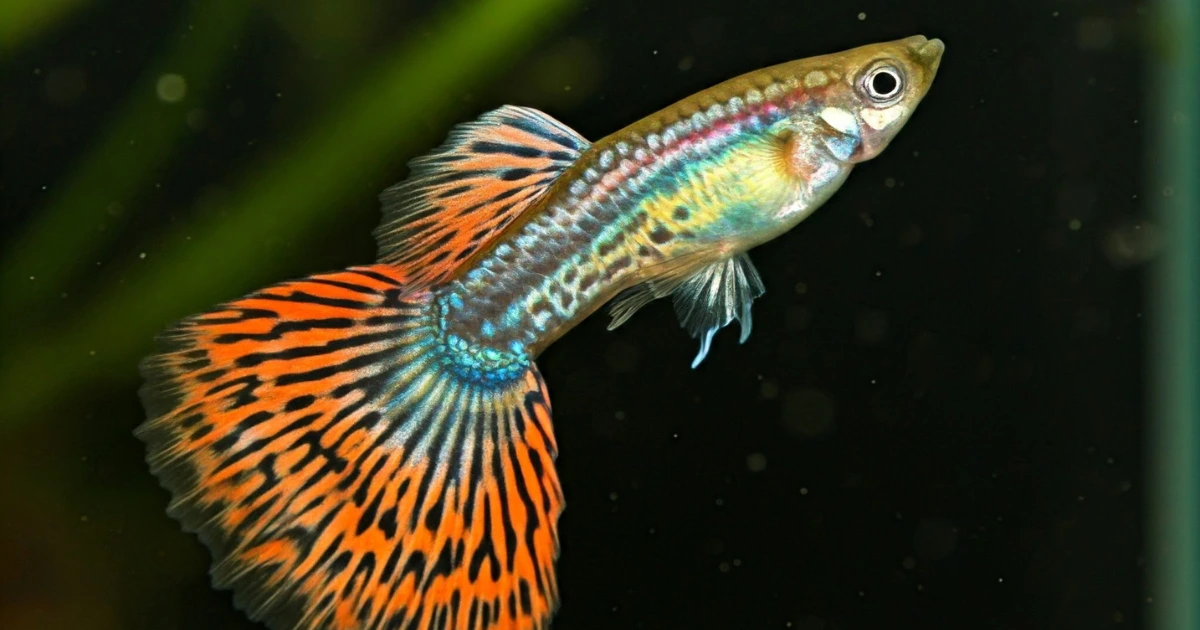
With their vibrant, ever-changing colors and a personality that fills every inch of the tank with energy, Guppies (Poecilia reticulata) are the dazzling jewels of the freshwater world. They are often the first fish a new hobbyist brings home, andfor good reason. However, their “beginner fish” reputation belies a fascinating biology and specific needs. This guide will, therefore, answer all your questions, ensuring your Guppies live a healthy, colorful life.
The fish on this list are often labeled “beginner fish,” a term that sometimes feels like a stepping stone to bigger, “better” species. So, I’ll let you in on a little secret: I have three separate tanks in my home dedicated just to guppies, platys, and swordtails. Why? Because after a long day of observing the complex moods of my chameleon or the territorial drama of my larger cichlids, there is nothing more purely joyful than watching these tanks. They are a non-stop flurry of vibrant color, bustling activity, and uncomplicated happiness. My “advanced” pets taught me about science and behavior, but my livebearers constantly remind me of the simple wonder that got me into this hobby in the first place. They taught me that “easy” doesn’t mean boring. Instead, it means resilient, forgiving, and a reliable source of delight in a glass box.
What is the Ideal Tank Setup for Guppies?
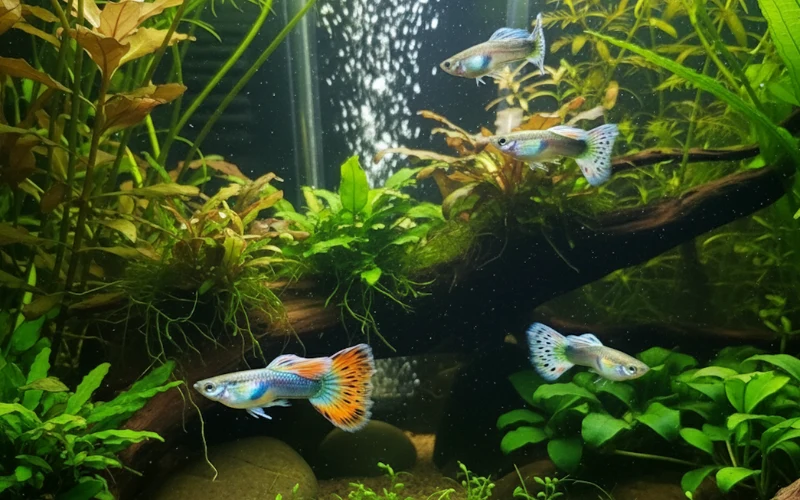
Plants and Decorations: Live plants are fantastic, as they effectively provide hiding places for fry. Specifically, floating plants like Hornwort or Guppy Grass are perfect for this role.
Tank Size: A 10-gallon (approx. 40 liters) tank is the minimum for a small group. A larger 20-gallon (75-liter) tank is highly recommended. It offers more stable water conditions. Additionally, it allows more space to manage their prolific breeding.
Water Parameters: Guppies are hardy, though they require stable conditions to truly thrive.
- Temperature: Consequently, a reliable heater is necessary to maintain the water between 74-78∘F (23-26∘C).
- pH: Regarding pH, they prefer slightly alkaline water, with a pH of 7.0 to 8.0.
What Do Guppies Eat (and How Often)?
Guppies are omnivores.
Frequency: For best results, feed them a small pinch once or twice a day, only what they can consume in about one minute.
Diet: Start with a high-quality tropical flake food as a staple. Then, supplement their diet with frozen or live foods like brine shrimp and daphnia to bring out their best colors.
How Can You Tell Male and Female Guppies Apart?
Sexing guppies, or “sex differentiation,” is quite easy once you know what to look for. These differences become obvious as the fish mature.
Male Guppies: In contrast, the males are the peacocks of the species. They are generally smaller and more slender but boast intensely vibrant colors and long, flowing caudal (tail) and dorsal fins.
Female Guppies: Conversely, females are larger and rounder, with a much more subdued coloration, typically a silvery-gray or muted yellow. Their primary role is reproduction, so they are built for carrying fry. Therefore, a key identifier is the dark “gravid spot” near their anal fin, which becomes more pronounced when they are pregnant.
How Do Guppies Breed? The Livebearer Life
Guppies are livebearers, meaning that the females give birth to live, free-swimming fry instead of laying eggs.
The Process is easy. In fact, if you have healthy males and females in the same tank, you will have babies. You do not need to do anything special.
Can females store sperm? Yes, and this is a crucial fact. A female guppy can store sperm from a single encounter for up to six months, allowing her to have multiple batches of fry even without a male present.
A female’s pregnancy lasts about 21-30 days. During this time, her body will get a boxy shape, and the gravid spot will become darker and larger.
How Do I Protect the Babies (Fry)?
Adult guppies, including the mother, will eat their own fry. To ensure some survive, you can employ two main methods:
- Use a Breeder Box: You can move a heavily pregnant female to a breeder box inside the aquarium. Once she gives birth, she can be returned to the main tank, and the fry can grow safely in the box.
- Provide Dense Hiding Places: Alternatively, a thicket of floating plants like Guppy Grass, Hornwort, or Java Moss is the best and most natural way to protect the fry.
How Do You Prevent Overpopulation?
This is the biggest challenge of keeping guppies.
- Rehome Them: The simplest solution is to find a local fish store that may take your extra guppies as trade-ins or give them to fellow hobbyists.
- Keep a Single-Sex Tank: Alternatively, the easiest method is to simply keep an all-male tank.
- Limit Hiding Places: If you want to maintain a mixed-sex tank, reducing the number of dense plants will mean fewer fry survive to adulthood.
- For smaller tanks (10-20g), population control is best managed by manually removing fry or keeping an all-male tank. There are few “predator” fish small enough for a 10-gallon tank that are capable of controlling a guppy population effectively.
What are the Common Problems and How Do You Solve Them?
Chasing: Males constantly chase females to breed. To mitigate this issue, maintain a proper gender ratio of one male to at least two or three females. Doing so spreads out the male’s attention and thereby reduces stress on any single female.
Overcrowding: Because of their rapid breeding, overcrowding can quickly lead to an overstocked tank, resulting inpoor water quality and stress. It is essential to manage the population using the methods above.
Stress: Signs of stress include clamped fins, hiding, and gasping at the surface. These symptoms are generally caused by poor water quality, bullying, or an improper gender ratio. Your first step should be to test your water and thenobserve the tank dynamics.
How Long Do Guppies Live?
In a well-maintained aquarium, guppies typically live for 2 to 3 years.
What Are the Best Tank Mates for Guppies?
Guppies are peaceful, but their long fins make them targets for nippers. Therefore, avoid fin nippers such as Tiger Barbs, Danios, and any fish large enough to eat an adult guppy. Furthermore, never house them with a male Betta. Instead, the best tank mates are peaceful community fish like Corydoras catfish, Neon Tetras, Platys, and Bristlenose Plecos.
What Are the Different Types of Guppies?
Guppies are bred into a breathtaking array of types based on their colors and tail shapes. Some popular examples include:
Dumbo Ear: Have enormous pectoral fins, similar to the Betta variety.
Tuxedo: The back half of the body is a solid black, contrasting with a different color on the front.
Cobra: Features a snakeskin-like pattern of vertical barring and rosettes.
Mosaic: The tail fin has a fine, irregular pattern of spots and splotches.
Neon Blue: A brilliant, iridescent blue that shimmers under the light.
Guppy Fish Care FAQ
Guppies are livebearers, meaning females give birth to fully developed, free-swimming fry rather than depositing eggs. A female’s gestation period lasts 21–30 days, and no special conditions are required to trigger reproduction. Any healthy male and female sharing a tank will breed without additional effort or intervention from the keeper.
Yes — female Guppies can store sperm internally for up to six months after a single encounter with a male. This means a female purchased from a mixed-sex tank can produce multiple batches of fry even after being moved to an all-female setup. Isolating females does not guarantee a pregnancy-free aquarium.
Guppies require a minimum tank size of 10 gallons (approximately 40 liters), though a 20-gallon (75-liter) tank is strongly recommended for population stability. Larger tanks provide more consistent water chemistry and essential space for managing the inevitable breeding activity. Overcrowding is the primary cause of disease outbreaks and premature death in guppy tanks.
Guppy fry are immediately at risk of being consumed by adult fish, including their own mother, upon birth. Dense floating plants such as Hornwort or Guppy Grass provide natural cover and represent the most effective long-term protective solution. Breeder boxes offer an alternative but require careful monitoring to prevent excessive stress on the pregnant female.
Male Guppies are smaller and more slender, displaying intensely vibrant colors and long, flowing tail and dorsal fins. Females are larger, rounder, and significantly less colorful, typically appearing silver-gray or muted yellow. The dark gravid spot near the female’s anal fin grows visibly larger and darker as her pregnancy progresses.
Maintaining an all-male tank is the simplest and most reliable solution to Guppy overpopulation. For mixed-sex tanks, keeping a ratio of one male to at least two or three females reduces breeding pressure, while limiting dense hiding plants decreases fry survival. Rehoming excess fish to local aquarium stores provides the most sustainable long-term management approach.
Guppies are peaceful fish whose long, flowing fins make them immediate targets for fin-nipping species in a community tank. Suitable companions include Corydoras catfish, Neon Tetras, Platys, and Bristlenose Plecos. Male Bettas, Tiger Barbs, and any fish large enough to consume an adult Guppy must be permanently excluded from the setup.


Leave a Reply