
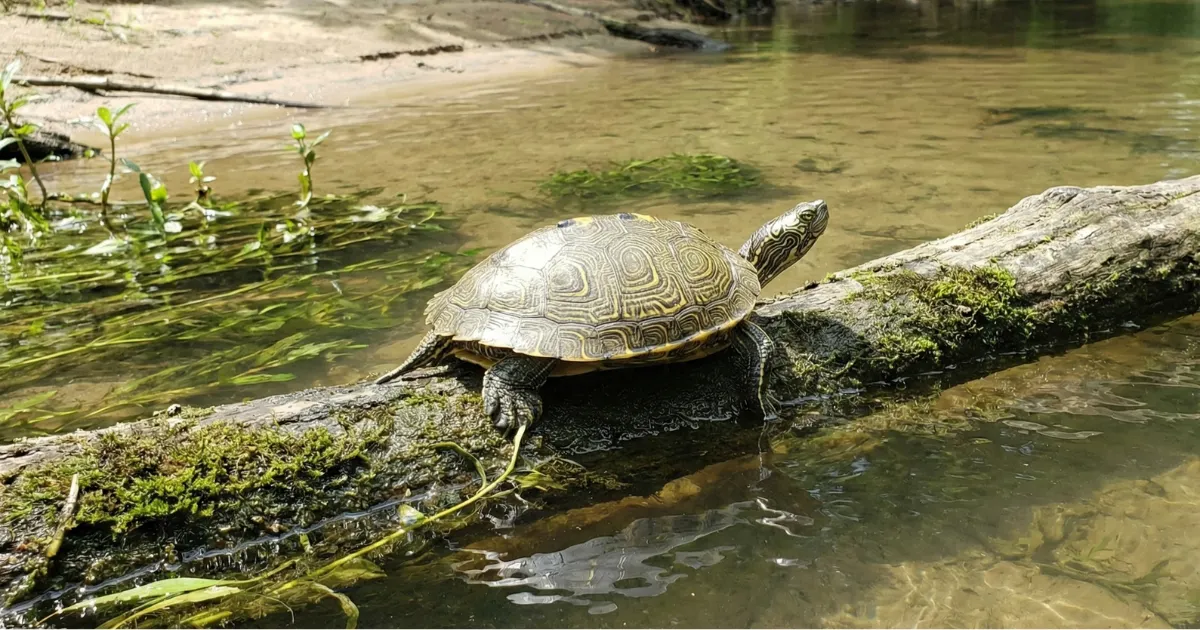
Map Turtles, from the genus Graptemys, are named for the intricate, map like contour lines on their shells. They are a captivating but demanding species for the dedicated keeper who is willing to invest in their specific needs for pristine water and powerful basking light.
Are Map Turtles suitable pets for the beginning hobbyist?
The Map Turtle is not a recommended choice for a beginner due to its specific environmental sensitivities. Specifically, their nervous temperament makes them prone to stress induced illness if the enclosure is poorly designed. Furthermore, they require much cleaner water than many other common aquatic species. Consequently, I classify them as an intermediate level pet that demands a high degree of technical maintenance. Therefore, you must prioritize a “hands-off” observation approach to ensure their psychological well-being. In fact, their skittish nature means they will often dive at the slightest movement in the room.
What is the lifespan and growth expectations for Map Turtles?
A Map Turtle represents a multi decade commitment that often exceeds thirty years in captivity. Specifically, females of the genus Graptemys grow significantly larger than their male counterparts. Furthermore, a male may only reach five inches, while a female can easily exceed ten inches in shell length. Consequently, you must plan your aquarium size based on the specific sex of the animal you acquire. Therefore, the “cute” baby you see today will eventually require a massive water volume. As a result, providing a stable environment from the start is critical for their long-term survival.
Why is a “river-style” setup essential for their physical health?
Replicating a riverine environment is the only way to meet the biological needs of a Map Turtle. Specifically, for a large female, you will require an enclosure ranging from 75 to 125 gallons. Furthermore, the setup must include a stable, completely dry basking platform where the animal can fully emerge. Consequently, these turtles are highly aquatic and spend the majority of their time navigating current and substrate. Therefore, you must provide under water cover like driftwood to help them feel secure. In fact, a lack of hiding spots will lead to chronic stress and a weakened immune system.
What are the standards for filtration and water quality?
The Map Turtle is exceptionally messy and requires massive, oversized filtration to prevent bacterial blooms. Specifically, you should utilize a canister filter rated for at least twice the volume of your actual tank. Furthermore, poor water quality is the leading cause of shell rot and respiratory infections in this genus. Consequently, frequent partial water changes are mandatory to manage the high nitrogenous bioload. Therefore, you should never rely on small, internal filters which are insufficient for aquatic reptiles. As a result, pristine water conditions are the foundation of successful husbandry.
How do you provide correct heat and UVB lighting?
Proper thermoregulation for a Map Turtle requires a distinct temperature gradient between the water and land. Specifically, the basking surface must reach 90–95∘F (32–35∘C) to facilitate digestion. Furthermore, a high-output T5 HO UVB lamp is non negotiable for the prevention of Metabolic Bone Disease. Consequently, the turtle must be able to dry its plastron and carapace completely under these lights. Therefore, you should run your lighting cycle for approximately 10 to 12 hours a day. In fact, a turtle that refuses to bask is often signaling that your temperatures are incorrect or it is feeling unwell.
What constitutes a scientifically balanced diet for Map Turtles?
While primarily carnivorous as hatchlings, adult Map Turtles remain opportunistic omnivores with a preference for protein. Specifically, a high-quality commercial pellet should serve as the nutritional foundation of their diet. Furthermore, females often have powerful jaws designed for crushing snails and crustaceans. Consequently, you should supplement their meals with earthworms, crickets, and calcium rich invertebrates. Therefore, offering dark leafy greens like dandelion leaves provides essential vitamins and minerals.
How can you distinguish between the common species of the Graptemys genus?
Identifying a specific Map Turtle requires a close analysis of the markings behind the eyes and the shell’s keel. Specifically, the Mississippi Map Turtle is recognized by the crescent shaped yellow markings located behind its eyes. Furthermore, the Black-knobbed Map Turtle features prominent dark protrusions along the center of its carapace. Consequently, while their care requirements are similar, their adult sizes can vary based on the specific species. Therefore, you should verify the scientific name to understand the exact regional requirements of your animal. In fact, each species has adapted to specific river systems across North America.
Map Turtles Care FAQ
No, they are an intermediate-level pet and are not recommended for beginners. They possess a nervous, skittish temperament and require far cleaner water than most common aquatic turtles. Their sensitive nature means they require a “hands-off” observation approach to prevent stress-induced illness.
Because females can exceed ten inches in shell length, they require a massive “river-style” enclosure ranging from 75 to 125 gallons. Males are smaller (around five inches), but both sexes require a stable, completely dry basking platform and underwater cover like driftwood to feel secure.
Map Turtles are exceptionally messy and require a heavy-duty canister filter rated for at least twice the volume of your tank. Frequent partial water changes are mandatory. Poor water quality is the primary cause of fatal respiratory infections and shell rot in this species.
You must provide a completely dry basking surface that reaches 90–95°F (32–35°C) to facilitate digestion. A high-output T5 HO UVB lamp is absolutely non-negotiable to prevent Metabolic Bone Disease. The turtle must be able to dry its entire shell under these lights for 10–12 hours daily.
While they are opportunistic omnivores, adults prefer protein. The foundation of their diet should be a high-quality commercial aquatic pellet. Supplement this with calcium-rich invertebrates, earthworms, crickets, and occasional dark leafy greens like dandelion leaves to provide essential vitamins and minerals.
Sources
- Reptiles Magazine
https://reptilesmagazine.com/common-map-turtle-care-sheet/ - Virginia Herpetological Society
https://www.virginiaherpetologicalsociety.com/reptiles/turtles/northern-map-turtle/northern_map_turtle.php - MSPCA-Angell
https://www.mspca.org/angell_services/care-of-aquatic-turtles/ - VCA Animal Hospitals
https://vcahospitals.com/know-your-pet/turtles-aquatic-feeding - Animal Diversity Web
https://animaldiversity.org/accounts/Graptemys_geographica/ - ReptiFiles
https://reptifiles.com/map-turtle-care-guide/ - Illinois Natural History Survey
https://www.inhs.illinois.edu/outreach/spotlight/map-turtles/


Leave a Reply