
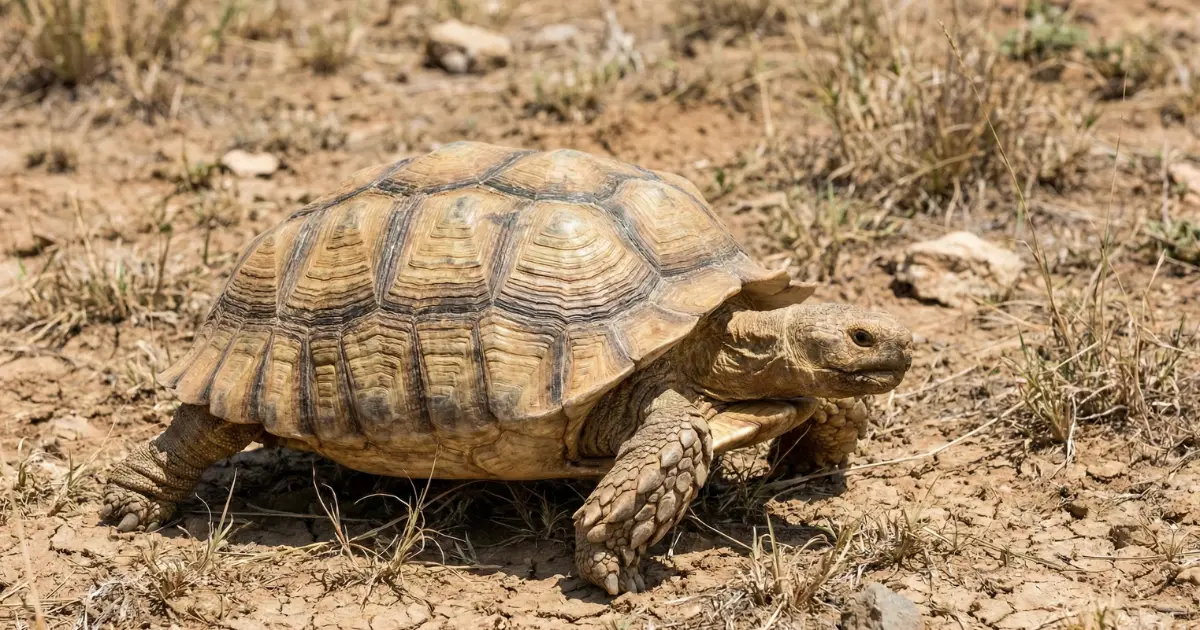
The African Sulcata Tortoise (Centrochelys sulcata), also known as the African Spurred Tortoise, is the third largest tortoise species in the world. Their impressive size and engaging personalities have made them popular, but their needs are immense. This guide is an honest look at the colossal commitment they represent.
Is the Sulcata Tortoise a suitable pet for a beginner?
The Sulcata Tortoise is categorically not a beginner level reptile. Specifically, while hatchlings are small and aesthetically pleasing, their rapid growth rate and massive adult size overwhelm most novice keepers. Furthermore, their incredible physical strength allows them to destroy standard indoor enclosures within the first few years. Consequently, this species is only appropriate for experienced individuals with extensive outdoor space. Therefore, you must treat the acquisition of this animal as a major lifestyle change rather than a simple hobby. In fact, their eighty-year lifespan requires you to have a long-term legal plan for their care.
How much space does an adult African Spurred Tortoise require?
An adult Sulcata Tortoise requires a secure, outdoor kingdom to maintain its psychological and physical health. Specifically, the absolute minimum space for a single adult is 500 square feet of fenced yard. Furthermore, 1,000 square feet is the preferred standard for promoting natural grazing behaviors and exercise. Consequently, you must install fencing with underground barriers to prevent the tortoise from digging out. Therefore, solid wood or concrete block walls are necessary to withstand their single-minded ramming behavior. As a result, providing anything less than a backyard sized enclosure is a failure in husbandry.
Why is high-fiber grazing essential for their shell development?
The Sulcata Tortoise is a biological machine designed to process low-quality, high fiber grasses. Specifically, the foundation of their diet must consist of orchard grass, Timothy hay, and Bermuda grass. Furthermore, you should avoid fruits and high protein foods entirely to prevent severe digestive distress. Consequently, feeding grocery store greens in excess can lead to rapid, unhealthy growth and internal organ stress. Therefore, you must prioritize broadleaf weeds like dandelions and hibiscus leaves as supplemental forage. In fact, their powerful jaws are perfectly evolved for crushing tough, fibrous plant matter.
What are the critical temperature and UVB standards for this species?
As a desert-dwelling species, the Sulcata Tortoise requires intense heat and ultraviolet radiation to facilitate calcium metabolism. Specifically, they need a basking spot that reaches 95–100∘F (35–38∘C). Furthermore, providing a high-output T5 HO UVB bulb is non-negotiable for any indoor hatchling setup. Consequently, a lack of proper lighting will result in Metabolic Bone Disease, leading to soft shells and skeletal deformities. Therefore, you must connect your heat sources to a thermostat to prevent dangerous thermal fluctuations. As a result, proper environmental control is the only way to ensure a hard, smooth carapace.
How do you prevent the development of shell pyramiding in a Sulcata Tortoise?
Shell pyramiding is an unnatural growth pattern characterized by lumpy, raised scutes on the carapace. Specifically, this condition is caused by a combination of high-protein diets and chronically low ambient humidity. Furthermore, keeping hatchlings in a humid microclimate is the only proven way to ensure a smooth shell. Consequently, you must provide a damp hide or frequent soakings to support proper keratin development. Therefore, I reject the assumption that diet alone determines shell aesthetics. In fact, consistent hydration is the “secret” to replicating the healthy growth seen in wild African populations.
Does a Sulcata Tortoise require social interaction or a mate?
The Sulcata Tortoise is a solitary animal that does not experience loneliness in the mammalian sense. Specifically, housing multiple males together will invariably lead to violent, territorial combat and potential injury. Furthermore, even females can be stressed by the persistent attention of a single-minded male. Consequently, keeping these animals individually is the safest and most ethical approach for the average keeper. Therefore, you should focus on your own interaction with the tortoise through hand-feeding and neck scratches. As a result, the animal will learn to associate your presence with positive resources without the stress of competition.
What kind of winter shelter is mandatory for their survival?
Because the Sulcata Tortoise does not hibernate, they must have access to a heated refuge during cold weather. Specifically, an insulated shed or “tortoise house” with a reliable heat source is mandatory. Furthermore, allowing a tortoise to get too cold will lead to fatal respiratory infections or “runny nose syndrome.” Consequently, you must ensure the shelter remains dry and waterproof during winter rains. Therefore, using ceramic heat emitters or specialized pig blankets can provide the necessary warmth. In fact, a heated shelter allows the tortoise to remain active even when outdoor temperatures drop below their comfort zone.
Sulcata Tortoise Care FAQ
No, they are categorically not beginner reptiles. While hatchlings are small, they rapidly grow into massive, incredibly strong adults that can easily destroy standard indoor enclosures. Their eighty-year lifespan requires experienced owners who are prepared for a multi-decade, major lifestyle commitment.
An adult requires a secure, outdoor kingdom with an absolute minimum of 500 to 1,000 square feet of yard space. You must install solid wood or concrete fencing with deep underground barriers. Without these heavy-duty reinforcements, their single-minded ramming and digging behaviors will quickly compromise standard fences.
Shell pyramiding is an unnatural, lumpy growth pattern caused by chronically low ambient humidity and high-protein diets. Providing a damp hide or frequent soakings for hatchlings is the only proven way to support proper keratin development. Consistent hydration is essential for replicating healthy, smooth shell growth.
The foundation of their diet must consist of low-quality, high-fiber grasses like Timothy hay and Bermuda grass. You must entirely avoid fruits and high-protein foods to prevent severe digestive distress and unnatural growth spikes. Broadleaf weeds like dandelions and hibiscus leaves make excellent supplemental forage.
No, this desert-dwelling species does not hibernate and will quickly develop fatal respiratory infections if exposed to freezing temperatures. They must have access to a dry, waterproof, and heated outdoor refuge during cold weather. Using ceramic heat emitters or specialized pig blankets ensures their winter survival.
Sources
- Smithsonian’s National Zoo
https://nationalzoo.si.edu/animals/african-spurred-tortoise - San Diego Zoo Wildlife Alliance
https://animals.sandiegozoo.org/animals/african-spurred-tortoise - Tortoise Trust
https://www.tortoisetrust.org/articles/sulcata.html - Arizona-Sonora Desert Museum
https://www.desertmuseum.org/kids/oz/long-fact-sheets/sulcata%20tortoise.php - Journal of Herpetological Medicine and Surgery
https://www.jherpmedsurg.com/ - Animal Diversity Web
https://animaldiversity.org/accounts/Centrochelys_sulcata/


Leave a Reply