
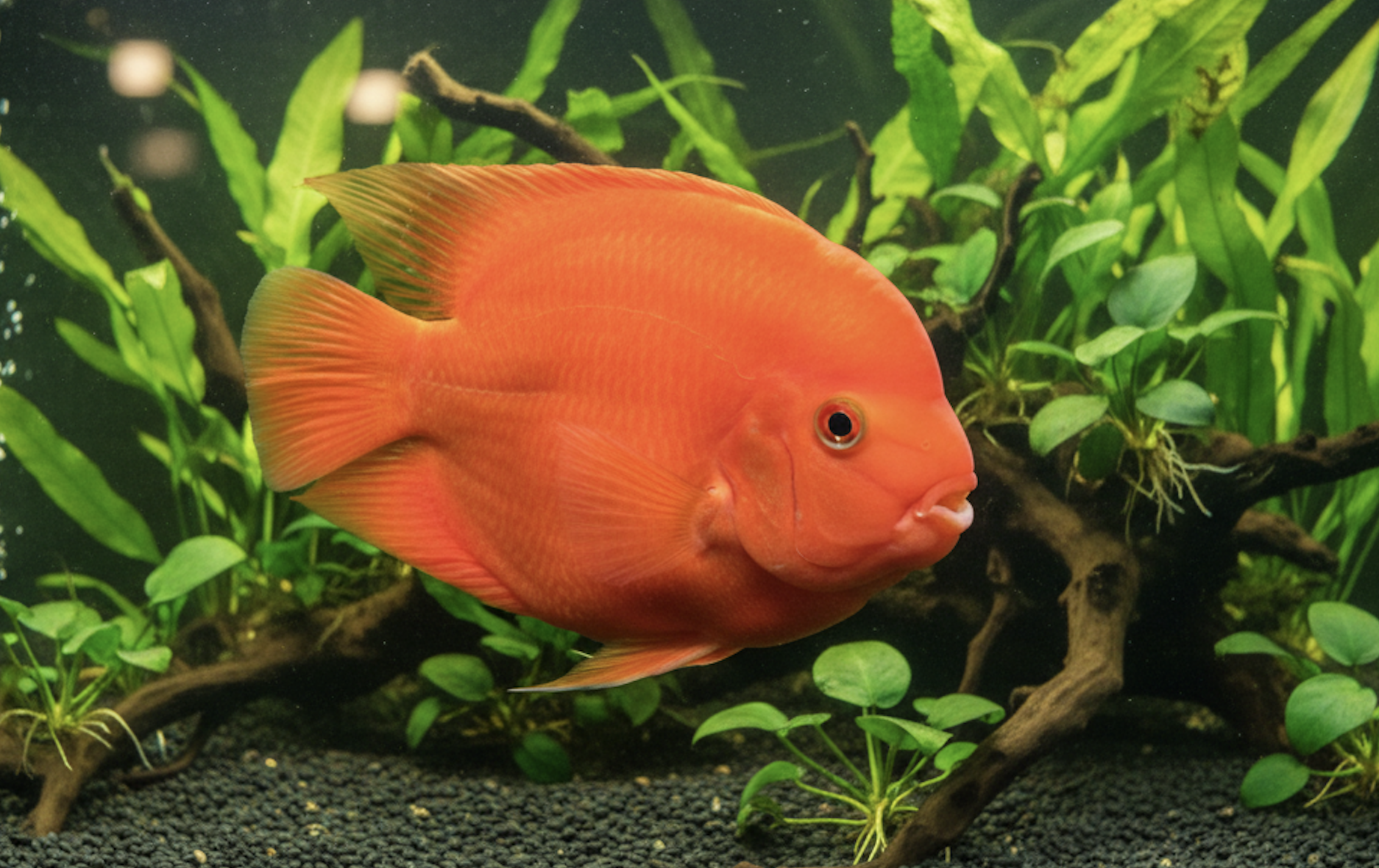
King Kong Parrot Cichlids represent a super sized, selectively bred grade of the classic Blood Parrot hybrid. Specifically, this fish is a man made creation derived from a cross between Amphilophus citrinellus and Vieja melanurus. Furthermore, keeping one is a significant commitment to a massive, interactive personality. In fact, they are often considered the undisputed kings of the aquatic world. Consequently, I reject the assumption that they are a separate species found in nature. Therefore, this guide provides the purely analytical evidence required for their stewardship.
Are King Kong Parrot Cichlids good pets for beginners?
No, King Kong Parrot Cichlids are strictly an expert level undertaking due to their massive size and technical demands. Specifically, if a standard Blood Parrot is a challenge, the King Kong is significantly more difficult. Furthermore, the immense waste production and expensive tank requirements are far beyond the scope of a beginner. In fact, a novice keeper will likely struggle with the industrial-strength filtration needed. Consequently, they are a poor choice for anyone starting with a standard-sized setup. Therefore, I prioritize experienced keepers for their long-term health.
How intelligent are King Kong Parrot Cichlids and how do they interact?
King Kong Parrot Cichlids possess high intelligence and are famous for their “water dog” personality. Specifically, they will recognize their owners and actively follow movement from inside the tank. Furthermore, they can be trained to eat from your hand or interact with specific toys. In fact, they are one of the most social freshwater fish available to hobbyists. Consequently, they require a high degree of mental stimulation to prevent boredom. Therefore, I recommend consistent interaction to support their complex social nature. As a result, you build a deep bond.
Are King Kong Parrot Cichlids aggressive or territorial cichlids?
King Kong Parrot Cichlids are territorial cichlids, though their aggression is often characterized by bluster rather than physical biting. Specifically, their unique mouth shape makes it difficult for them to inflict deep shredding wounds. Furthermore, they are more likely to behave as clumsy bullies by pushing tank mates. In fact, their sheer mass can be incredibly intimidating for smaller or more timid fish. Consequently, their presence is a significant source of stress in overcrowded systems. Therefore, I prioritize providing ample space to reduce territorial disputes.
How long do King Kong Parrot Cichlids live in a stable environment?
In a large and well-maintained environment, these fish represent a commitment of ten to fifteen years. Specifically, they require impeccably clean water to reach their maximum biological age. Furthermore, they are long-term companions that become true members of the household. In fact, providing a stable habitat is the primary factor in their longevity. Consequently, they outlive many other common freshwater species found in the hobby. Therefore, I recommend planning for a decade of care. As a result, you ensure their systemic well-being.
What is the minimum tank size for a King Kong Parrot?
The absolute analytical minimum for a single adult is a 100 gallon aquarium. Specifically, a 125 gallon or 150 gallon tank is far superior for providing adequate swimming room. Furthermore, their large bodies and active nature require a significant horizontal footprint. In fact, keeping them in smaller volumes leads to stunted growth and chronic waste buildup. Consequently, you must prioritize water volume over aesthetic design. Therefore, I recommend a 6 foot tank length for adult specimens. As a result, the fish can maneuver comfortably.
What kind of substrate and decor are best for King Kong Parrot Cichlids?
Soft sand is the ideal substrate because these fish love to dig and landscape their territory. Specifically, all decorations must be large, heavy, and completely smooth to prevent injury. Furthermore, their clumsy nature means they can easily scratch their bodies on sharp rocks. In fact, large rounded boulders and smooth logs are the only safe choices. Consequently, you must avoid any jagged driftwood or pointy plastic items.
What type of filtration and water maintenance is required?
You require massive, oversized filtration because these fish produce an enormous amount of metabolic waste. Specifically, a large canister filter rated for twice your tank size is a mandatory requirement. Furthermore, they are messy eaters that quickly degrade water quality during feeding. In fact, your filtration system is the primary life support for such a large hybrid. Consequently, large weekly water changes of 50% to 75% are mandatory. Therefore, I prioritize industrial-strength mechanical filtration. As a result, nitrates stay within a safe range.
What are the ideal water parameters and diet?
King Kong Parrot Cichlids thrive in warm water between 78°F and 86°F with zero ammonia and nitrite. Specifically, the foundation of their diet must be a high-quality sinking pellet for comfortable feeding. Furthermore, you should supplement their meals with krill to enhance their deep red coloration. In fact, they require protein-rich nutrition to maintain their bulky skeletal structure. Consequently, you must avoid overfeeding to prevent excessive waste buildup. Therefore, I recommend a diverse diet containing natural astaxanthin. As a result, their color remains vibrant.
Why do they turn black and do females have humps?
Black splotches are very common and are usually a definitive sign of high stress. Specifically, these patches will typically fade as the fish settles into a stable environment. Furthermore, the prominent head growth, or “kok,” is primarily a male trait associated with maturity. In fact, females typically do not develop a significant nuchal hump. Consequently, observing their coloration is a key health metric for the keeper. Therefore, I prioritize monitoring their physical appearance daily. As a result, you can intervene if stress levels rise.
What defines the King Kong grade vs. a Blood Parrot?
A King Kong is a selectively bred grade of the Blood Parrot characterized by its size and hump. Specifically, they grow significantly larger, often reaching 12 inches in length. Furthermore, they possess a much more pronounced nuchal hump similar to a Flowerhorn. In fact, they are essentially a bigger and more impressive version of the classic hybrid. Consequently, their care needs are scaled up significantly to account for their mass. Therefore, I categorize them as a specialized elite grade. As a result, they command a higher price.
Which tank mates are compatible with King Kong Parrot Cichlids?
Keeping a solitary King Kong is often the happiest and safest option for the fish. Specifically, housing them with others requires a massive tank of 180 gallons or more. Furthermore, you need tank mates that are robust enough to withstand pushing, such as large Severums. In fact, you must avoid smaller fish that will be bullied or eaten. Consequently, hyper-aggressive fish like Flowerhorns should also be avoided to prevent stress. Therefore, I recommend choosing peaceful “monster” fish as companions. As a result, the kingdom remains stable.
Essential Equipment for Your King Kong Parrot Cichlid
To manage the massive waste and social needs of the King Kong Parrot Cichlid, I recommend these professional-grade components. Specifically, the Fluval FX6 Canister Filter provides the industrial-strength mechanical filtration required for large hybrids. Furthermore, feeding NorthFin Cichlid Sinking Pellets ensures your king receives a balanced, protein-rich diet. In fact, utilizing Smooth Rounded River Boulders provides the necessary territorial barriers without the risk of physical injury.
King Kong Parrot Cichlids FAQ
A single King Kong Parrot Cichlid requires at least 75 gallons to stay healthy. These fish are massive, messy eaters that produce staggering amounts of biological waste. A 125-gallon tank is much better if you want to keep them with tank mates without starting a war.
Feed them high-quality sinking pellets formulated for blood parrots to maintain their intense red coloration. Include frozen treats like bloodworms or krill to satisfy their predatory instincts. Avoid cheap fillers that turn your expensive water into a liquid sewer and ruin their long-term health.
King Kong Parrots are significantly more aggressive and territorial than standard blood parrots. They possess a more functional mouth that allows them to bite and lock jaws with rivals. Keep them with robust, large-bodied species to prevent them from bullying every passive fish in your aquarium.
These hybrids can live for ten to fifteen years if you provide pristine water conditions. Poor maintenance leads to chronic stress and diseases like Hole-in-the-Head. Owning one is a decade-long commitment to heavy-duty filtration and weekly water changes to keep their environment stable.
Sources
- Seriously Fish
https://www.seriouslyfish.com/species/amphilophus-citrinellus/ - FishBase
https://www.fishbase.se/summary/Vieja-melanurus.html - Aquarium Source
https://www.aquariumsource.com/blood-parrot-cichlid/ - Hepper
https://www.hepper.com/king-kong-parrot-cichlid/
Leave a Reply
You must be logged in to post a comment.