
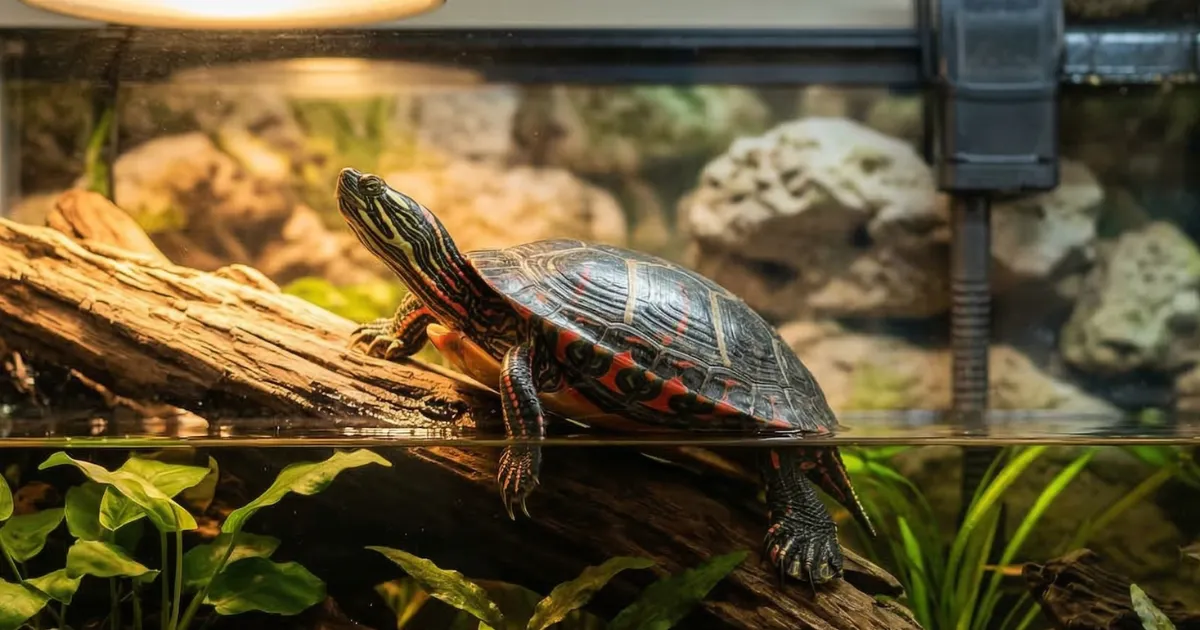
Eastern Painted Turtles (Chrysemys picta picta) represent one of the most widespread native aquatic reptiles in North America. Indeed, these highly adaptable turtles inhabit slow moving freshwater ponds and dense marshes. Consequently, their striking visual appearance makes them highly sought after specimens within the aquatic hobby. Therefore, mastering their intense biological requirements guarantees a thriving, long lived captive aquatic predator.
Identifying Eastern Painted Turtles
Eastern Painted Turtles display distinct, perfectly aligned vertebral and pleural carapace scutes. Furthermore, their dark olive shell features striking, pale leading edges across these aligned segments. Consequently, vibrant red markings heavily decorate their marginal scutes and neck region. Therefore, their solid yellow plastron remains mostly plain without complex, dark abstract patterns. As a result, recognizing their aligned top scutes separates them from other painted variations.
Beginner Suitability
They require massive water volumes and incredibly expensive, heavy duty filtration systems. Furthermore, their aquatic environment demands strict, daily maintenance to prevent severe toxic ammonia spikes. Consequently, lazy beginners routinely kill them through gross negligence and poor water quality. Therefore, they remain suitable only for highly dedicated beginners willing to invest heavily.
Lifespan and Size of Eastern Painted Turtles
Eastern Painted Turtles represent a massive, multi decade commitment for any responsible owner. Specifically, a healthy individual typically lives between 20 and 30 years in captive captivity. Furthermore, adult females grow significantly larger, reaching lengths up to 18 cm physically. Consequently, converting this to biological mass, mature females easily exceed 300 grams. Therefore, you must provide excellent veterinary care and strict nutrition to ensure their longevity.
Eastern Painted Turtles Temperament
They possess a highly docile but extremely timid biological temperament. Specifically, they frequently panic and dive rapidly into the water when humans approach suddenly. Furthermore, they function as peaceful observers rather than highly aggressive, snapping aquatic predators. Consequently, they demand slow, gentle interactions to prevent severe psychological stress and anxiety. As a result, they eventually learn to tolerate their human caretakers through positive reinforcement.
Tank Size for Eastern Painted Turtles
You must provide a massive aquatic enclosure to accommodate their active swimming habits. Specifically, a single adult requires a bare minimum of a 75 gallon glass aquarium. Furthermore, you must provide a completely dry, easily accessible basking dock above the water line. Consequently, filling the tank completely forces them to swim constantly without essential resting periods. Therefore, providing deep water and a secure dry zone constitutes a mandatory, proper setup.
Water Parameters
You must maintain intense, stable aquatic conditions using a digital thermostat. Specifically, the main swimming water must remain strictly between 24 and 26 degrees Celsius. Furthermore, their dry basking platform requires intense heat reaching 32 to 35 degrees Celsius. Consequently, inadequate temperatures severely disrupt their digestive system and crash their immune response. As a result, using heavy duty aquarium heaters guarantees a stable, healthy aquatic environment.
Proper Diet for Eastern Painted Turtles
Eastern Painted Turtles are highly opportunistic omnivores requiring diverse nutrition daily. Specifically, you must feed them a premium commercial aquatic turtle pellet as their staple. Furthermore, you must supplement this with dark, leafy greens and aquatic insects. Consequently, measuring exactly 10 to 20 grams of food prevents severe aquatic fouling. Therefore, offering fresh vegetables daily mimics their natural, wild dietary intake safely and effectively.
Common Health Problems
Poor water quality and inadequate basking heat cause agonizing, fatal bacterial shell infections. Furthermore, a lack of dietary vitamin A causes severe, blinding swollen eye conditions. Consequently, using intense UVB lighting prevents crippling metabolic bone disease and soft shell syndrome. As a result, pristine water and proactive veterinary care prevent these catastrophic aquatic diseases.
Breeding Eastern Painted Turtles
Captive breeding requires providing a massive, deep box of damp soil. Specifically, gravid females instinctively dig deep nests to deposit their fragile, leathery eggs. Furthermore, a female typically lays multiple clutches containing up to ten eggs seasonally. Consequently, failing to provide a proper nesting site forces the female to become egg bound. Therefore, this fatal condition requires emergency surgical intervention from a certified specialized veterinarian.
Compatible Tankmates
You must proceed with extreme caution when housing these reptiles. Specifically, they will absolutely hunt and consume any slow moving fish sharing their aquatic enclosure. Furthermore, keeping multiple adult males together frequently triggers intense, violent territorial disputes. Consequently, highly aggressive cichlids will nip their delicate toes and cause severe bacterial infections. Therefore, housing them entirely alone represents the safest, most logical aquatic husbandry choice.
Essential Equipment for Eastern Painted Turtles
You must purchase incredibly heavy duty hardware to maintain their massive aquatic footprint. Specifically, a massive canister filter rated for three times the tank volume remains mandatory. Furthermore, you must install intense, specialized reptile UVB lighting directly over their dry dock. Consequently, a shatterproof submersible water heater maintains their core aquatic temperatures. As a result, cheap equipment guarantees fatal water quality crashes and severe biological failure.
Sexing Eastern Painted Turtles
Mature adult Eastern Painted Turtles display highly distinct sexual dimorphism making visual identification straight forward. Specifically, adult males possess incredibly long, prominent front claws used during their mating rituals. Furthermore, males feature significantly longer, thicker tails with the cloaca positioned past the carapace edge. Consequently, females grow noticeably larger and possess short, stubby front claws by comparison. Therefore, examining their front claws and tail thickness confirms their biological sex.
Filtration Needs
Eastern Painted Turtles represent the absolute messiest aquatic animals you can possibly keep indoors. Specifically, they produce massive amounts of heavy biological waste and physically destroy their food. Furthermore, standard internal aquarium filters absolutely cannot handle this immense biological load. Consequently, you must utilize a massive, high capacity external canister filter packed with biological media. As a result, massive filtration turnover remains your only defense against fatal ammonia poisoning.
Intelligence and Interaction of Eastern Painted Turtles
Eastern Painted Turtles display highly impressive associative learning capabilities. Specifically, they quickly learn to recognize their human caretakers visually across the room. Furthermore, they will actively beg for food by splashing aggressively at the aquarium glass. Consequently, they associate your physical presence directly with positive nutritional rewards. Therefore, they offer engaging, highly visual interaction rather than cuddly, physical mammalian affection.
Aggression and Territoriality
They generally maintain a highly peaceful disposition toward humans during routine maintenance. Specifically, they prefer to flee into the water rather than actively launching a biting attack. Furthermore, males occasionally display intense territorial aggression toward other males during the breeding season. Consequently, over crowding their aquatic enclosure instantly triggers severe stress and aggressive resource guarding. As a result, providing massive swimming space prevents violent territorial disputes.
Planted Tanks and Eastern Painted Turtles
Eastern Painted Turtles will aggressively consume every single live plant you introduce. Furthermore, their powerful swimming strokes physically uproot delicate aquatic flora rapidly and destructively. Consequently, they completely shred expensive aquarium plants, clogging your massive canister filter. Therefore, using heavy stones and artificial, robust decorations remains the only viable aesthetic choice.
Sources
- Savannah River Ecology Laboratory
https://srelherp.uga.edu/turtles/chypic.htm - The Orianne Society
https://www.oriannesociety.org/species/eastern-painted-turtle/ - Virginia Herpetological Society
https://www.virginiaherpetologicalsociety.com/reptiles/turtles/eastern-painted-turtle/eastern_painted_turtle.php - Animal Diversity Web
https://animaldiversity.org/accounts/Chrysemys_picta/ - Reptiles Magazine
https://reptilesmagazine.com/painted-turtle-care-sheet/



Leave a Reply