
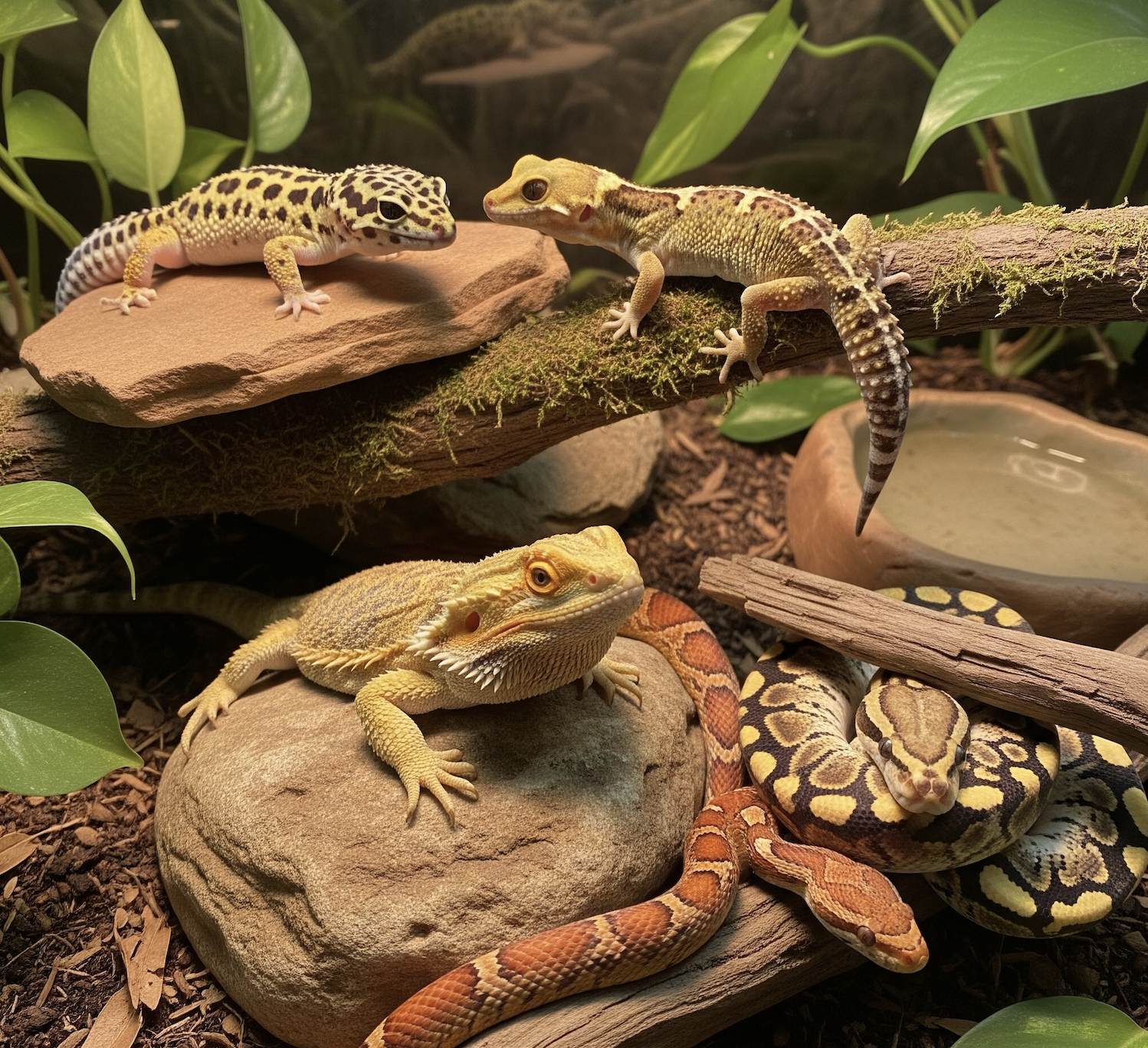
The world of reptiles is an extraordinary and ancient realm, brimming with fascinating creatures that seem like vibrant living relics from a long-lost era. For a newcomer, the exhilarating thought of welcoming a scaly companion into your home can ignite an adventurous spirit, while simultaneously presenting a daunting challenge. When selecting a beginner reptile, you might wonder: which lizard possesses the kindest demeanor? Which snake is the most delightful to handle? Thus, this guide is crafted with passion to illuminate those questions, offering a transparent and heartfelt exploration of the best reptile species for enthusiastic first-time owners.
These are the burning questions that ignited my curiosity when I first stood on the thrilling precipice of this incredible hobby. I found myself grappling with the allure of the complexity and the enchanting, albeit strange-sounding, equipment. I was eager yet anxious, wondering if I could truly forge a deep connection with an extraordinary creature, so wonderfully different from a cat or a dog. But here’s the exhilarating truth. The journey ahead is not only vastly rewarding but also far less daunting than you could ever imagine, especially when you take that first step with the perfect beginner reptile!
Choosing your first reptile
This is the single most important decision you will make. A good beginner reptile is a gateway. It serves as a gentle and forgiving ambassador. This reptile teaches you the fundamentals of husbandry and builds your confidence. Conversely, a difficult one can lead to frustration, heartbreak, and the false conclusion that “reptiles aren’t for me.”
When choosing the best beginner reptiles, which lizard is the friendliest? Which snake is the most manageable? Therefore, this guide is designed to answer those crucial first questions. We will provide a clear and honest look at the top-tier species. These species are known for their docile temperaments. They offer simple care and hardiness. They are the true champions of the beginner reptile world. Ultimately, this is your roadmap to starting your journey not with a challenge, but with a companion.
The Day Fear Turned to Fascination
A few years ago, I was the person who would shriek at a garden hose. My fear of snakes—ophidiophobia—was deep and very real. The idea of ever touching one, let alone owning one, was unthinkable. My journey into the reptile world started with a chameleon and turtles, which felt “safe.”
Then came the day I challenged myself and touched a Kenyan boa. My heart pounded, but the fear I expected was instantly replaced by a sense of profound awe. It was a beautiful, calm, living creature. That single moment retrained my brain to see beauty where it once saw only fear.
I tell you this because choosing your first reptile isn’t just about finding one that’s “easy.” It’s about finding the one that sparks that sense of awe in you. This list is your starting point for beginner reptiles to spark your incredible journey.
What Makes a Reptile “Easy” for a Beginner?
- Docile and Friendly: A good beginner reptile is one that tolerates handling well. It should not be prone to biting or aggressive displays.
- Easy Care Requirements: Their heating, lighting, and humidity needs are relatively simple to achieve and maintain.
- Manageable Size: They do not grow to a massive size, meaning their adult enclosure can fit comfortably in most homes.
- Availability: They are commonly captive-bred, making them easy to find, affordable, and well-adjusted to life in captivity.
Top Beginner Reptiles
1. Leopard Gecko (Eublepharis macularius)

Why It’s a Great Beginner Pet: The Leopard Gecko is arguably the number one recommended on the beginner reptiles list. This is because they are calm, small, and their needs are very straightforward. Furthermore, being nocturnal, their lighting requirements are less intense than many other lizards.
Temperament: They are extremely docile and slow-moving. Consequently, they rarely bite and are very tolerant of gentle handling.
Basic Requirements: A 20-gallon (75-liter) long tank is a great size. They require a temperature gradient with a warm spot of 88−92∘F (31−33∘C). It is best provided by an under-tank heat mat connected to a thermostat.
Diet: They are insectivores. Specifically, they eat a diet of crickets, mealworms, and dubia roaches, which must be dusted with calcium.
2. Crested Gecko (Correlophus ciliatus)

Why It’s a Great Beginner Pet: The “room temperature reptile”! Crested Geckos thrive at average household temperatures, often eliminating the need for complex heating setups. Furthermore, their diet is also incredibly simple, which puts them on the top 5 beginner reptiles list.
Temperament: They are docile and calm, so they tolerate handling well. They are known for their “sticky” toe pads and love to climb, including up their owner’s arm.
Basic Requirements: They are climbers, so a vertically oriented 20-gallon (75-liter) tall tank is ideal. Therefore, you must provide plenty of vines and foliage for climbing.
Diet: This is their easiest feature. They eat a pre-mixed, powdered “complete gecko diet” that you just mix with water.
3. Bearded Dragon (Pogona vitticeps)

Why It’s a Great Beginner Reptile (with a caveat): Bearded Dragons are the most personable lizards on this list. They are very interactive. They are active during the day and often seem to enjoy interacting with their owners.
Temperament: They are very docile, curious, and hardy. In fact, they are one of the friendliest and most handleable lizards.
The Caveat: However, they have more demanding care. They grow up to 24 inches/60 cm and require a large enclosure (4′x2′x2′ is recommended). Second, they also need very bright, high-output UVB and heat lamps.
Diet: They are omnivores. Specifically, they eat a mix of gut-loaded insects (like crickets and dubia roaches) and a daily salad of fresh greens.
Top Beginner Snakes
1. Corn Snake (Pantherophis guttatus)

Why It’s a Great Beginner Pet: The Corn Snake is the quintessential starter snake—the first snake on the beginner reptiles list. They are hardy, very reluctant to bite, come in a breathtaking variety of colors (“morphs”), and have very simple care requirements.
Temperament: They are extremely docile and curious. Consequently, they are active explorers and generally very easy to handle.
Basic Requirements: An adult can live comfortably in a 40-gallon (150-liter) tank. They only need a simple heat mat to create a warm spot of 85∘F (29∘C).
Diet: Crucially, they readily eat frozen/thawed mice, which are easy to buy and store.
2. Ball Python (Python regius)

Why It’s a Great Beginner Pet: Ball Pythons are famous for their incredibly shy and docile nature. In fact, their first line of defense is to curl up into a tight, protective ball rather than strike.
Temperament: They are exceptionally docile. They are slow-moving and very easy to handle, thus making them a fantastic choice for someone nervous about snakes.
The Caveat: However, their one challenge is humidity. They require a higher humidity level (55-65%), which may require misting or a specific substrate to maintain. They are also known for occasionally being picky eaters.
Diet: They eat frozen/thawed rodents (mice or rats depending on their size).
Beginner Reptile Pets FAQ
The Leopard Gecko ranks as the easiest reptile for first-time owners due to docile temperament, small size, and simple care needs. Crested Geckos and Corn Snakes follow closely as excellent alternatives. All three forgive minor husbandry mistakes that more sensitive species would not survive.
Leopard Geckos are genuinely low-maintenance compared to other reptiles, since they need no UVB lighting and accept simple insect diets. Their nocturnal nature reduces lighting complexity, and a 75-liter tank with a heat mat works perfectly. They tolerate gentle handling and live 15 to 20 years.
Crested Geckos thrive at typical household temperatures between 21 and 27°C, eliminating the need for specialized heating equipment. Their natural humid forest origins translate well to indoor conditions. A pre-mixed powdered diet replaces live insects entirely, making them the simplest pet reptile to maintain.
Bearded Dragons suit motivated beginners willing to invest in proper equipment despite their high maintenance demands. They need large enclosures of 4 by 2 by 2 feet, intense UVB, and varied insect-and-salad diets. Their interactive personalities reward keepers who commit to advanced setup requirements upfront.
The Corn Snake ranks as the friendliest beginner snake due to docile temperament and tolerance for handling. Ball Pythons follow as a close second with their famously calm, defensive coiling behavior. Both species accept frozen-thawed prey reliably and adapt well to standard reptile husbandry.
A beginner reptile habitat costs between $200 and $600 for proper initial setup. Tank, lighting, heating, substrate, hides, and thermostats account for most expenses. Add ongoing costs for food, replacement bulbs, and veterinary care, since UVB bulbs need replacement every 6 to 12 months.
A beginner can absolutely keep a Corn Snake or Ball Python without prior reptile experience when proper research precedes purchase. Both species forgive minor husbandry mistakes that would harm sensitive lizards. Frozen-thawed feeding and simple temperature gradients suit first-time keepers comfortable with eventual rodent feeding.
Sources
- MSD Veterinary Manual
https://www.msdvetmanual.com/exotic-and-laboratory-animals/reptiles/management-of-geckos - LafeberVet
https://lafeber.com/vet/crested-gecko-care-sheet/ - Journal of Zoo and Aquarium Research
https://www.jzar.org/jzar/article/view/150 - Reptiles Magazine
https://reptilesmagazine.com/corn-snake-care-sheet/ - The Spruce Pets
https://www.thesprucepets.com/ball-python-care-and-breeding-1239228
Leave a Reply
You must be logged in to post a comment.