
للغة العربية اضغط هنا
Shy, serpentine, and endlessly amusing, the Kuhli Loach (Pangio spp.) is the beloved “water noodle” of the freshwater world. These nocturnal, bottom-dwelling fish are a fantastic addition to a peaceful community tank. However, their unique burrowing nature can be puzzling, and their elusive behavior may also confuse new keepers. This guide will, therefore, shine a light on these shadowy noodles, answering all your questions to help you create a perfect, safe habitat where they can thrive.
The Secret Tenants of a Peaceful Kingdom
My 10-gallon Betta tank is one of my favorite little ecosystems. It’s ruled by “Sky,” my gorgeous Betta, and a hardworking Long Fin Bristlenose. But the true landlords of the tank’s ground floor are a wiggling, secretive group of six Kuhli Loaches. Many would call this an odd mix, but it is, without a doubt, my most peaceful tank.
This experience taught me a profound lesson in compatibility. As long as everyone has their own space, peace is possible. Specifically, Sky owns the top half; the Pleco is the master of the driftwood; and the Kuhlis have complete dominion over the sandy substrate. I rarely see all six at once, yet catching a glimpse of their noodle-like bodies sifting through the sand is a constant source of quiet joy. This guide is for anyone ready to welcome these shy, charming tenants into their own aquatic world.
Where Are My Kuhli Loaches? Understanding Their Behavior
Why are they always hiding?
This is the #1 question from new owners, and it’s completely normal. The reason is that Kuhli Loaches are nocturnal and naturally shy. Furthermore, in the wild, they are prey animals that spend their days burrowed in the sand or hidden in leaf litter to feel safe. Therefore, a hiding loach is often a happy loach.
Do they need to be in a group?
Yes, this is non-negotiable. Because they are social creatures that find security in numbers, a single loach will be terrified and will likely hide 100% of the time. Therefore, you must keep them in a group of at least 6 or more.
Why are my loaches darting to the surface?
This can be a sign of excitement, especially if you’ve just fed them or done a water change. They also sometimes perform a frantic “loach dance,” which is often linked to changes in barometric pressure before a storm. However, if this behavior is constant, it can also be a sign of poor water quality or low oxygen, so you should test your water parameters immediately.
Are my loaches dead or just hiding?
They are masters of stillness and can wedge themselves into the tightest spots. A sleeping loach can look unnervingly like a dead one. If you are truly concerned, a gentle nudge is okay, but often the best way to tell is by doing a headcount during feeding time at night.
What is the Best Tank Setup for Kuhli Loaches?
Creating the right environment is the most important step to seeing your Kuhli Loaches thrive and behave naturally. Their setup is less about decoration and more about providing a deep sense of security that caters to their unique, burrowing lifestyle.
Substrate: A Soft Landing is Mandatory
This is the single most important aspect of their habitat. Kuhli Loaches are natural “earth-eaters” and burrowers; they spend a significant amount of time sifting sand through their delicate gills to find food and completely burying themselves to rest and feel safe. For this reason, a soft, fine-grained sand substrate is non-negotiable.
Why Not Gravel?
Gravel is a major hazard. Its sharp edges can easily scratch and damage their scaleless skin and injure their sensitive barbels (whiskers), leading to infection. Furthermore, it prevents their most fundamental natural behavior: burrowing.
Best Choices:
Inexpensive pool filter sand or play sand (thoroughly rinsed) are perfect choices. A darker sand will also help these shy fish feel more secure and will make their colors pop.
Tank Size & Shape: A Large Footprint is Key
Because they are bottom-dwellers who love to explore, the footprint (length x width) of the tank is far more important than its height. A “long” style tank is much better than a tall one. A 20-gallon long (approx. 75 liters) is an ideal starting size for a proper group, providing ample ground space for them to sift, scavenge, and socialize.
Filtration: Making it “Noodle-Proof”
Kuhli Loaches are notorious for exploring every nook and cranny, and their slender, noodle like bodies can easily fit into the intake slots of a powerful hang-on-back or canister filter. This is a common and often fatal accident.
You must make your filter intake safe by covering it with a pre-filter sponge. This not only protects your loaches but also adds a huge amount of surface area for beneficial bacteria to grow. Alternatively, using a gentle sponge filter is an inherently safe and excellent choice for a loach tank.
Aquascape: A World of Shadows and Shelter
To encourage your loaches to be more active and feel secure, create a complex and dimly lit aquascape.
Provide Abundant Hiding Places:
Use smooth driftwood, catappa (Indian almond) leaves, coconut huts, and smooth river stones to create a network of caves, tunnels, and shady overhangs. A shy fish that knows safety is just an inch away is a bolder fish.
Dim Lighting:
They are nocturnal and are stressed by intense, bright lighting. Use a lower-output light or add floating plants like Water Lettuce, Frogbit or Salvinia to diffuse the light and create a more natural, dappled effect.

What Do Kuhli Loaches Eat?
Feeding Kuhli Loaches successfully is less about what you feed and more about how and when you feed it. As shy, nocturnal bottom feeders, they can easily be outcompeted for food by more boisterous tank mates.
- The Golden Rule: Feed After Lights Out
The single best way to ensure your loaches are well-fed is to feed them 15-20 minutes after you have turned off the main aquarium lights for the night. This is when they naturally become active and begin to scavenge. This simple technique allows the food to bypass the faster mid-water fish and reach the bottom, where the “polite waiters” of the tank can find it. - Their Staple Diet:
Their primary food should be a high-quality sinking wafer or fine-grained pellet that is designed for bottom-feeders. This ensures the food gets to their level and is appropriately sized for their small mouths. - Enrichment and Variety:
Kuhli Loaches are micropredators by nature and will relish meaty, protein-rich foods. Supplementing their diet a few times a week with frozen or live foods is essential for their health and will trigger their exciting, natural scavenging behaviors. Excellent choices include frozen food such as Daphnia, bloodworms, brine shrimp, and tubifex worms. Or live food. Such as, Blackworms or white worms are a special treat that will cause a flurry of activity. - Do They Eat Algae or Snails?
While they may nibble on biofilm, Kuhli Loaches are not algae eaters. Do not rely on them to clean your glass. Similarly, they are not an effective snail-control crew. They may opportunistically eat tiny pest snail eggs or a newborn baby snail, but they will not make a dent in an established snail population.
What Are the Different Types of Kuhli Loaches?
While they may all look like “noodles,” the Pangio genus is quite diverse. In the aquarium hobby, you will most commonly encounter two main species, with a few rarer cousins occasionally making an appearance.
The Classic: Striped Kuhli Loach (Pangio kuhlii or P. semicincta)
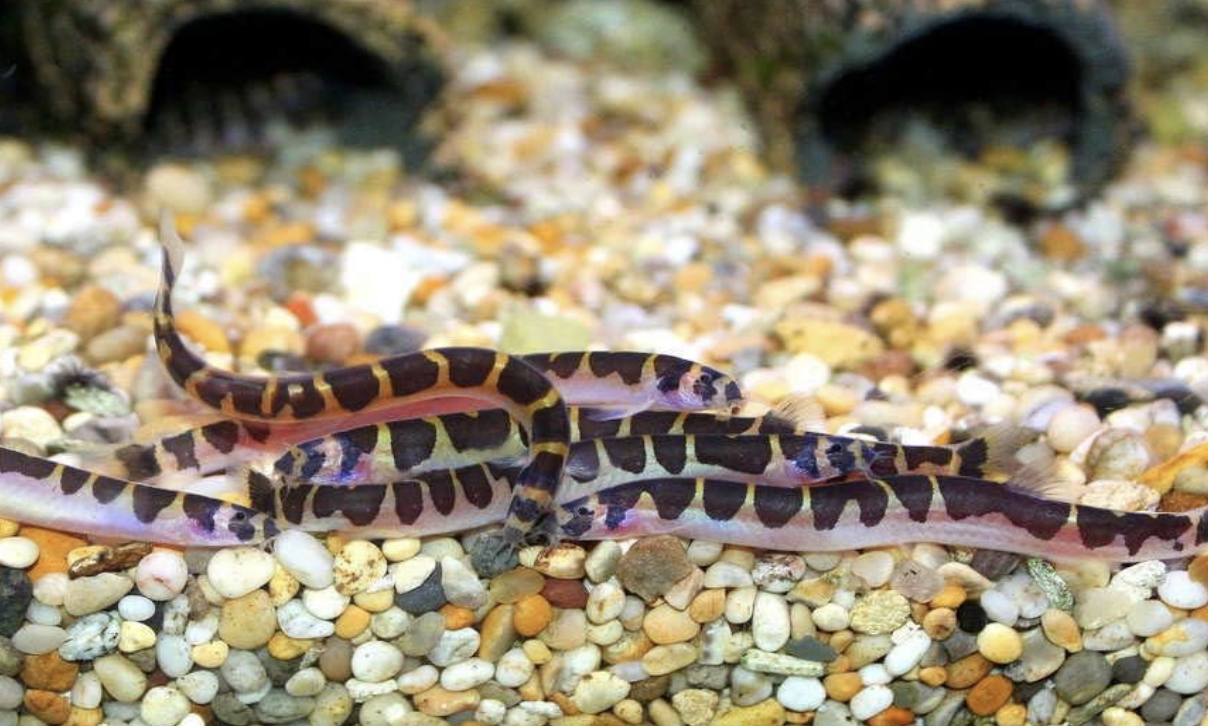
This is the iconic species that most people picture. They have a beautiful yellowish-pink to orange body overlaid with dark brown or black bands. There is some taxonomic confusion, but it is believed that most of the “striped” loaches in the hobby are Pangio semicincta, which has saddle-like bands that don’t always connect on the underside. Their shy, secretive nature is legendary.
The Shadow Loach: The Black Kuhli (Pangio oblonga)
Often called the “Java Loach,” this species is a solid, uniform blackish-brown to dark gray color with a silvery underbelly. The most significant difference is not their color, but their behavior. Black Kuhli Loaches are famously bolder and more active during the day than their striped cousins, making them a fantastic choice for owners who want to see their loaches more often. Their care requirements are absolutely identical to the striped variety.
Rarer Cousins:
Occasionally, you may find other species for sale. This can include the Giant Kuhli (Pangio myersi), which is a bit thicker and has full, solid black bands, or other more obscure, beautifully patterned species.
Can Different Loach Species Be Housed Together?
Yes, absolutely. All species within the Pangio genus share the same social needs and body language. You can create a fascinating and visually diverse “noodle pile” by mixing Striped and Black Kuhli Loaches in the same group. They will happily shoal, hide, and explore together.
Sources
- Aquarium Co-Op (Kuhli Loach Care)
https://www.aquariumcoop.com/blogs/aquarium/kuhli-loach-care-guide - Seriously Fish (Pangio semicincta)
https://www.seriouslyfish.com/species/pangio-semicincta/ - Fishkeeping World (Kuhli Loach Diet)
https://www.fishkeepingworld.com/kuhli-loach/ - Loaches.com (Species Index)
https://www.loaches.com/species-index/pangio-semicincta - Aquarium Source (Black Kuhli Loach)
https://www.aquariumsource.com/black-kuhli-loach/


Leave a Reply