
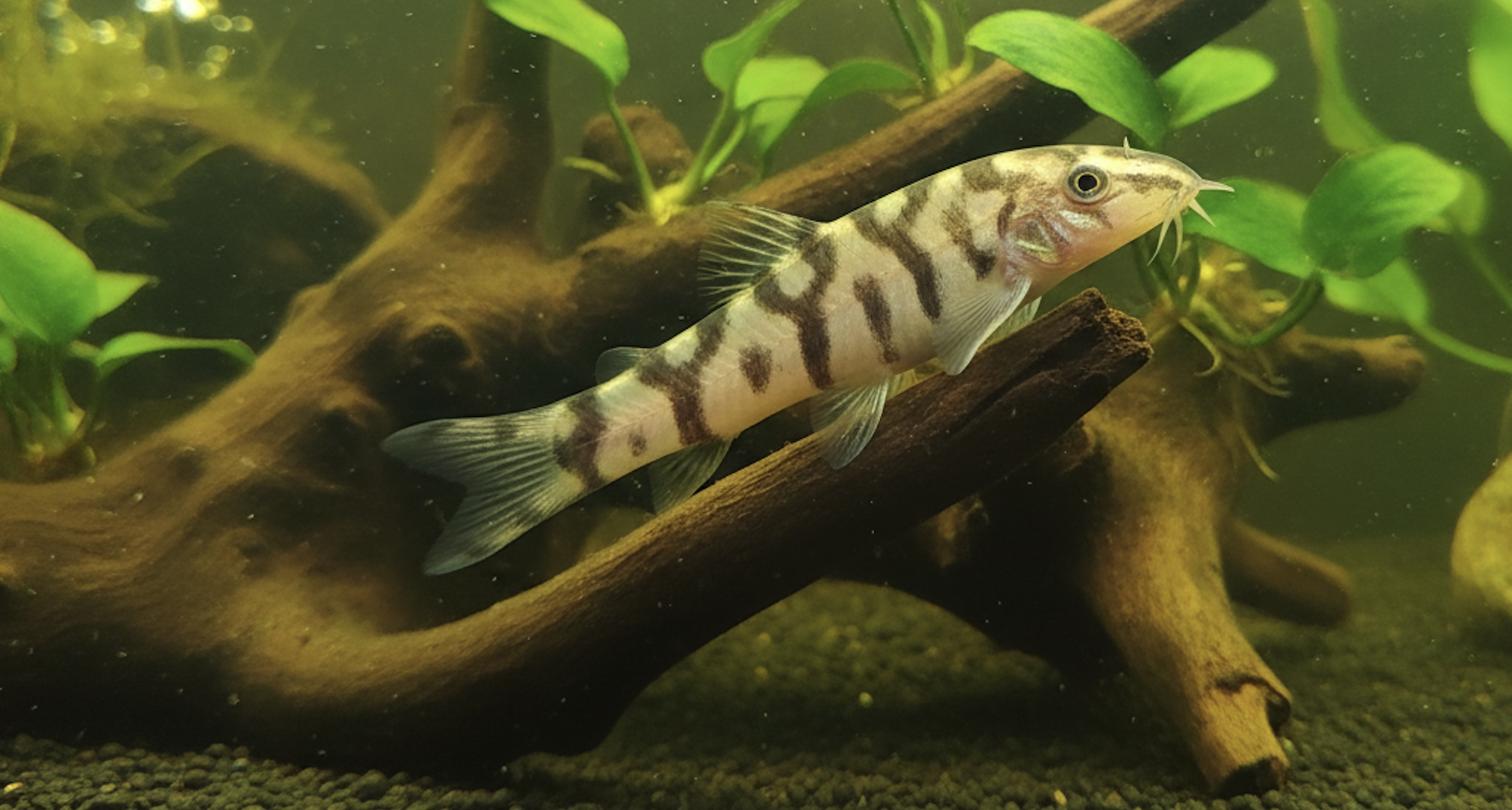
One time I thought I had lost one of my Yoyo Loaches. After a frantic search, I found it wedged sideways between a rock and a piece of driftwood, completely motionless. My heart sank. I reached in with the net to retrieve the body, and in a flash of stripes and motion, the “dead” loach shot out, joined its schoolmates, and began enthusiastically chasing them around the tank. It wasn’t dead; it was napping. That was my formal introduction to the quirky, sometimes heart stopping, and always entertaining personality of the Yoyo Loach. They are not calm, sedate bottom dwellers; they are a pack of mischievous, intelligent, and endlessly active characters that will turn the bottom of your aquarium into a constant playground.
The Yoyo Loach (Botia almorhae), also known as the Almora Loach, gets its name from the juvenile pattern on its side that looks like the letters “Y-O-Y-O.” They are a true centerpiece bottom dweller, but their high energy and social needs require a specific setup to thrive.
Are Yoyo Loaches suitable for beginners?
Yoyo Loaches are hardy species suitable for beginners who possess a large aquarium. Specifically, they adapt well to various water parameters and exhibit high resilience. However, they are not appropriate for small “starter” tanks due to their activity levels. Furthermore, they demand a significant long term commitment of fifteen to twenty years. Consequently, I reject the idea that they are “low maintenance” fish. Therefore, you must meet their group requirements to ensure success. In fact, their complex social needs are non negotiable for any keeper.
How large do Yoyo Loaches grow and how long do they live?
Adult specimens reach a robust length of five to six inches. Specifically, they grow from tiny juveniles into chunky, powerful bottom-dwellers. Furthermore, they live for ten to fifteen years in stable environments. In fact, some keepers report their loaches living for two decades. Consequently, you must plan for a massive bioload as they mature. Therefore, I prioritize large-scale filtration for this species. As a result, you will enjoy their playful antics for many years.
Why is a social school essential for Yoyo Loaches temperament?
You must maintain a school of at least five to six Yoyo Loaches. Specifically, they are highly social animals that rely on a group hierarchy. Furthermore, isolated specimens often become aggressive or chronically stressed. In fact, a large group allows them to spread their energy naturally. Consequently, you will witness fascinating social sparring and chasing. Therefore, I recommend a 55-gallon tank as the absolute minimum. As a result, the fish will feel secure and active.
What are the ideal tank setup and substrate requirements?
Experts strongly recommend a fine sand substrate for this species. Specifically, sand protects their delicate barbels from permanent physical damage. Furthermore, you must provide multiple hiding spots like driftwood and caves. In fact, a secure loach is a confident and active loach. Additionally, you must install a tight-fitting lid on the aquarium. Consequently, these energetic fish often jump out of open-topped tanks. Therefore, I prioritize a “cluttered” setup with many retreats.
What specific water conditions do Yoyo Loaches require?
They thrive in warm, stable water between 75°F and 82°F. Specifically, they prefer a pH range of 6.5 to 7.6. Furthermore, these “scaleless” fish are hyper-sensitive to ammonia and nitrates. In fact, you must only add them to a fully cycled aquarium. Consequently, large weekly water changes are mandatory for their health. Therefore, I recommend consistent water testing to prevent systemic illness. As a result, their metallic patterns will remain vibrant.
What is a balanced diet for this omnivore?
Their primary diet should consist of high-quality sinking pellets and wafers. Specifically, they are opportunistic omnivores that enjoy varied proteins. Furthermore, you must supplement their diet with frozen bloodworms and daphnia. In fact, they are famous for consuming “pest” snails like Ramshorns. Consequently, they will protect your plants from snail infestations. However, you should never keep them with ornamental snails. Therefore, I recommend a diverse feeding schedule twice daily.
Why do they “play dead” and make clicking sounds?
Yoyo Loaches are famous for sleeping on its side. Specifically, this “playing dead” posture is a normal resting state. Furthermore, they produce audible clicking sounds during feeding or sparring. In fact, they use pharyngeal teeth to create these sharp noises. Consequently, do not panic if you hear your tank clicking at night. Therefore, I advise observing their behavior to understand their health. As a result, you will recognize their unique social signals.
Which tank mates are compatible with boisterous loaches?
The best tank mates are robust and active mid-water swimmers. Specifically, Tiger Barbs and Rainbowfish can handle their high energy. Furthermore, you should avoid slow-moving or long-finned fish like Bettas. In fact, boisterous loaches may accidentally harass timid species. Consequently, I prioritize companions that occupy different water layers. Therefore, you should avoid keeping them with small shrimp. As a result, the community remains stable and peaceful.
Is breeding Yoyo Loaches a feasible goal for hobbyists?
Breeding this species in a home aquarium is extremely rare. Specifically, commercial farms use hormone injections to induce spawning. Furthermore, their natural migration patterns are difficult to replicate indoors. In fact, no documented home spawns have been verified to date. Consequently, you should not expect eggs in your community tank. Therefore, I classify them as a non-breeding species for average keepers. As a result, focus on providing a high-quality life instead.
Yoyo Loaches FAQ
Playing dead is a completely normal resting behaviour for Yoyo Loaches — not a sign of illness. They sleep on their sides, wedged between rocks and driftwood, completely motionless. A truly sick loach will show additional symptoms like loss of colour, refusal to eat, or swollen abdomen. A loach that shoots away when disturbed was simply napping.
The clicking is produced by specialised pharyngeal teeth located in their throat. It is most commonly heard during feeding or social sparring within the group. It is completely normal and actually a sign of an active, engaged fish. Do not be alarmed if you hear your tank clicking at night — your loaches are simply communicating.
A minimum school of five to six is non-negotiable. Yoyo Loaches are highly social and develop a group hierarchy that is essential for their psychological wellbeing. Isolated specimens become aggressive, chronically stressed, and display none of the entertaining social behaviour the species is known for. A 55-gallon tank is the absolute minimum for a proper group.
Yes — they are highly effective and enthusiastic snail hunters. They will systematically hunt and consume Ramshorn and Bladder Snails throughout the tank. This makes them one of the most practical biological solutions to a snail infestation. However, never house them with ornamental snails like Nerites or Mystery Snails — they will eat those too.
In a stable, well-maintained aquarium, Yoyo Loaches live for 10–15 years, with some specimens reportedly reaching 20 years. They are a genuine long-term commitment. They grow to 5–6 inches, produce a significant bioload as adults, and require oversized filtration and consistent weekly water changes to maintain the water quality their scaleless bodies demand.
Sources
- Seriously Fish
https://www.seriouslyfish.com/species/botia-almorhae/ - Loaches Online
https://www.loaches.com/species-index/botia-almorhae - FishBase
https://www.fishbase.se/summary/Botia-almorhae.html - Aquarium Tidings
https://aquariumtidings.com/yoyo-loach/ - Aquatic Arts
https://aquaticarts.com/products/yo-yo-loach


Leave a Reply